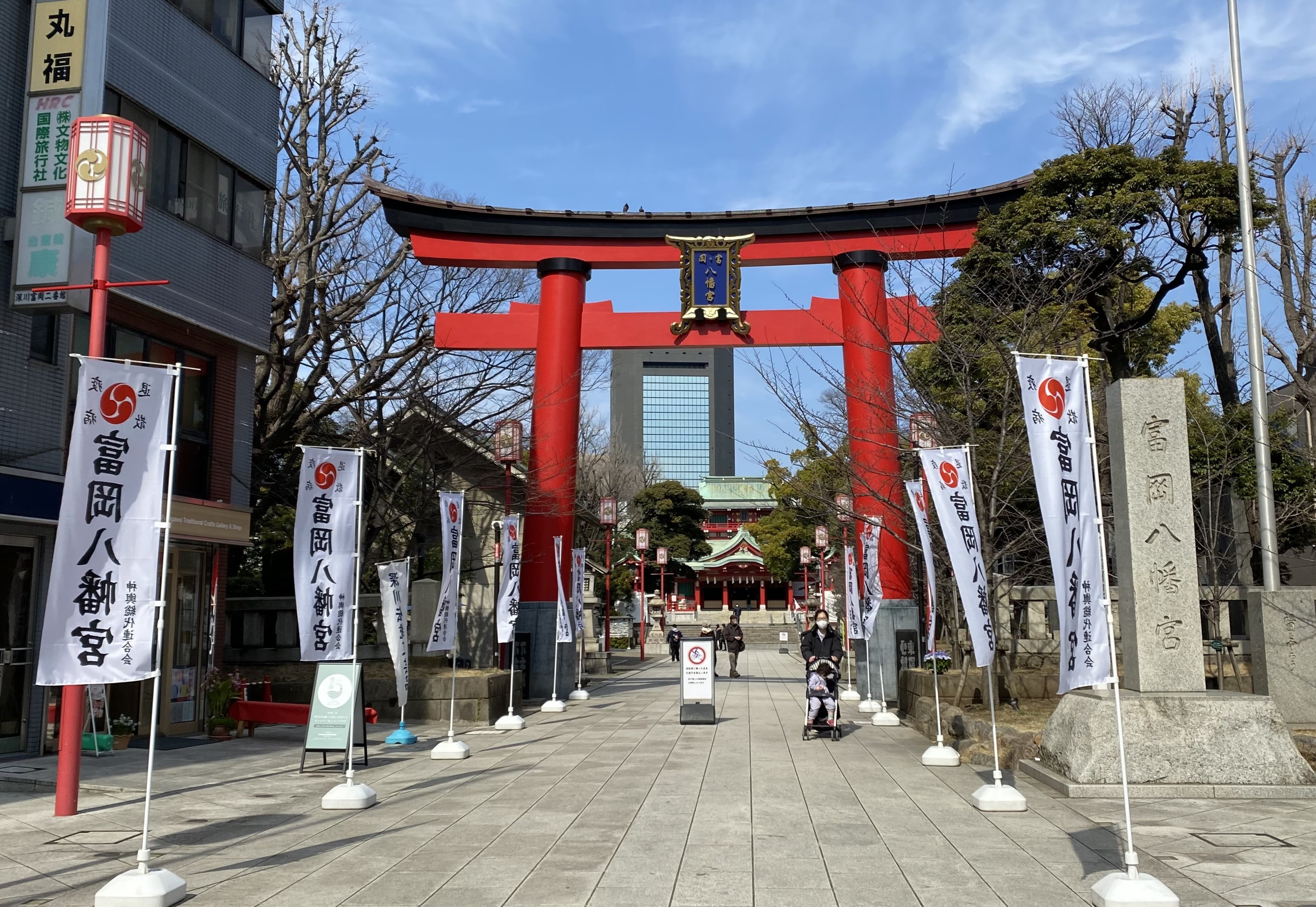
Tokyo's largest Hachiman shrine, birthplace of professional sumo and home to a jewel-studded golden mikoshi.
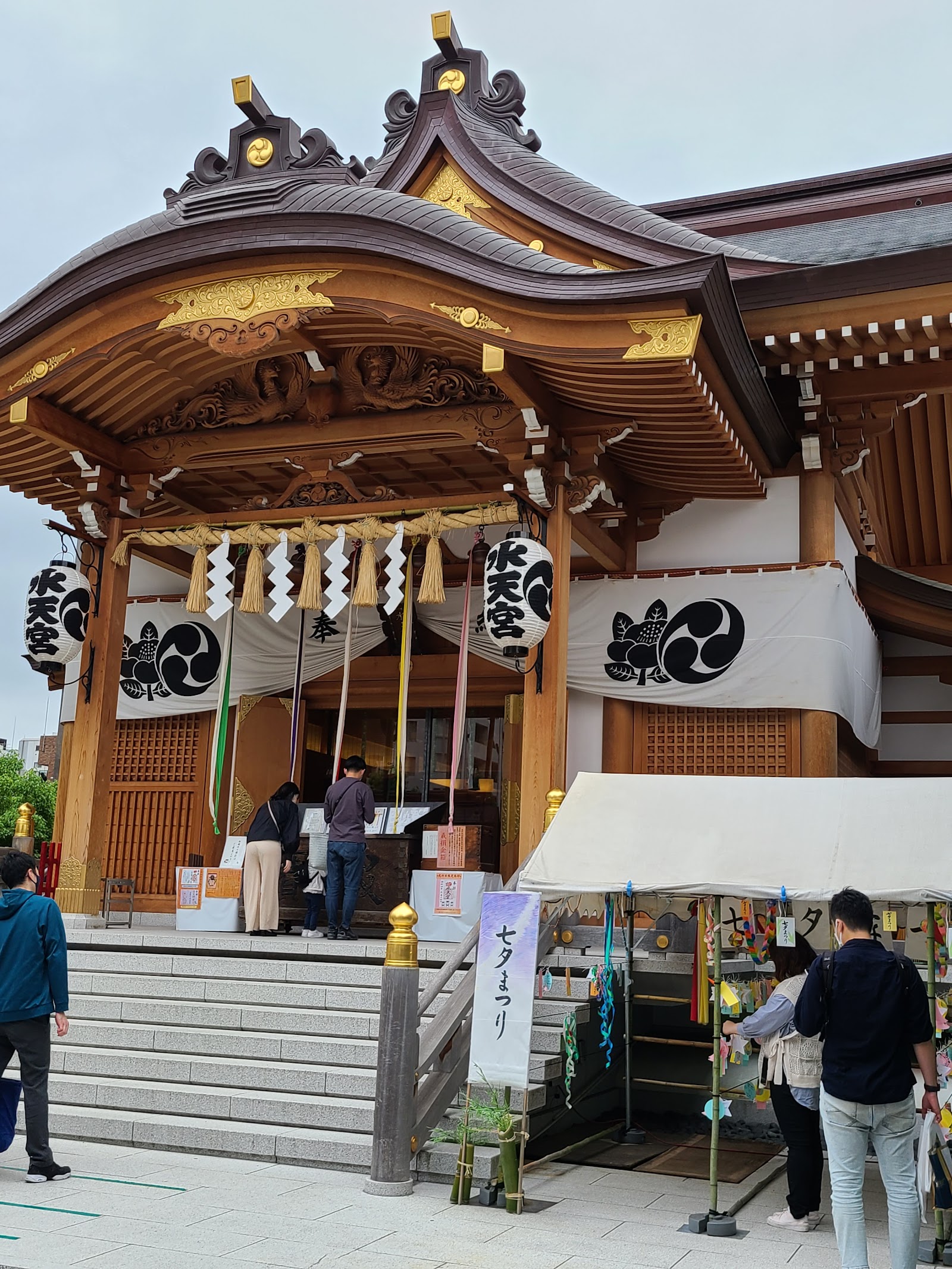
Tomioka Hachimangū, in the old Fukagawa district of Kōtō ward, is the largest Hachiman shrine in Tokyo and one of the city's great centres of festival culture. Founded in 1627 on land reclaimed from the bay, it enshrines Hachiman, the Shinto god of war and protector of warriors, and quickly became a favourite of the Edo townspeople — a role it still plays today as the heart of one of Tokyo's most vibrant local communities.
The shrine holds a special place in the history of sumo. It was here, from 1684, that the shogunate first permitted officially sanctioned kanjin-zumō — charity sumo tournaments — making Tomioka Hachimangū effectively the birthplace of professional sumo in Japan. That legacy is written in stone across the grounds: two large monuments, the Yokozuna Stones, are inscribed with the ring-names of every grand champion (yokozuna) in history, with new names added as each champion is promoted, while another stone honours the ōzeki rank. For sumo fans it is a place of genuine pilgrimage, and new yokozuna still perform their dohyō-iri ring-entering ceremony here.
The shrine is equally famous for its mikoshi, the portable shrines carried at festivals. Near the entrance stands the Ichi-no-miya, a colossal golden mikoshi built in 1991 and reputed to be one of the largest in Japan — its fittings glittering with gold, and, famously, set with diamonds, rubies and other jewels, making it too heavy and precious to actually carry. Beside it a slightly smaller mikoshi is the one used in the great festival.
That festival is the Fukagawa Hachiman Matsuri, held each August and counted among the three great festivals of Edo alongside Kanda and Sannō. In its grandest form, staged every three years, more than fifty neighbourhood mikoshi are paraded through the streets while spectators hurl buckets of water over the sweating bearers to purify and cool them — earning it the nickname the "water-throwing festival." The energy, noise and drenched, joyful crowds make it one of the most exhilarating sights in Tokyo.
Architecturally the present hall is a postwar reconstruction in a bright, classic style, its plaza spacious and welcoming. On the 1st, 15th and 28th of each month a lively antiques and flea market fills the approach, and the adjacent Fukagawa Fudōdō temple makes for an easy two-in-one visit.
The visiting experience is friendly, free and refreshingly untouristed, offering a window into the tight-knit shitamachi neighbourhoods east of the Sumida River. The grounds are flat and step-accessible, easy for all visitors. Getting there is quick: Monzen-Nakachō Station on the Tōzai and Ōedo lines is a three-minute walk. Combine the shrine with a stroll along the Kiyosumi canals and the strolling garden of Kiyosumi Teien, or the contemporary art of the nearby Museum of Contemporary Art Tokyo, for a rewarding half-day in old-town Tokyo. The adjoining Fukagawa Fudōdō, with its thunderous fire rituals and mantra-covered corridor, is well worth pairing with a visit here.
A local's tip
Find the enormous golden mikoshi near the entrance — one of the largest portable shrines in Japan, studded with real diamonds and rubies — then check the sumo memorial stones inscribed with every yokozana champion's name.
Best time to visit
Mid-August for the Fukagawa Matsuri water festival
Getting there
Three minutes on foot from Monzen-Nakacho Station on the Tozai and Oedo lines.
Good to know
- Restrooms
- Souvenir shop
- Antique market
Plan the whole trip offline
Tomioka Hachimangū is one of many places in the Real Japan app — with turn-by-turn directions, nearby spots and full offline maps you can use with no signal.