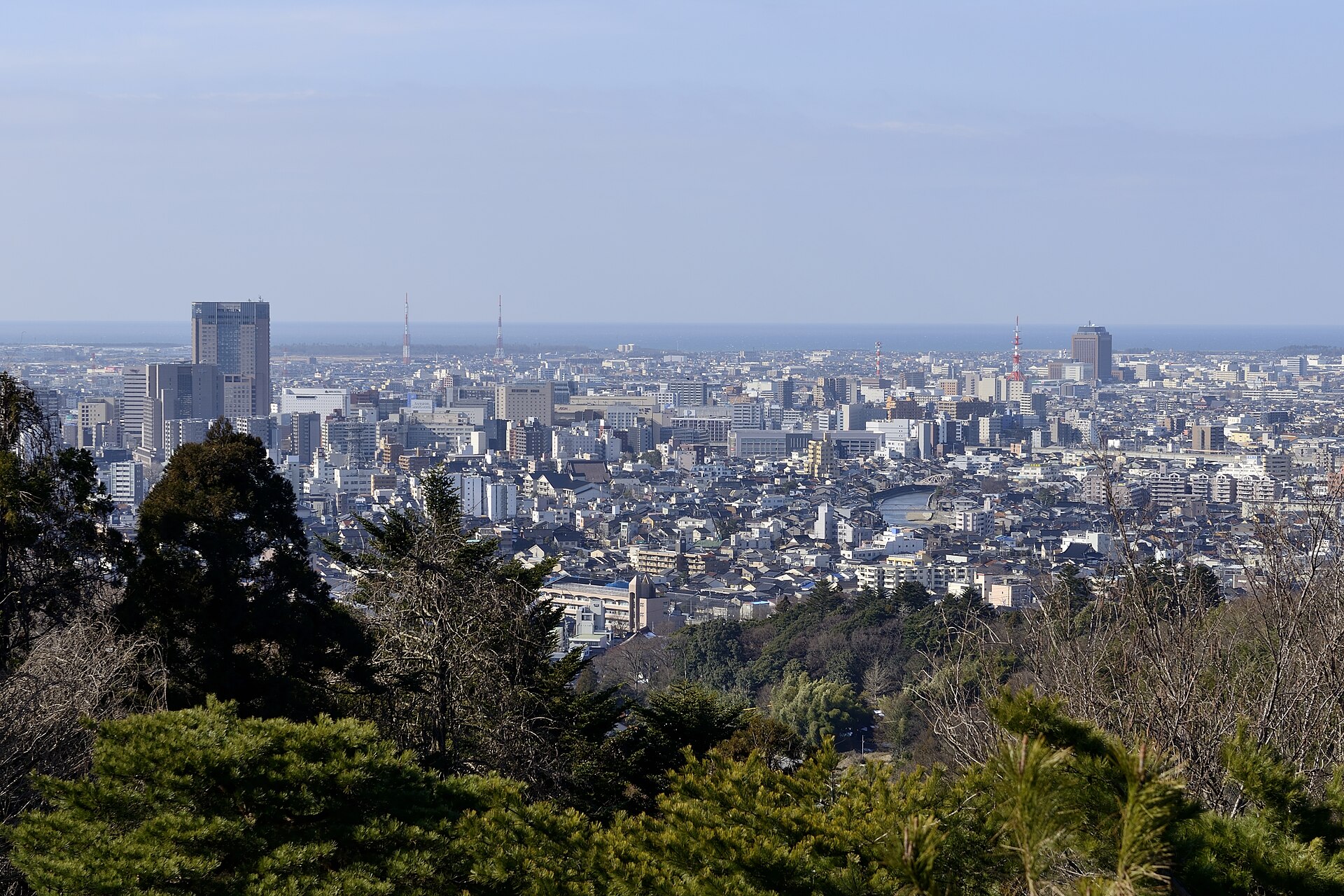
A City That Time Forgot — in the Best Possible Way
There is a moment, usually somewhere between the stone-lantern path of Kenroku-en and the lacquered shopfronts of Higashi Chaya, when Kanazawa stops feeling like a stop on a Japan itinerary and starts feeling like the whole point of the trip. This compact city on the Noto Peninsula's doorstep spent three centuries under the wealthy Maeda clan, accumulated gold leaf, Noh drama, and fine ceramics at a pace that rivalled Kyoto, and then — by sheer geographic luck — was bypassed by both industrialisation and wartime bombing. The result is an almost impossible density of intact historic neighbourhoods, world-class museums, and culinary ambition squeezed into a city of fewer than 500,000 people.
For travellers who have already ticked off Tokyo, Kyoto, and Osaka, Kanazawa is the logical next layer of Japan — less crowded, more affordable, and startlingly authentic. For first-timers willing to look beyond the Golden Route, it can be the single most rewarding stop of an entire holiday.
Four Centuries of Maeda Splendour: The History Behind the Beauty
Kanazawa's golden age began in 1583 when the warlord Maeda Toshiie entered the city and established what would become the largest feudal domain in Japan outside the Tokugawa shogunate itself. The Maeda clan was rich — obscenely, artistically rich — producing roughly a million koku of rice per year, and they channelled that wealth into culture with a deliberateness that still echoes through every neighbourhood today.
They invited master craftsmen from Kyoto to teach Kaga Yuzen silk-dyeing. They patronised Kenzan-school ceramics, Wajima lacquerware, and the gold-leaf craft that would eventually make Kanazawa responsible for producing over 99 percent of Japan's gold leaf. They built Noh stages and filled their court with musicians and poets. When the Meiji Restoration dismantled the old order in the 1860s, Kanazawa lost its political purpose but retained every physical trace of that investment. The city's historic bones were never bulldozed for factories and never burned by air raids, leaving samurai residences, geisha okiya, and Buddhist temple districts remarkably close to how they looked in the Edo period.
Kanazawa Castle itself was largely destroyed by fire and rebuilt over centuries; its current reconstruction is partial but evocative, and the parkland surrounding it provides the green lungs from which the rest of the city unfolds.
What to See and Do: A City Built for Slow Exploration
Kenroku-en Garden is non-negotiable. Ranked among Japan's three great gardens alongside Mito's Kairakuen and Okayama's Korakuen, Kenroku-en earns its reputation across every season — cherry blossoms in April, irises in June, the otherworldly yukitsuri rope cones protecting pine trees through winter snowfall. Budget at least 90 minutes and enter early to beat the tour groups. The garden adjoins Kanazawa Castle Park, so a combined visit is natural and rewarding.
Higashi Chaya District is the city's most photogenic historic quarter, a street of two-storey wooden machiya townhouses where geisha have entertained since the 1820s. Several ochaya teahouses are open to visitors; Shima Ochaya in particular offers an intimate look at the gilded interiors and lacquered instruments of geisha culture. In the early morning, before the souvenir shops open their shutters, the street is almost eerily unchanged from Edo-period woodblock prints.
The Nagamachi Samurai District sits on the western slope below the castle and rewards aimless wandering — oiled mud walls, narrow water channels, and tile-capped earthen fences framing the residences of middle-ranking samurai. The Nomura Clan Samurai House is the most accessible interior to visit, with a garden considered one of the finest of its scale in Japan.
The 21st Century Museum of Contemporary Art provides a brilliant counterpoint to all the historical immersion. Designed by Pritzker Prize-winning architects SANAA, the circular glass building has no front or back, inviting visitors to drift through internationally significant installations. The swimming-pool work by Leandro Erlich — where visitors above and below the water appear to interact through glass — remains one of the most joyfully surprising art experiences in Japan.
Omicho Market, open since the 18th century, is where Kanazawa's extraordinary seafood culture becomes edible. Snow crab in winter, buri yellowtail, and nodoguro (blackthroat seaperch) are local obsessions. Sushi here — especially at the market's upstairs counter restaurants — represents extraordinary value compared with Tokyo equivalents of similar quality.
Navigating between all these districts is where the Real Japan app becomes genuinely useful. Its offline maps and walking directions work without data roaming, and the curated nearby-spot suggestions are well-suited to Kanazawa's layout, where the best finds are often a single turning off the main tourist path. Download it free on iOS and Android before you leave home.
Best Time to Visit Kanazawa
Kanazawa is rewarding in every season, but each has a distinct character. Spring (late March to early May) brings cherry blossoms to Kenroku-en and the castle park — spectacular but crowded, especially over Golden Week. Summer (June to August) is warm and occasionally rainy, but the city is far less hectic than Kyoto or Tokyo, and the Hyakumangoku Festival in early June fills the streets with traditional processions. Autumn (mid-October to November) is arguably the finest season: foliage turns Kenroku-en into a layered painting of red and gold, temperatures are comfortable, and the tourist pressure eases significantly.
Winter is the local's favourite argument for Kanazawa's superiority. Snow falls reliably from December through February, and the yukitsuri rope cones — erected each November to protect the garden's pine trees — transform Kenroku-en into a scene of extraordinary quiet beauty. Crab season is at its peak, hotel rates drop, and you may have entire neighbourhoods almost to yourself on weekday mornings.
Practical Tips for Getting the Most from Kanazawa
- Get an IC card (Suica or ICOCA) loaded before arriving — Kanazawa's city loop buses and local routes all accept them, and the Kanazawa Loop Bus covers most major sights on a single fixed route.
- Book accommodation in the Higashi Chaya or Katamachi area to be within walking distance of most historic districts. Ryokan options here are exceptional and often more affordable than Kyoto equivalents.
- Eat where locals eat. The city's restaurant culture runs deeper than the tourist trail. Use the Real Japan app's local dining suggestions — especially for izakayas and small sushi counters that don't appear in English-language guidebooks — to eat the way residents do.
- Allow at least two full days, ideally three. Kanazawa is routinely underestimated. Most visitors who budget one day leave wishing they had stayed longer.
- Gold leaf souvenirs are the definitive Kanazawa gift. Hakuza on Higashi Chaya's main street is the most atmospheric shop, with gold-leaf workshops visible from the street.
Getting There: Closer Than You Think
The opening of the Hokuriku Shinkansen in 2015 transformed Kanazawa's accessibility. From Tokyo (Kanazawa Station), the Kagayaki bullet train covers the journey in approximately two hours and thirty minutes — faster than the flight once airport transfers are factored in, and fully covered by the Japan Rail Pass. From Osaka or Kyoto, the limited express Thunderbird train connects via Fukui in around two to two and a half hours, though the Hokuriku Shinkansen extension completed in 2024 now gives faster options from the Kansai region as well.
Kanazawa Station itself is a destination: its Tsuzumi-mon gate, a pair of massive drumstick-shaped wooden arches sheltering the glass entrance, has become one of the most photographed pieces of contemporary architecture in Japan. From the station, the city's compact layout means that most major sights are reachable by city bus or a pleasant bicycle ride — rental shops cluster near the east exit.
Before your trip, download the Real Japan app (free on iOS and Android) to save Kanazawa's key sights, get offline walking directions, and browse opening hours and seasonal notes without needing a data connection. It won't replace the experience of getting pleasantly lost in Nagamachi at dusk — but it will make sure you find your way back to dinner.