Where the City Dissolves into Forest
There is a moment, roughly thirty seconds after you step off the rickshaw path and into the Sagano Bamboo Grove, when Kyoto stops feeling like a city. The stalks press in on either side — ten, fifteen metres tall — and the light goes green-grey and diffused, as if the sun itself has been filtered through jade. The sound changes too: a low, woody percussion as the canes knock together in the breeze, a noise the Japanese government once officially designated one of the country's 100 Soundscapes Worth Preserving.
Arashiyama sits at Kyoto's western edge, where the Oi River slides out of the Tamba highlands and the mountains crowd close enough to touch. For over a thousand years it was a retreat for the imperial court — aristocrats came here to compose poetry, watch the autumn maples flame, and feel agreeably melancholy. Today it is one of Japan's most visited day-trip destinations, yet it still earns its reputation. With a little planning and an early start, Arashiyama rewards visitors with beauty that genuinely justifies the journey.
A Place the Emperors Loved: History and Context
The district's history is inseparable from Kyoto's cultural golden age. During the Heian period (794–1185), aristocrats built villas along the riverbank and patronised the temples that still define the area. Tenryu-ji, Arashiyama's most important Zen temple, was founded in 1339 by the shogun Ashikaga Takauji to honour the memory of Emperor Go-Daigo. Its garden — designed by the master landscape artist Muso Soseki — is considered one of the finest in Japan and has been in continuous use for nearly seven centuries. Even the pond's proportions, perfectly framing Arashimayama peak in every season, feel inevitable rather than designed.
The bamboo grove itself was cultivated as part of the temple estate, which is why entering from the Tenryu-ji north gate drops you straight into it — a deliberate transition from human artifice to something that feels wilder. The grove covers only about half a kilometre, but its density and verticality make it feel limitless.
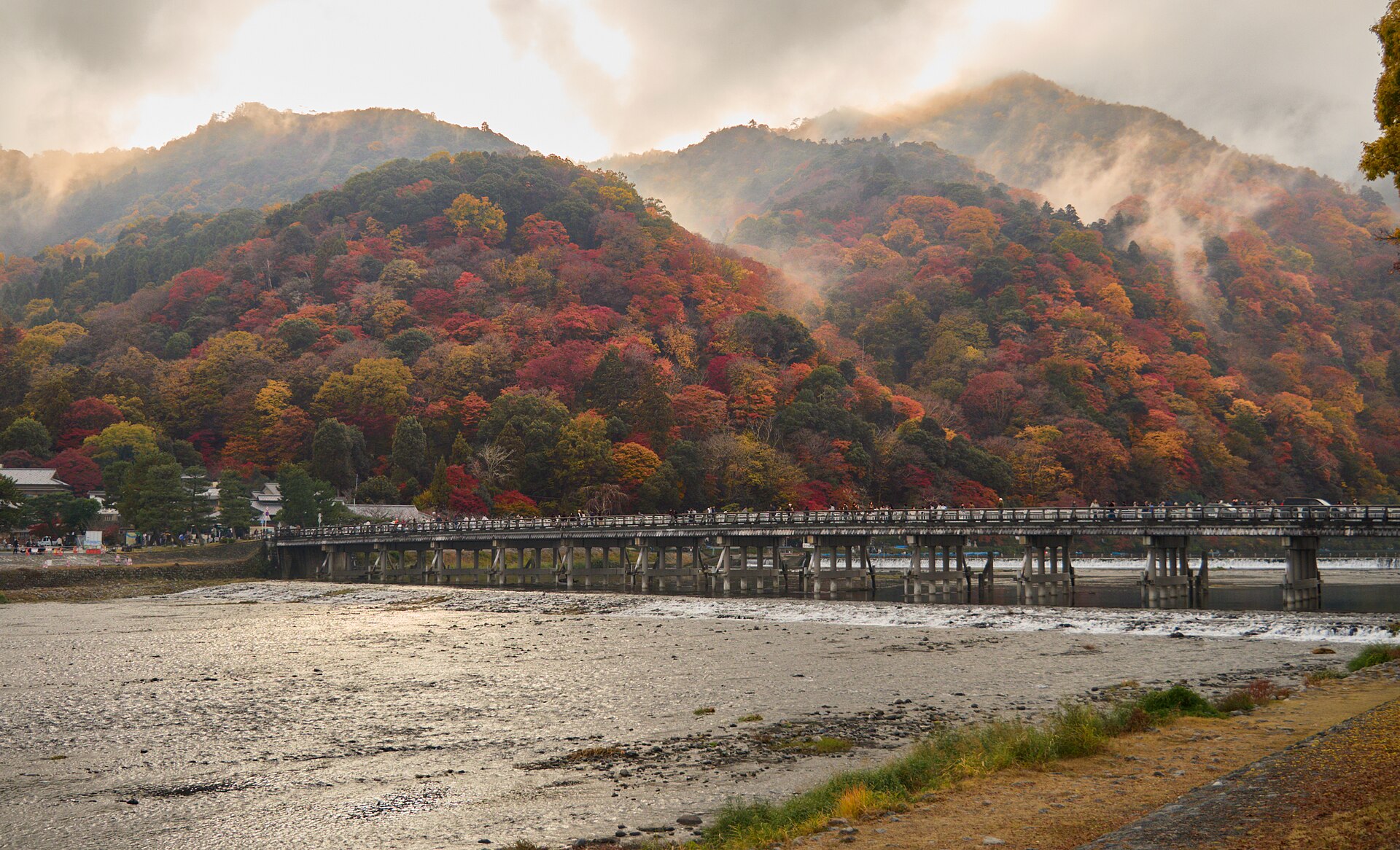
Later, during the Edo period, wealthy Kyoto merchants joined the courtiers in building retreats here. The covered bridge Togetsukyo — whose name means Bridge That Passes the Moon — dates in its current form to the 1930s, but a bridge has spanned this point since the 10th century. Standing on it at dusk, watching cormorant fishermen (ukai) work the shallows in summer, is one of those experiences that lodges permanently in memory.
What to See and Do: Building Your Day
Arashiyama is compact enough to explore on foot, though the highlights are spread across several clusters. A logical route runs roughly south-to-north before looping back along the river.
- Tenryu-ji Garden: Arrive when the gates open at 8:30 a.m. to experience the garden in near-solitude. The ¥500 garden-only ticket is excellent value; pay extra to enter the main hall if temple interiors interest you. The weeping cherry tree near the Sogen Pond is extraordinary in late March.
- Sagano Bamboo Grove: Walk through immediately after Tenryu-ji via the north gate. The path is free and open at all hours — dawn visits, before the tourist crowds arrive around 9 a.m., offer an almost surreal quietness. The grove connects to Okochi Sanso Villa, a hillside garden built by a silent-film actor that provides sweeping views over the valley.
- Jojakko-ji and the Northern Temples: A short uphill walk from the bamboo path leads to a cluster of quieter temples — Jojakko-ji, Nison-in, and Gioji — that most visitors skip. Gioji, a moss garden associated with a tragic love story from the Heike Monogatari, is especially beautiful in the rain.
- Togetsukyo Bridge and the Riverbank: Head back downhill to the river for the iconic bridge view, riverside food stalls (try yudofu tofu hotpot at one of the old restaurants opposite the bridge), and seasonal boat rides up the Hozu gorge.
- Iwatayama Monkey Park: A steep 20-minute climb above the south bank rewards you with a hilltop colony of wild Japanese macaques and arguably the best panoramic view of the Arashiyama valley. A quirky highlight: the monkeys roam free while the humans feed them from inside a cage.
Before heading out, download the Real Japan app (free on iOS and Android) — its offline maps are particularly useful in Arashiyama, where alleyways between temples aren't always well signposted, and data coverage in the wooded hillside areas can be patchy. The app flags opening hours and entry fees so you won't arrive at a gate that's already closed.
Eating and Shopping Along the Approach
The main shopping street, Arashiyama Saga Tonomachi Street, runs from the bridge toward the bamboo grove and is lined with matcha soft-serve stalls, pickled-vegetable shops, and small craft galleries selling Kyoto textiles. For a proper sit-down meal, the riverside restaurants specialising in kaiseki (multi-course Kyoto cuisine) are outstanding but expensive — book ahead for dinner. Budget travellers do well with yudofu set meals, fresh warabi-mochi (bracken-starch sweets dusted with kinako powder), and canned craft beer from the convenience store near the station, consumed on the riverbank like a local.
If you're planning to explore some of the lesser-known lanes east of the main drag, the Real Japan app is handy for surfacing nearby cafés, small galleries, and craft shops that don't appear in mainstream guidebooks — the kind of finds that make a trip feel genuinely personal rather than checklist-driven.
When to Visit: Seasons and Crowds
Arashiyama has a season for every temperament.
- Spring (late March–April): Cherry blossoms along the Oi River and inside Tenryu-ji are magnificent, but crowds are at their absolute peak. Book accommodation months ahead and aim for weekday mornings.
- Summer (June–August): Lush and green, with fireflies in June along the river and ukai cormorant fishing through September. Hot and humid, but fewer foreign tourists.
- Autumn (mid-November–early December): Arguably the finest season. The maple trees around Jojakko-ji and Tenryu-ji turn copper and crimson, and the evening light-up events (momiji) are genuinely magical. Crowds rival spring.
- Winter (December–February): The least visited season and deeply atmospheric. Frost on the bamboo, mist over the river, and the temples almost to yourself. The annual Hanatoro lantern festival in mid-December lines the bamboo path with soft lights.
Regardless of season, arriving before 8:30 a.m. transforms the experience. The bamboo grove by 7 a.m. on a weekday — especially in autumn — is one of Kyoto's great travel secrets.
Getting There: Transit and Practical Tips
Arashiyama is easily reached from central Kyoto by three separate rail lines, which gives you useful flexibility on the return.
- Randen Tram (Keifuku Electric Railway): The most charming option — a two-carriage street tram from Shijo-Omiya station that deposits you right in the heart of the district at Arashiyama Station. About 20 minutes, ¥250.
- Hankyu Railway: From Kyoto-Kawaramachi or Umeda (Osaka), change at Katsura for the Arashiyama line. Terminates at Hankyu Arashiyama Station, a five-minute walk from the bridge.
- JR Sagano Line: From Kyoto Station to Saga-Arashiyama Station — the fastest option (about 15 minutes, ¥240) and the most convenient for early-morning arrivals. JR Pass holders ride free.
Once you're there, walking is the best way to move between sites — the whole area is only about two kilometres across. Rental bicycles are available near both the Hankyu and Randen stations if you want to combine Arashiyama with the nearby Sagano countryside or the philosopher's bamboo paths further north.
For real-time navigation between temples without burning through mobile data, the offline maps in the Real Japan app (free on iOS and Android) make a reliable companion — especially useful for the hillside temple cluster above the bamboo grove, where Google Maps occasionally loses confidence in the footpaths. The app also surfaces nearby lunch spots and galleries as you walk, which turns a planned itinerary into something more spontaneous.
Arashiyama doesn't ask much of you. Show up early, walk slowly, and let the bamboo do its work. The rest takes care of itself.