Where Time Forgot to Move On
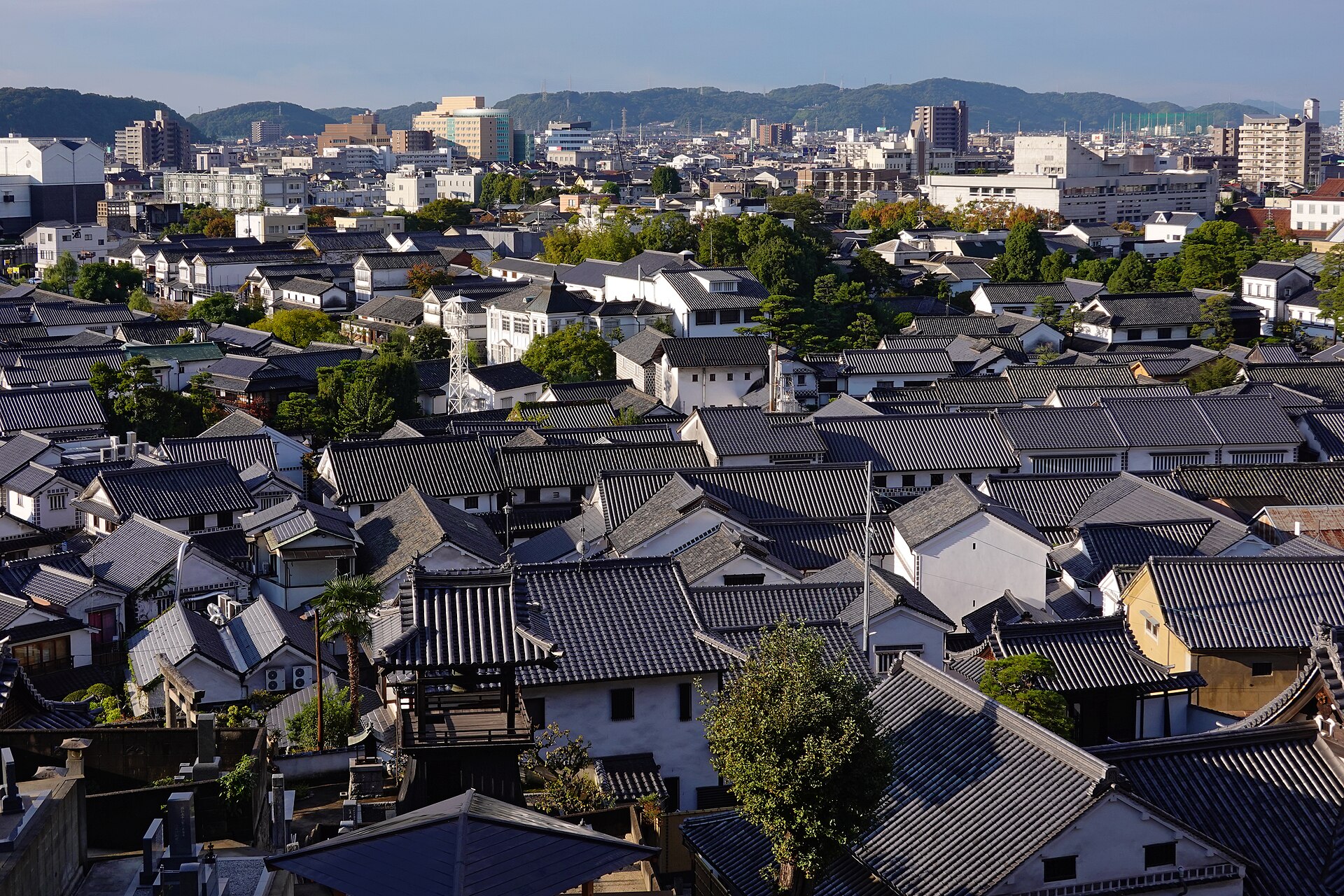
There are places in Japan that stop you mid-step. Kurashiki's Bikan Historical Quarter — bikan meaning 'beautiful scenery' — is one of them. A short walk south of Kurashiki Station in Okayama Prefecture, the neighbourhood unfolds like a scene from a woodblock print: a narrow canal lined with drooping willows, flat-bottomed boats drifting silently past, and rows of namamoko-kabe warehouses — their white-plastered walls studded with a diamond lattice of black roof tiles — standing exactly as they did three hundred years ago. No overhead cables, no garish signage, no concrete intrusions. Just one of the most cohesive, lovingly maintained historic streetscapes in the entire country.
Kurashiki isn't merely a pretty backdrop. It's a living neighbourhood packed with indie cafés, craft shops, excellent museums and excellent okayama cuisine. Whether you have a single afternoon or a full weekend, this corner of western Honshu punches well above its weight as a travel destination — and it remains refreshingly less crowded than Kyoto's most famous lanes.
A Town Built on Rice, Cotton and Commerce
To understand why Kurashiki looks the way it does, you need to understand its economic history. During the Edo period (1603–1868), the town sat at the centre of one of the most productive agricultural regions in Japan. The Kibi Plain surrounding it yielded enormous harvests of rice, which was shipped along the Takahashi River system and stored in the large kura (storehouses) that give the city its name — kura meaning 'storehouse', shiki meaning 'spread out'.
Crucially, Kurashiki was administered directly by the Tokugawa shogunate rather than by a local feudal lord, which meant its merchants prospered under relatively stable, centrally managed rule. When cotton cultivation boomed in the late Edo period, those same merchant families — the Ohara clan chief among them — poured their wealth into the canal infrastructure, the warehouses, and eventually into culture. It was Magosaburo Ohara, a textile magnate and philanthropist, who founded the Ohara Museum of Art in 1930 — the first Western art museum in Japan — filling it with works he had commissioned the painter Torajiro Kojima to acquire directly from Europe. El Greco, Monet, Gauguin and Picasso all hang here, inside a neoclassical building that sits improbably but magnificently beside the Edo-era canal. That collision of cultures, East and West, old money and new ideas, is the essence of Kurashiki's character.
What to See and Do in the Bikan Quarter
The canal walk itself — a roughly 400-metre stretch — is the heart of any visit. Go early in the morning (before 9 a.m.) if you can: the light is golden, the willow reflections sharp on the water, and the tourist coaches haven't yet arrived. Swan boat rides and traditional rowing-boat tours depart from the main canal landing and take about 20 minutes; they're gentle, unhurried, and the boatmen offer low-key commentary in Japanese. Even if you don't board, watching the boats glide under the Nakanohashi Bridge from above is worth the pause.
- Ohara Museum of Art: Allow at least 90 minutes. The main building holds the Western collection; separate annexes display Japanese mingei (folk craft) and modern art. Admission is ¥1,500 for adults.
- Kurashiki Museum of Folk Craft (Kurashiki Mingei-kan): Housed in four connected Edo warehouses, this is one of Japan's finest collections of everyday craft objects — ceramics, baskets, textiles and glassware from Japan, Korea and beyond. Entry is ¥1,200.
- Ivy Square (Ivy Gekijo): A converted Meiji-era cotton spinning mill, its brick walls smothered in Virginia creeper. Today it hosts boutique shopping, a small hotel and regular evening concerts in the courtyard.
- Kurashiki Tivoli Park Area and Achi Shrine: Climb the stone steps behind the canal district to the hilltop Achi Shrine for a bird's-eye view of the rooftops — the single best photograph you'll take all day.
- Kibidango and craft shopping: The lanes branching off the canal are lined with shops selling hand-stitched denim (Okayama is Japan's denim capital), Bizen pottery, bamboo crafts and mochi sweets. Budget time to browse without a destination in mind.
Navigating those branching lanes is much easier with the Real Japan app open on your phone. Its offline maps work without a data connection, so even if you wander into a back alley to discover a tiny ceramics studio, you can find your way back to the canal without fumbling with a paper map. The app also surfaces opening hours and entrance fees for the museums before you set off, saving the usual guesswork.
Day Trips and Nearby Highlights
Kurashiki's position in Okayama Prefecture makes it a brilliant base for wider exploration. Okayama Castle (the so-called 'Crow Castle' for its black façade) and the celebrated Korakuen Garden — one of the Three Great Gardens of Japan — are just 18 minutes away by JR limited express. The garden's sweeping lawns, pine-fringed ponds and seasonal plum and cherry blossoms are among the most elegant in the country.
Further afield, the Seto Inland Sea islands of Naoshima and Teshima — accessible by ferry from Uno Port, itself 30 minutes by train from Kurashiki — have become world-famous for their fusion of contemporary art and island life. The Benesse Art Site, Chichu Art Museum and Lee Ufan Museum draw serious art pilgrims from around the globe. If you're planning to hop between the canal district, the castle town and the art islands, the Real Japan app's nearby-spot suggestions are particularly handy for stitching together an efficient multi-day itinerary without over-planning.
Best Time to Visit
Kurashiki is rewarding year-round, but each season has a distinct mood. Spring (late March to April) brings cherry blossoms that overhang the canal, and the combination of pink petals, white walls and dark water is genuinely breathtaking — though crowds peak accordingly. Early summer (May to June) is arguably the sweet spot: the willows are at their most lush, the irises bloom in the riverside gardens, and the humidity hasn't yet become oppressive. Autumn (October to November) turns the ivy on Ivy Square a blazing crimson and brings cooler temperatures ideal for long walks. Winter is quiet and atmospheric — occasional frost dusts the rooftops, and you'll often have the early-morning canal almost entirely to yourself.
Avoid the Obon holiday week in mid-August and the Golden Week period in late April to early May if you dislike large crowds; the quarter is small enough that it can feel overwhelmed on those days.
Getting There and Practical Tips
By Shinkansen: Kurashiki is most easily accessed via Okayama Station on the San'yō Shinkansen (Nozomi and Hikari services stop here). From Okayama, take the JR Hakubi or Seto lines to Kurashiki Station — the journey takes about 15 minutes and costs ¥320. The Bikan Historical Quarter is a flat, signposted 10-minute walk south of the station exit.
From Hiroshima: Under 40 minutes by Shinkansen to Okayama, then the short local train. A perfect addition to a Hiroshima–Kyoto corridor trip.
From Osaka or Kyoto: Roughly 45–60 minutes by Shinkansen to Okayama. Kurashiki makes an excellent single-day excursion or an overnight stop.
Accommodation: The Kurashiki Ivy Square Hotel, set within the old spinning mill complex, is the most atmospheric option. The Ryokan Kurashiki, inside a converted warehouse right on the canal, offers a more traditional inn experience but books out months ahead in sakura season. Budget travellers will find clean business hotels clustered around Kurashiki Station.
Getting around: The Bikan Quarter is entirely walkable — in fact, it's one of those rare Japanese tourist zones where a car is a hindrance rather than a help. Download the Real Japan app (free on iOS and Android) before you leave home: its curated offline guides, transit directions and real-time opening hour checks mean you can step off the train and start exploring immediately, without burning through mobile data or stopping to squint at tourist boards. It's especially useful for double-checking which museum annexes are open on any given day, since schedules vary by season.
Kurashiki Bikan is the kind of place that earns a second visit. Come once for the postcard views; come back to sit longer in the museum, linger over handmade udon in a converted warehouse, and watch the light change on the water at dusk. Japan has no shortage of beautiful historic towns, but few combine culture, craft, cuisine and sheer visual coherence quite as effortlessly as this one.