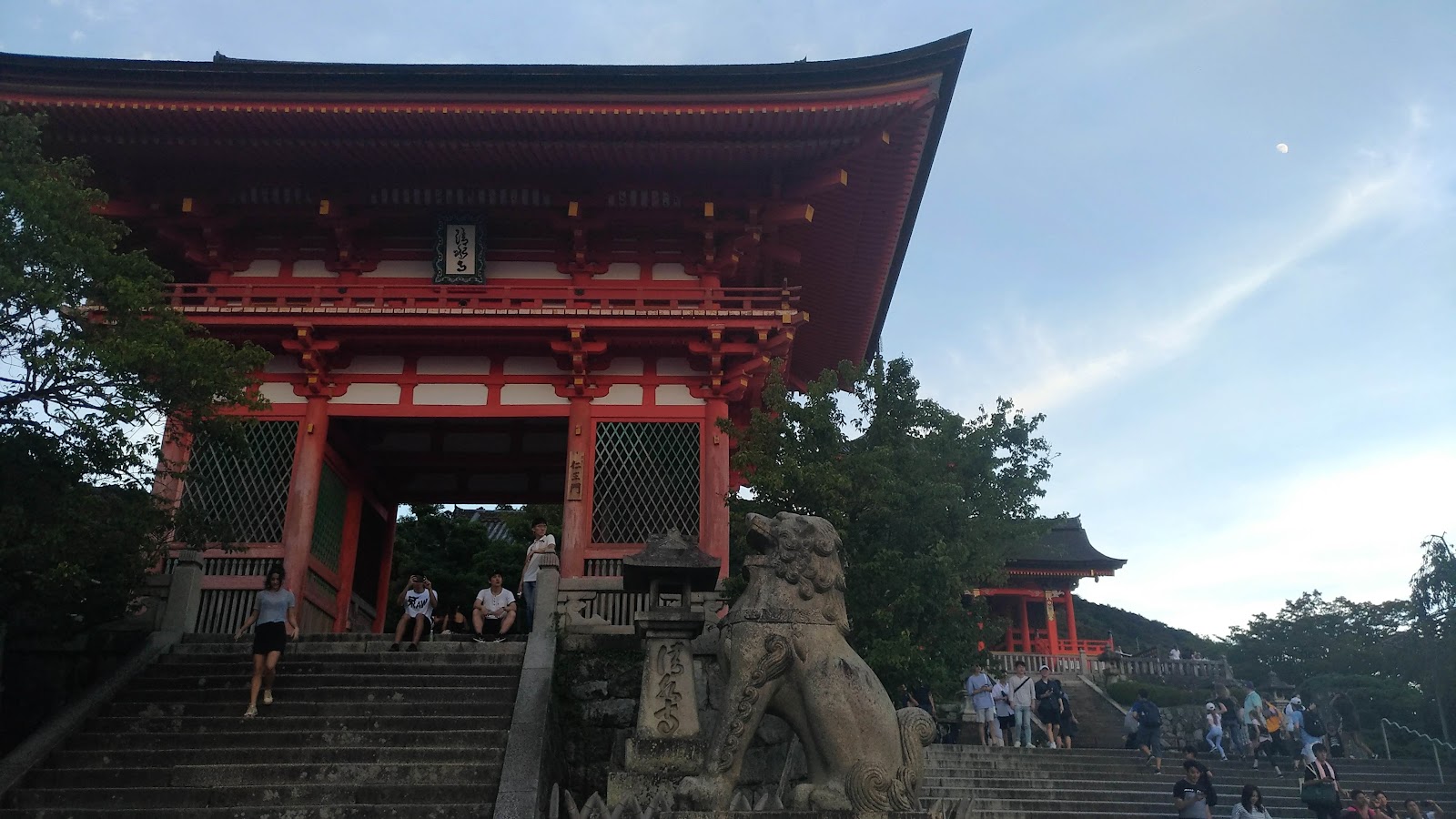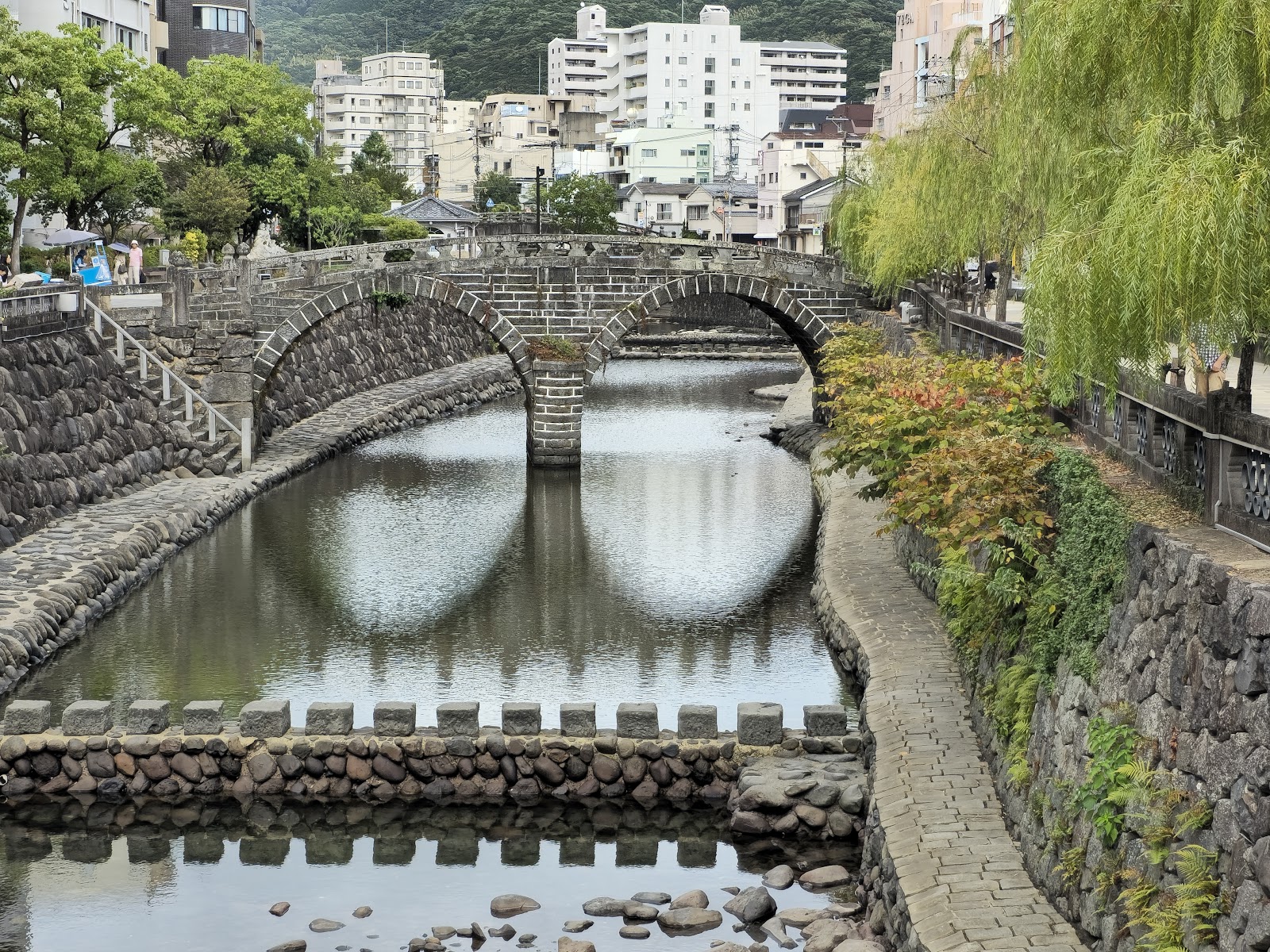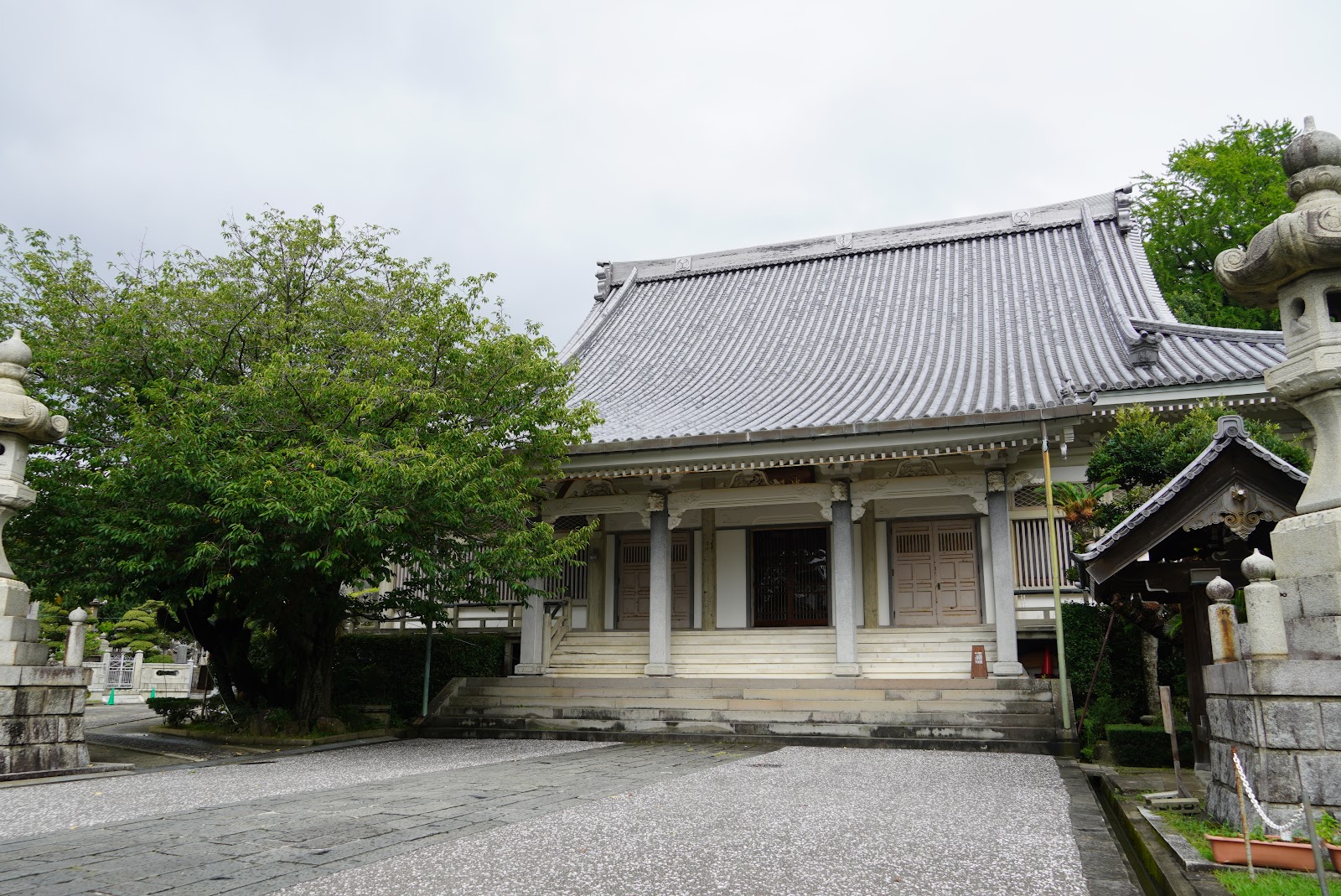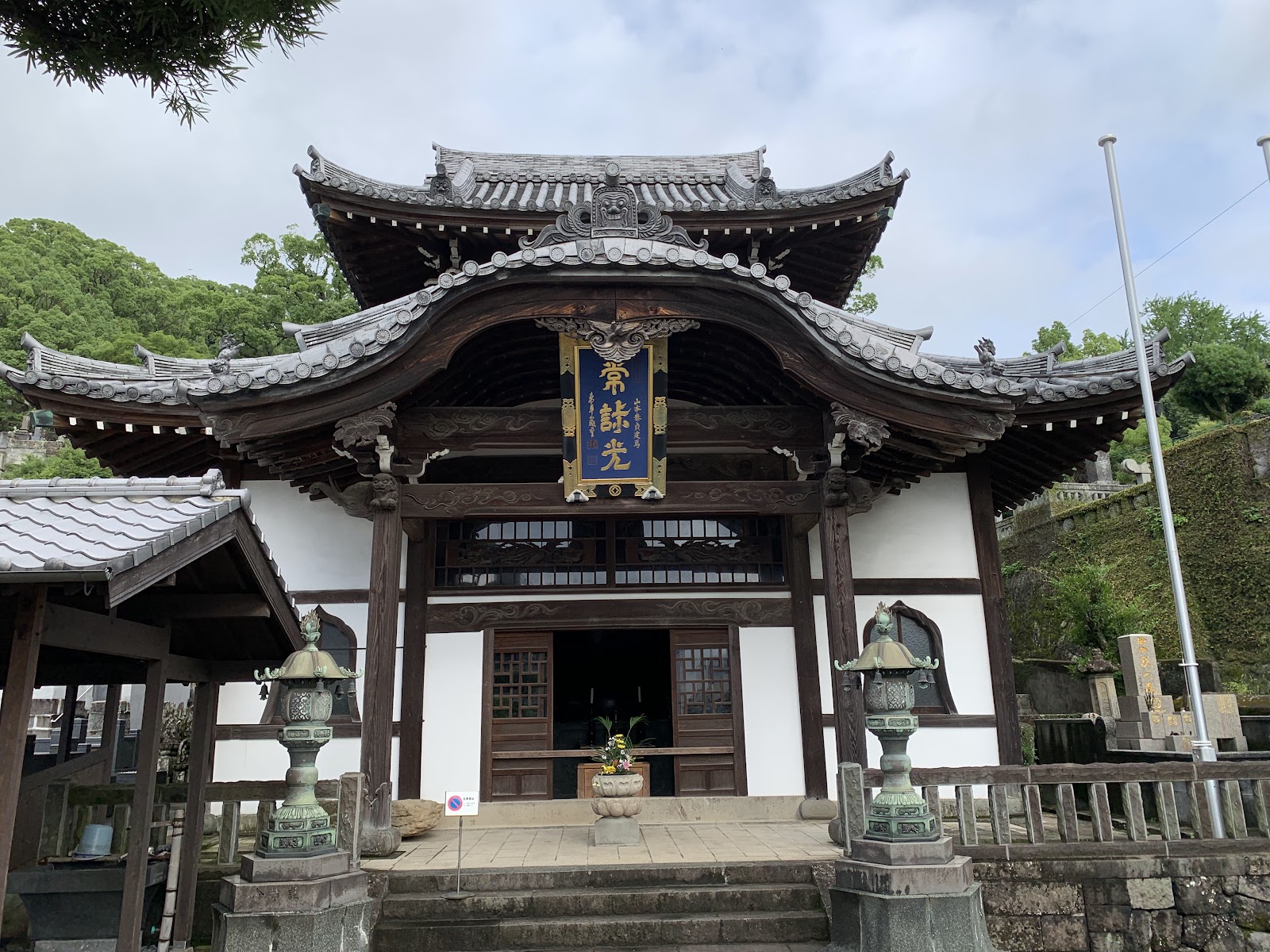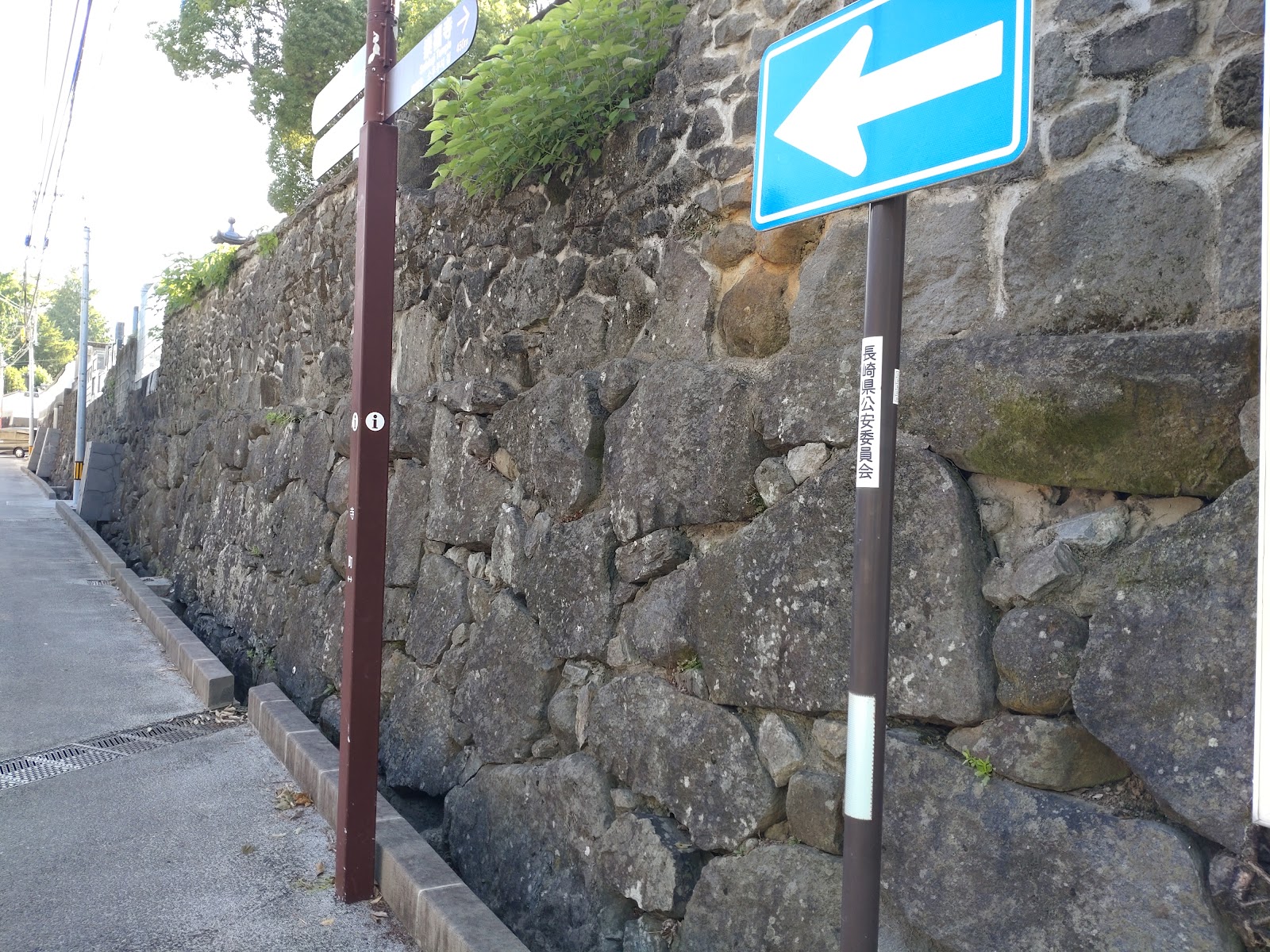
Nagasaki's temple town—a hillside street lined with historic temples above the old stone bridges of the Nakashima River.
Teramachi—literally "temple town"—is the historic religious quarter of Nagasaki, a street and hillside neighbourhood on the lower slopes of the eastern hills where a remarkable concentration of Buddhist temples stands within a short walk of one another. Running roughly parallel to and above the Nakashima River, it is one of the most atmospheric and least hurried corners of a city better known for its harrowing modern history, and it rewards a slow morning's wander among stone steps, mossy graveyards, great tiled gates and quiet courtyards.
The district owes its existence to the extraordinary religious politics of Nagasaki's past. In the early seventeenth century, as the Tokugawa shogunate moved to suppress Christianity—which had taken unusually deep root in this port city through Portuguese and Spanish missionaries—the authorities actively promoted Buddhism as a counterweight. A cluster of temples was established here, and every citizen was required to register with one to prove they were not Christian. The result was this dense line of temples along the hillside, several of them founded by or associated with the Chinese merchant community that was such an important presence in Nagasaki.
The jewels of Teramachi are its great temples. Kofukuji, founded in 1620, is regarded as Japan's oldest Obaku Zen temple and the birthplace of that Chinese-influenced sect in the country; its vermilion buildings and Ming-Chinese architectural details reflect the city's deep ties to China. Sofukuji, a little further along, is even more striking—a Chinese-style temple built by Fujian merchants in 1629, whose Buddhist hall and second gate are designated National Treasures, among the finest examples of Ming architecture surviving anywhere in Japan. Between and around these headline temples run smaller halls, cemeteries climbing the hillside, and shrines, many with their own long histories.
What makes Teramachi so pleasant to explore is the way it connects to the river below. A celebrated traditional walk pairs the temples with the Nakashima River's string of old stone bridges: pilgrims and visitors would cross the river on one arched bridge to reach a temple, then return on another, and you can still trace such loops today. The most famous of the bridges, the double-arched Megane or "Spectacles" Bridge, lies just downstream, and the combination of stone bridges, running water, temple gates and wooded slope gives this part of Nagasaki a serene, timeworn beauty quite unlike the busy downtown a few minutes away.
The area is at its best early in the day, before other visitors arrive, and in the shoulder seasons—cherry blossom softens the temple grounds in spring, while maples flush red against the grey stone in late autumn. Sturdy shoes help, as the lanes climb and involve steps, but the gradients are gentle and the distances short.
Teramachi is an easy addition to a downtown itinerary. From the Kokaido-mae or Shokakuji-shita tram stops it is a few minutes' walk uphill, and it links naturally with the river bridges, Suwa Shrine and the Hamanomachi arcade. Give it an unhurried hour or two, step inside Sofukuji and Kofukuji to see their Chinese-Japanese architecture, and let the temple town reveal the older, quieter soul of Nagasaki.
A local's tip
Pair the walk with the stone bridges below: a traditional route crosses the river on one bridge, visits a temple, and returns on another—an easy self-guided loop through old Nagasaki.
Best time to visit
Morning, quiet and atmospheric; autumn for foliage
Getting there
From the Kokaido-mae or Shokakuji-shita tram stops, walk up the slope toward the hillside. Teramachi runs along the lower flank of the eastern hills, linked to the Nakashima River stone bridges below.
Good to know
- Restrooms
Plan the whole trip offline
Teramachi Temple Street is one of many places in the Real Japan app — with turn-by-turn directions, nearby spots and full offline maps you can use with no signal.