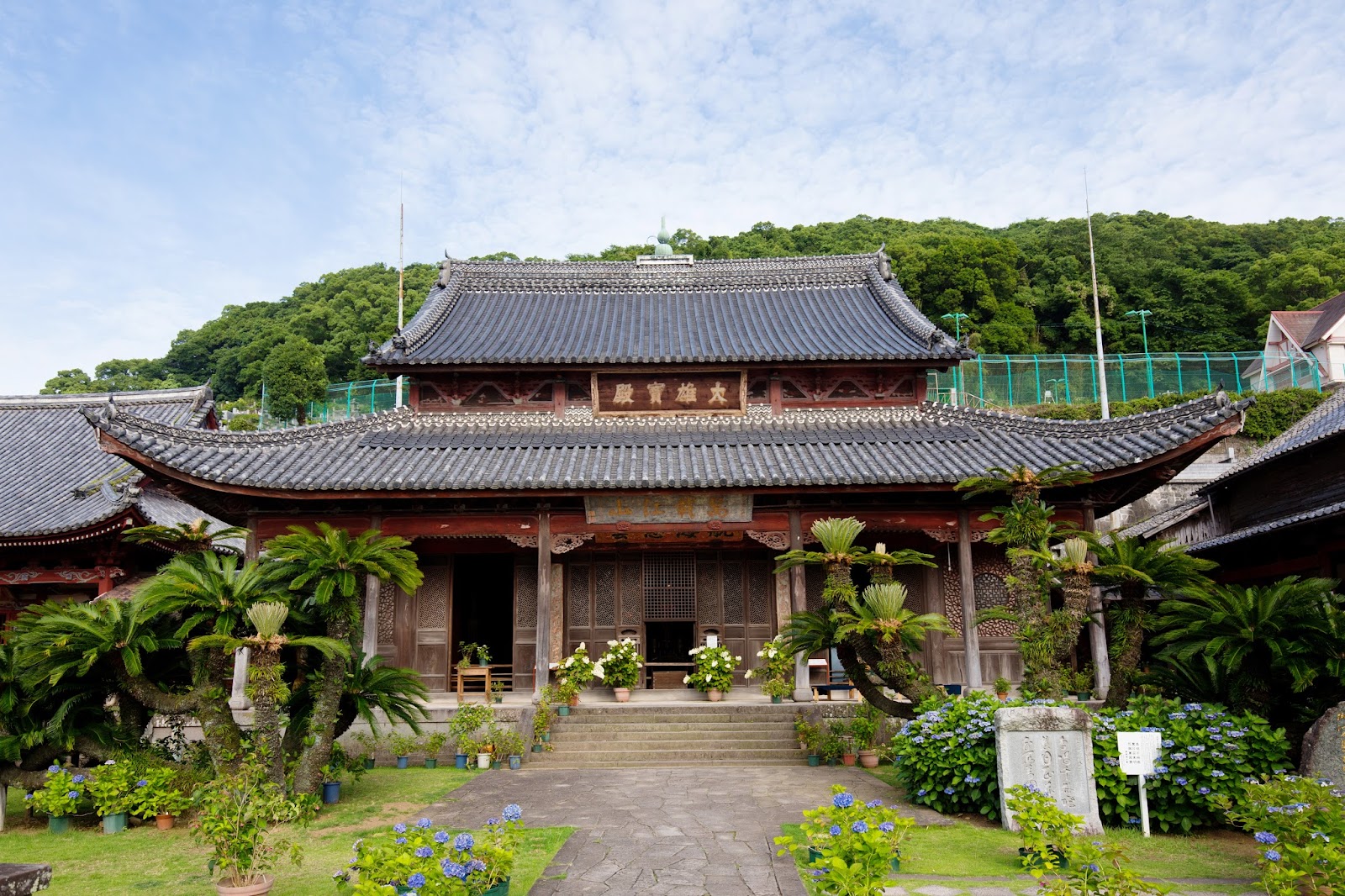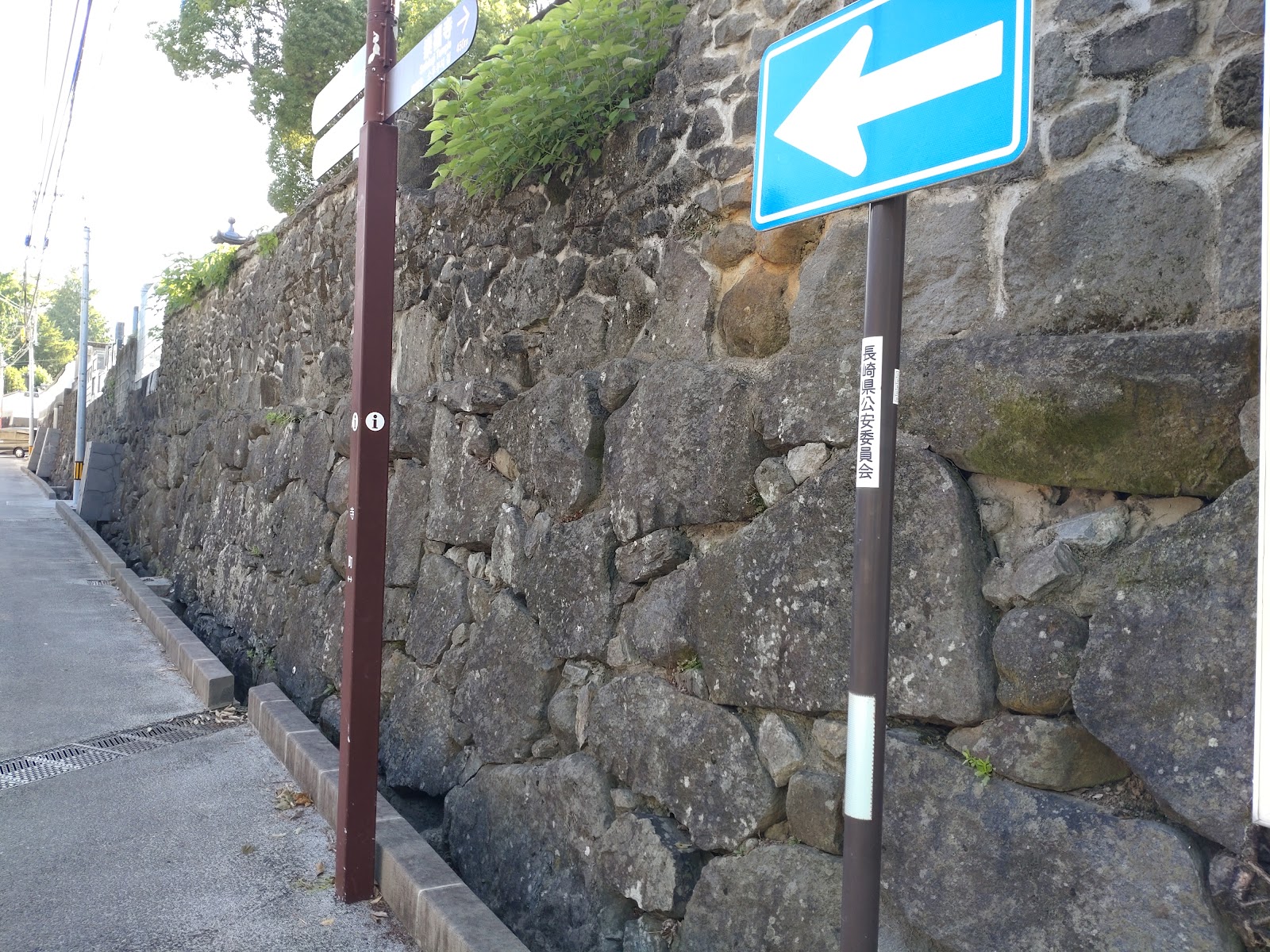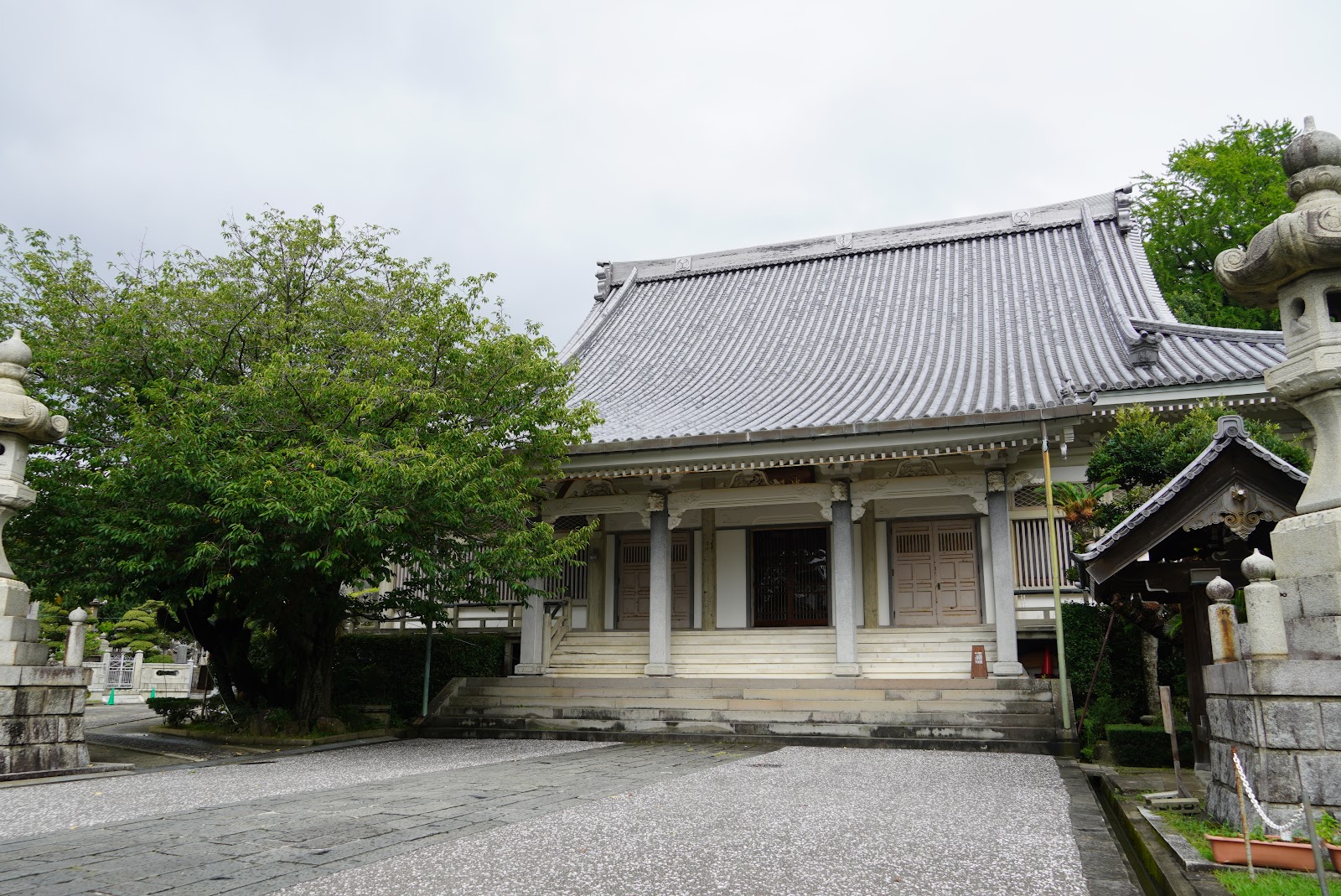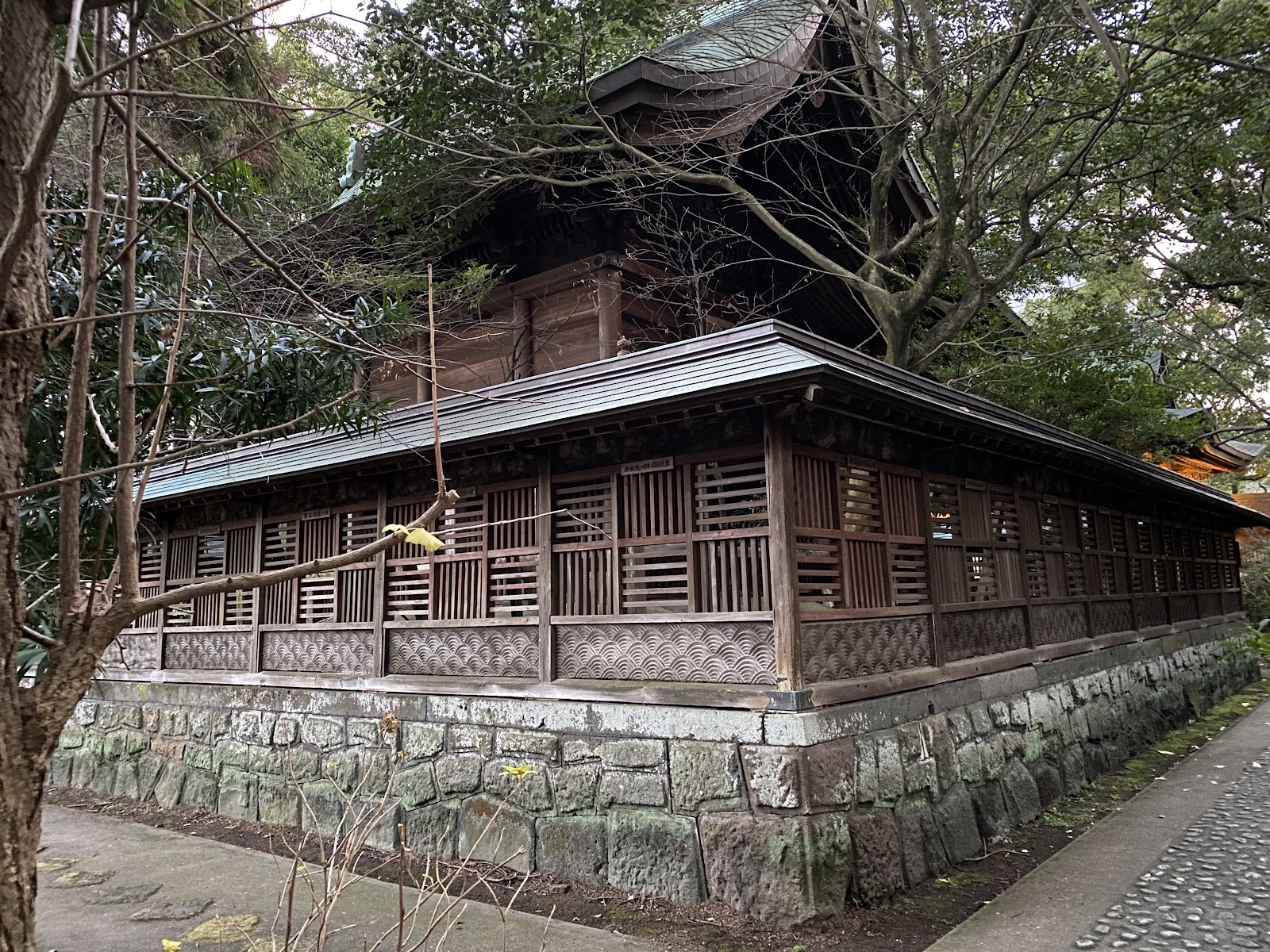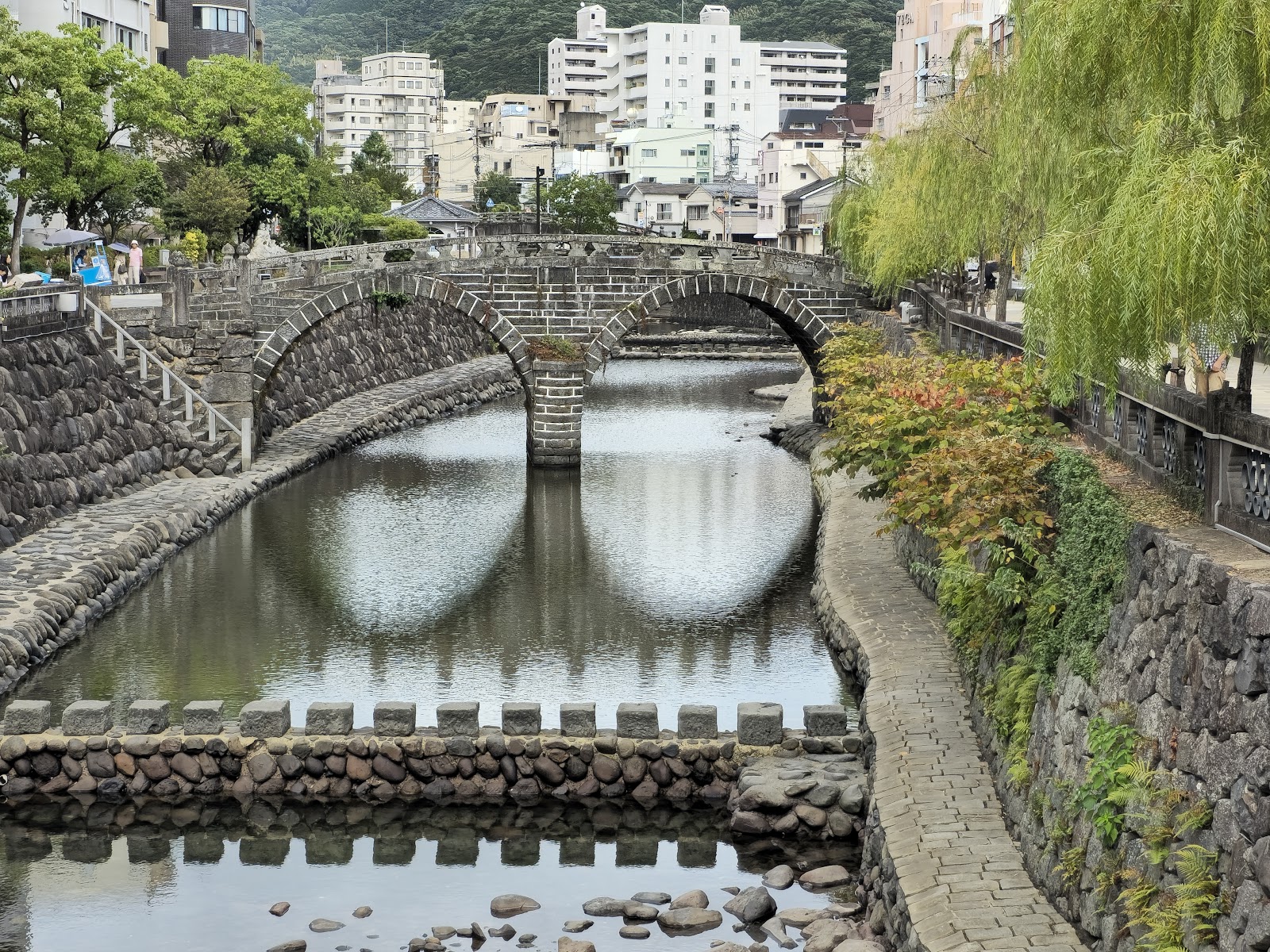
A riverside promenade of centuries-old stone arch bridges below the temple town—anchored by the famous double-arched Megane Bridge.
The Nakashima River, a modest stream flowing down from the hills through the eastern side of central Nagasaki, is spanned by one of Japan's most remarkable concentrations of historic stone arch bridges. Walking its embankments from bridge to bridge is a gentle, rewarding way to trace the old pilgrimage route to the temple town of Teramachi above, and the string of grey stone arches reflected in the water is one of the definitive images of old Nagasaki. While the double-arched Megane, or "Spectacles," Bridge is the celebrated centrepiece, it is only the most famous of a whole series that together tell the story of the city's early engineering and its deep ties to China.
These bridges were built largely in the seventeenth century, and their existence is bound up with the Chinese community that gave Nagasaki so much of its character. The Megane Bridge, completed in 1634, is traditionally credited to a Chinese monk of the nearby Kofukuji temple, and is often described as the oldest stone arch bridge in Japan. Its two symmetrical arches, mirrored in the calm water beneath, form the shape of a pair of spectacles—hence the name—and the effect, especially on a still day, is genuinely striking. The bridges were built in stone precisely to withstand the floods that periodically tore through the valley; several have been damaged and rebuilt over the centuries, most notably after a catastrophic flood in 1982, but they were carefully restored, in some cases reusing the original stones, to preserve their historic form.
What makes the riverside so pleasant is that the bridges come one after another, linked by paved embankment walks and low steps down to the water's edge. Each has its own name, date and story, and small plaques explain their histories. Because the temples of Teramachi climb the hillside just above, the traditional way to explore was to cross the river on one bridge to visit a temple and return on another, and you can still trace such loops, weaving between the water and the temple gates. It is an easy, flat walk, suitable for all ages, and threads together several of central Nagasaki's quieter historic sights.
The area is atmospheric in every season. Cherry trees along the banks blossom in spring; in late winter, during the spectacular Nagasaki Lantern Festival, the river and its bridges are hung and lined with glowing Chinese lanterns, and floating decorations turn the whole watercourse into a ribbon of colour and light—one of the most magical times to visit. A charming local tradition draws couples and visitors to hunt for the heart-shaped stones set into the embankment walls near Megane Bridge, said to bring luck in love.
The bridges lie in the thick of downtown, a few minutes' walk from the Kokaido-mae and Nigiwaibashi tram stops and easily combined with the Hamanomachi arcade, Suwa Shrine and the temple district into an afternoon on foot. Take your time strolling from arch to arch, pause at Megane Bridge for the classic reflection photograph, and let the quiet procession of old stone bridges carry you back into the layered history of this singular port city.
A local's tip
Look for the heart-shaped stones set into the embankment walls near Megane Bridge—finding them is a local good-luck tradition, especially popular with couples.
Best time to visit
Daytime; especially fine in the Lantern Festival season
Getting there
From the Kokaido-mae or Nigiwaibashi tram stops, walk to the Nakashima River; a riverside path lets you stroll from bridge to bridge, with Megane Bridge as the centrepiece.
Good to know
- Restrooms
Plan the whole trip offline
Nakashima River Stone Bridges is one of many places in the Real Japan app — with turn-by-turn directions, nearby spots and full offline maps you can use with no signal.