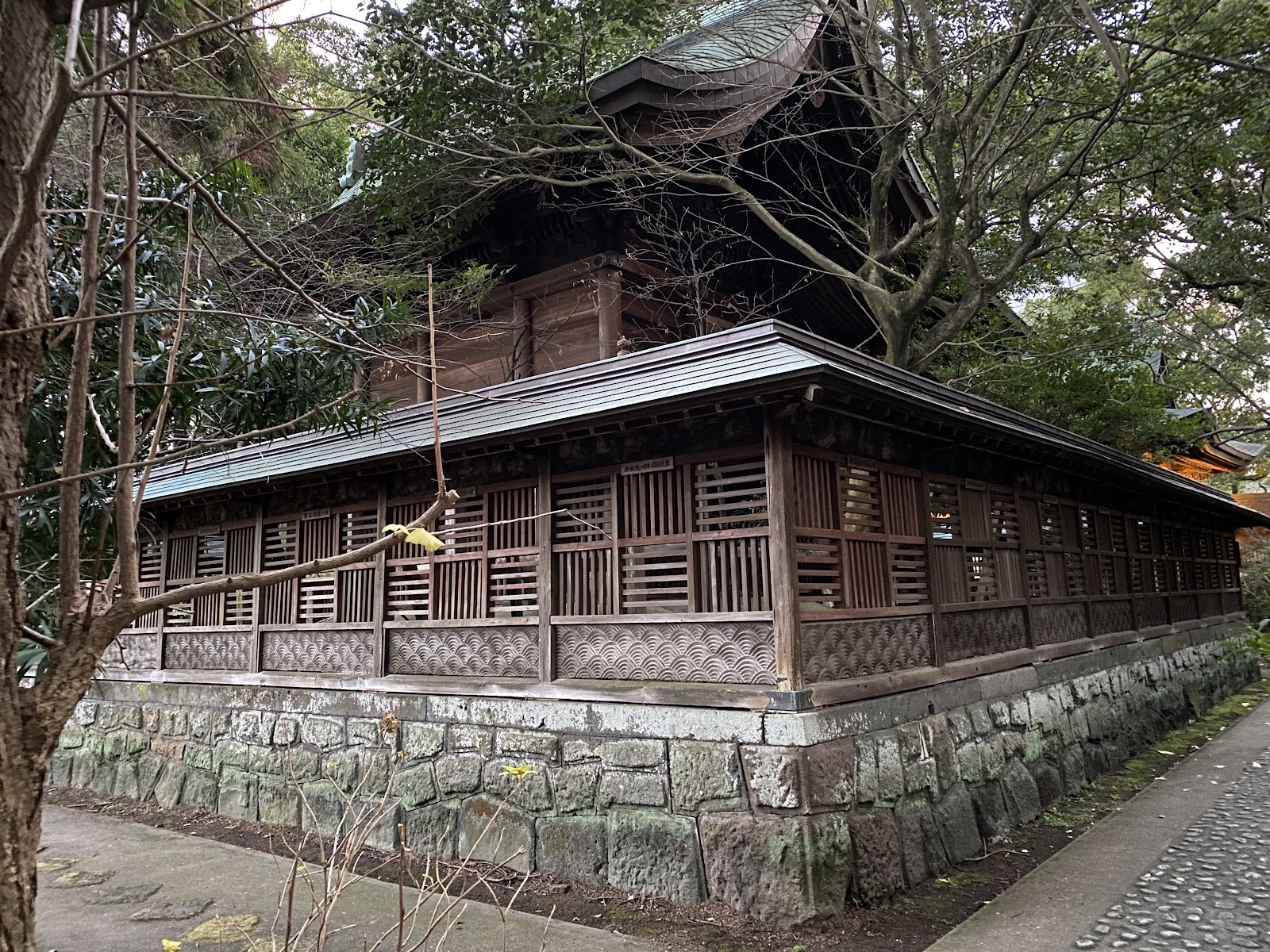
A Tenmangu shrine to the god of learning, famed for exquisite eave carvings depicting the trades of old Nagasaki.
Matsunomori Tenmangu is a graceful and historically rich shrine tucked into the hillside near the centre of Nagasaki, celebrated above all for the extraordinary wood carvings that adorn its worship hall. Dedicated to Sugawara no Michizane, the Heian-era scholar and statesman deified as Tenjin, the god of learning and scholarship, it is one of the city's three great shrines and a favourite of students praying for success in their studies and examinations.
The shrine traces its origins to the seventeenth century, growing alongside Nagasaki's rise as a bustling international port. Michizane's cult, spread across Japan through hundreds of Tenmangu and Tenjin shrines, took root here as elsewhere, drawing scholars, officials and ordinary parents hoping for their children's academic success. To this day the shrine sells amulets for learning, and its precincts fill with hopeful visitors around examination season, tying it firmly to everyday life in the city.
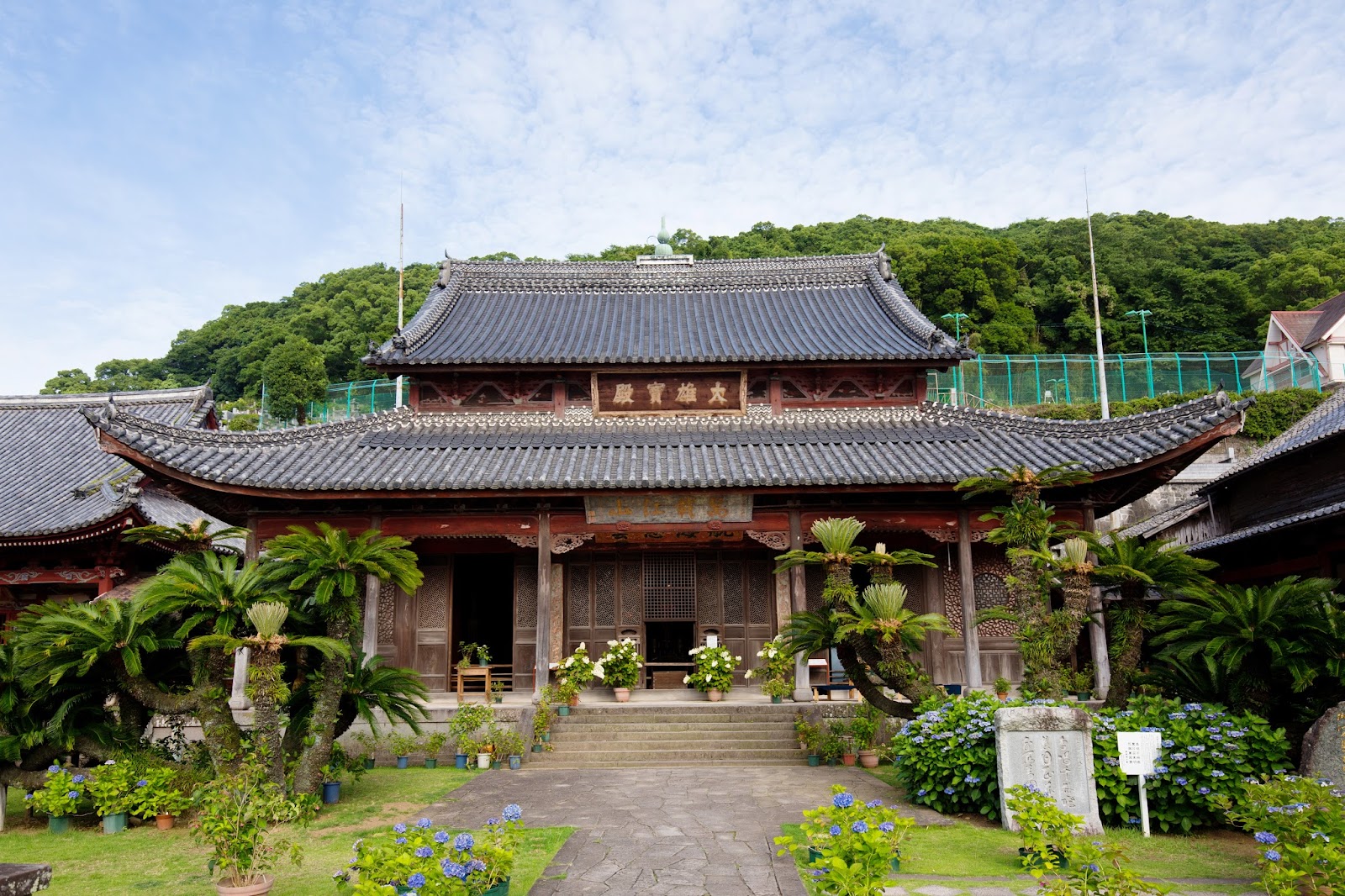
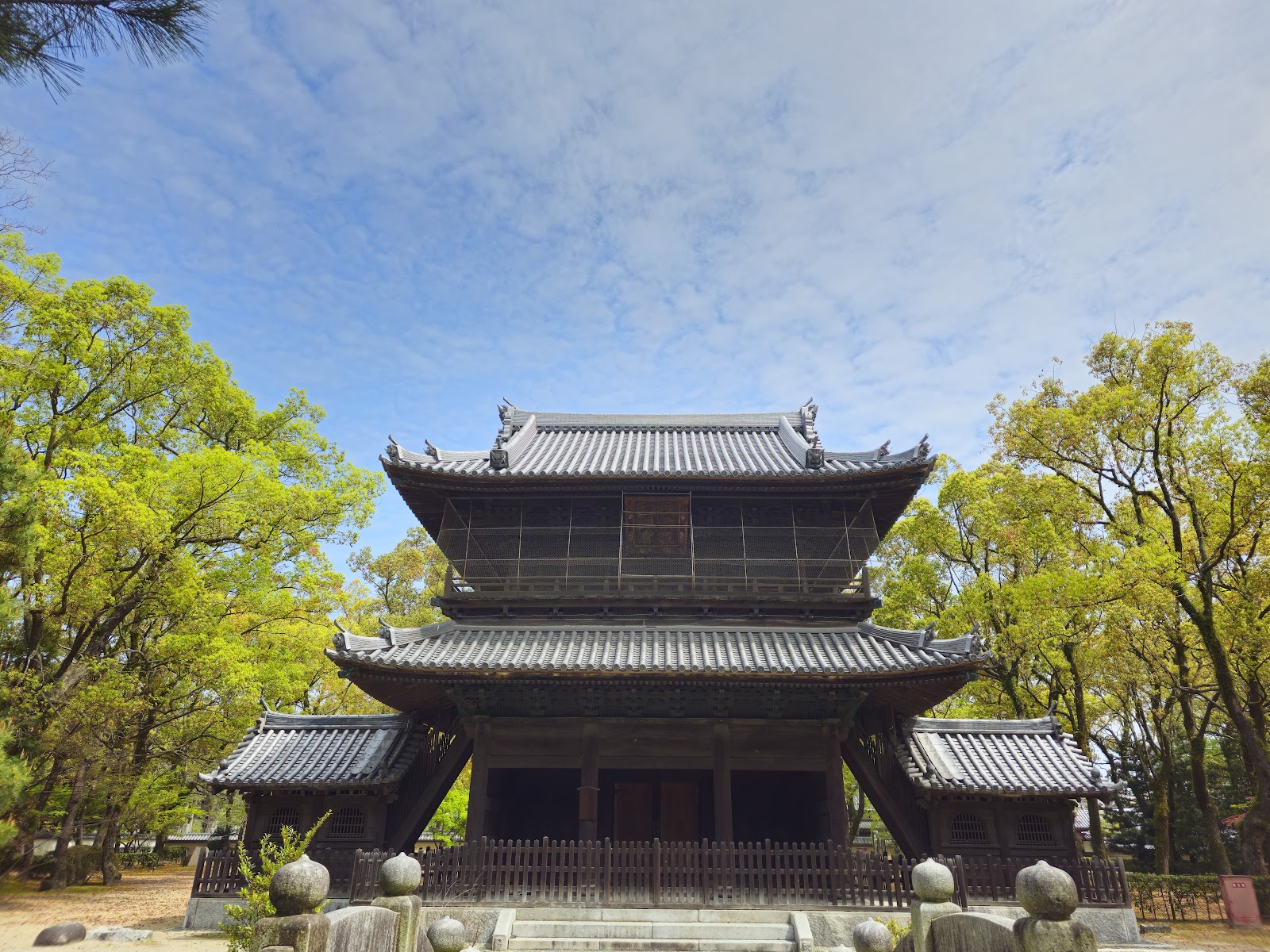
What elevates Matsunomori Tenmangu above many neighbourhood shrines is the quality of its craftsmanship. The eaves and transoms of its worship hall are decorated with a remarkable series of carved wooden panels, the finest of which depict the '30 occupations of old Nagasaki' — vignettes of Edo-period townsfolk at their trades, from craftsmen and merchants to labourers and entertainers. These lively, detailed carvings are a rare and precious record of working life in the historic city, part folk art and part social document, and connoisseurs of woodwork make a point of studying them closely. Dragons, flowers and auspicious creatures fill out the decorative scheme, and the overall effect is of a small shrine punching well above its size in artistic ambition.
The setting adds to the appeal. Matsunomori Tenmangu lies close to the grand Suwa Shrine and the temple lanes of Teramachi, on the green hillside that rises east of the modern city, so its precincts share the calm, tree-shaded atmosphere of that historic quarter while remaining only minutes from the tram lines and bustle below. Stone lanterns, a modest but elegant hall and the surrounding greenery make it a pleasant, restful place to pause.
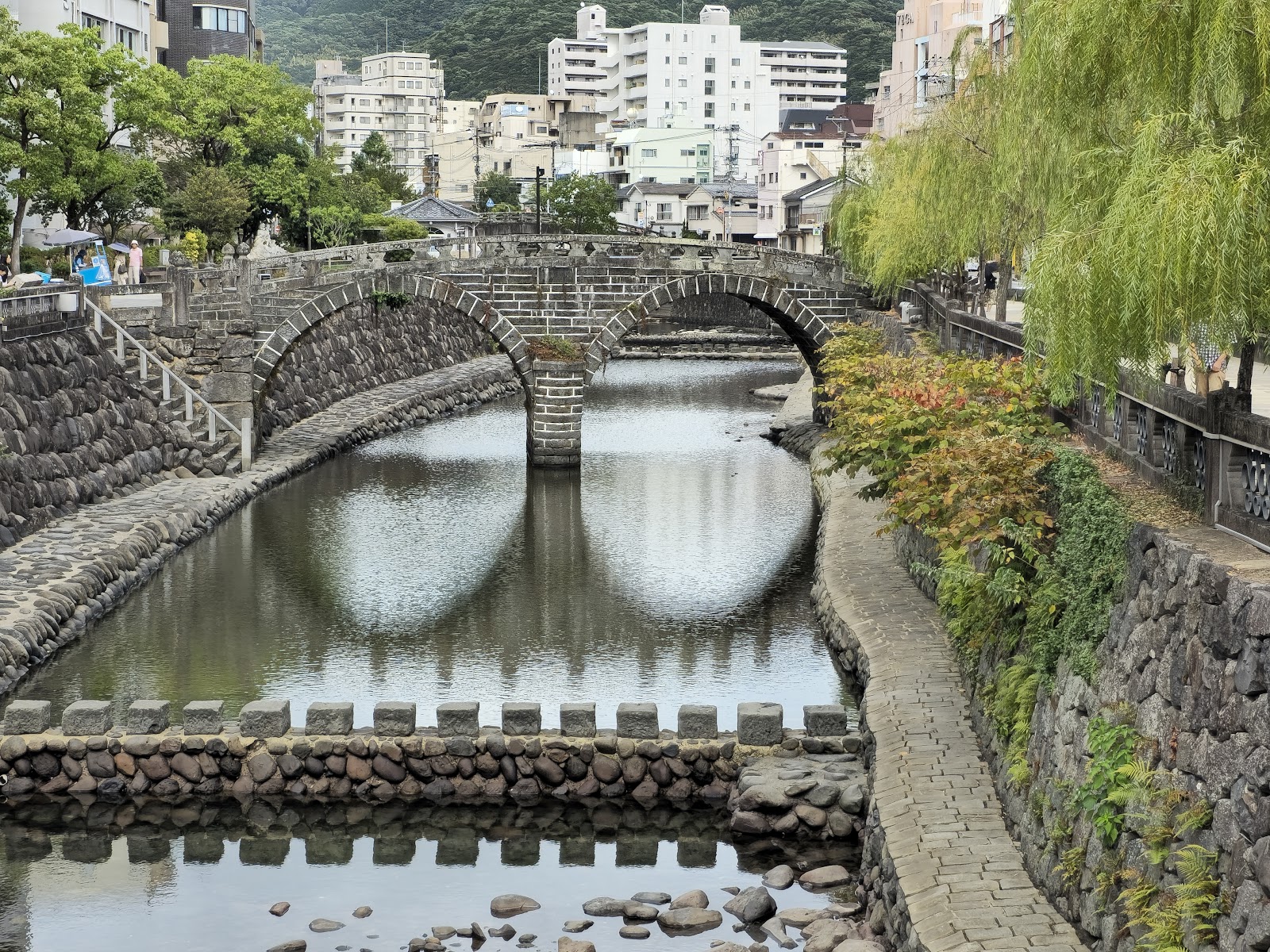
For visitors, the shrine is an easy and rewarding addition to a walking tour of Nagasaki's shrine-and-temple district, combining naturally with Suwa Shrine, the Teramachi temples and the nearby stone bridges of the Nakashima River. The grounds are open at all times and free to enter, and amulets and prayer plaques are available for those wishing to petition the god of learning. Daytime visits allow the best appreciation of the celebrated carvings. To reach it, take a tram to Kokaido-mae or Shokakuji-shita and walk about six minutes toward the hillside. Small in scale but rich in artistry and meaning, Matsunomori Tenmangu is a quiet gem for anyone interested in the craftsmanship and daily life of old Nagasaki.
A local's tip
Look up at the elaborately carved eaves of the worship hall — the ranma carvings of the '30 trades of old Nagasaki' are a rare, delightful folk-art record of Edo-period working life.
Best time to visit
Daytime; a peaceful pause near the city centre
Getting there
From central Nagasaki take a tram to Kokaido-mae or Shokakuji-shita, then walk about 6 minutes toward the Teramachi hillside. The shrine sits close to Suwa Shrine.
Good to know
- Amulets
- Restrooms
Plan the whole trip offline
Matsunomori Tenmangu Shrine is one of many places in the Real Japan app — with turn-by-turn directions, nearby spots and full offline maps you can use with no signal.