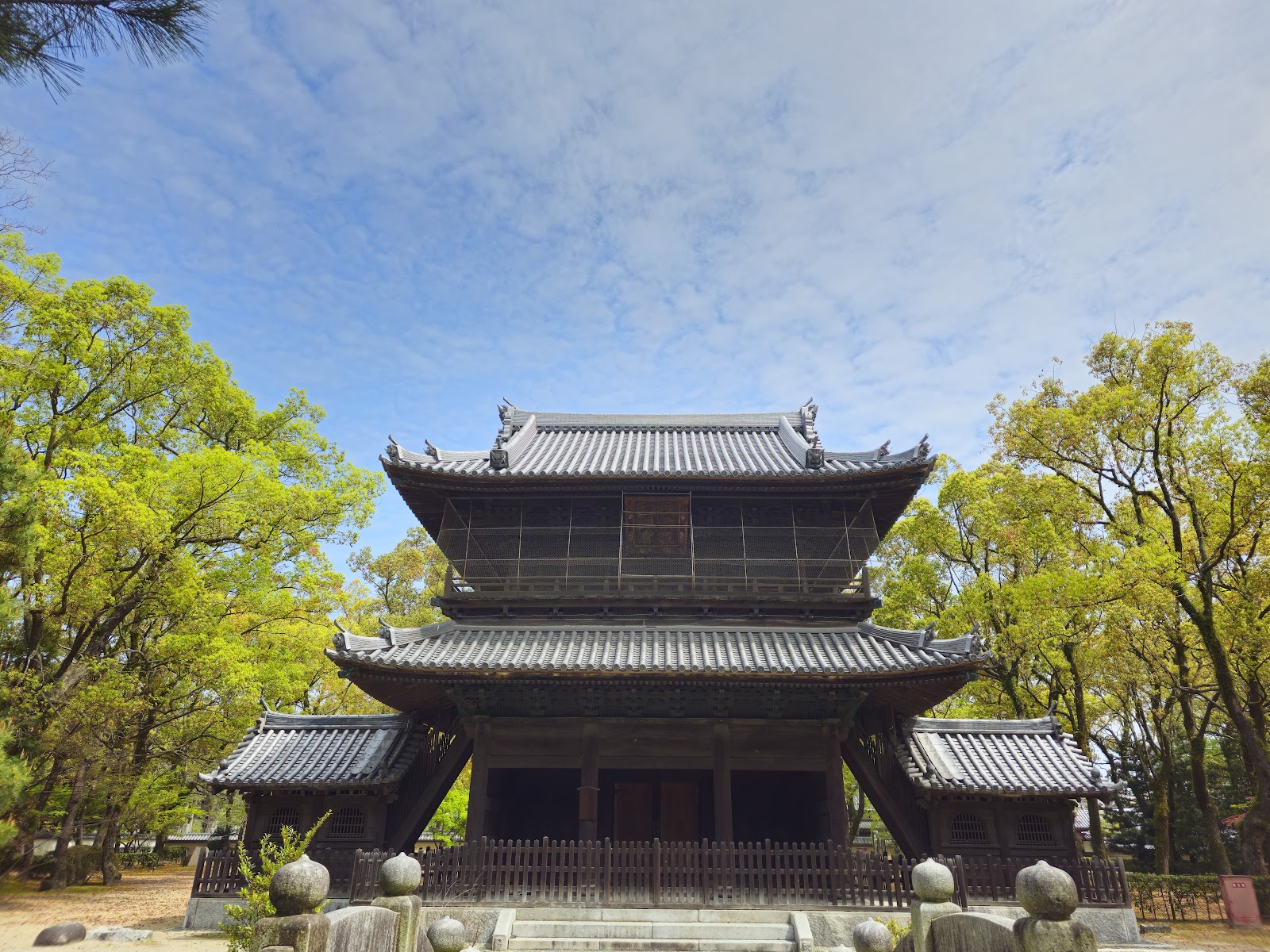
The quietest of Nagasaki's four great Obaku Zen temples, with a stately Chinese gate and centuries-old halls on the hillside.
Shofukuji is the least visited but in many ways the most serene of Nagasaki's four great Chinese-founded temples, a place where you can experience the atmosphere of Obaku Zen Buddhism without the crowds that gather at its better-known siblings. Set on the hillside among the temple district east of the city centre, it rewards those who seek it out with dignified Chinese-influenced architecture, important cultural properties and a deep, moss-scented calm.
The temple was founded in 1677, the last of the quartet of Obaku Zen temples — together with Kofukuji, Sofukuji and the now-lost Fukusaiji tradition — that the Chinese community established in Nagasaki during the Edo period. Obaku Zen, a school introduced from China in the seventeenth century, blended Zen meditation with Pure Land and other mainland practices, and its temples in Nagasaki became centres both of religion and of Chinese culture at a time when the port was Japan's chief window onto the continent. Shofukuji's founding by the monk Tetsushin and the local Chinese faithful placed it firmly in this cosmopolitan world.
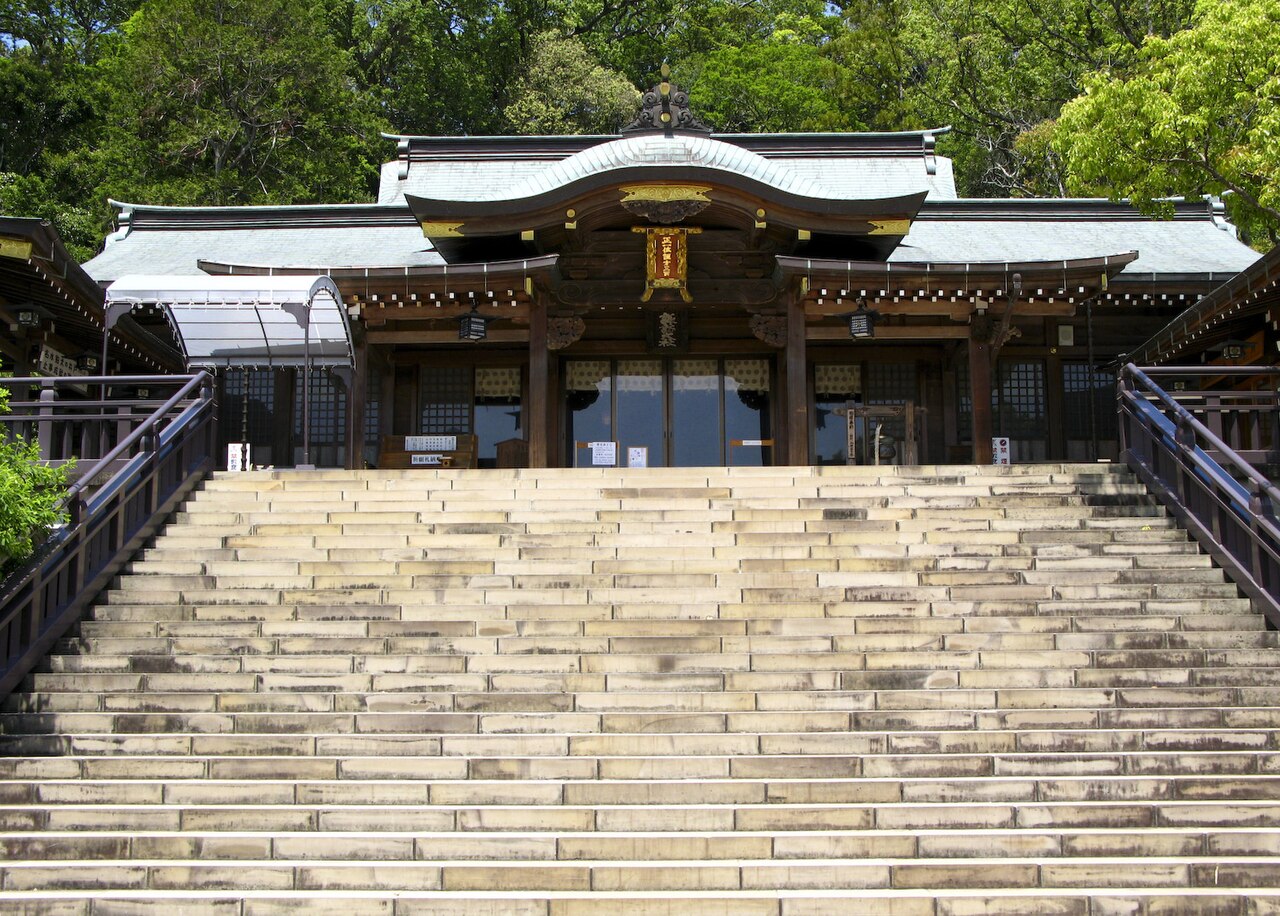
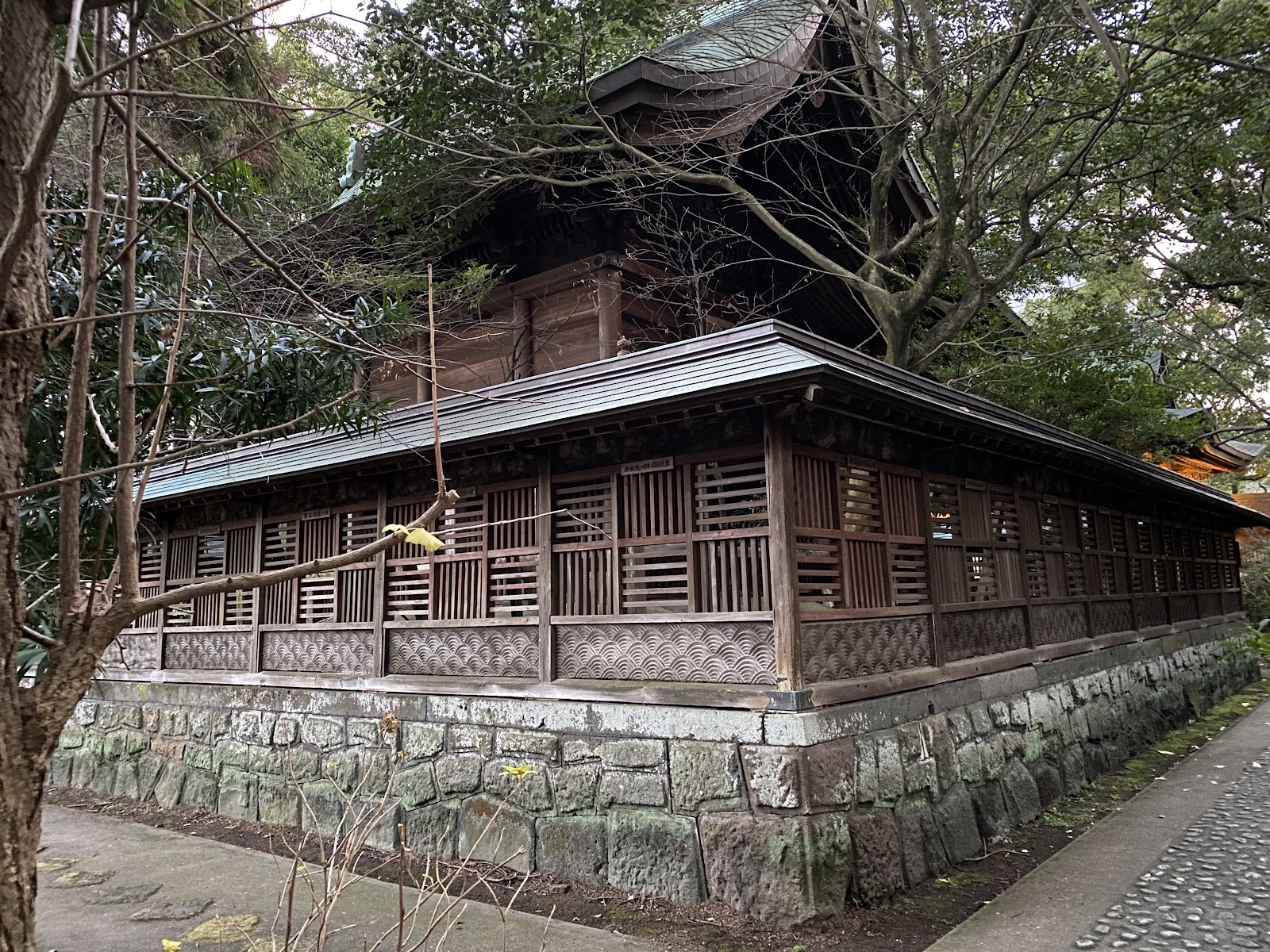
Architecturally, the temple showcases the Chinese-style features that distinguish Nagasaki's Obaku temples from ordinary Japanese Zen establishments. Its main gate is a stately, robustly built structure, and the halls beyond display the sweeping roofs, red and dark timber, and continental detailing typical of the school. Several of its buildings and objects are designated cultural properties, and a great bronze bell and other relics attest to the wealth and devotion of the community that raised it. The grounds, shaded by old trees and touched with moss, take on particular beauty in autumn when the leaves turn.
What sets Shofukuji apart today is its tranquillity. Because it draws far fewer visitors than the vividly restored Sofukuji or the historically celebrated Kofukuji, it often feels almost private, a quiet pocket of the old temple town where the only sounds are birdsong and the occasional temple bell. For travellers who have toured the busier sights, it offers a chance to slow down and absorb the layered history of Chinese-Japanese exchange that shaped Nagasaki.
For visitors, Shofukuji fits neatly into a walking tour of the temple district and the Teramachi area, combining well with Sofukuji, Kofukuji and the stone bridges of the Nakashima River. The grounds are generally open through the day and free to enter, with signage explaining the buildings' significance. Weekday mornings are the most peaceful times to come. To reach it, take a tram to Sakuramachi or Shindaikumachi and walk about seven minutes up into the hillside temple quarter. Understated, historic and quietly beautiful, Shofukuji is a rewarding stop for anyone drawn to the Chinese heritage and Zen traditions of old Nagasaki.
A local's tip
Admire the imposing Chinese-style main gate and the great bronze bell; Shofukuji is quieter than Sofukuji and Kofukuji, so you often have the mossy grounds to yourself.
Best time to visit
Daytime; peaceful on weekday mornings
Getting there
From central Nagasaki take a tram to Sakuramachi or Shindaikumachi, then walk about 7 minutes into the temple district on the hillside.
Good to know
- Restrooms
- Cultural property signage
Plan the whole trip offline
Shofukuji Temple is one of many places in the Real Japan app — with turn-by-turn directions, nearby spots and full offline maps you can use with no signal.