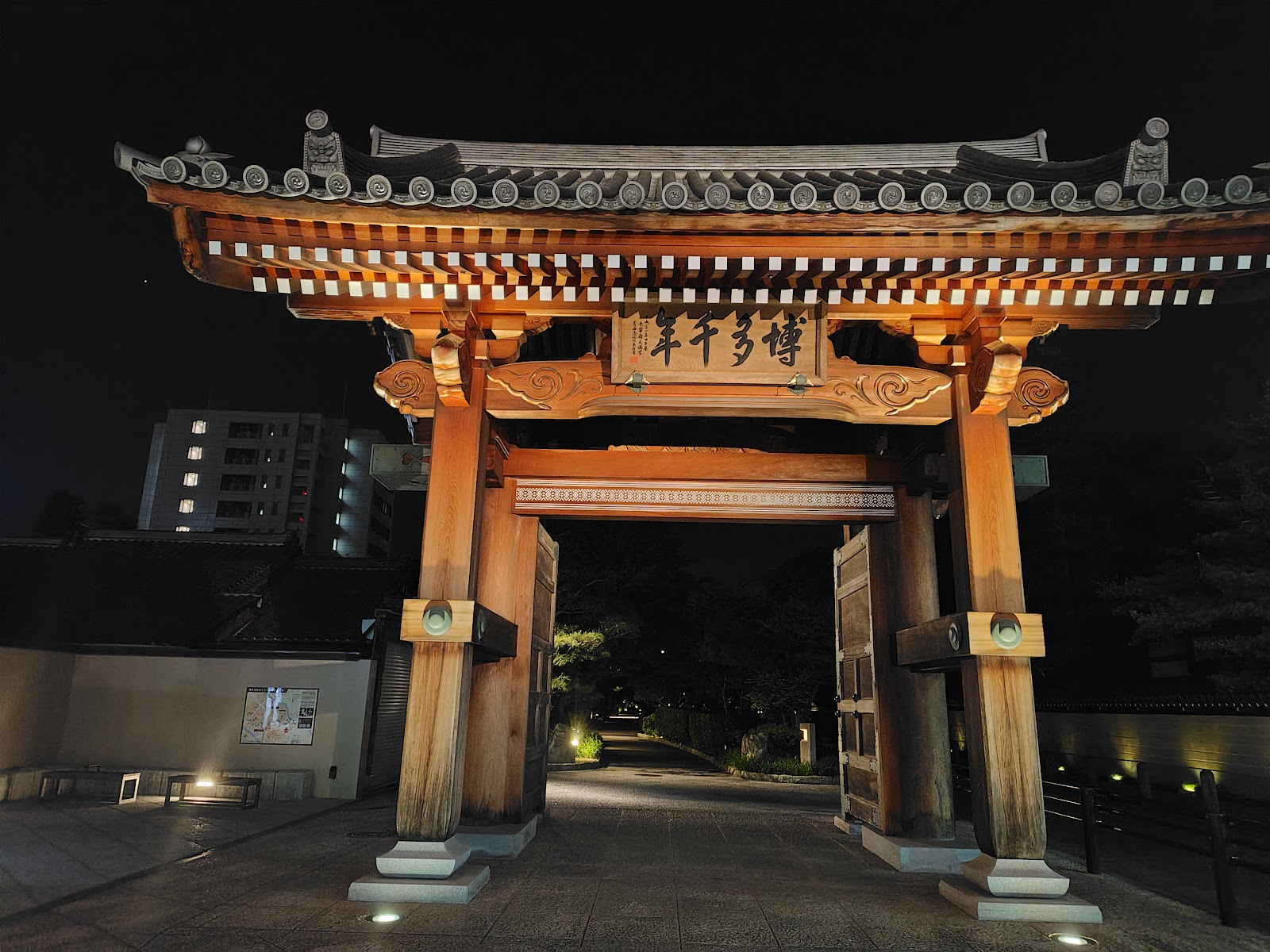
The historic temple quarter of Hakata, entered through the modern Sennen-no-Mon gate and lined with centuries-old streets and temples.
Hakata Old Town (Hakata Rekishi-no-machi) is the historic soul of Fukuoka - the compact temple quarter where the port city of Hakata grew rich on trade with China and Korea and where much of Japanese Zen Buddhism and tea culture first took root. Today it is one of the city's most rewarding walking areas, a quiet grid of stone-paved lanes and old temple walls tucked just minutes from the glass towers around Hakata Station.
The symbolic entrance is the Hakata Sennen-no-Mon, a striking wooden gate whose name means 'Gate of a Thousand Years.' Although it is a modern addition, completed in 2014, it was crafted using a thousand-year-old camphor beam and traditional techniques, and it deliberately evokes the old city gates that once stood here. Passing beneath it onto Jotenji-dori sets the tone for the district: the noise of the modern city falls away and you enter a landscape of temples, gravestones, mossy walls and the occasional monk.
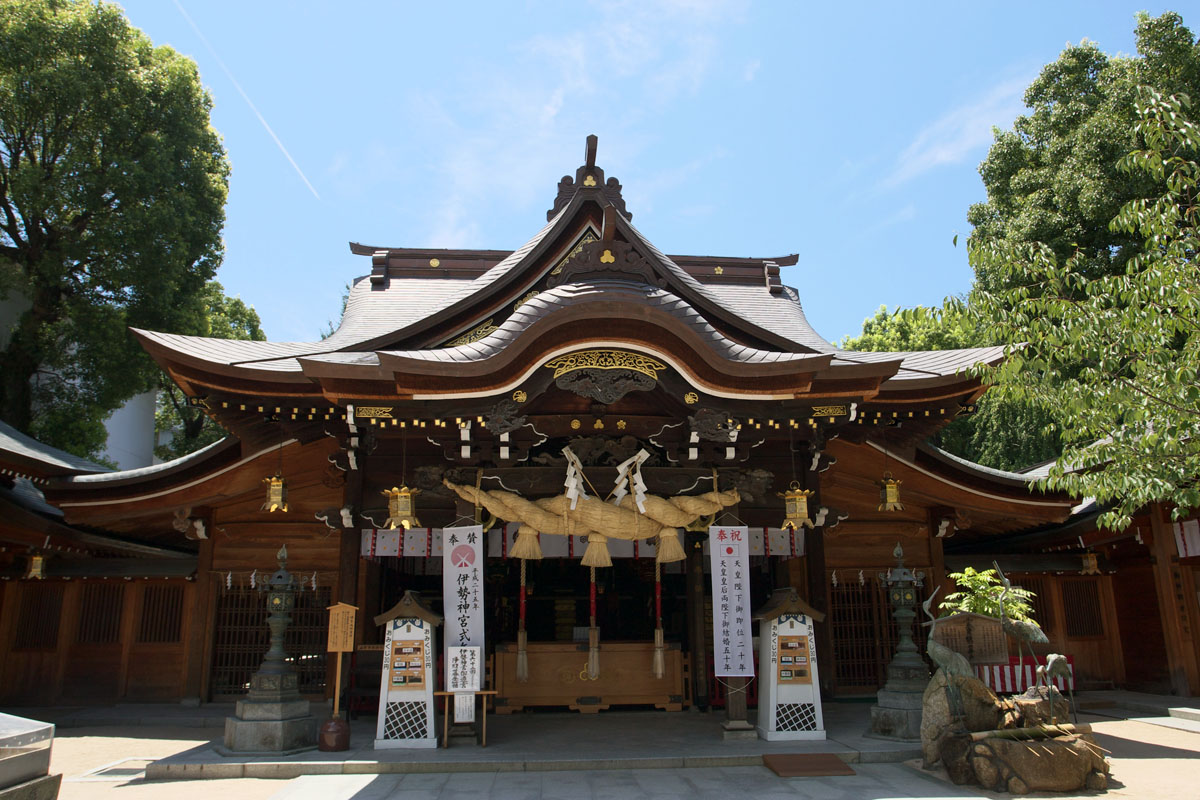
Beyond the gate lie several of the most important temples in western Japan, many within a few minutes' walk of one another. Shofukuji, founded in 1195 by the monk Eisai, is celebrated as the first Zen temple in Japan; Eisai is also credited with bringing tea-seed cultivation to the country, making this quiet compound a birthplace of Japanese tea culture. Nearby Jotenji, founded in 1242, is associated with the introduction of udon, soba and steamed-bun techniques from China, and its grounds contain a beautiful dry-landscape garden. Tochoji, one of the oldest Shingon temples in Kyushu, houses an enormous seated wooden Buddha. Kushida Shrine, the guardian shrine of Hakata and the spiritual home of the Gion Yamakasa festival, sits at the district's western edge.
What makes the area special is not any single monument but the density and the atmosphere. You can wander for an hour or two, ducking between temple gates, reading the historical plaques (many bilingual) that the city has installed, and feeling the layers of a thousand years of Hakata history stacked into a handful of blocks. It is almost always uncrowded compared with Kyoto's temple districts, and admission to the streets and most grounds is free.
The district is at its best in the early morning, when the light is soft on the stone lanes and the temples are near-empty, or in autumn when maples colour the temple gardens. Spring brings blossom to several compounds. Getting there could not be easier: Gion subway station on the Airport Line is a five-minute walk away, and it is only about ten minutes on foot from Hakata Station, so the old town slots neatly into any arrival or departure day. Pair it with Kushida Shrine, the Kawabata arcade and Canal City for a walk that traces Fukuoka from its medieval origins to the present in well under a mile.
A local's tip
Follow the stone-paved Jotenji-dori lane between Jotenji and Shofukuji temples - it is one of the most photogenic and least crowded historic streetscapes in Fukuoka, especially in early morning light.
Best time to visit
Morning, when the temple grounds are quiet
Getting there
A 5-minute walk from Gion subway station (Kuko Line) or about 10 minutes on foot from Hakata Station's Hakata exit. The Hakata Sennen-no-Mon gate on Jotenji-dori marks the western entrance to the temple quarter.
Good to know
- Wi-Fi
- Restrooms
- Guided tours
Plan the whole trip offline
Hakata Old Town and Sennen-no-Mon Gate is one of many places in the Real Japan app — with turn-by-turn directions, nearby spots and full offline maps you can use with no signal.