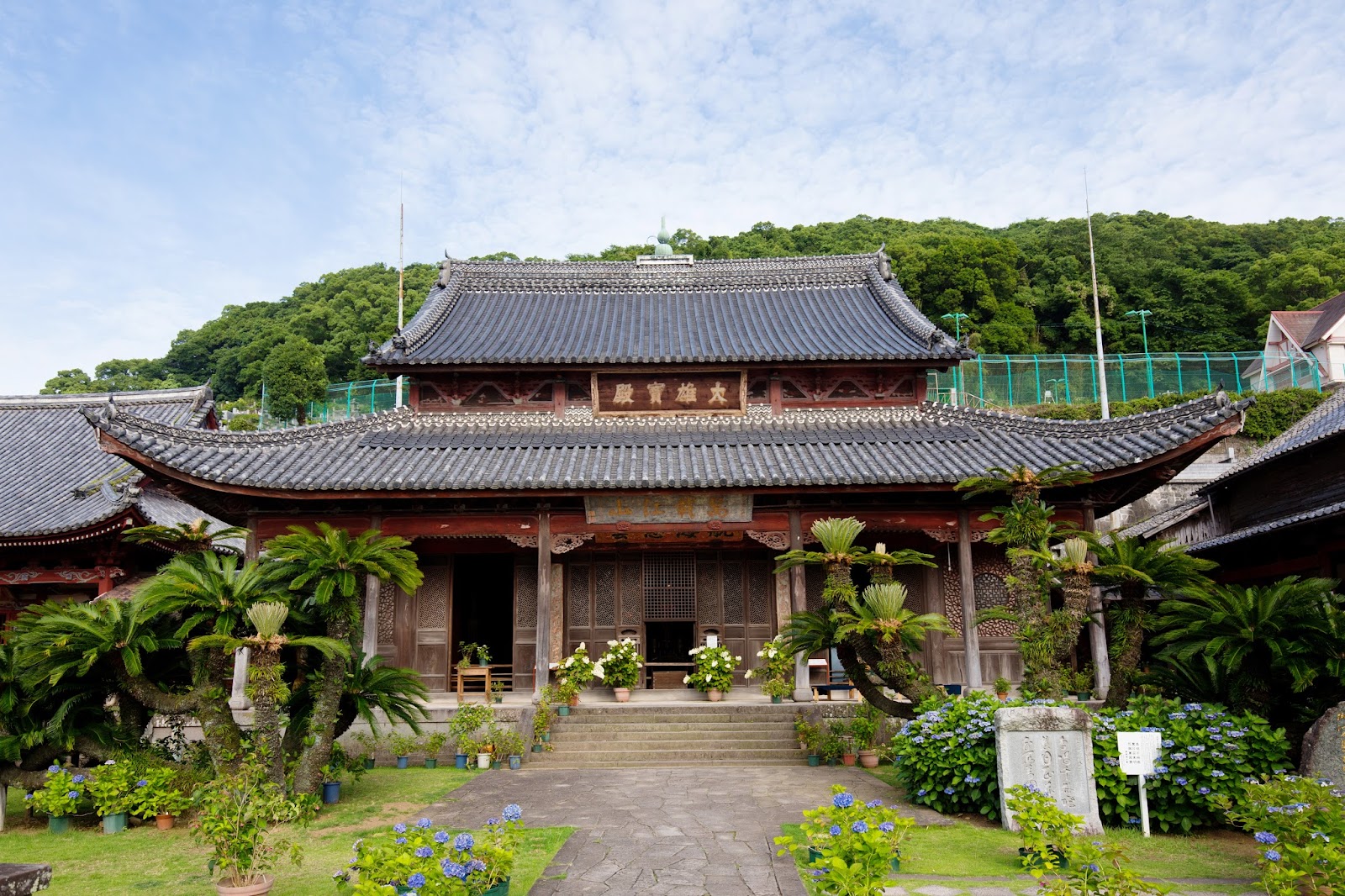
Japan's oldest Obaku Zen temple, founded by Chinese monks, with rare Ming-dynasty architecture in Nagasaki's temple district.
Kofukuji is one of Nagasaki's great Chinese-founded temples, a serene complex of dark timber halls in the Teramachi temple district that holds a special place in Japanese religious history as the cradle of Obaku Zen Buddhism. Founded in 1620 by the resident Chinese community, it is the oldest of Nagasaki's Chinese temples and a beautifully preserved window onto the deep cultural exchange that flowed through the port during Japan's era of seclusion.
The temple was established by and for Nagasaki's Chinese merchants and sailors, many from the Fujian region, who needed a place of worship and a spiritual anchor far from home. Because it was popular with people from southern China, it became known as the "Nanking Temple." Its true historical importance, however, dates to 1654, when the eminent Chinese monk Yinyuan Longqi — known in Japan as Ingen — arrived from the mainland and briefly served here before going on to found the Obaku school of Zen, the third great Zen lineage in Japan alongside Rinzai and Soto. Ingen is also credited with introducing various aspects of Chinese culture to Japan, and Kofukuji is remembered as the point where his influence entered the country.
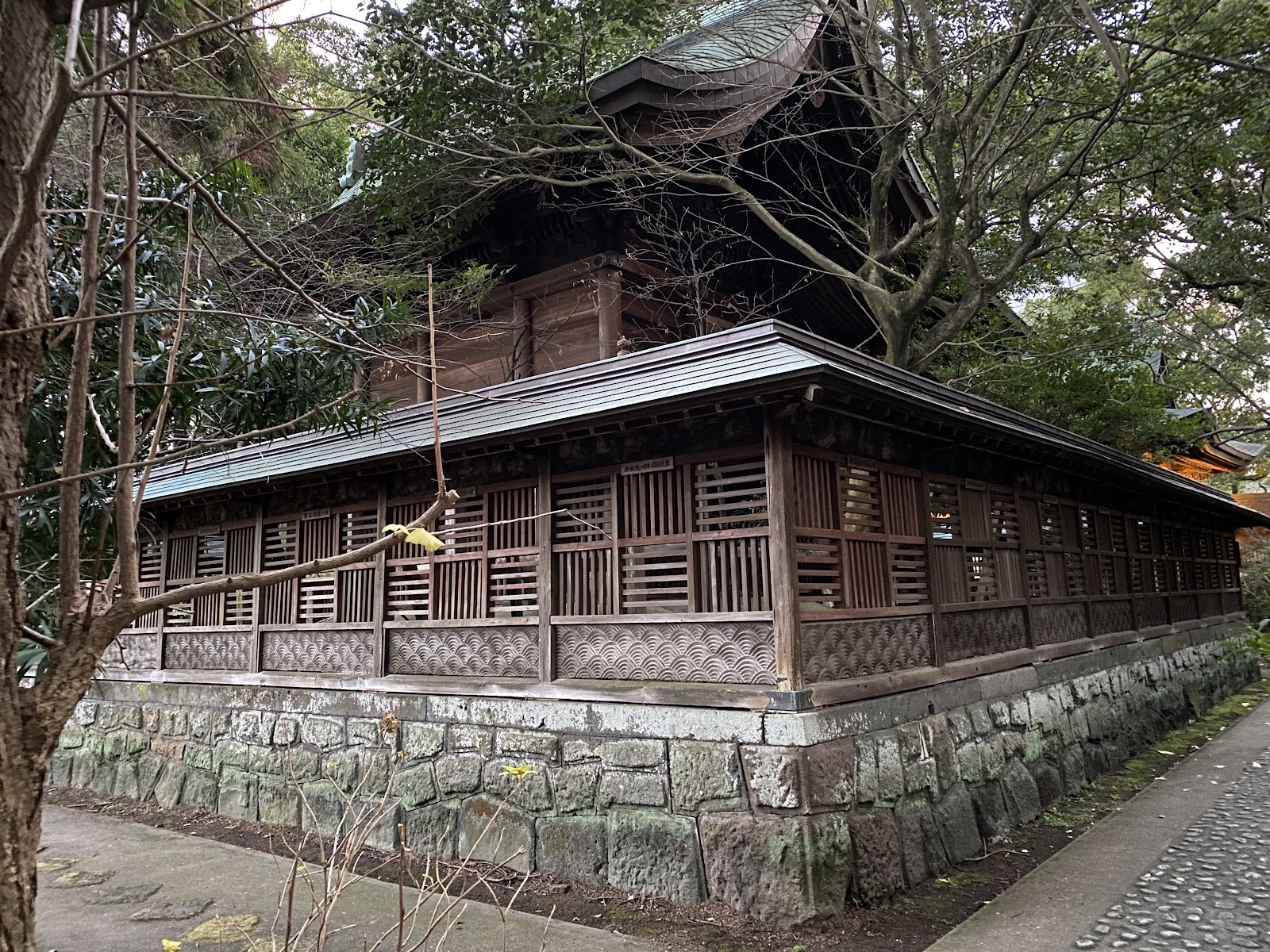
Architecturally, the temple is a rare survivor of authentic Chinese Ming-dynasty style on Japanese soil. Its main hall (Daiyuhoden), rebuilt with materials and techniques from China, features the sweeping roofs, distinctive bracketing and red-and-dark colour scheme of southern Chinese temple design, quite different from Japanese Buddhist architecture. The gate, bell tower, and the Masodo hall dedicated to Mazu — the Chinese sea goddess who protected the merchant ships — all reflect this heritage, and several structures are designated Important Cultural Properties. Statues, altars and inscriptions throughout carry the flavour of the mainland.
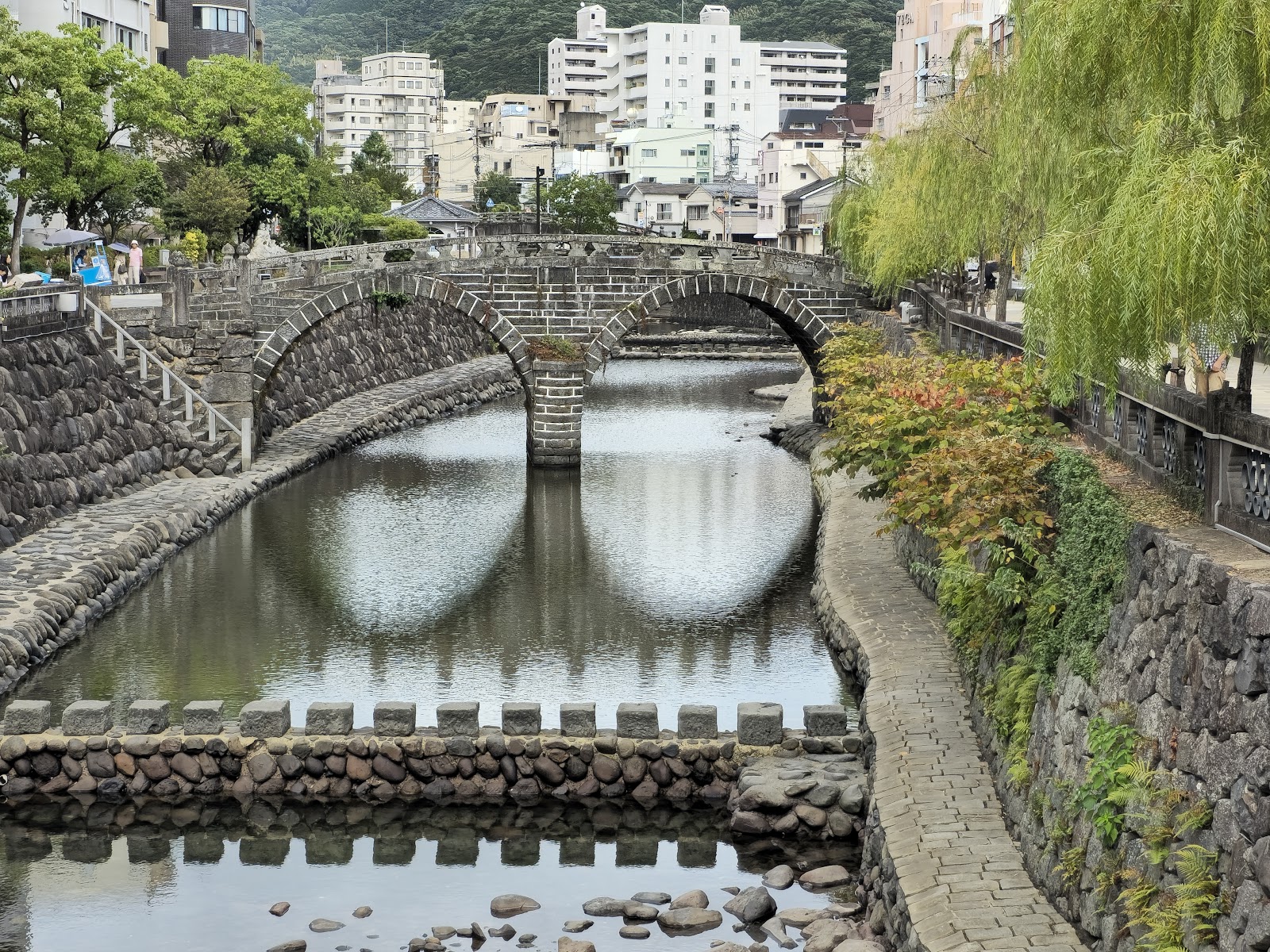
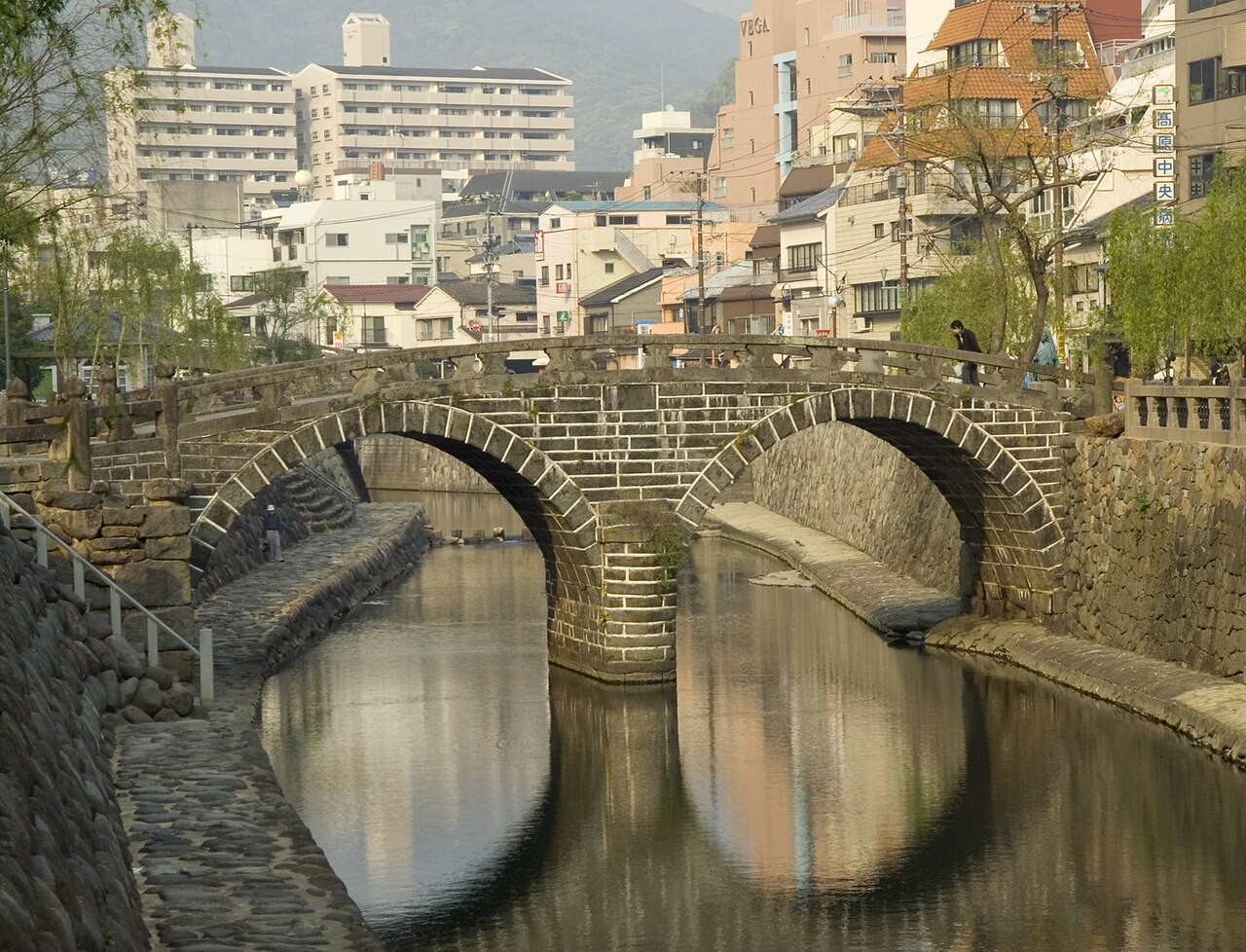
Wandering the quiet courtyards, with their stone paving, mature trees and weathered timber, is a peaceful experience, and the temple's role as a spiritual home for the Chinese community adds a layer of meaning to the calm. The connection between these Chinese monks and the wider city runs deep: the same community's engineering knowledge is linked to the construction of Nagasaki's famous stone bridges, including the celebrated Megane (Spectacles) Bridge just downhill.
Kofukuji sits within the Teramachi district, a lane of temples on the lower slopes that makes for an atmospheric walk, and it pairs naturally with a stroll to the nearby stone bridges over the Nakashima River. Easily reached by tram to Kokaido-mae and a short walk, it asks a small admission fee and around forty-five minutes to appreciate the halls and courtyards. Historically pivotal and architecturally rare, Kofukuji is a quiet highlight for anyone interested in the Chinese chapter of Nagasaki's story and the origins of Obaku Zen in Japan.
A local's tip
This is the birthplace of Obaku Zen in Japan and features rare Chinese Ming-style architecture — combine it with a walk down to nearby Megane Bridge, which the temple's Chinese monks helped inspire.
Best time to visit
Morning for quiet in the temple courtyards
Getting there
Take a Nagasaki tram to Kokaido-mae, then walk about five minutes east into the Teramachi temple district on the lower slopes.
Good to know
- Gift shop
- Restrooms
Plan the whole trip offline
Kofukuji Temple is one of many places in the Real Japan app — with turn-by-turn directions, nearby spots and full offline maps you can use with no signal.