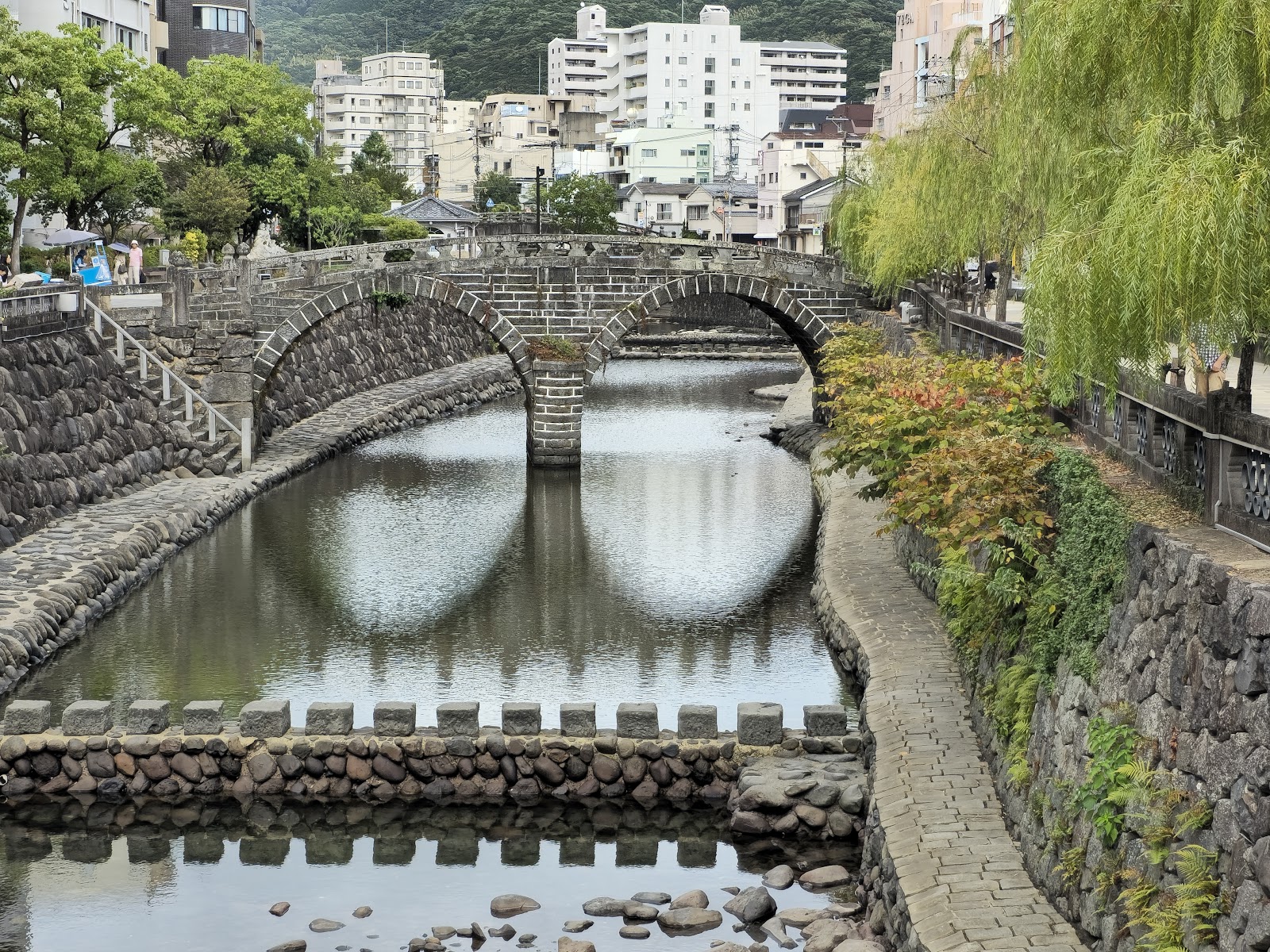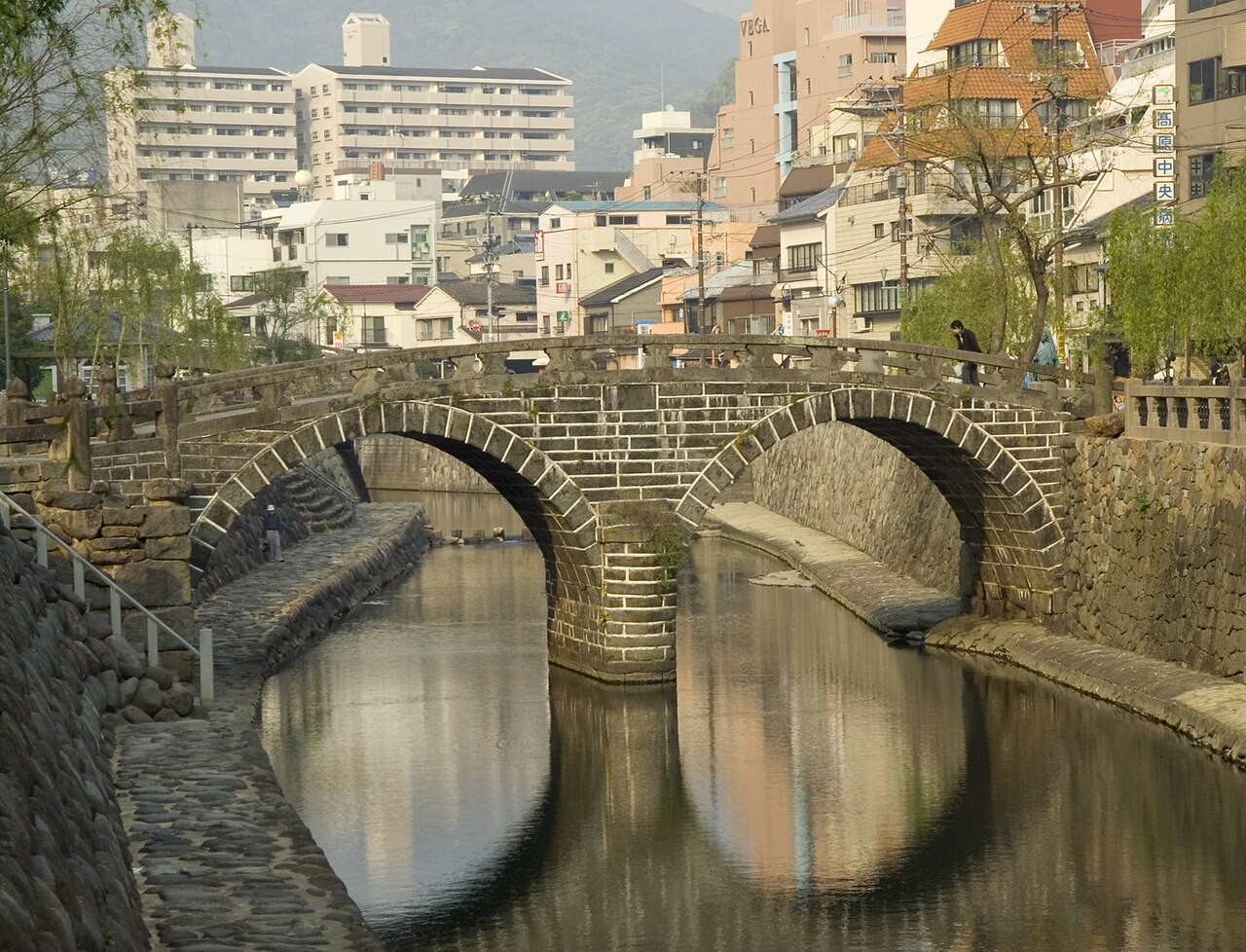
A 17th-century double-arched stone bridge whose reflection in the river forms the shape of a pair of spectacles.
Megane Bridge, whose name means Spectacles Bridge, is one of Nagasaki's most charming and enduring landmarks, a graceful double-arched stone bridge spanning the Nakashima River in the heart of the old city. Built in 1634, it is widely regarded as the oldest stone arch bridge in Japan, and its enduring fame comes from a delightful visual trick: when the water is calm, the two stone arches and their reflections in the river combine to form the shape of a pair of round spectacles, giving the bridge its affectionate name.
The bridge was constructed by a Chinese monk associated with the nearby Kofukuji temple, part of the wave of Chinese cultural influence that shaped Nagasaki during its centuries as Japan's window on the world. Stone arch bridges of this kind were a continental import, and Megane Bridge is the most celebrated survivor of a whole cluster of historic stone bridges that once crossed the Nakashima River. Its solid, elegant construction has allowed it to endure for nearly four centuries, weathering floods and the passage of time to remain a working part of the cityscape.
The bridge's resilience was tested most severely in a great flood in the postwar era, when torrential rains swelled the river and damaged or destroyed several of the historic bridges along it. Megane Bridge was harmed but survived, and it was carefully restored using the original stones wherever possible, a testament to the value Nagasaki places on this piece of its heritage. Today the river is managed to prevent such disasters, and the banks have been landscaped into a pleasant walkway.
Visiting is simple and free. The bridge sits in an attractive district of small shops, cafes and traditional buildings, and a stroll along the stone-paved riverside path lets you admire the arches from several angles, cross the bridge itself and enjoy the surrounding neighbourhood. The area is flat and easy to walk, making it accessible, and most people spend around half an hour here, often combining it with nearby temples and shopping streets. On a still day, the perfect spectacles reflection is the classic photograph, and visitors gather to catch it.
A popular local tradition adds a playful element to a visit. Embedded among the grey stone blocks lining the river embankments are a number of heart-shaped stones, and finding one is said to bring good luck, particularly in love. Couples and visitors delight in hunting for these hidden hearts along the walls, turning a simple riverside walk into a small treasure hunt.
A notable point is how Megane Bridge distils several threads of Nagasaki's character into one modest structure: the Chinese influence that gave the city its temples and its bridges, the craftsmanship of the Edo period, and the resilience of a place that has repeatedly rebuilt after disaster. Small and unassuming, it nonetheless carries a great deal of the city's story.
The best time to visit is a calm day when the river lies still enough to complete the spectacles illusion, though the bridge is pleasant in any weather and pretty when lit in the evening. Take tram line 4 or 5 to the Nigiwaibashi stop and walk a few minutes to the river. For a quick, free and quintessentially Nagasaki experience, Megane Bridge is a delightful stop.
A local's tip
Search the stone embankments along the river for the small heart-shaped stone set among the blocks; finding it is a local good-luck tradition, especially for couples.
Best time to visit
A still day when the water is calm enough to reflect the arches as spectacles
Getting there
Take Nagasaki tram line 4 or 5 to the Nigiwaibashi stop, then walk about five minutes to the Nakashima River.
Good to know
- Cafes
- Restrooms
- Riverside walk
Plan the whole trip offline
Megane Bridge is one of many places in the Real Japan app — with turn-by-turn directions, nearby spots and full offline maps you can use with no signal.