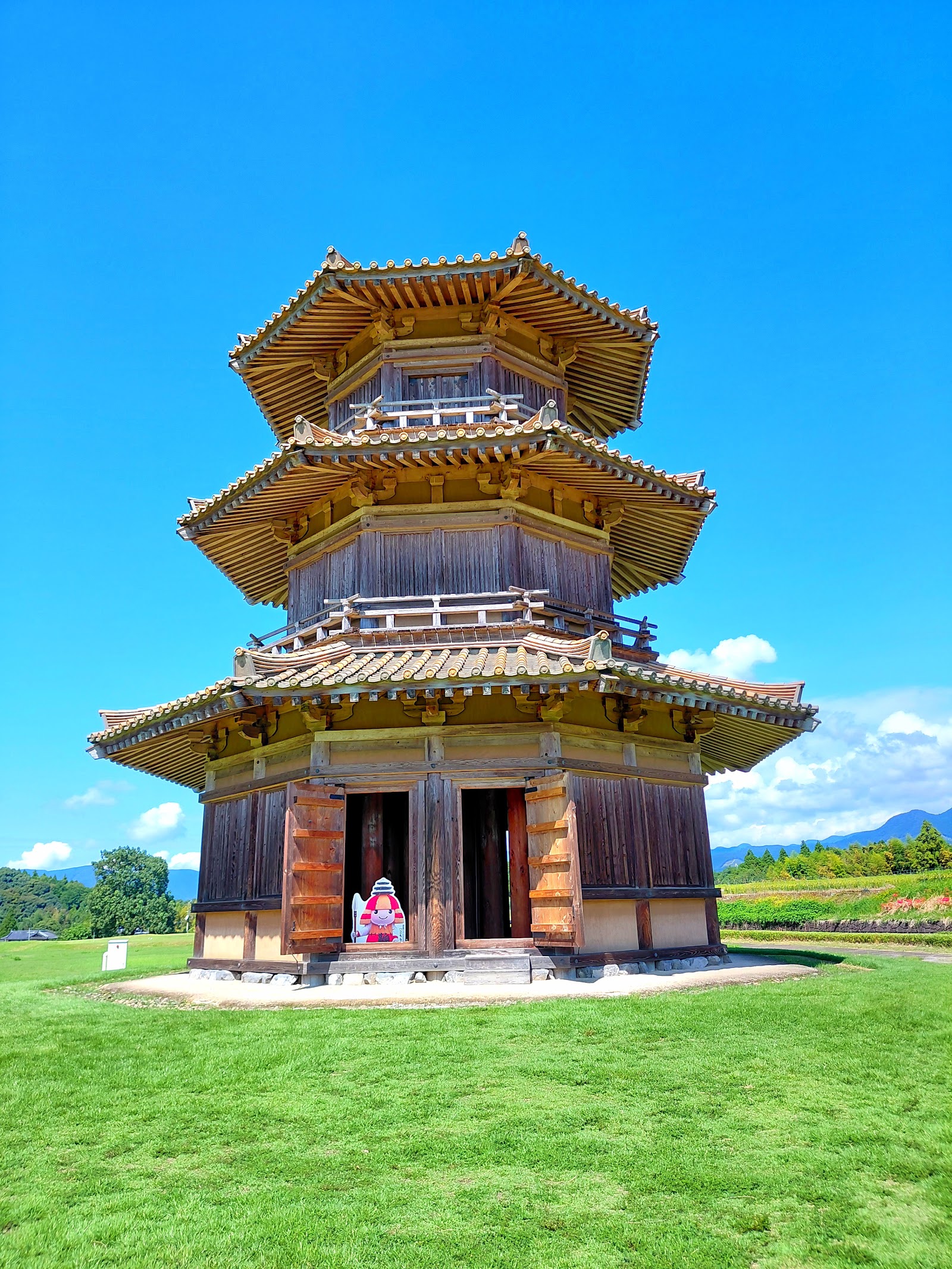
A reconstructed 7th-century mountain fortress built to defend ancient Japan against invasion from the continent.
Kikuchi Castle, or Kikuchi-jo, is far older than the samurai strongholds most visitors associate with Japanese castles, and it tells a very different story. It was built in the late seventh century, around the 660s, during a tense period when the Yamato court feared invasion from the Korean peninsula and Tang China following Japan's defeat at the naval Battle of Baekgang. In response, the court ordered a chain of defensive mountain fortresses across northern Kyushu, and Kikuchi-jo was one of the largest, guarding the interior plains behind the coast.
Rather than stone keeps and moats, these ancient 'kogoseki' fortresses relied on long earthen ramparts, timber palisades and elevated storehouses spread across a broad hilltop, designed to shelter troops and supplies. Over the centuries the site was abandoned and forgotten, its purpose lost, until modern archaeology rediscovered and studied it. Excavations revealed the outlines of granaries, gates, wells and barracks, and the finds established Kikuchi-jo as a nationally important historic site.
Today the hilltop is preserved as a spacious historical park, with several structures reconstructed on their original foundations to help visitors picture the fortress in use. The most striking is a tall octagonal building, thought to have served as a drum or lookout tower, alongside a reconstructed elevated granary and sections of the earthen defensive walls. Walking among them across the grassy plateau, with wide views over the Kikuchi river plain and distant mountains, gives a real sense of why this commanding position was chosen.
An on-site museum, the Onkokan, displays excavated artefacts including roof tiles, iron tools and pottery, and explains the geopolitics of ancient East Asia that led to the fortress being built. The interpretive material makes clear how connected early Japan was to events on the continent, and how seriously the young state took the threat of invasion.
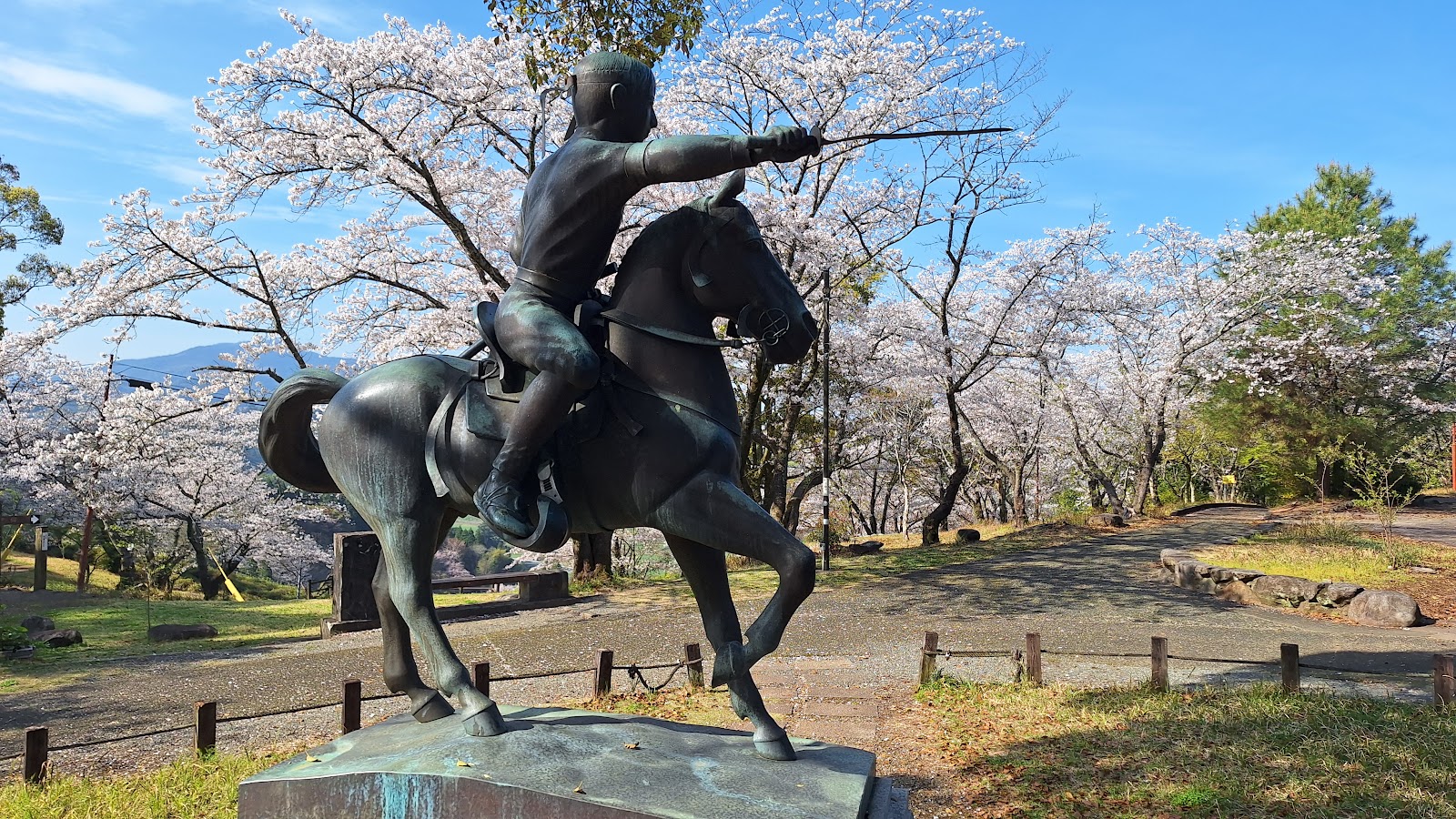
The park is also simply a pleasant place to walk, with cherry trees that bloom in spring, autumn colour in the surrounding hills, and picnic-friendly lawns that make it popular with local families. Because it lies off the usual tourist track, it is rarely crowded, and history enthusiasts often have the ramparts almost to themselves.
Kikuchi-jo sits in the hills of Yamaga, and reaching it comfortably requires a car, about an hour north of central Kumamoto, with free parking at the site. The grounds are freely accessible, while the museum keeps daytime hours and closes on Mondays. Allow around an hour and a quarter to walk the site and visit the exhibits. For travellers interested in the deeper, pre-samurai layers of Japanese history, Kikuchi Castle is a rewarding and unusual detour.
A local's tip
Climb to the reconstructed octagonal drum tower at the top of the site for a sweeping panorama — on a clear day you can see all the way to the Ariake Sea.
Best time to visit
Autumn for clear views across the Kikuchi plain
Getting there
Located in the hills of Yamaga; reaching it practically requires a car, roughly one hour north of central Kumamoto. There is a large free car park at the historical park.
Good to know
- Museum
- Parking
- Restrooms
Plan the whole trip offline
Kikuchi Castle Ruins (Kikuchi-jo) is one of many places in the Real Japan app — with turn-by-turn directions, nearby spots and full offline maps you can use with no signal.