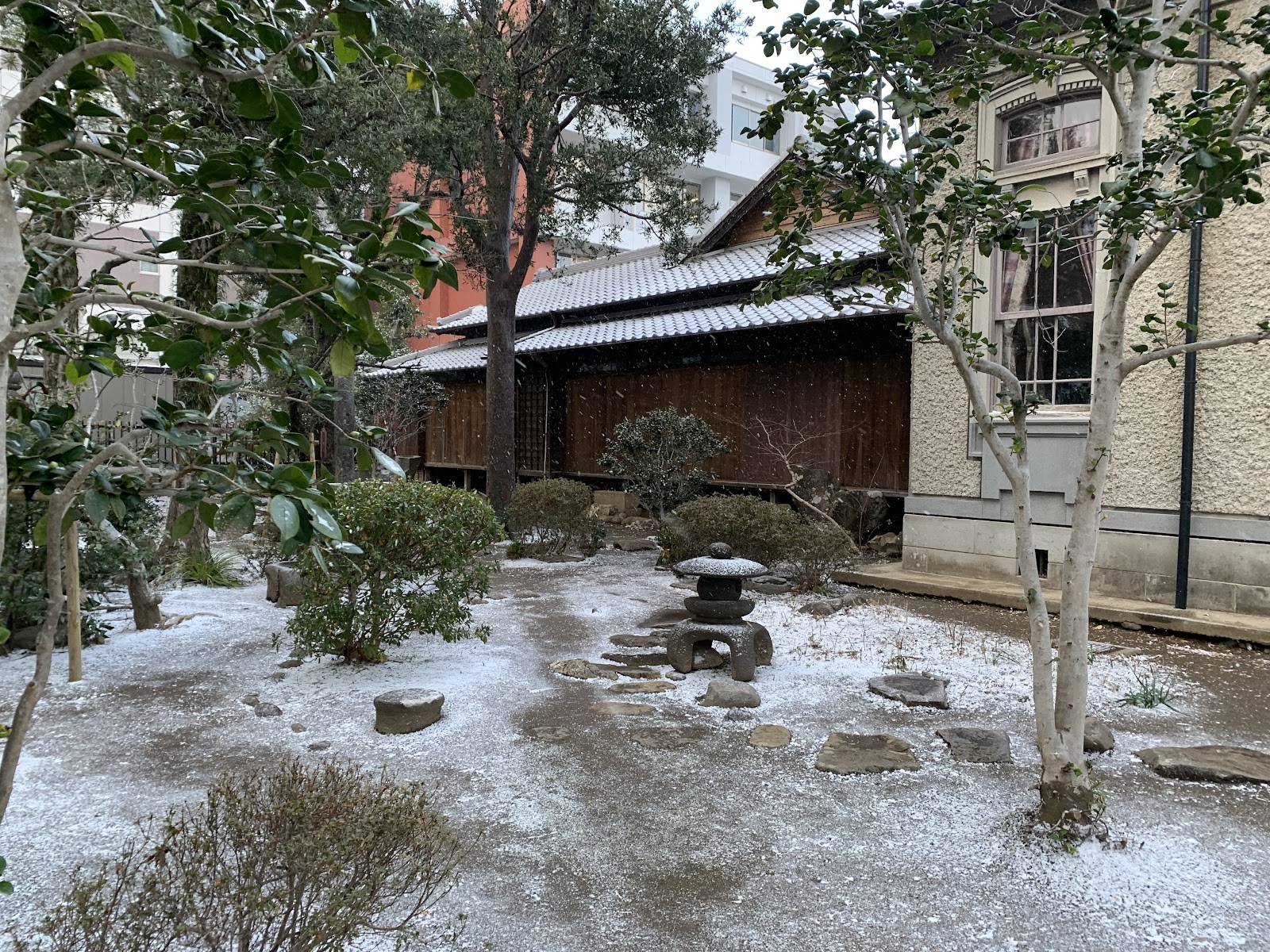
The best-preserved of the Kumamoto homes of novelist Natsume Soseki, now a small literary museum.
The Natsume Soseki Former Residence at Uchitsuboi preserves one of the Kumamoto homes of Japan's most revered modern novelist, the writer whose portrait once graced the 1,000-yen note. Before he became the author of 'Kokoro', 'Botchan' and 'I Am a Cat', Natsume Soseki spent four formative years, from 1896 to 1900, teaching English at the Fifth Higher School in Kumamoto. He moved house several times during that period, and this Uchitsuboi residence is the fifth and best preserved of them, the place where he lived longest and where his eldest daughter, Fudeko, was born.
The house is a modest wooden dwelling in the Meiji-era style, with tatami rooms, sliding screens and a small garden, restored and opened as a memorial to the writer. Inside you will find manuscripts, photographs, letters, period furnishings and displays explaining Soseki's Kumamoto years, a time when the young teacher, not yet the famous novelist, wandered the region, composed haiku and gathered the impressions that would later surface in his fiction. His novel 'Kusamakura', set at a hot spring in the mountains west of Kumamoto, grew directly out of a walking trip he took while living in the city.
A visit is short, perhaps forty minutes, and its appeal is quiet and specific: this is a place for readers. Standing in the rooms where Soseki lived, looking out at the same small garden, gives a tangible sense of the everyday life behind the literature. For anyone who has read his work, or who is interested in the Meiji intellectual world that produced Japan's first great modern novelists, it is a rewarding and inexpensive detour. Casual visitors with no particular literary interest may find it modest, and that is fair; the house is a memorial rather than a spectacle.
The residence sits in the Uchitsuboi neighbourhood a short distance north of Kumamoto Castle, on a quiet residential lane. From the castle area it is about a fifteen-minute walk, or a brief taxi ride; the nearest tram stops are around the castle, from where you continue on foot. Admission is a token fee. It opens from mid-morning to late afternoon and closes on Mondays. There is a small garden and restrooms, but few other facilities, in keeping with its scale.
Because it is so close to the castle and the city museum, it slots neatly into a downtown day for travellers who want a change of pace from ramparts and volcanoes. Come in spring for blossom over the garden wall, linger in the tatami rooms, and let the house do what a good writer's home should: make the person feel real. It is one of the more understated but genuinely atmospheric stops in Kumamoto, a small window onto the youth of a national literary giant.
A local's tip
This is the house where Soseki's eldest daughter was born and where he lived longest during his Kumamoto years, one of five surviving homes from his time in the city.
Best time to visit
A quiet literary detour on a castle day
Getting there
From the castle area walk north into the Uchitsuboi neighbourhood, or take a short taxi; the preserved house sits on a quiet residential lane.
Good to know
- Garden
- Restrooms
Plan the whole trip offline
Natsume Soseki Former Residence (Uchitsuboi) is one of many places in the Real Japan app — with turn-by-turn directions, nearby spots and full offline maps you can use with no signal.