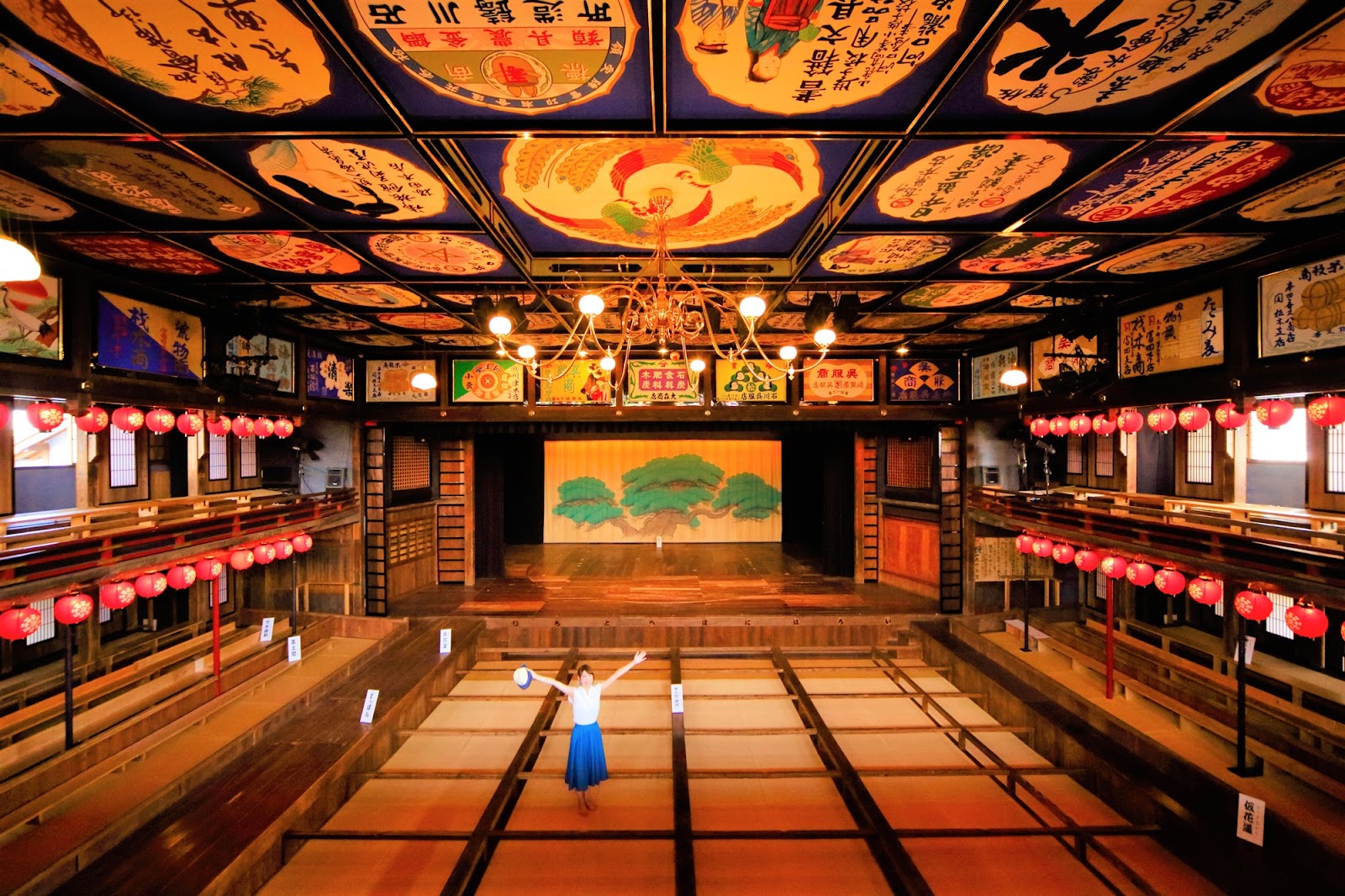
A gorgeously preserved 1910 kabuki playhouse in the onsen town of Yamaga, complete with a hand-turned revolving stage.
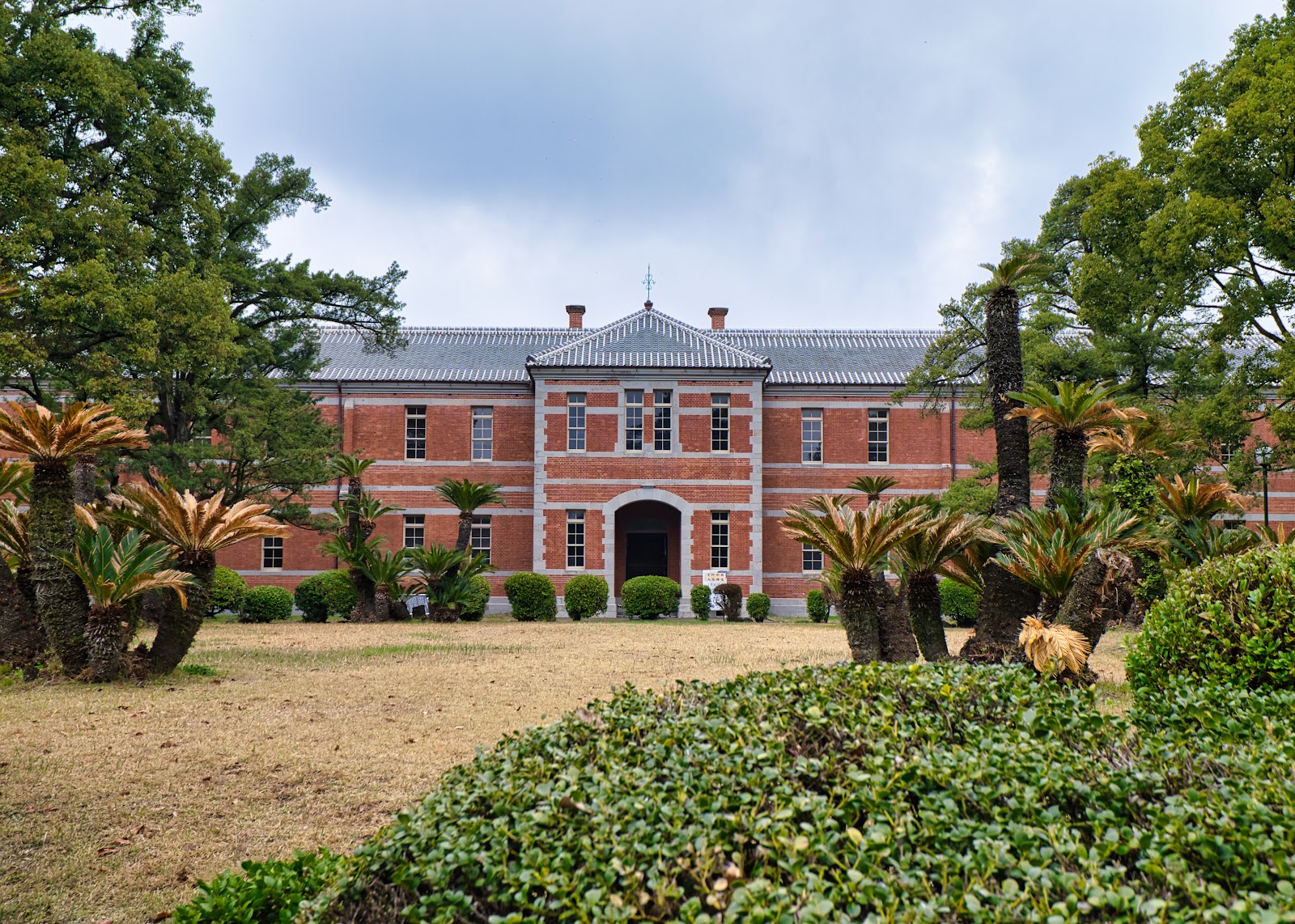
Yachiyoza is one of Japan's finest surviving traditional theatres and a designated Important Cultural Property, a rare complete example of the kind of playhouse that once entertained townsfolk across the country. It stands in Yamaga, a historic onsen and merchant town north of Kumamoto that grew wealthy on rice, sake and its position on old trade routes. In 1910 the town's prosperous merchants pooled funds to build a proper kabuki theatre, and the result was this elegant wooden hall, opened to great celebration and used continuously as a cultural heart of the community.
Stepping inside is like walking into the Meiji era. The auditorium is built in classic style, with 'masu-seki' box seating on the floor where audiences sat on tatami, a pair of hanamichi walkways running through the crowd to the stage, and a beautifully painted coffered ceiling covered in vintage advertisements for local shops and sake breweries, a charming record of the town's businesses a century ago. Overhead lanterns and the warm tone of aged timber give the space an atmosphere no modern theatre can replicate.
The real magic lies in the stage machinery, all of it powered by human muscle. Beneath the boards, a large wooden revolving stage, the 'mawari-butai', is turned by staff who push heavy capstan bars in a circular tunnel, allowing scenes to change dramatically before the audience's eyes. A trapdoor lift known as the 'suppon' let actors rise as if by magic onto the hanamichi. On the guided tour visitors are taken backstage and below the floor to see this ingenious low-tech engineering, and to stand in the dressing rooms where generations of actors prepared.
For a period in the twentieth century the theatre fell into decline and was nearly lost, but a determined local preservation and restoration effort brought it back to life. Today Yachiyoza hosts regular kabuki and other performances, and attending a live show here, surrounded by hand-painted advertisements and lit stage lanterns, is a genuinely memorable way to experience traditional Japanese theatre in its natural setting rather than a museum reconstruction.
When no performance is scheduled, the theatre opens for tours that combine the auditorium, the stage mechanics and an adjacent exhibition hall explaining Yamaga's history and its famous lantern festival, in which dancers balance golden paper lanterns on their heads. Yamaga itself rewards a longer visit, with old streets, public baths and craft shops.
The town lies about 50 minutes north of central Kumamoto by car, or reachable by bus from Shin-Tamana Station on the Kyushu Shinkansen. Allow around 45 minutes for the theatre tour, and consider timing a trip to coincide with a live performance for the full effect.
A local's tip
Ask to go beneath the stage — the hand-operated revolving 'mawari-butai' and the tunnel-like 'suppon' trapdoor are still turned by staff pushing wooden capstans, exactly as in 1910.
Best time to visit
Weekdays for quiet backstage tours; check the schedule for live kabuki
Getting there
Yamaga sits north of Kumamoto; from Shin-Tamana Station on the Kyushu Shinkansen take a bus toward Yamaga (about 30 min), or drive roughly 50 minutes north of central Kumamoto.
Good to know
- Restrooms
- Guided tour
Plan the whole trip offline
Yachiyoza Theatre is one of many places in the Real Japan app — with turn-by-turn directions, nearby spots and full offline maps you can use with no signal.