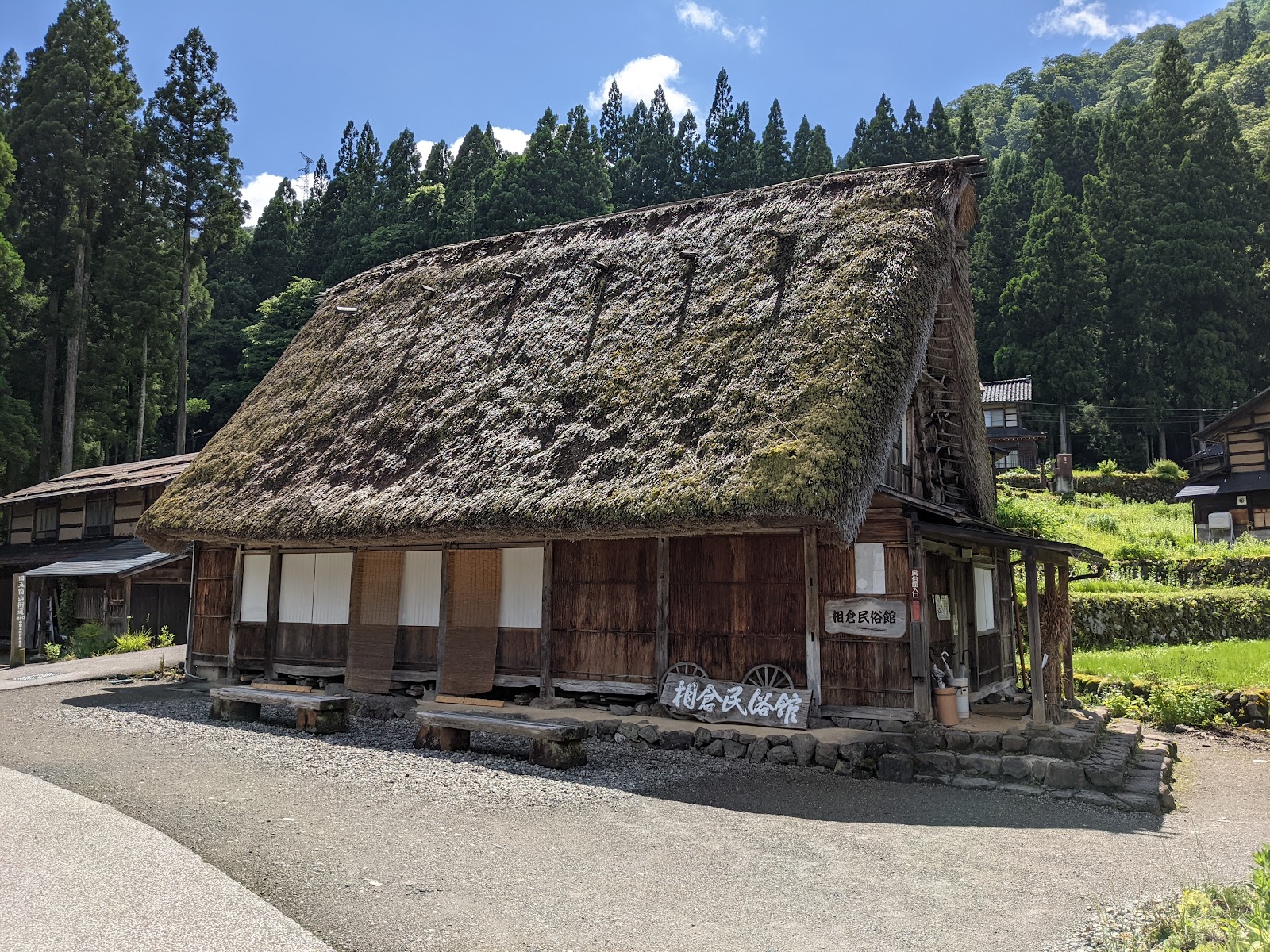
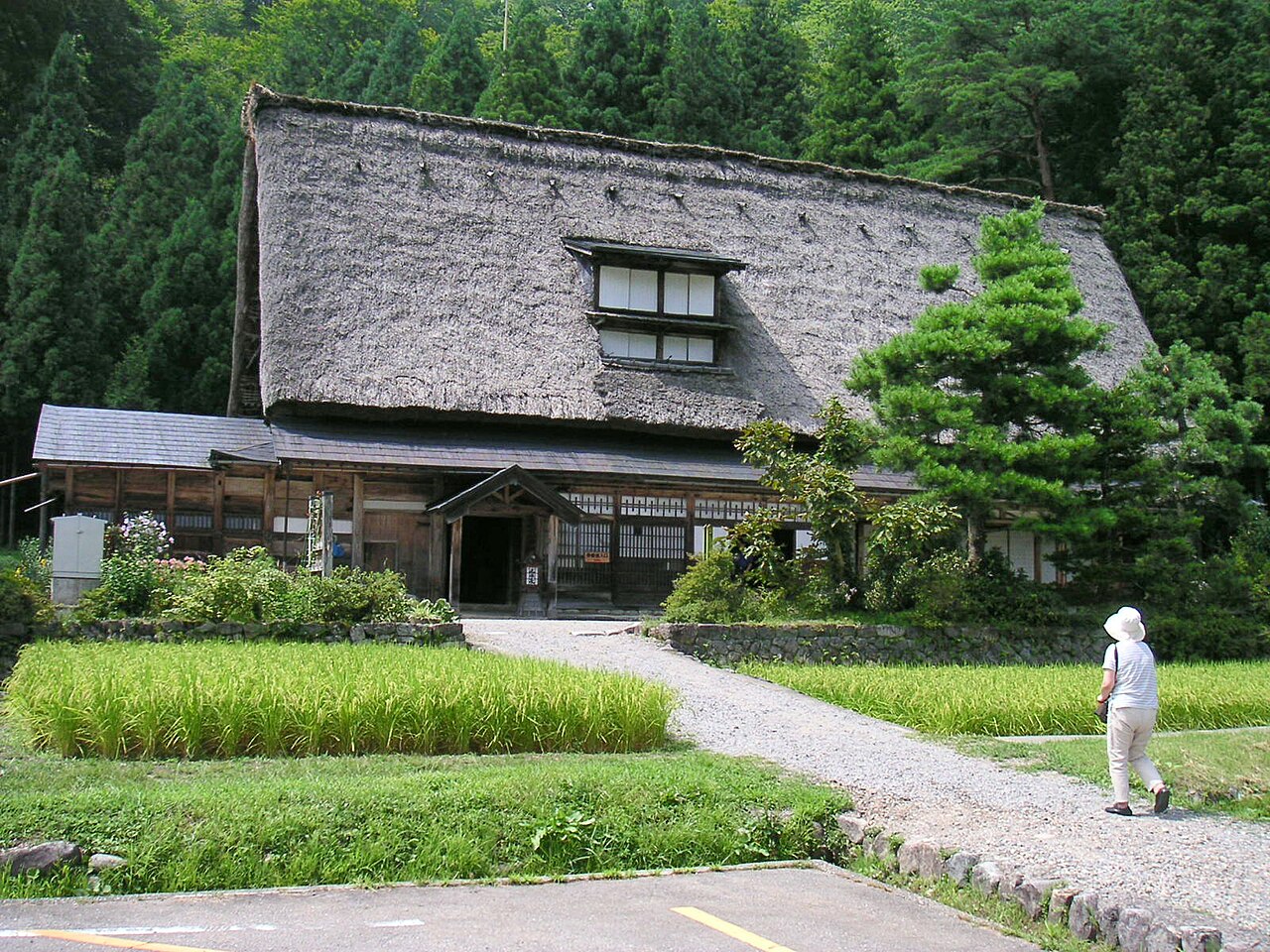
A quiet Gokayama hamlet home to Murakami House, one of the oldest and most authentic gassho farmhouses you can enter.
Between the famous World Heritage clusters of Suganuma and Ainokura, the small hamlet of Kaminashi strings its houses along the Sho River in the heart of Gokayama. It sees a fraction of the visitors of its UNESCO-listed neighbours, yet it holds one of the region's true treasures: Murakami House, or Murakami-ke, a gassho-zukuri farmhouse widely regarded as among the oldest and most intact of its kind and designated an Important Cultural Property of Japan.
Built in the traditional prayer-hands style, Murakami House is thought to date in its earliest form to the sixteenth century, with the present structure representing centuries of careful maintenance. Stepping inside is the real reward. Unlike the many gassho houses you can only admire from the lane, this one is open as a museum, and a resident caretaker often greets guests personally. You sit by the irori, the sunken hearth whose rising smoke cured the thatch and blackened the beams against insects and rot, while the ingenious multi-storey interior reveals how families lived below and raised silkworms and stored tools in the vast roof space above.
Gokayama's history threads through the house: the isolation of these valleys, the silk and washi paper trades, and the clandestine production of gunpowder saltpetre for the Kaga domain that once made the region strategically valuable. Kaminashi is also strongly associated with the kokiriko, said to be Japan's oldest folk song and dance, and the caretaker may demonstrate the sasara — a whirling string of small wooden slats that snaps like a wooden wave — giving you a rare, living link to a performance tradition more than a thousand years old.
The experience here is personal and unhurried. Because Kaminashi is not a headline stop, you can take your time, ask questions, and feel the texture of a working farmhouse rather than a monument. The setting is lovely in every season: fresh green in early summer, blazing maples in autumn, and the hushed, snow-muffled stillness of a Gokayama winter. The house and hamlet are compact and easy to walk, with restrooms and parking nearby.
Getting to Kaminashi is the same journey as the rest of Gokayama. The World Heritage Bus from Shin-Takaoka Station passes through on its way between the valleys, and by car it lies just off the Tokai-Hokuriku Expressway near the Gokayama interchange. Pairing Kaminashi and Murakami House with Suganuma and Ainokura makes for a full, rounded day in these mountains, and it adds the one thing the busier villages can struggle to offer: the quiet chance to step inside a centuries-old home and hear its stories told by someone who still calls the valley home.
A local's tip
Ask the caretaker at Murakami House to demonstrate the sasara clappers of the kokiriko dance — the house is one of the best places in Gokayama to hear about the old folk song firsthand.
Best time to visit
Any season; winter for atmosphere, autumn for colour
Getting there
From Shin-Takaoka Station take the World Heritage Bus toward Gokayama and alight near Kaminashi (about 60 minutes). By car it is a few minutes off the Tokai-Hokuriku Expressway near the Gokayama IC.
Good to know
- Parking
- Restrooms
Plan the whole trip offline
Kaminashi Village and Murakami House is one of many places in the Real Japan app — with turn-by-turn directions, nearby spots and full offline maps you can use with no signal.