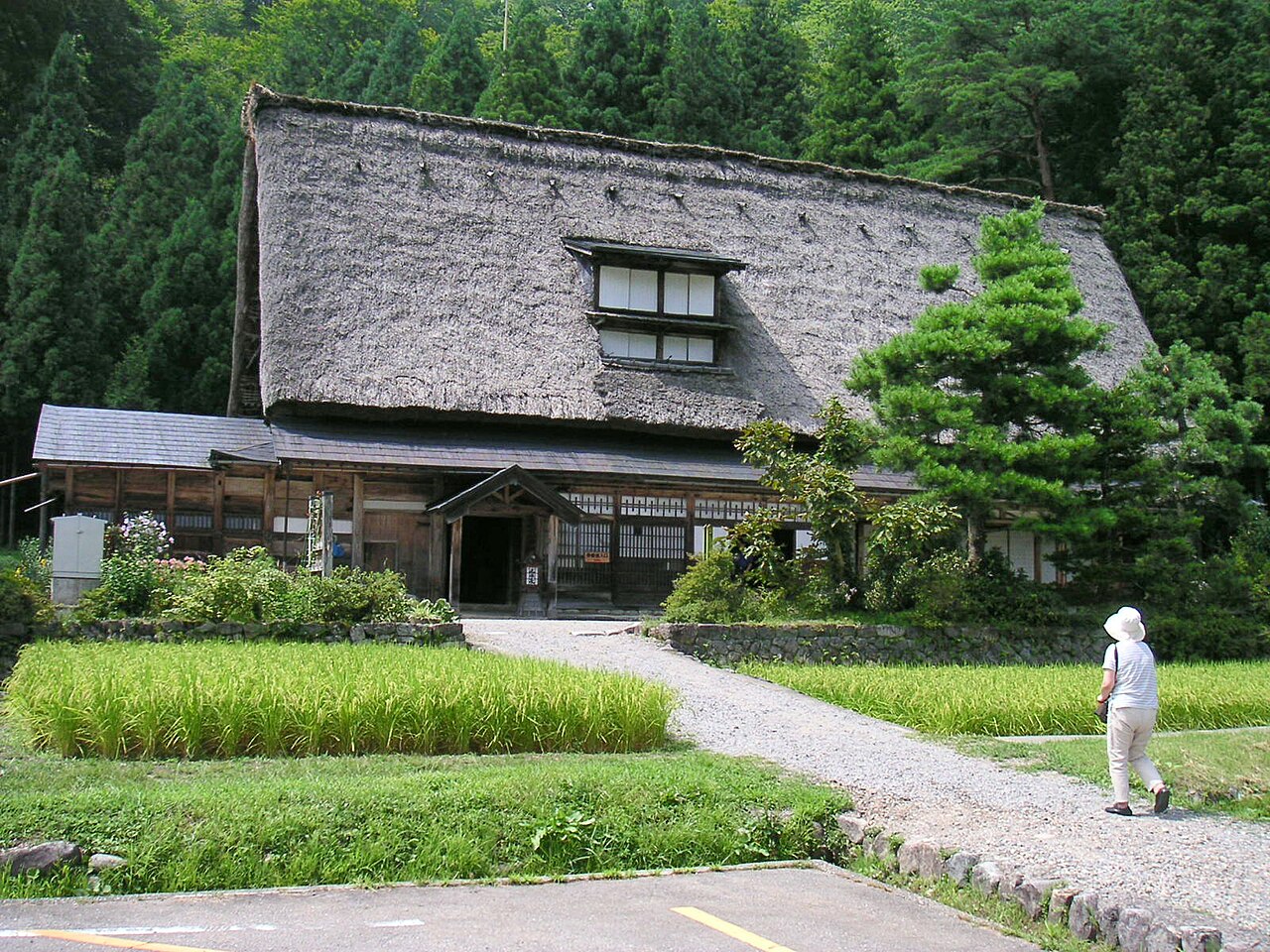
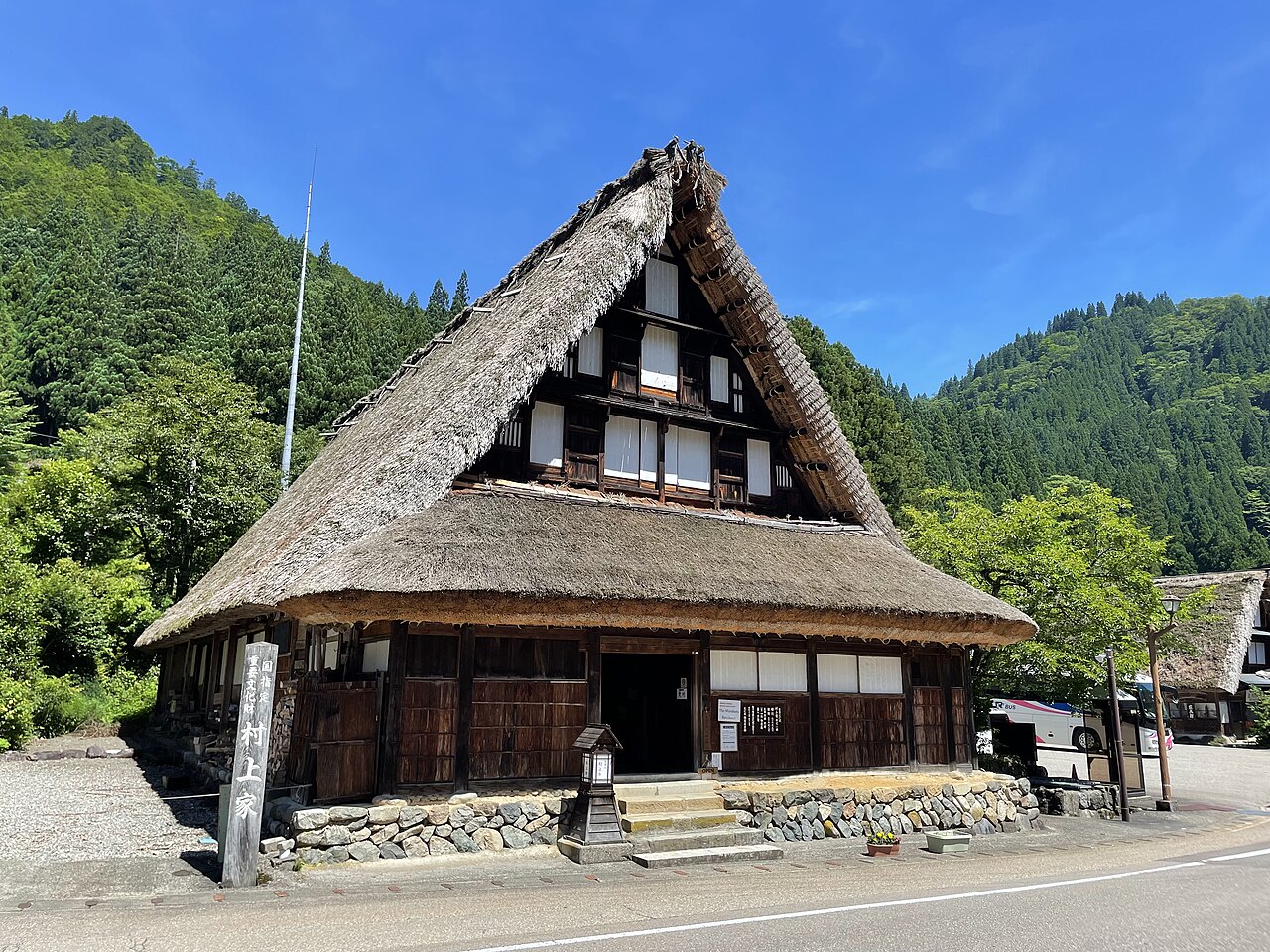
A living UNESCO village of steep-thatched farmhouses tucked in the remote Sho River mountains of Gokayama.
Ainokura is the largest and best known of the Gokayama villages, a cluster of gassho-zukuri farmhouses set on a small plateau deep in the mountains of southern Toyama Prefecture. Its steeply pitched thatched roofs — named gassho, or "hands in prayer," for their resemblance to pressed palms — are engineered to shrug off the heavy snows that bury this valley each winter. Around twenty houses remain, some more than three centuries old, still lived in by families who farm the surrounding terraces.
Along with neighbouring Suganuma and the larger Shirakawa-go across the prefectural border, Ainokura was inscribed on the UNESCO World Heritage List in 1995 as an outstanding example of a traditional human settlement adapted to a harsh environment. For centuries this was one of the most isolated corners of the old Etchu province, reachable only by mountain paths. That very remoteness shaped its economy: households raised silkworms in the airy upper floors of their houses and produced gunpowder saltpetre for the ruling Kaga (Maeda) domain, work that funded the enormous, labour-intensive roofs.
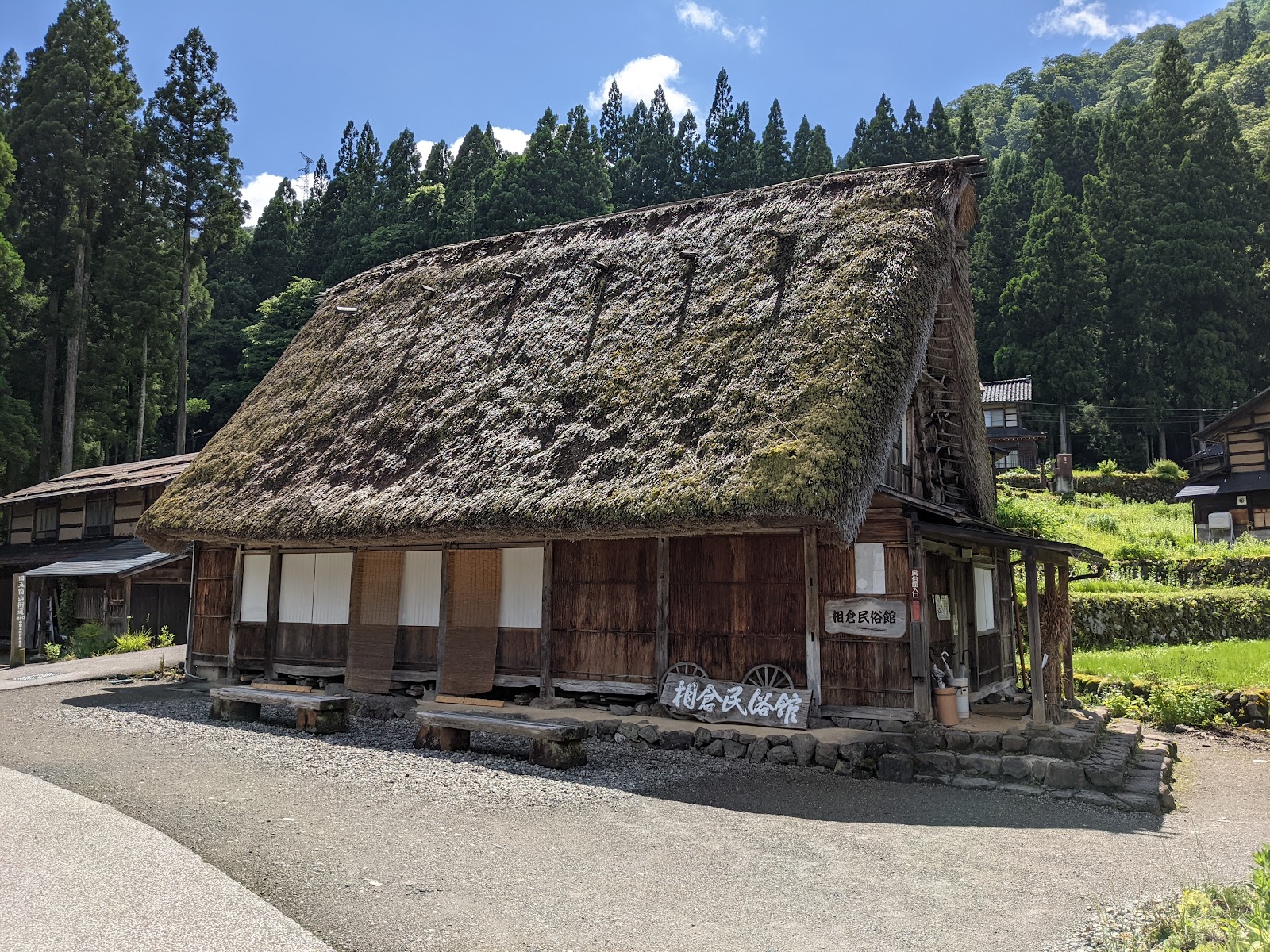
Walking the single lane through the village, you pass the small Ainokura Folklore Museum, whose two buildings display the tools of silk and paper making and everyday mountain life. Gokayama is also the cradle of the kokiriko dance, accompanied by the Kokiriko Bushi — often called Japan's oldest folk song — performed with a clattering sasara of wooden slats; you can sometimes catch a demonstration or buy a sasara as a souvenir.
The visiting experience is quiet and unhurried. A signposted path climbs to a hillside viewpoint that takes in the whole hamlet, the surest photograph in Gokayama, and it is at its most magical in winter when the roofs disappear under a metre of snow and a handful of evenings each season the village is lit up. Autumn brings fiery maples to the ridgelines behind the houses. Facilities are simple but present — restrooms, a paid car park below the village, small shops and cafes — and paths are mostly flat and easy, though the viewpoint trail is a short climb.
Ainokura rewards those who slow down. Several farmhouses operate as minshuku, and staying overnight, after the day trippers leave, is the way to feel the place as it really is: irori hearths glowing, the smell of woodsmoke, an utterly dark and silent mountain night. Getting there is half the adventure. From Shin-Takaoka Station the World Heritage Bus winds up toward Shirakawa-go and stops at Ainokura-guchi in a little over an hour; by car it is about an hour from the coast via the Tokai-Hokuriku Expressway. Come respectful — people live here — and Ainokura offers one of the most authentic encounters with old rural Japan still possible today.
A local's tip
Climb the marked hilltop viewpoint above the car park early or late in the day when the tour buses have gone — that is the postcard shot, especially when chimney smoke hangs over the thatch.
Best time to visit
Winter for snow-covered roofs; late autumn for foliage
Getting there
From Shin-Takaoka Station take the World Heritage Bus toward Shirakawa-go and alight at Ainokura-guchi (about 70 minutes), then a short uphill walk. By car it is roughly 1 hour via the Tokai-Hokuriku Expressway (Fukumitsu IC).
Good to know
- Shops
- Parking
- Restrooms
Plan the whole trip offline
Ainokura Gassho-zukuri Village is one of many places in the Real Japan app — with turn-by-turn directions, nearby spots and full offline maps you can use with no signal.