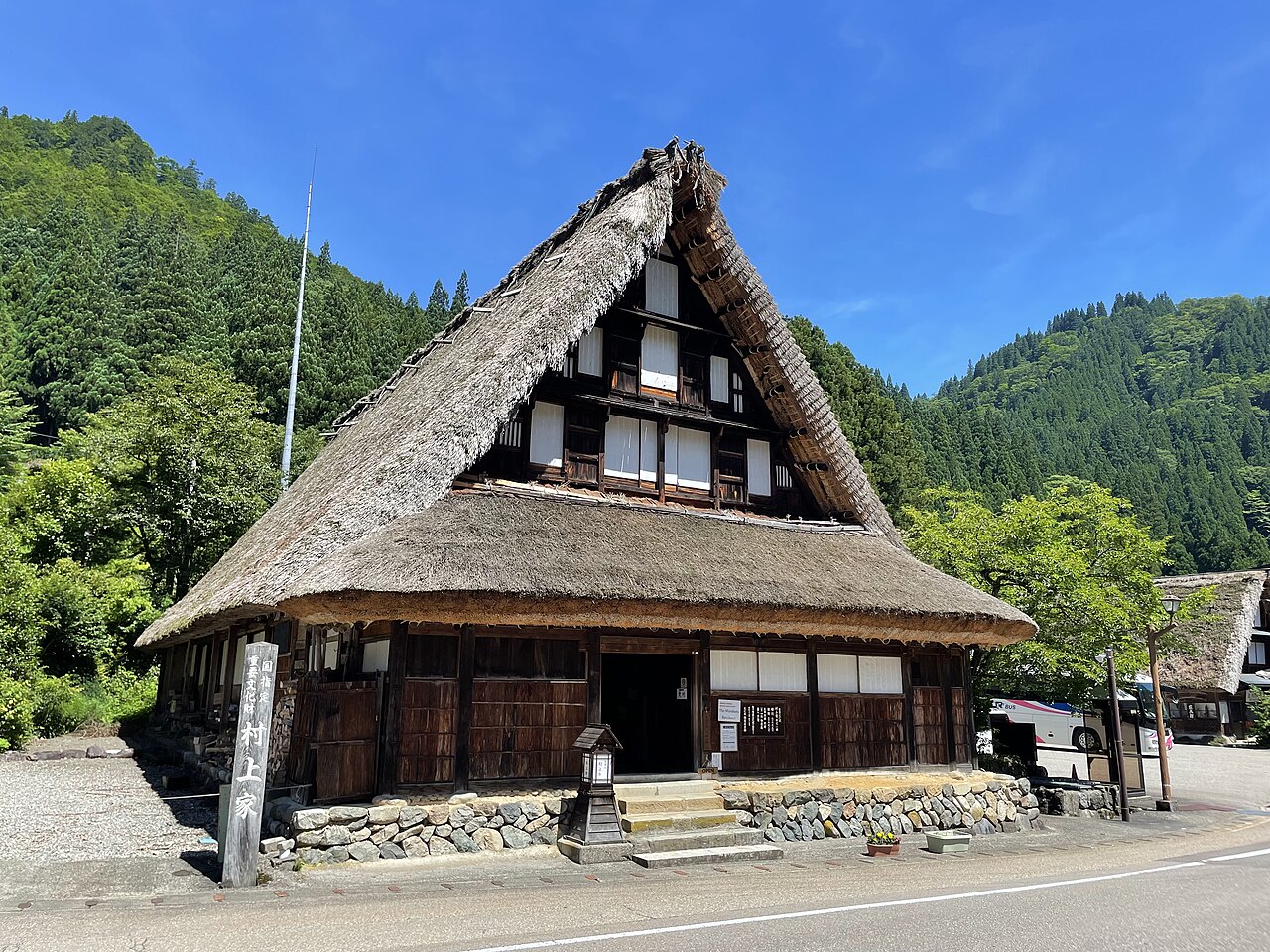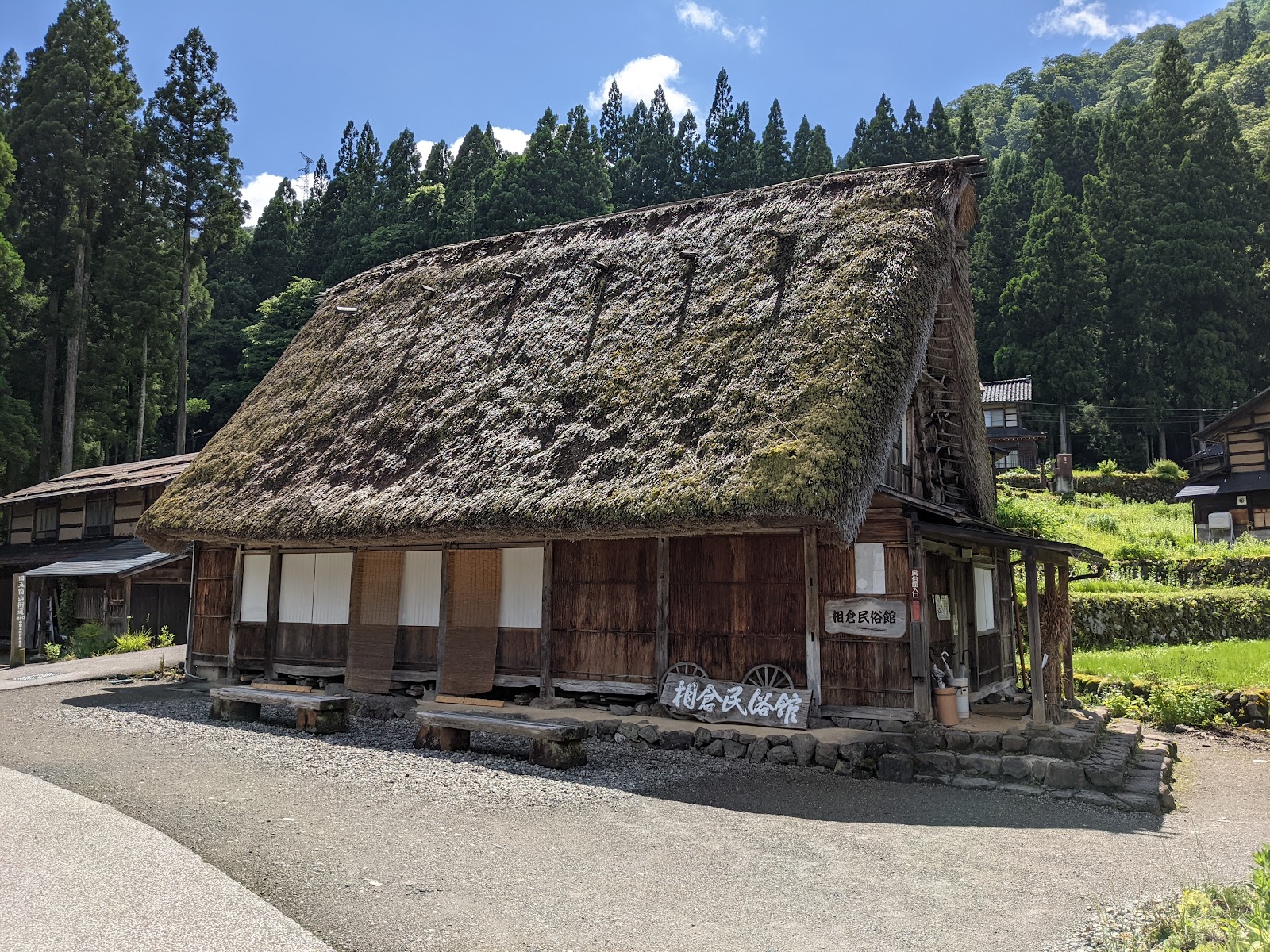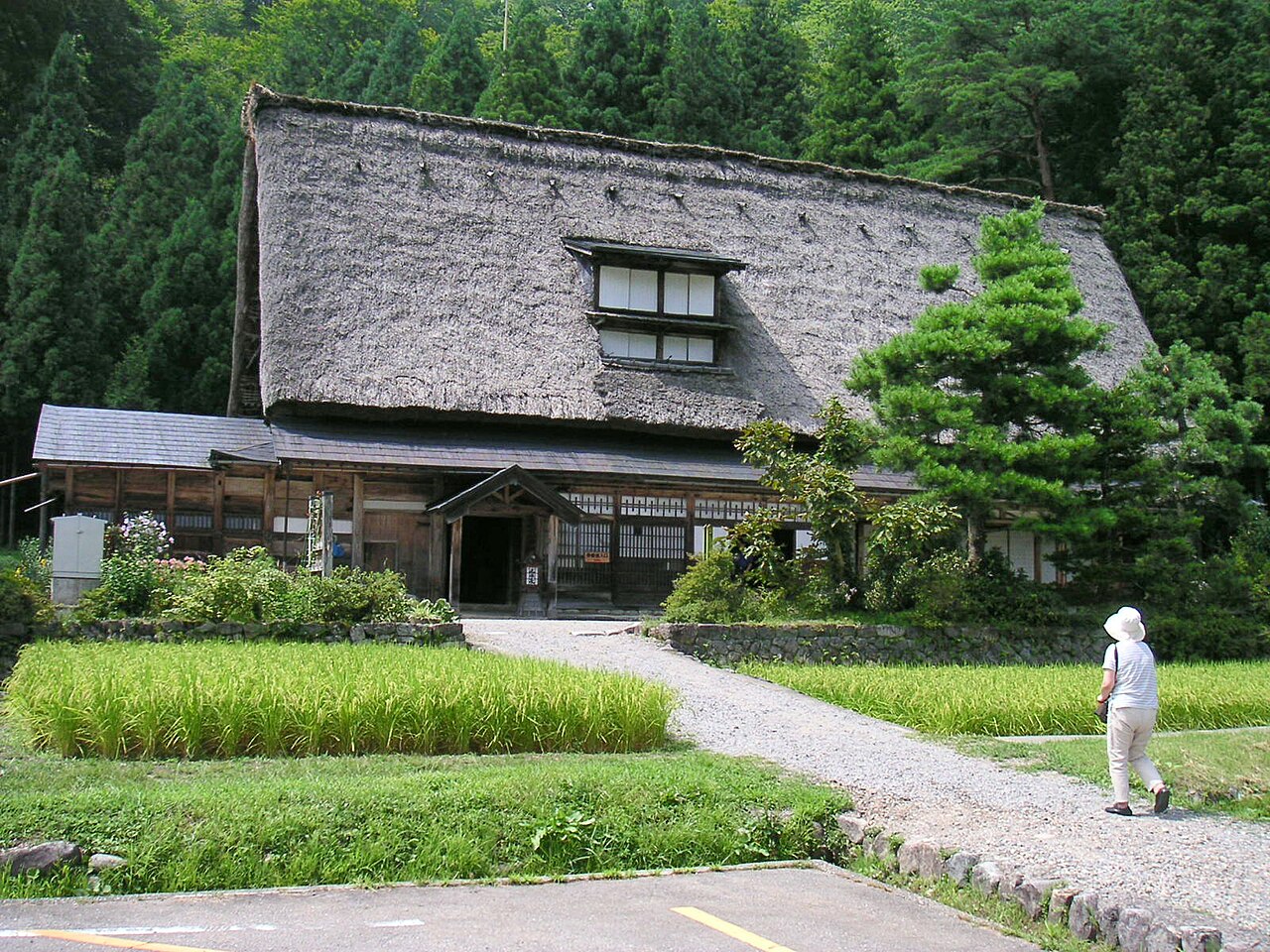
The largest gassho farmhouse in Japan, a five-storey Gokayama house built of zelkova wood, deep in the quiet valley.
The Iwase House is the largest gassho-zukuri farmhouse in Japan, a towering five-storey structure in the tranquil Gokayama valley that offers one of the most impressive interiors of any thatched house in the country. Standing in the hamlet of Nishiakao along the Shokawa river, it is a highlight of the Gokayama district — the lesser-known, quieter partner to Shirakawa-go within the same UNESCO World Heritage listing.
Gokayama lies deeper in the mountains than Shirakawa-go and receives only a fraction of the visitors, so exploring its gassho houses is a serene, almost solitary experience. The valley's isolation shaped its history: for centuries it was a hidden, self-reliant world where families supported themselves through farming, sericulture and, crucially, the production of saltpetre for gunpowder, a trade carried out under the protection of the ruling Kaga domain. That combination of remoteness and quiet prosperity produced the magnificent farmhouses that survive here.
The Iwase House, built in the 18th century, is the grandest of them all. It rises a full five floors under its steep thatched roof — the gassho-zukuri form, meaning 'praying hands,' whose sharp triangular pitch was designed to shed the region's heavy snow while enclosing a vast working space beneath. What sets the Iwase House apart, beyond its sheer size, is the quality of its construction: its interior framework is built substantially from keyaki, or Japanese zelkova, a hard and valuable timber, reflecting the wealth and status of the family, who served as officials overseeing the saltpetre production for the domain.
Inside, visitors can climb up through the floors to appreciate the scale and engineering of the building. The massive beams are bound with rope and pliable branches rather than nails, allowing the enormous frame to flex under snow and wind, and the upper storeys — once devoted to raising silkworms and to the saltpetre trade — display tools, household goods and information about these vanished industries. The ground floor retains its sunken irori hearth, whose smoke rising through the house has preserved the timbers for generations. The sense of standing within such a huge, ingeniously assembled wooden structure, so far from any city, is genuinely awe-inspiring.
The surrounding hamlets of Gokayama, principally Ainokura and Suganuma, preserve whole clusters of gassho houses amid terraced fields and steep forested mountains, and the atmosphere throughout is deeply peaceful. Autumn brings brilliant foliage to the valley walls, while winter cloaks the roofs in heavy snow. Because crowds are light, Gokayama rewards travellers who want the beauty of Shirakawa-go with far more solitude.
Getting there: Gokayama is reached by the World Heritage bus that runs through the valley, connecting with Shirakawa-go to the south and the town of Johana to the north; the Iwase House stands beside the road in Nishiakao, a short walk from the bus stop. It keeps daytime hours and charges a small admission. Step inside Japan's largest thatched farmhouse, climb toward its lofty roof, and let the silence of Gokayama complete the experience.
A local's tip
This is the largest gassho house of all, with five interior floors and an interior built from zelkova wood. Gokayama sees a fraction of Shirakawa-go's visitors, so you can explore in near silence.
Best time to visit
Autumn foliage; quiet any time thanks to fewer crowds than Shirakawa-go
Getting there
Reached by the World Heritage bus through the Gokayama valley (from Shirakawa-go or Johana); the Iwase House stands in the Nishiakao hamlet along the Shokawa river.
Good to know
- Restrooms
- Tea served
- Ticketed interior
Plan the whole trip offline
Iwase House (Gokayama) is one of many places in the Real Japan app — with turn-by-turn directions, nearby spots and full offline maps you can use with no signal.