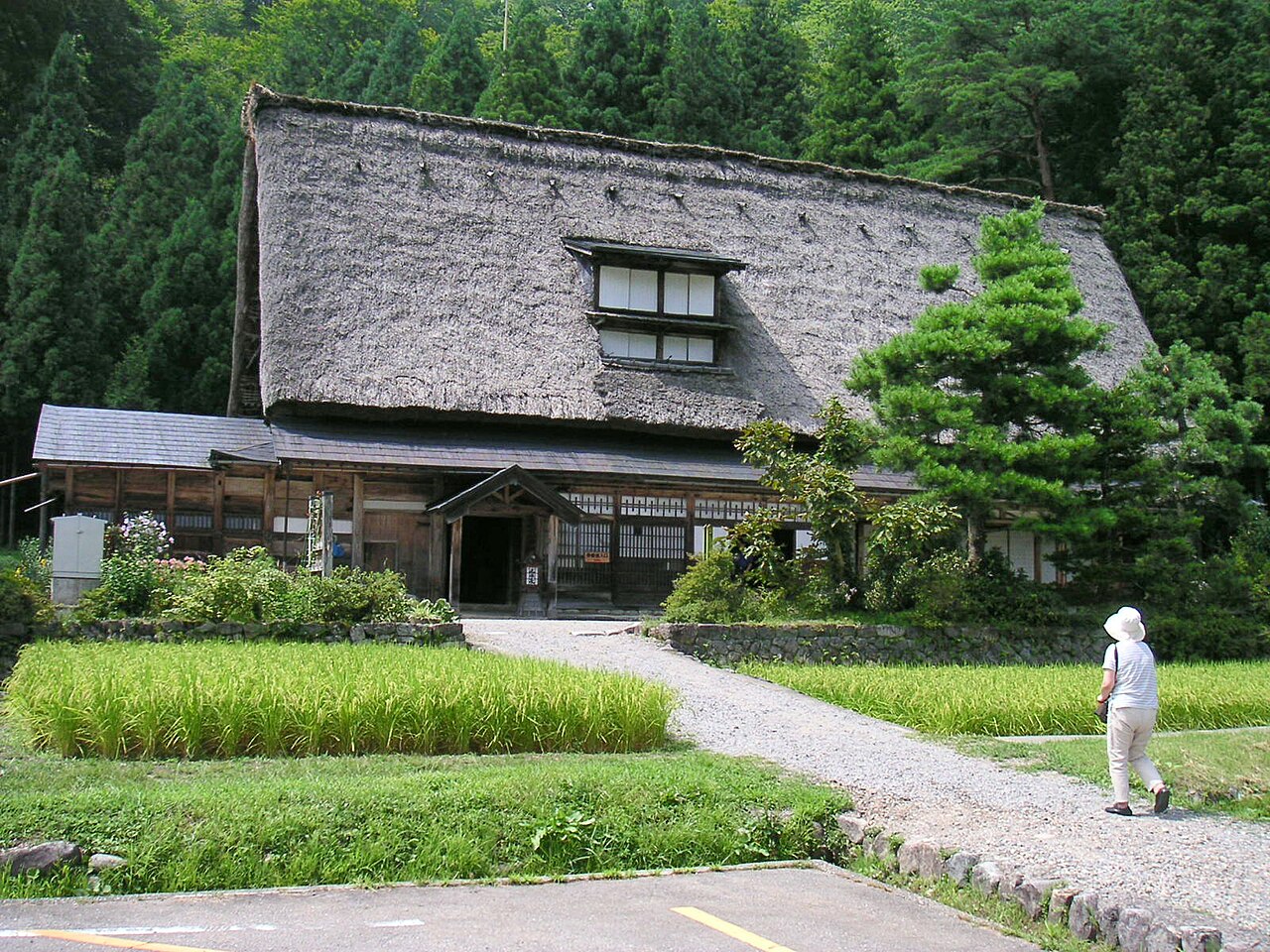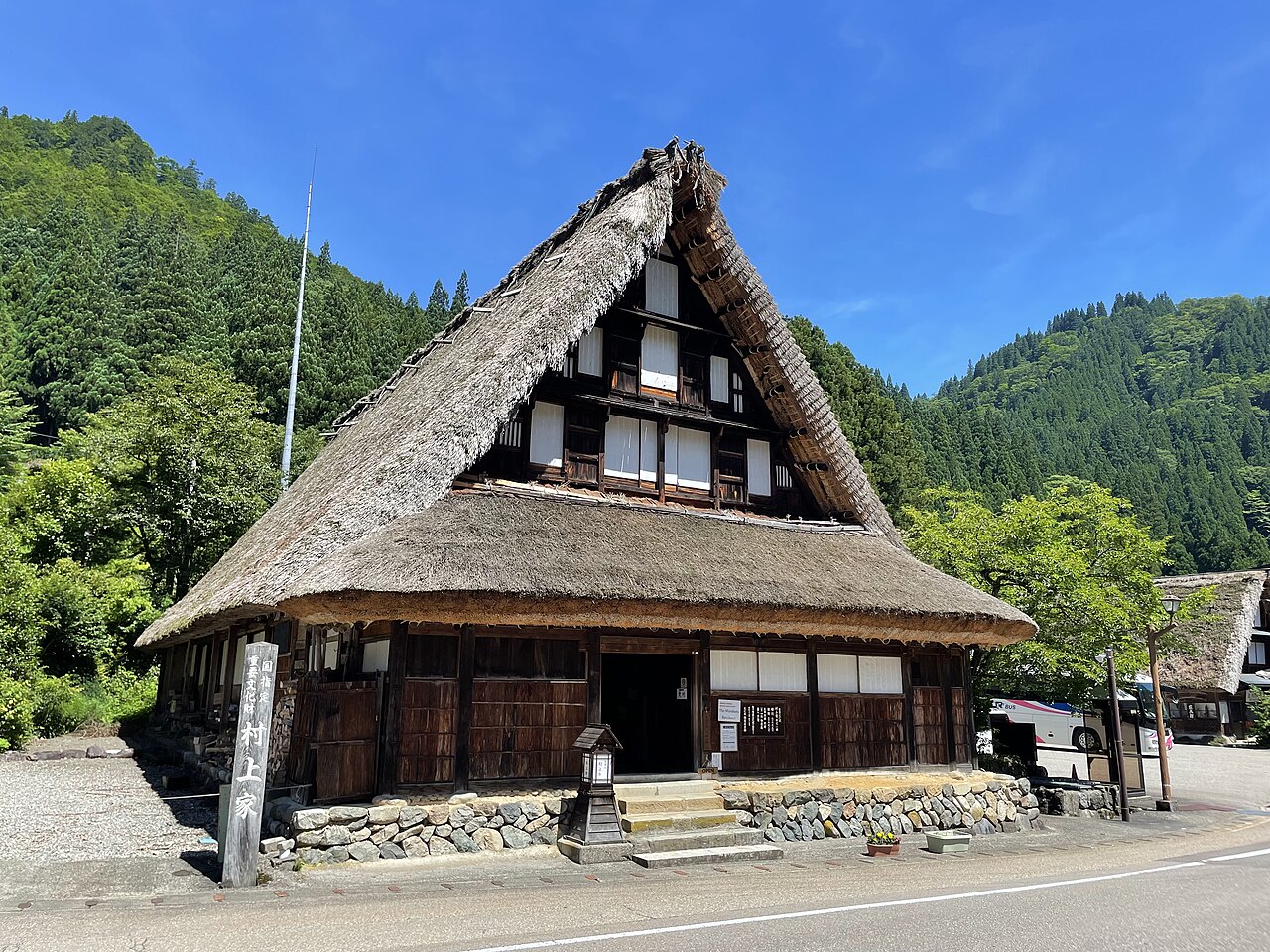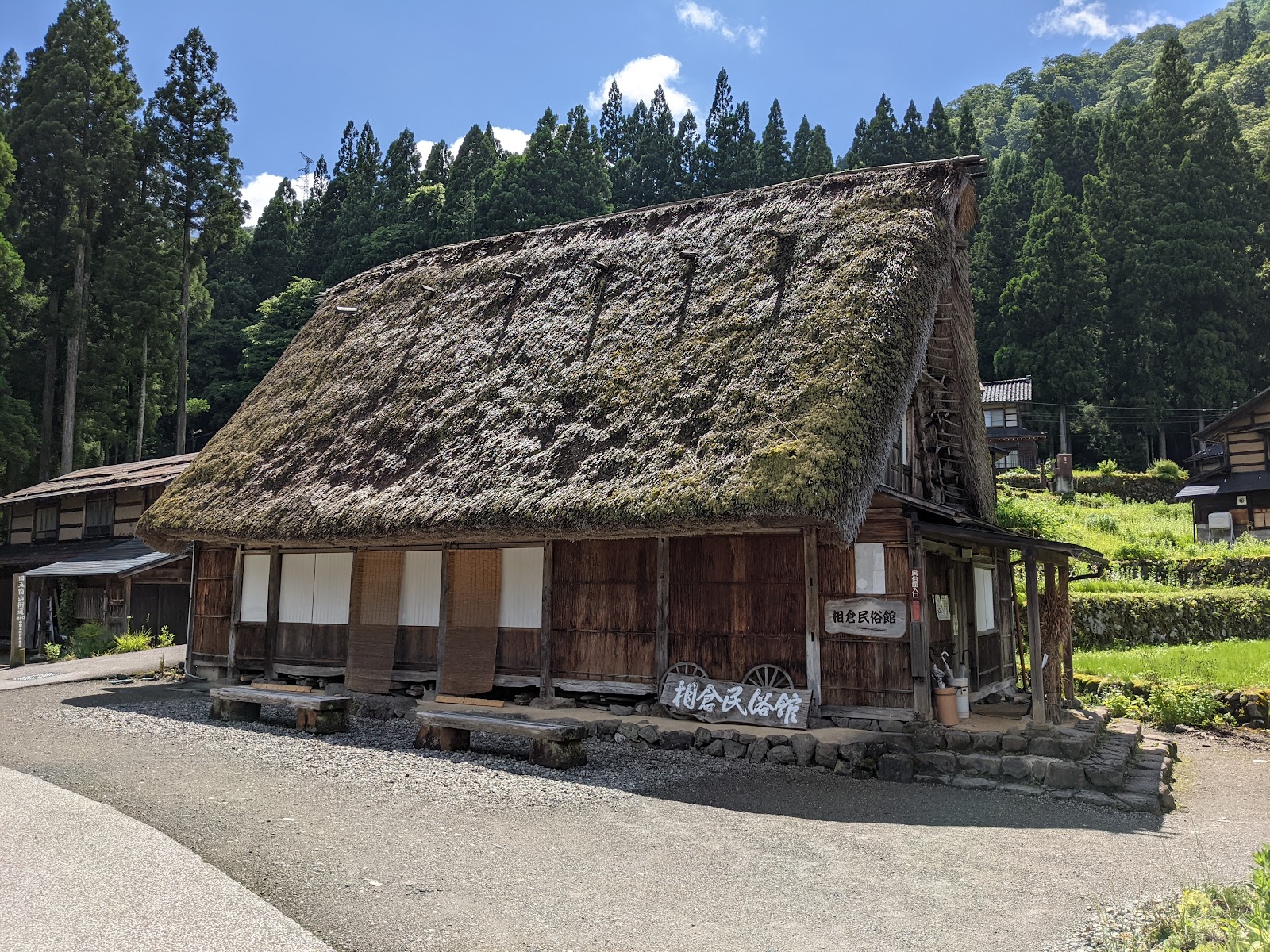
A gassho-house museum in the hilltop hamlet of Ainokura, telling the story of Gokayama's saltpetre and paper-making crafts.
The Ainokura Folk Museum sits within Ainokura, the largest and most beautifully sited of the gassho-zukuri hamlets of the Gokayama valley, and it is the ideal place to understand the crafts and traditions that allowed these remote mountain villages to survive for centuries. Housed in traditional thatched buildings, the museum pairs perfectly with a wander through Ainokura itself, one of the most enchanting settlements in the entire Shirakawa-go and Gokayama World Heritage area.
Ainokura clings to a hillside terrace high in the mountains, a compact cluster of around twenty gassho-zukuri farmhouses set among small paddy fields and ringed by steep forested slopes. The name gassho-zukuri means 'praying hands,' describing the steeply pitched thatched roofs that resemble two palms pressed together, a design perfected to shed the deep snows of this isolated valley while enclosing generous working space beneath the thatch. Because Ainokura lies far off the main tourist trail, it retains a serene, lived-in atmosphere, and the classic viewpoint on the slope above the hamlet offers one of the most memorable panoramas in Japan — the whole village of thatched roofs laid out below, especially magical under autumn colour or a blanket of winter snow.
The folk museum, occupying gassho houses within the village, brings the human story of Gokayama to life. Its displays explain the two great cottage industries that sustained the valley in the Edo period. The first was the production of saltpetre, the essential ingredient of gunpowder, painstakingly cultivated in pits beneath the floors of the houses and supplied to the powerful Kaga domain — a trade that brought income and a degree of protected status to these otherwise poor mountain communities. The second was the making of washi, traditional Japanese paper, crafted from local plant fibres and prized for its strength and quality. Alongside these, the museum shows farming tools, silk-rearing equipment, household objects and folk crafts, and explains the communal customs that bound the village together, including the collective labour needed to re-thatch the great roofs.
The buildings themselves are part of the exhibit. Their massive frames, tied with rope rather than nailed so they can flex under snow, their smoke-blackened beams cured by generations of hearth fires, and their lofty roof spaces all reward close attention. Gokayama is also famous for its folk music, including the ancient Kokiriko dance with its clattering wooden sasara instrument, and the region's living traditions add depth to what the museum documents.
Because Ainokura sees far fewer visitors than Shirakawa-go, exploring it is a peaceful pleasure. You can walk the lanes between the farmhouses, climb to the viewpoint, visit the museum and simply absorb the atmosphere of a mountain village that has changed remarkably little in centuries.
Getting there: take the World Heritage bus through the Gokayama valley to the Ainokura-guchi stop, then walk up into the hamlet, about twelve minutes; the folk museum is within the village. It keeps daytime hours and charges a small admission. Climb to the viewpoint for the classic photo, then step into the museum to learn how saltpetre and paper kept this hidden valley alive.
A local's tip
Climb to the Ainokura viewpoint first for the classic photo of the whole hamlet, then visit the museum to learn how the saltpetre and washi paper trades sustained these isolated villages.
Best time to visit
Any season; the viewpoint above Ainokura is superb in autumn and winter
Getting there
From the Ainokura-guchi bus stop on the World Heritage bus route, walk up into the Ainokura hamlet; the folk museum occupies gassho houses within the village.
Good to know
- Restrooms
- Viewpoint nearby
- Ticketed interior
Plan the whole trip offline
Ainokura Folk Museum (Gokayama) is one of many places in the Real Japan app — with turn-by-turn directions, nearby spots and full offline maps you can use with no signal.