The central head temple of the Kunisaki Peninsula's Rokugo Manzan Buddhism, guarded by famous stone Nio statues.
Futago-ji Temple stands near the very centre of the Kunisaki Peninsula, on the slopes of Mount Futago, and serves as the head temple of the peninsula's unique Rokugo Manzan Buddhist culture. Ancient, atmospheric and set amid beautiful mountain forest, it is the spiritual heart of one of Japan's most distinctive and least-visited religious landscapes, within a scenic drive of Beppu.
The temple is traditionally said to have been founded in the 8th century by the monk Ninmon, revered as the founder of Rokugo Manzan, the syncretic tradition that fused esoteric Tendai Buddhism, Shinto and mountain worship across the Kunisaki Peninsula. Under the influence of the nearby Hachiman shrine of Usa Jingu, this culture produced a dense network of temples, hermitages and rock-carved Buddhas throughout the region, and Futago-ji came to occupy the central, supervising role among them. For centuries it has been a focus of the ascetic mountain practices for which Kunisaki is famous.
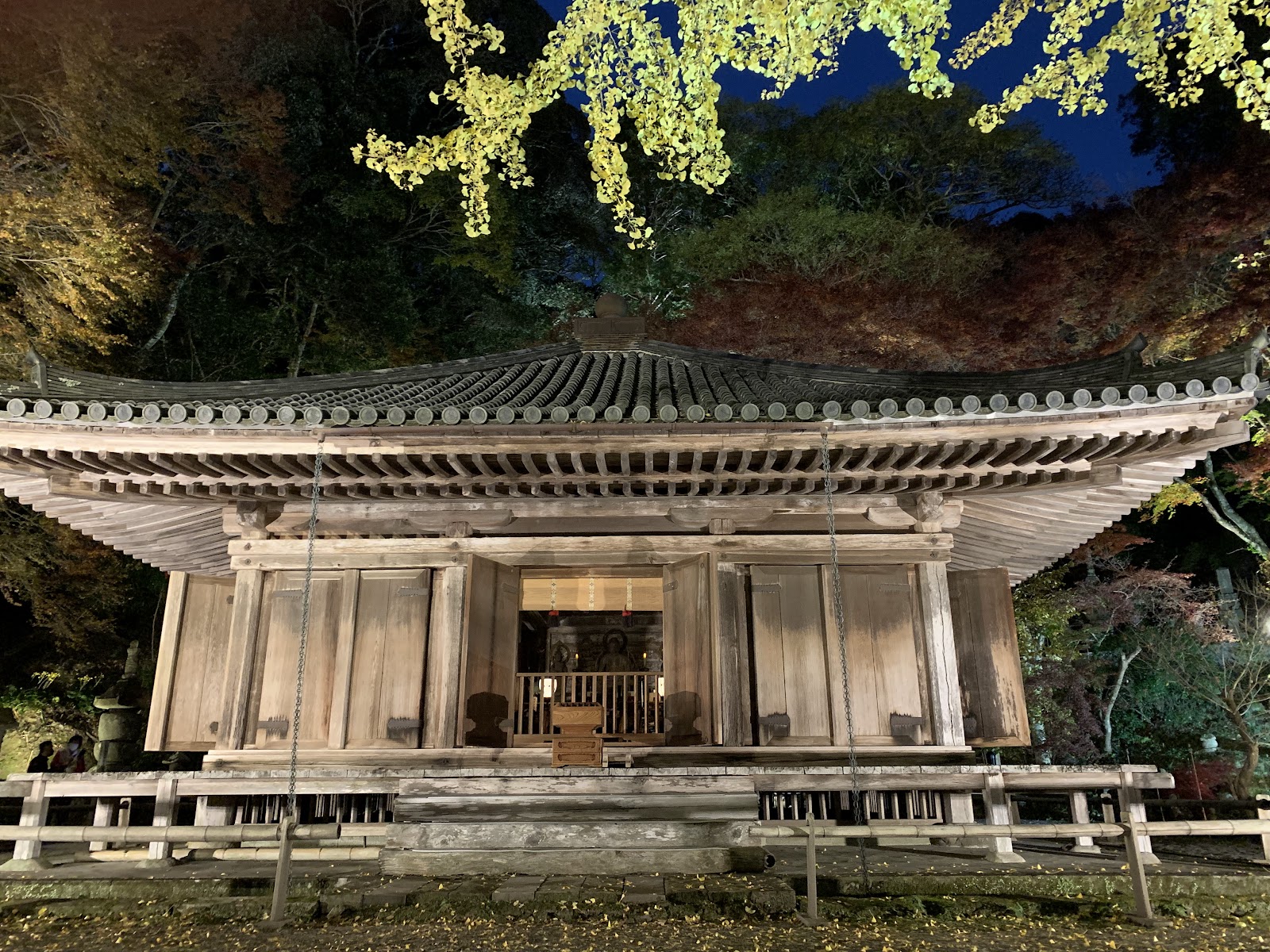
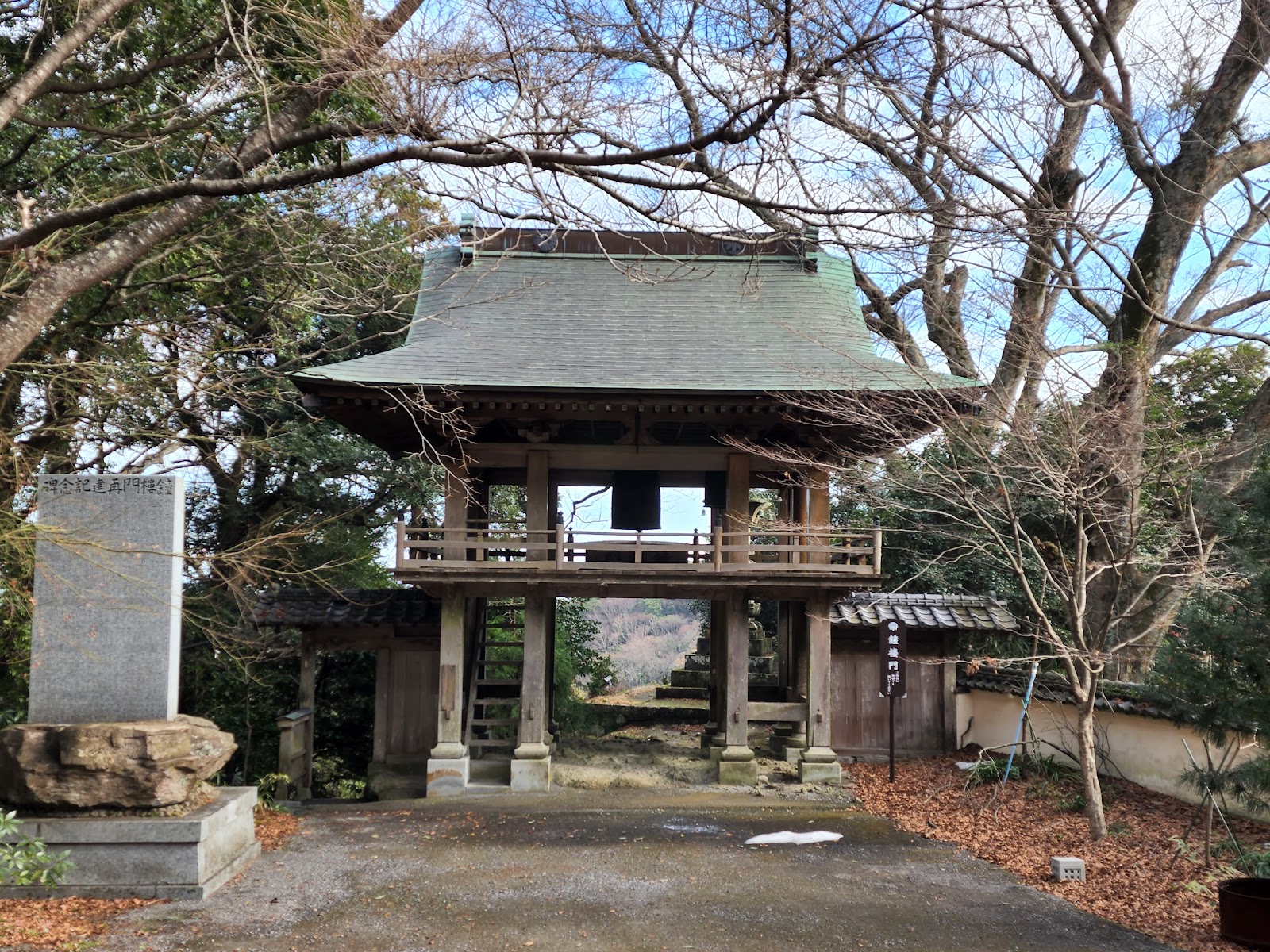
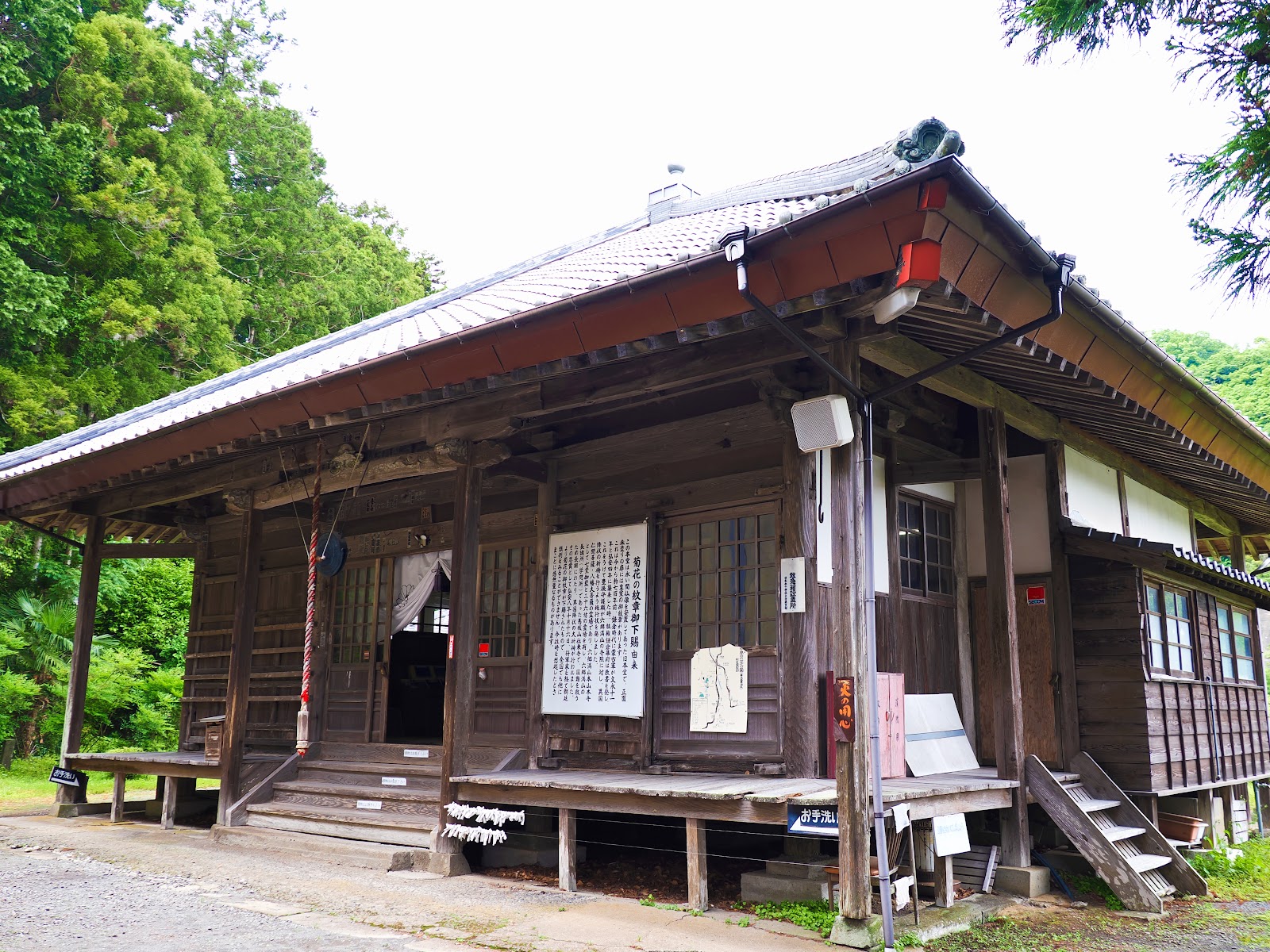
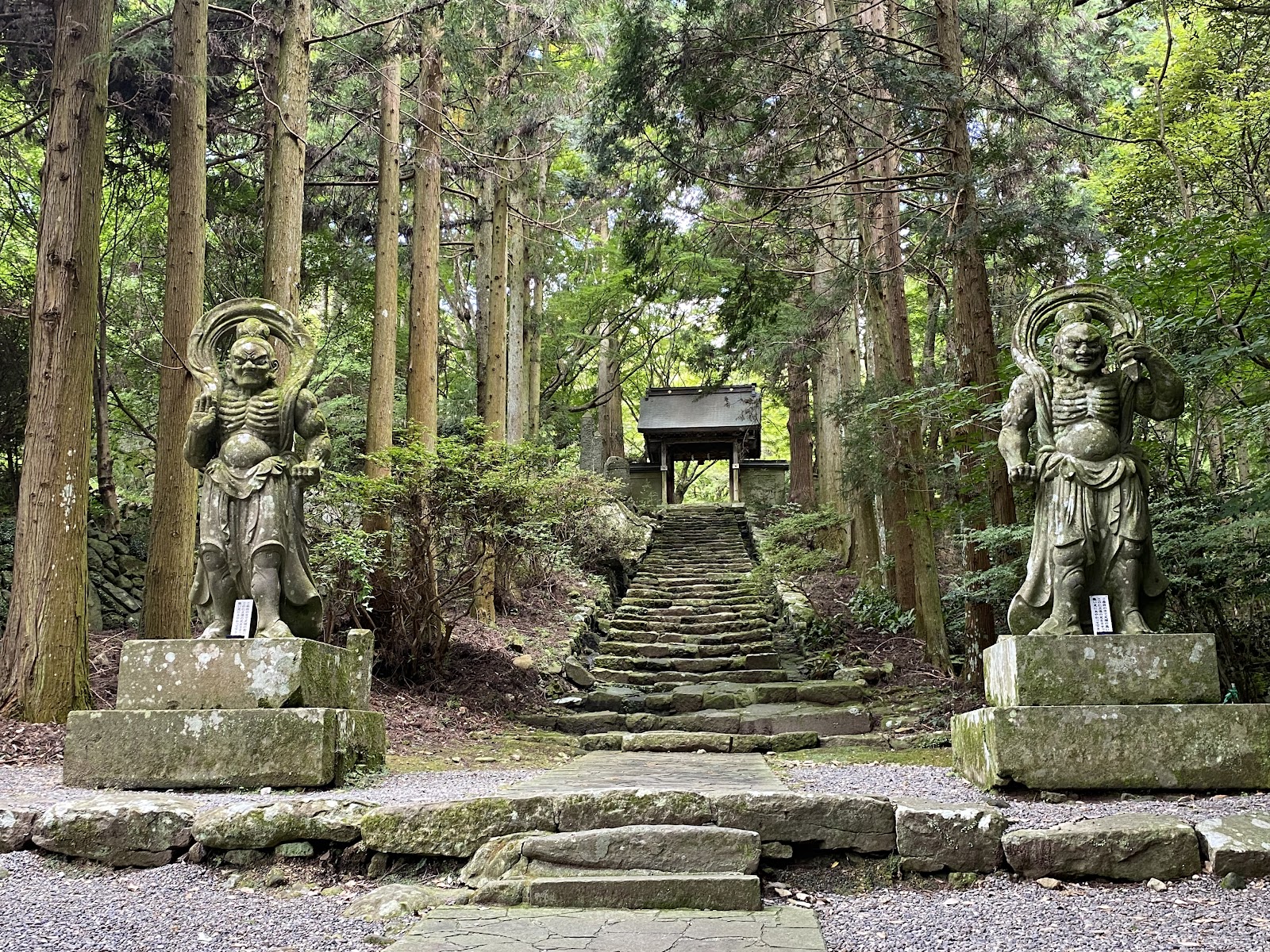
The approach to the temple is one of its great pleasures. Visitors pass a pair of imposing stone Nio guardian statues that flank the stairway, their fierce expressions carved with unusual power; these are counted among the finest stone Nio in Japan and have become an emblem of the peninsula. Climbing the moss-edged stone steps beneath towering trees, worshippers reach the main halls and, higher up the mountainside, the Okunoin inner sanctuary tucked beneath an overhanging rock face, a dramatic setting typical of Kunisaki's mountain temples.
The grounds are rich in atmosphere in every season but are especially celebrated in autumn, when the maples turn brilliant shades of red and orange, drawing visitors to one of the finest koyo spots in Oita. The combination of ancient wooden halls, weathered stone statuary and vivid foliage against the mountain backdrop makes for unforgettable scenery. In spring and summer the deep greenery and cool forest air offer a different but equally beautiful mood.
As the hub of Rokugo Manzan, Futago-ji is the ideal place to begin or anchor a tour of the Kunisaki Peninsula. From here travellers can seek out the other treasures of the tradition, including the National Treasure hall of Fuki-ji, the great rock-carved Buddhas of the Kumano Magaibutsu, the National Treasure statues of Maki Odo and remote hermitages such as Monjusen-ji and Tenne-ji. Together these sites reveal a religious world quite unlike anywhere else in Japan.
Because the peninsula's interior is served by little public transport, reaching Futago-ji really requires a car, about 50 minutes from Beppu, but the winding drive through the hills is itself part of the experience. Allow around an hour to climb the steps, explore the halls and the Okunoin, and absorb the temple's ancient atmosphere. For pilgrims and curious travellers alike, Futago-ji offers a profound and beautiful introduction to the sacred mountains of Kunisaki.
A local's tip
Pause at the pair of fierce Nio guardian statues flanking the stairway, considered among the finest stone Nio in Japan, before climbing to the mountainside Okunoin hall.
Best time to visit
Autumn for spectacular maple colour
Getting there
Futago-ji sits near the centre of the Kunisaki Peninsula. It is realistically reached only by car, about 50 minutes from Beppu, as public transport to the peninsula's interior is minimal. Roads lead to a car park below the temple, from where stone steps climb up.
Good to know
- Parking
- Restrooms
- Prayer hall
Plan the whole trip offline
Futago-ji Temple is one of many places in the Real Japan app — with turn-by-turn directions, nearby spots and full offline maps you can use with no signal.