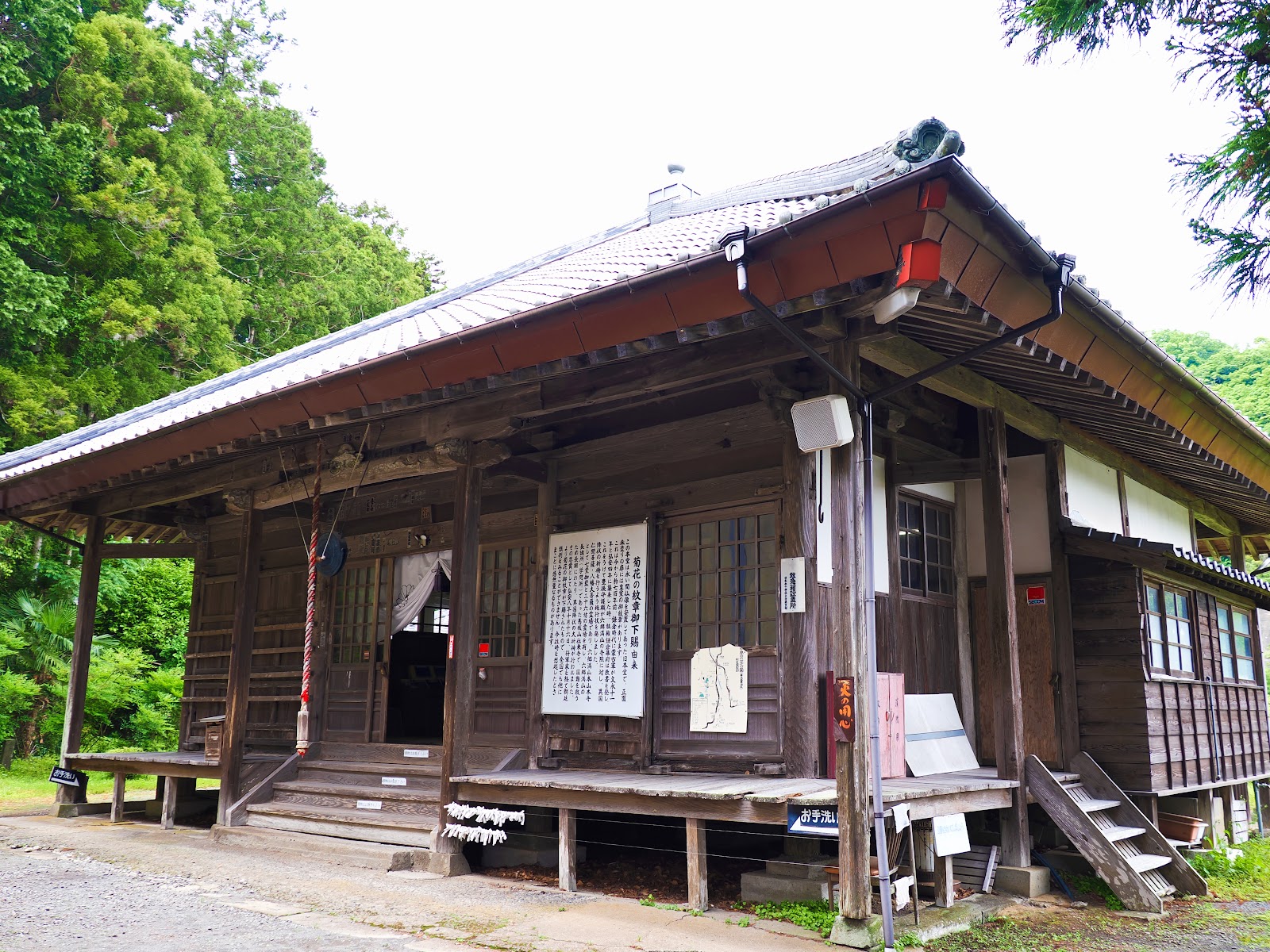
Kyushu's oldest wooden building, a serene National Treasure Amida hall on the Kunisaki Peninsula.
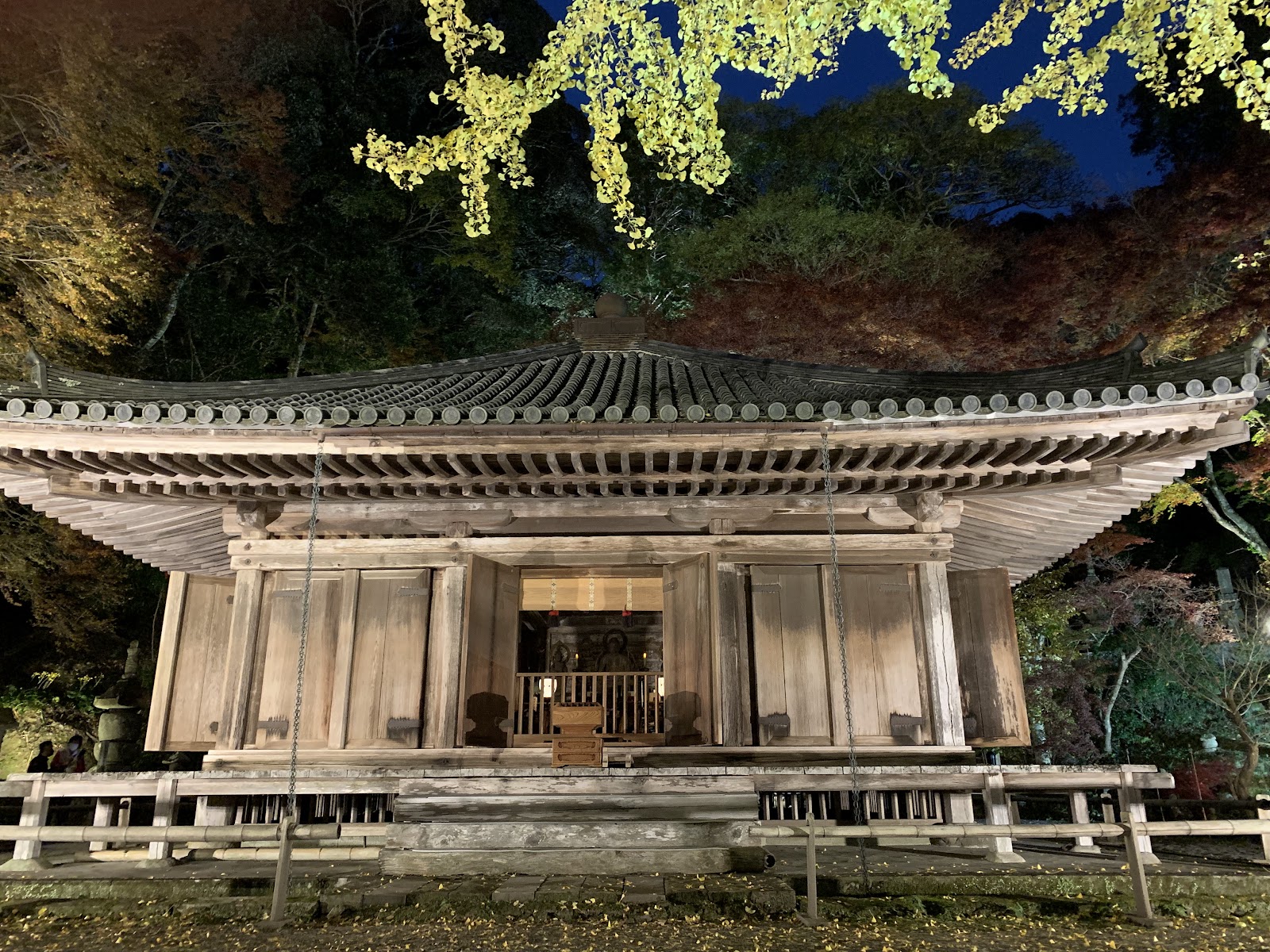
Fuki-ji Temple, on the Kunisaki Peninsula in northern Oita, is home to the oldest wooden structure in Kyushu and one of the most quietly beautiful buildings in all of Japan. Its Amida hall, or Odo, is designated a National Treasure and stands as a serene masterpiece of early Buddhist architecture, hidden in a peaceful rural valley within reach of Beppu.
The great hall is believed to date from the Heian period, roughly the 12th century, making it around 900 years old and the sole surviving example in Kyushu of a wooden building from that distant age. It was built to enshrine Amida Nyorai, the Buddha of the Western Paradise, reflecting the Pure Land faith that swept Japan in the late Heian era, when believers longed for rebirth in Amida's paradise. The hall's restrained, elegant proportions, its shingled roof and its aged, silvery timber embody the refined aesthetic of the period.
Inside, a large seated statue of Amida sits upon a lotus throne, and although faded by the centuries, the walls once bore painted images of the Buddhist paradise and the deities who welcome the faithful. Traces of these Pure Land murals survive, giving a sense of how radiant the interior must once have been. The dim, hushed space, lit only by the soft light from the entrance, creates an atmosphere of profound calm that has drawn worshippers and pilgrims for centuries.
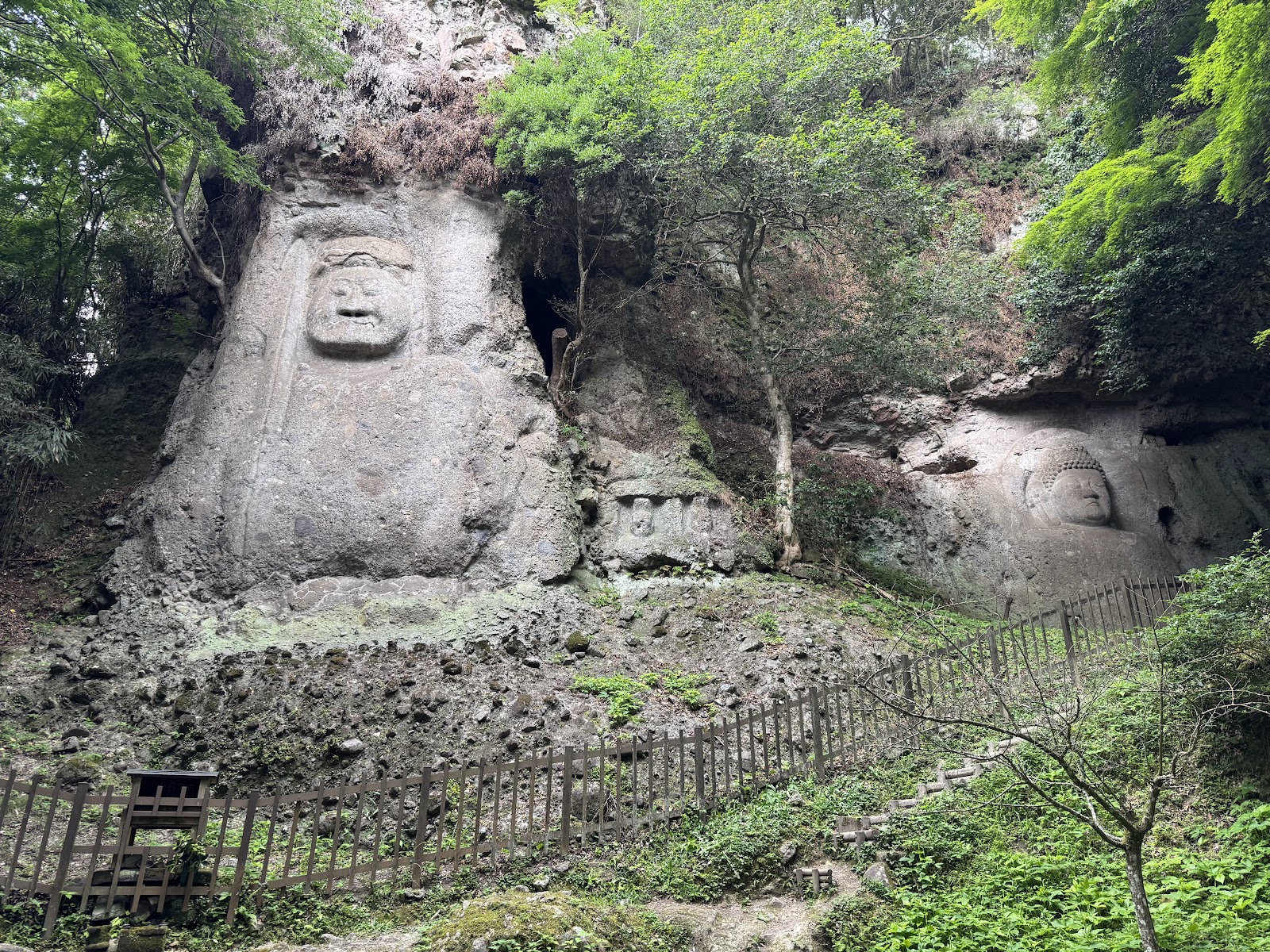
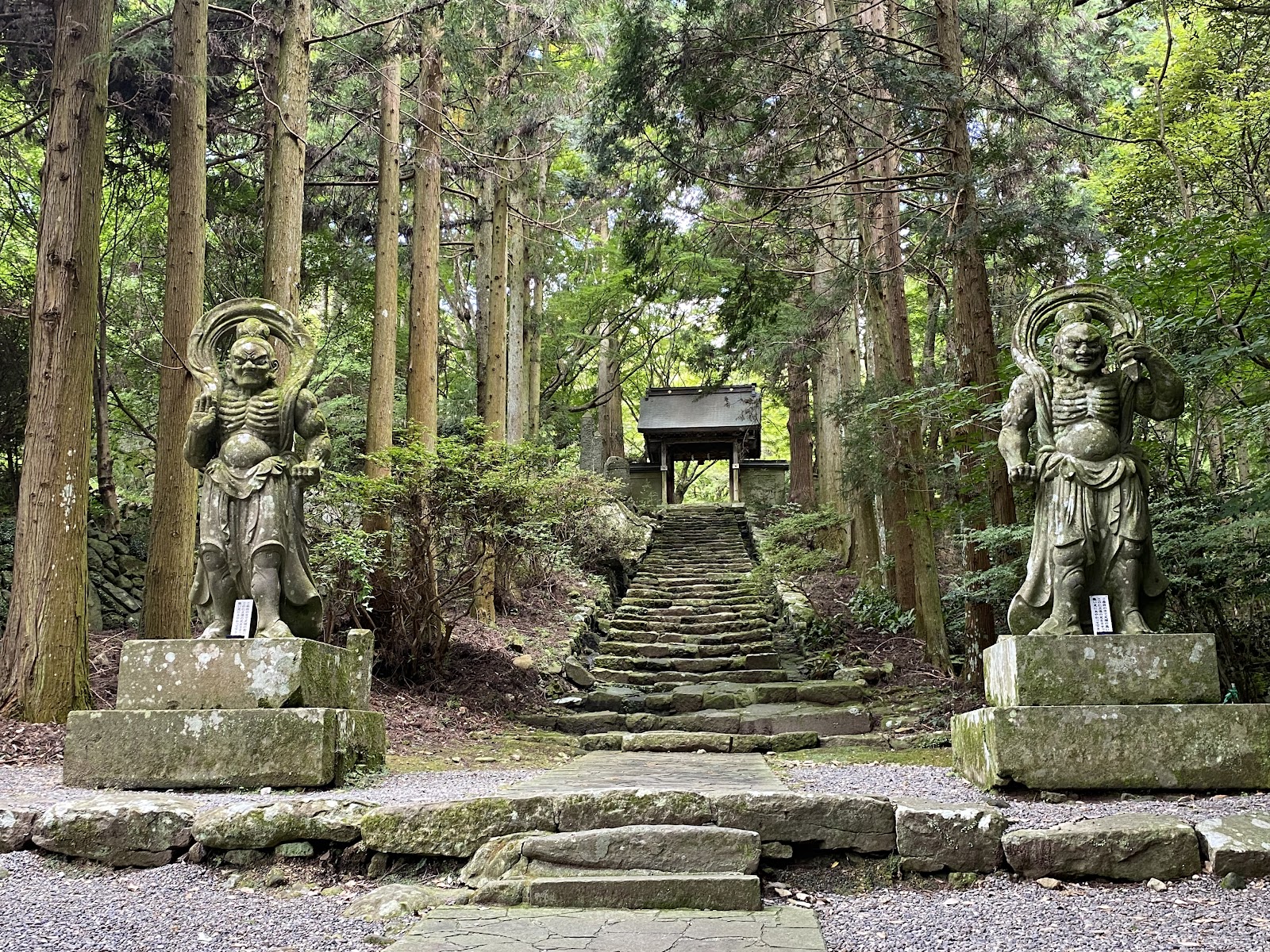
Fuki-ji is one of the jewels of the Kunisaki Peninsula's distinctive Rokugo Manzan culture, a unique blend of Shinto, esoteric Buddhism and mountain worship that flourished here under the influence of the great Hachiman shrine at nearby Usa. The peninsula became dotted with temples, hermitages and rock-carved Buddhas, and Fuki-ji is among the most treasured survivors of that tradition. The temple's setting, surrounded by trees and hills, enhances its air of timeless seclusion.
The hall is especially famous in autumn, when the maples around it blaze red and gold, framing the ancient dark timbers in colour and drawing photographers from across the country. Spring brings soft greenery, and at any season the temple offers a contemplative escape far from the crowds of Japan's better-known religious sites.
Because the Kunisaki Peninsula is rural and served by only sparse public transport, Fuki-ji is best reached by car, about an hour from Beppu, and pairs naturally with other Rokugo Manzan sites such as Futago-ji, Maki Odo and the Kumano Magaibutsu rock carvings. Allow around 45 minutes to appreciate the hall, its statue and the tranquil grounds.
For travellers who value history, architecture and atmosphere over spectacle, Fuki-ji is an unforgettable stop: a fragile wooden survivor from the age of the samurai's ancestors, still standing serenely in its quiet valley after nine centuries.
A local's tip
Go in late autumn when the maples around the hall turn crimson; the weathered wooden Amida hall framed by red leaves is one of Kyushu's most beautiful sights.
Best time to visit
Autumn for the maples framing the hall
Getting there
Fuki-ji is on the Kunisaki Peninsula in Bungotakada. It is realistically reached by car, about 60 minutes from Beppu; by public transport, take the train to Usa or Bungotakada and connect by infrequent local bus or taxi. A rental car is strongly recommended for the peninsula.
Good to know
- Parking
- Restrooms
Plan the whole trip offline
Fuki-ji Temple is one of many places in the Real Japan app — with turn-by-turn directions, nearby spots and full offline maps you can use with no signal.