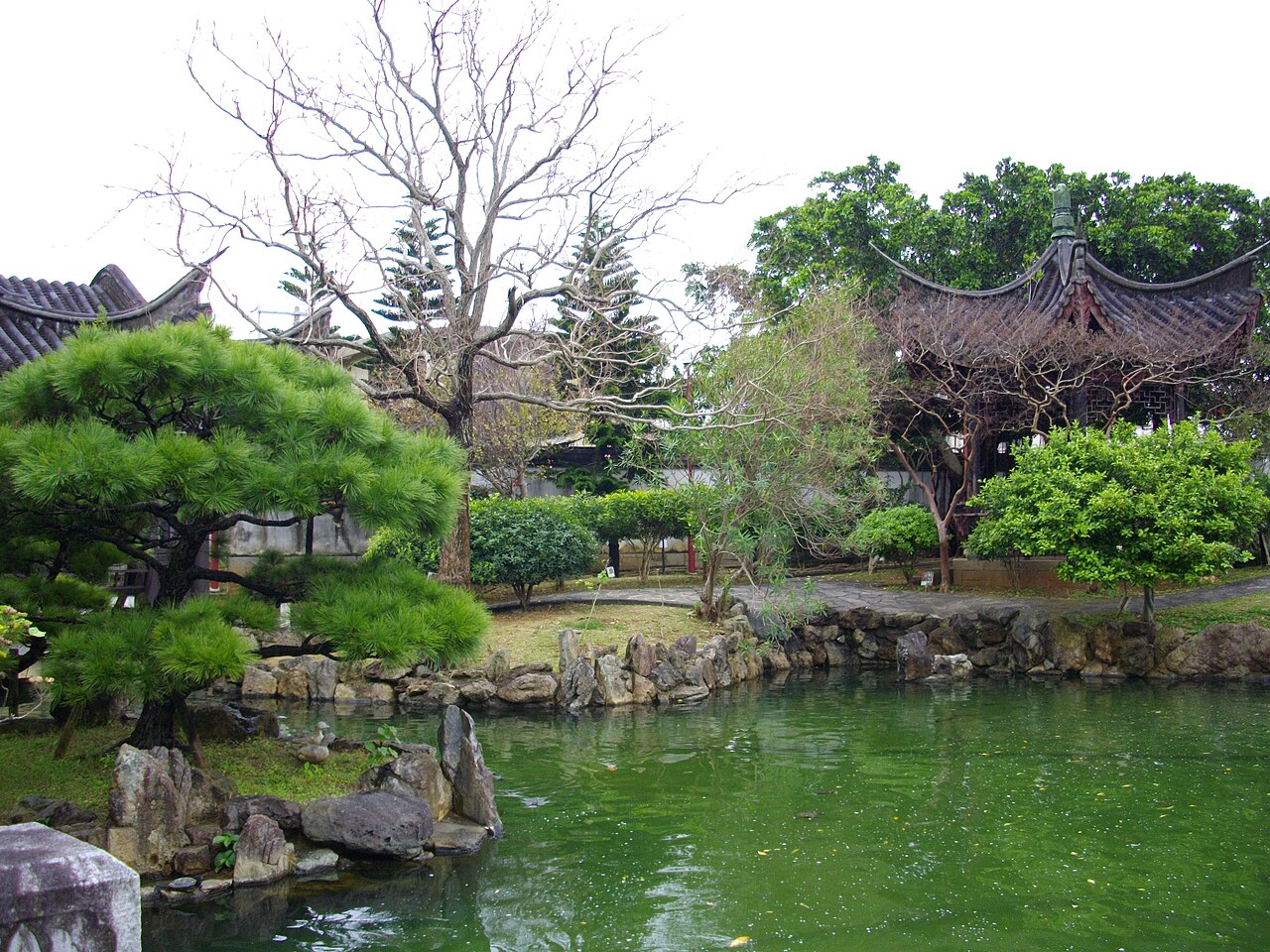
A serene Chinese-style garden in central Naha celebrating the Ryukyu Kingdom's centuries-old ties with Fuzhou, China.
Fukushuen is a tranquil Chinese-style garden in the heart of Naha, built to honour the deep and enduring relationship between Okinawa and the Chinese city of Fuzhou. Opened in 1992 to mark the tenth anniversary of the sister-city ties between Naha and Fuzhou — and the historic connection that reaches back centuries to the Ryukyu Kingdom — it offers a pocket of classical Chinese landscaping and a moment of calm just minutes from the city's busy streets.
The garden was constructed in authentic southern Chinese style, with materials and craftsmen brought from Fuzhou to ensure fidelity to the tradition. Within its walls you find the classic vocabulary of a Chinese scholar's garden: ornamental ponds crossed by arched stone bridges, artificial hills pierced by grottoes, cascading waterfalls, and elegant pavilions with sweeping tiled roofs and carved details. Winding paths lead past koi-filled water, groves of subtropical and Chinese plantings, and carefully framed viewpoints designed so that each turn reveals a new composed scene, in keeping with the Chinese garden ideal of a landscape painting made three-dimensional.
Beyond its beauty, Fukushuen is a monument to history. For roughly five hundred years the Ryukyu Kingdom maintained tributary and trade relations with China, and Fuzhou was the principal port through which that exchange flowed. A community of Chinese settlers — the "Thirty-Six Families" from Fujian — lived in the nearby Kume district and profoundly shaped Okinawan culture, from navigation and diplomacy to cuisine and crafts. The garden sits in exactly this historically Chinese-influenced part of Naha, giving it real geographic as well as symbolic resonance.
The experience is quiet and unhurried. Because admission is inexpensive and the garden is comparatively little-known to overseas visitors, it rarely feels crowded, and a stroll here is a soothing counterpoint to the shopping streets and beaches elsewhere. Morning light on the still ponds, the sound of the waterfalls, and the shade of the pavilions make it a pleasant place to pause and reset. When special evening illuminations are held, particularly in winter, the lit pavilions, bridges and cascades reflected in the dark water create a genuinely magical scene.
Getting there is easy by Okinawan standards: the Yui Rail monorail stops at Kencho-mae, from which the garden is a short walk into the Kume district. Allow around forty-five minutes to circle the ponds, cross the bridges and enjoy the pavilions, longer if you visit during an illumination event. For travellers seeking a calm, cultural and affordable break from Naha's bustle — and a window onto the fascinating Chinese threads woven through Okinawan history — Fukushuen is a small, worthwhile treasure.
A local's tip
Come for the evening winter illuminations if your visit coincides, when the pavilions and waterfalls are lit — and note this is one of the cheapest, most peaceful escapes in central Naha.
Best time to visit
Morning for calm reflections on the ponds
Getting there
From Kencho-mae Station on the Yui Rail monorail, walk about eight minutes west toward the Kume district; the garden is well signposted.
Good to know
- Parking
- Restrooms
Plan the whole trip offline
Fukushuen Garden is one of many places in the Real Japan app — with turn-by-turn directions, nearby spots and full offline maps you can use with no signal.