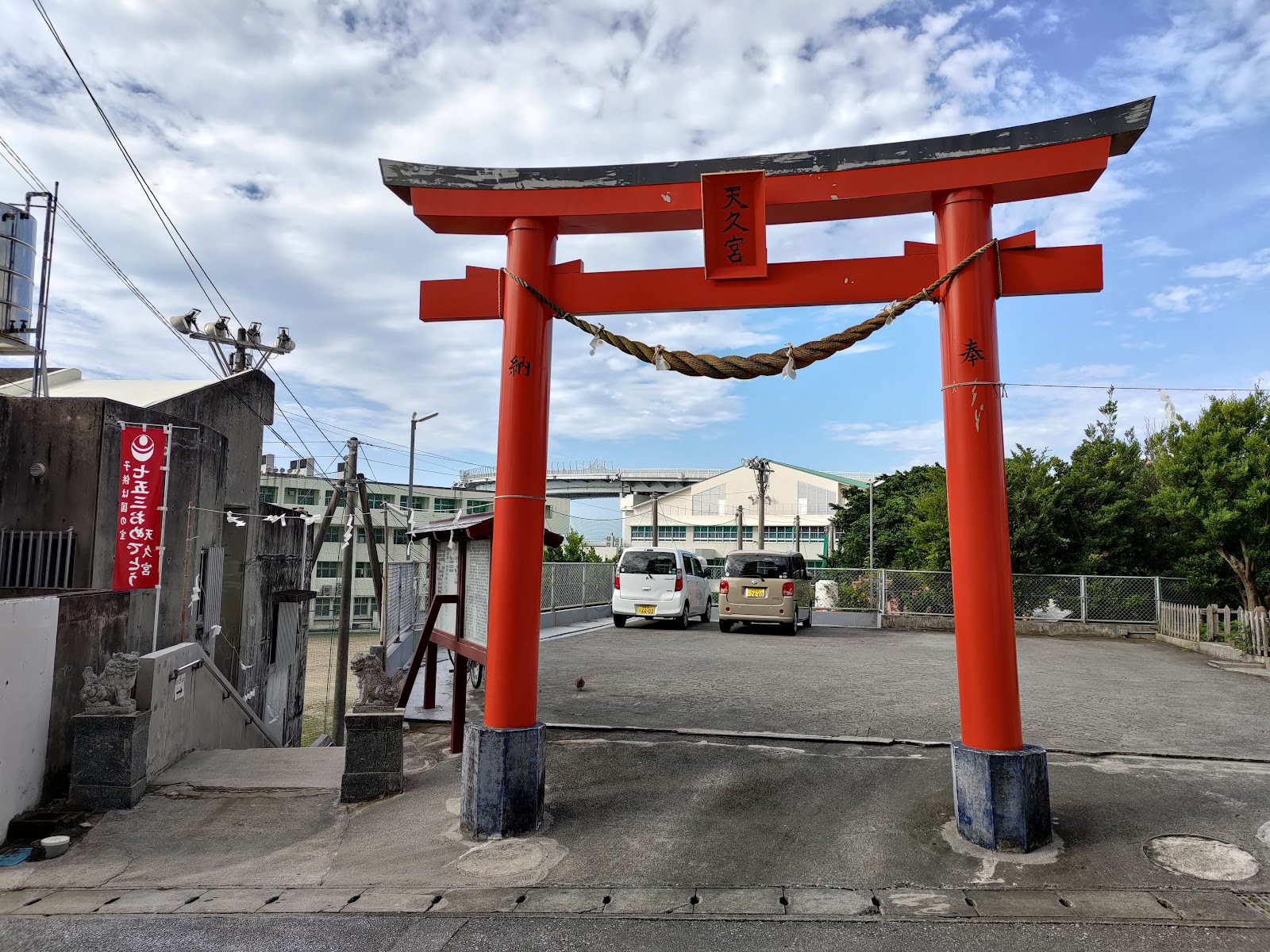
The least-touristed of the Ryukyu Eight Shrines, built by a cave where Benzaiten is said to have appeared, in Naha's Tomari district.
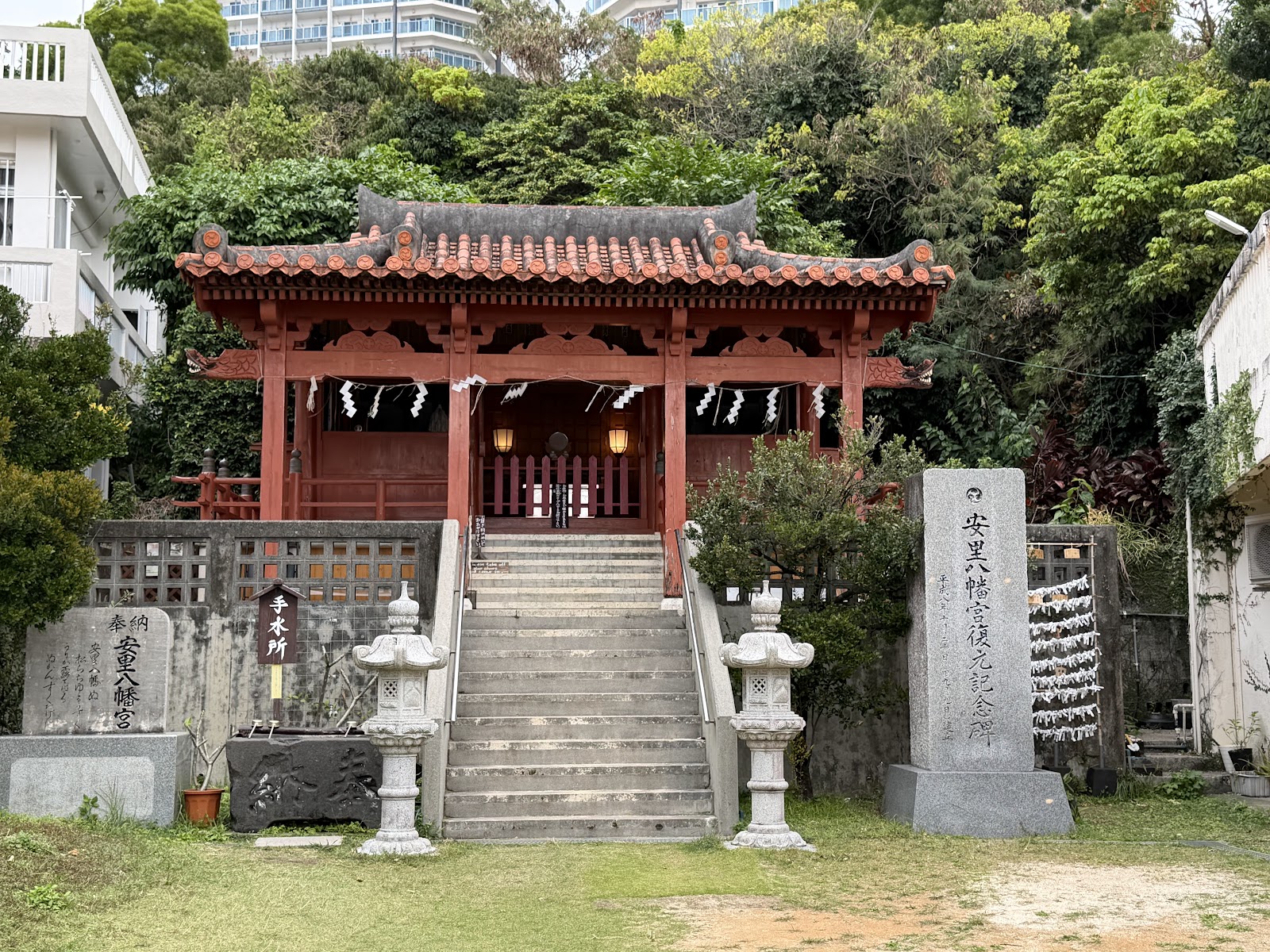
Ameku-gu is counted among the Ryukyu Eight Shrines and is the most low-key of them, set in the Tomari district of Naha not far from Tomari Port. It was built around 1465, in the confident early decades of the Second Sho Dynasty, in front of a cave where the goddess Benzaiten was said to have appeared. That cave origin is important: it places Ameku-gu firmly in the older Ryukyuan tradition of worship at natural sacred spots, later overlaid with the Kumano and Benzaiten devotions that the kingdom's official shrines came to share.
As with every historic shrine in central Naha, Ameku-gu was destroyed during the Second World War and rebuilt afterward, with the present structures dating to a 1972 reconstruction. What survives most powerfully is the sense of place rather than any grand architecture. On the grounds is a small limestone cave, a gama, inside which a subsidiary altar is still maintained, directly connecting the modern shrine to the pre-Shinto cave-worship that runs through Okinawan religion. Standing before that little cave altar is the highlight of a visit and the clearest reminder of the shrine's ancient roots.
The visiting experience is genuinely local. Ameku-gu receives far fewer tourists than Naminoue or Futenma, and that is precisely its charm: it functions as a real neighborhood shrine where residents come to pray, unpolished and unpretentious. There are no crowds, no ticket booths, no commercial bustle, just a quiet worship hall, the cave altar, and the everyday devotions of the Tomari community. For travelers seeking the Ryukyu Eight Shrines beyond the postcard sites, it offers an honest, human-scaled counterpoint.
Highlights include the Benzaiten cave and its altar, the modest postwar worship hall, and the chance to see an active Okinawan shrine free of tourist trappings. The grounds are compact and flat, making the visit easy and brief; most people spend around twenty-five minutes. Facilities are minimal, so it is best treated as a short, respectful stop rather than a destination in itself. Because it is a working community shrine, keep your voice down and be considerate of anyone at prayer.
Getting there is manageable by public transport. From Miebashi Station on the Yui Monorail, Okinawa's only rail line, it is roughly a 15-minute walk into Tomari. Alternatively, take a bus from Naha Bus Terminal toward Tomari and alight at the Tomari Koko Mae stop, from which the shrine is about a five-minute walk. Parking near the shrine is limited, so the monorail or bus is often easier than driving. Okinawa has no JR network and no Shinkansen, so a JR Pass is of no use; IC cards can be used on the monorail and city buses. Ameku-gu combines well with nearby Tomari Port, the departure point for ferries to the Kerama Islands, letting you fold a quiet, authentic shrine visit into a day that also touches Okinawa's island-hopping gateway.
A local's tip
Look for the small limestone cave (gama) on the grounds where the goddess Benzaiten is said to have appeared; it links the shrine to Okinawa's pre-Shinto cave worship.
Best time to visit
Morning, for a quiet neighborhood atmosphere
Getting there
In the Tomari district of Naha near Tomari Port. About a 15-minute walk from Miebashi Station on the Yui Monorail, or take a bus from Naha Bus Terminal to the Tomari Koko Mae stop and walk 5 minutes. Parking is limited. No JR exists on Okinawa.
Good to know
- Parking
- Restrooms
Plan the whole trip offline
Ameku-gu Shrine is one of many places in the Real Japan app — with turn-by-turn directions, nearby spots and full offline maps you can use with no signal.