Home to Japan's only octagonal pagoda, a National Treasure hidden in the hot-spring hills of Bessho Onsen.
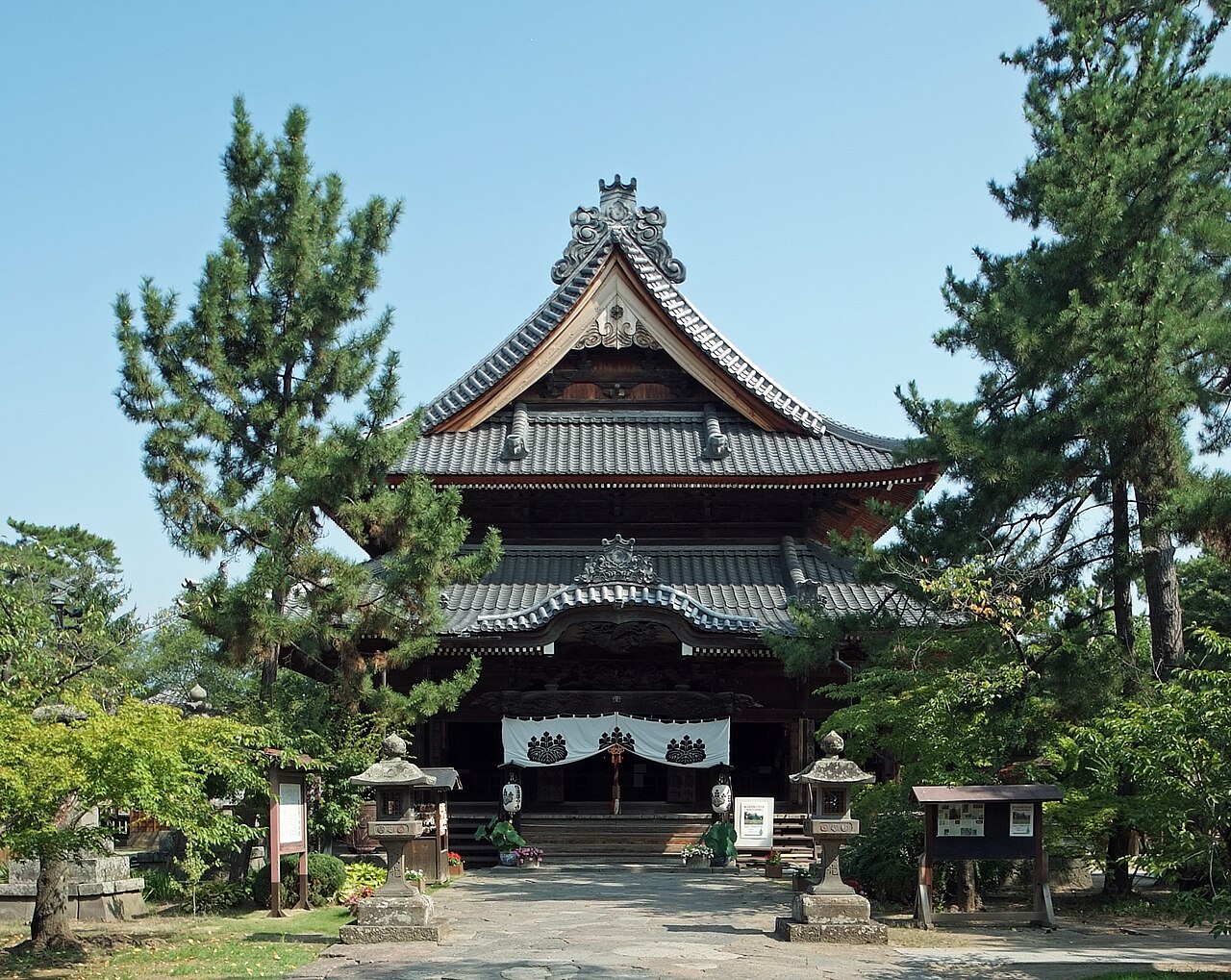
Anraku-ji is the oldest Zen temple in Nagano Prefecture and guards one of Japan's rarest architectural treasures: the country's only surviving octagonal wooden pagoda. Tucked into the wooded hillside above the ancient hot-spring resort of Bessho Onsen, near Ueda, the temple rewards the small effort it takes to reach it with a monument that is genuinely unique in the entire nation.
The temple was founded during the Kamakura period, when Bessho was an important centre of learning and culture sometimes called the Kamakura of Shinshu. At its height Anraku-ji was a major seat of Rinzai Zen study, drawing monks from across the country. Its great treasure, the sanjunoto or three-storey pagoda, was built in the Chinese Song architectural style favoured by early Zen temples. Although it appears at first glance to have four roofs, the lowest is a mokoshi, a decorative skirt roof, so the structure is technically a three-storey pagoda. What sets it utterly apart is its octagonal plan: every other historic pagoda in Japan is square, making this the only eight-sided example to survive. It was designated a National Treasure in 1952, among the very first buildings to receive the honour under Japan's postwar cultural property law.
The pagoda's precise age was long debated, but dendrochronological dating of its timbers has shown it was built in the late 13th century, making it one of the oldest Zen structures in the country. Standing before it, you can appreciate the crisp geometry of the eight sides, the steep protective roofs designed to shed heavy Shinshu snow, and the restrained elegance typical of the earliest Zen aesthetic imported from the continent.
The walk up to the pagoda leads through the temple's quiet precinct, past the thatched main hall, or hondo, which enshrines an image of Sakyamuni flanked by the bodhisattvas Manjusri and Samantabhadra. In autumn the maples surrounding the pagoda blaze red and orange, and the contrast between the dark aged timber and the fiery leaves is one of the loveliest sights in the region. Spring and summer bring cool green shade, and even in winter the snow-capped pagoda has a stark beauty.
Anraku-ji sits within easy walking distance of Bessho Onsen's other historic temples, including the Kitamuki Kannon, so it is best combined with a leisurely wander through the old spa town. Reaching it is part of the pleasure: from Ueda, itself a stop on the Hokuriku Shinkansen, take the charming single-track Ueda Electric Railway Bessho Line to its terminus at Bessho Onsen, then walk about 15 minutes uphill through streets lined with traditional inns. Round off your visit with a soak in one of the town's public baths, whose alkaline waters have drawn travellers here for more than a thousand years.
A local's tip
The octagonal pagoda is the only one of its kind in Japan; visit in late autumn when the surrounding maples frame it in red.
Best time to visit
Autumn for the maples around the pagoda
Getting there
From Ueda Station take the Ueda Electric Railway Bessho Line to its terminus at Bessho Onsen, then walk about 15 minutes uphill through the town.
Good to know
- Parking
- Restrooms
Plan the whole trip offline
Anraku-ji Temple (Bessho Onsen) is one of many places in the Real Japan app — with turn-by-turn directions, nearby spots and full offline maps you can use with no signal.