The official interpretive centre for Mt. Fuji as a UNESCO World Heritage Site, with a striking illuminated Fuji model.
When Mt. Fuji was inscribed as a UNESCO World Heritage Site in 2013 — recognised not as a natural wonder but as a 'sacred place and source of artistic inspiration' — Yamanashi Prefecture built this modern interpretive centre to tell that story. Standing beside Route 71 on the road from Kawaguchiko toward the mountain, the Fujisan World Heritage Center is the best single place to understand why Fuji means so much to Japan, and it makes an ideal first or last stop in the region.
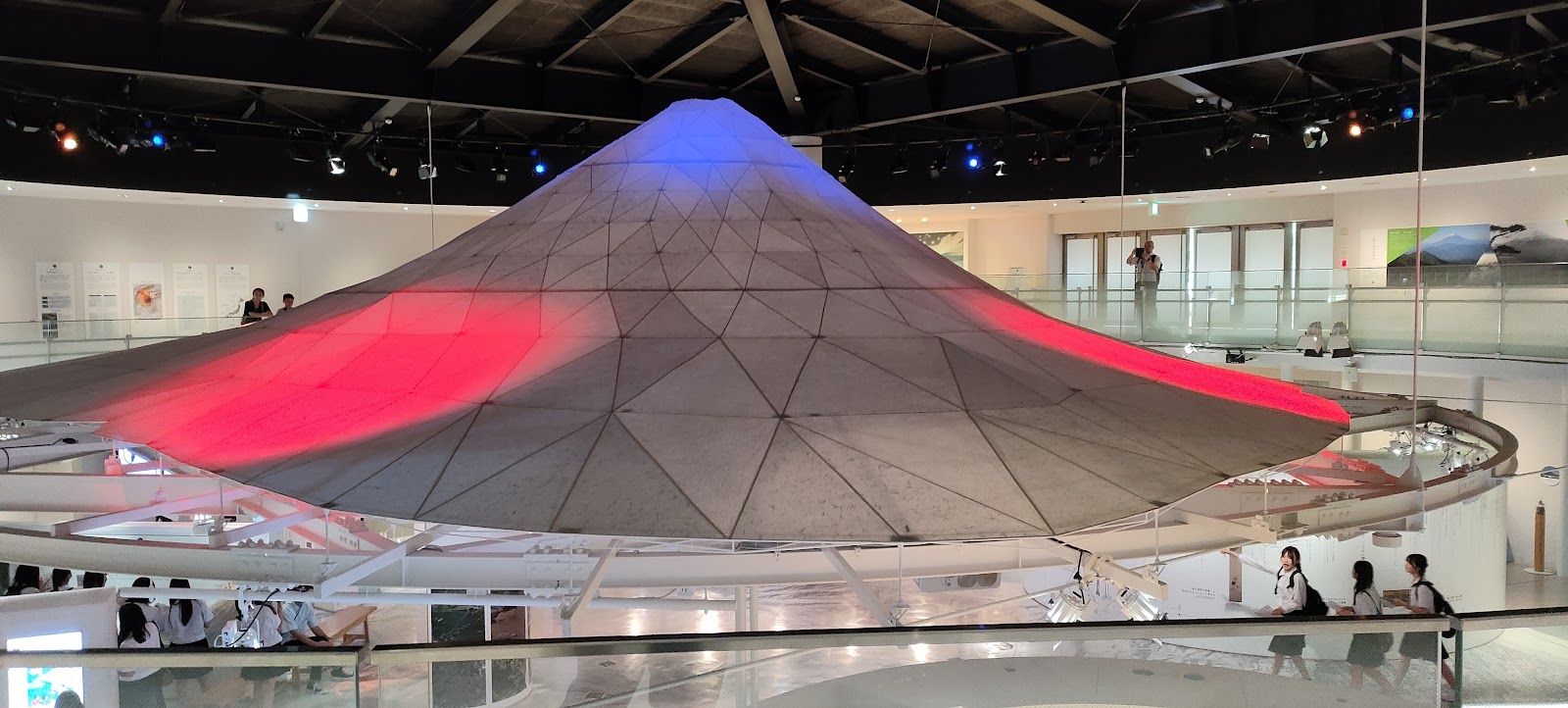
The complex is split into two halls. The South Hall is free to enter and functions as a visitor gateway, with a tourist information desk, a cafe, a shop and introductory exhibits about climbing routes and the surrounding area. The paid North Hall is the highlight: its centrepiece is 'Fuyu no Mori no Fujisan,' a giant three-dimensional model of the mountain made from washi paper, lit from within so that its surface shifts through the colours of dawn, midday, sunset and night in a slow, hypnotic cycle. Around it, well-designed exhibits — many with English support and interactive elements — explore Fuji's volcanic geology, its centuries of religious pilgrimage, the Sengen shrine faith, and the mountain's overwhelming influence on Japanese art, from Hokusai's woodblock prints onward.
What makes the centre genuinely valuable is that it reframes the mountain you have come to photograph as a living cultural landscape. You learn about the ascetic pilgrims who once climbed Fuji as a spiritual act, the shrines and lava-cave sanctuaries at its base, and the way its near-perfect cone shaped a whole visual culture. It turns a scenic backdrop into something you understand.
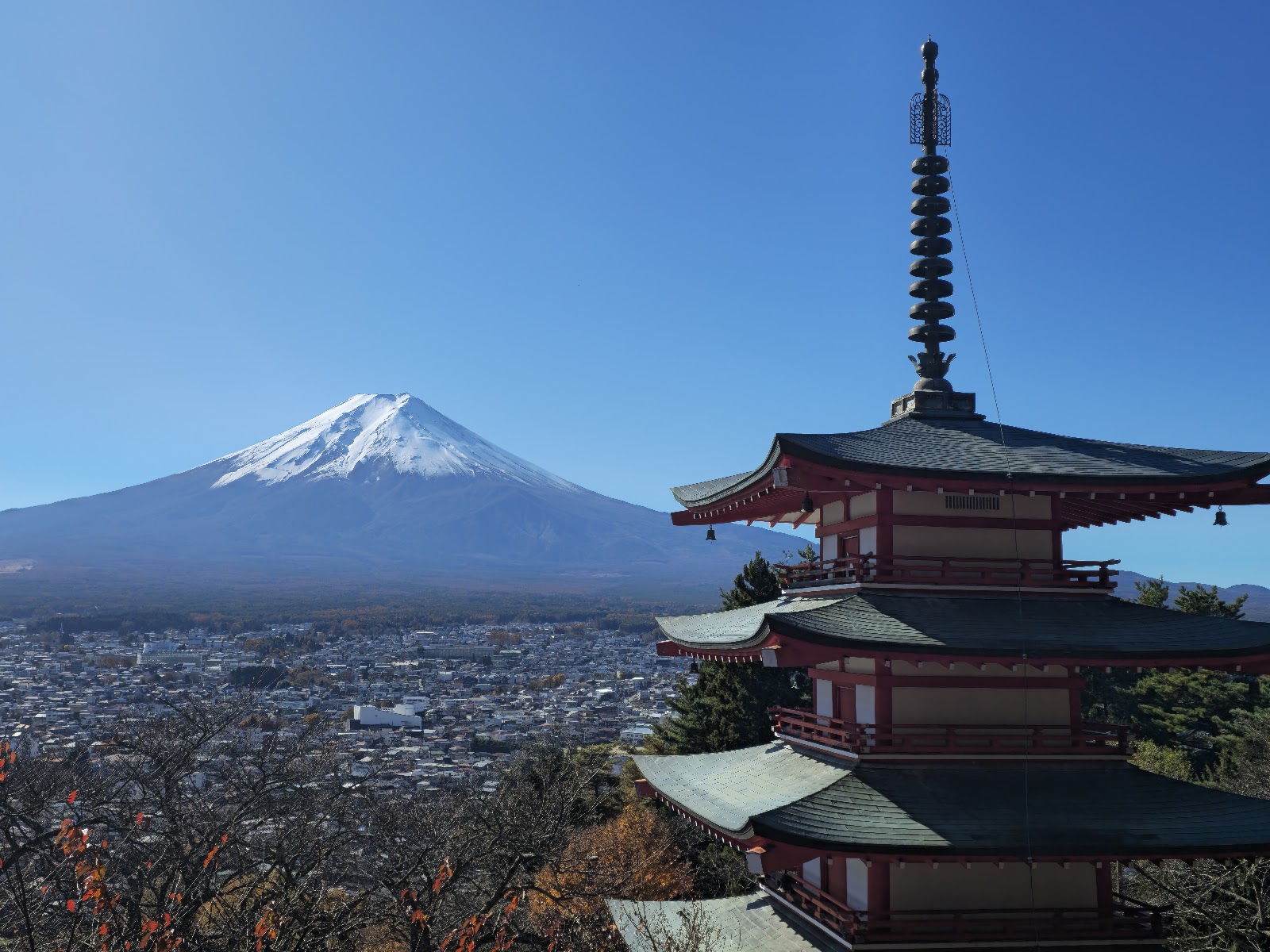
The building itself is contemporary and elegant, with clean lines, wide windows and — on clear days — a real, framed view of Mt. Fuji that plays against the model indoors. That contrast between the paper mountain glowing inside and the actual peak outside is a quietly memorable experience, and the centre is a smart choice precisely on cloudy days, when the real summit is hidden and this becomes the next best way to 'see' Fuji.
Historically, the centre reflects Japan's commitment, made as part of the World Heritage listing, to educate visitors and protect the mountain's cultural and environmental value rather than simply exploit it for tourism.
The visiting experience is comfortable and family-friendly: the halls are spacious, step-free and air-conditioned, with restrooms, free wi-fi, a cafe and a well-stocked gift shop selling Fuji-themed goods. Allow around an hour. It suits any season, and is genuinely enjoyable in poor weather. To get there, take a Fujiyoshida- or mountain-bound bus from Kawaguchiko Station and alight at the World Heritage Center stop, or drive and use the free parking; it also makes a natural pause on the way to the Subaru Line and the Fifth Station.
A local's tip
The huge illuminated model of Mt. Fuji in the North Hall subtly changes colour to mimic the mountain across dawn, day and dusk — linger a few minutes to watch a full cycle.
Best time to visit
Any season; excellent on cloudy days when Fuji is hidden outside
Getting there
Take the Fujikko-go / Fujiyoshida-Kawaguchiko bus from Kawaguchiko Station toward Fujiyoshida and alight at the 'Fujisan World Heritage Center' stop; it stands beside Route 71 on the way to the mountain.
Good to know
- Cafe
- Wi-Fi
- Gift Shop
- Restrooms
Plan the whole trip offline
Yamanashi Prefectural Fujisan World Heritage Center is one of many places in the Real Japan app — with turn-by-turn directions, nearby spots and full offline maps you can use with no signal.