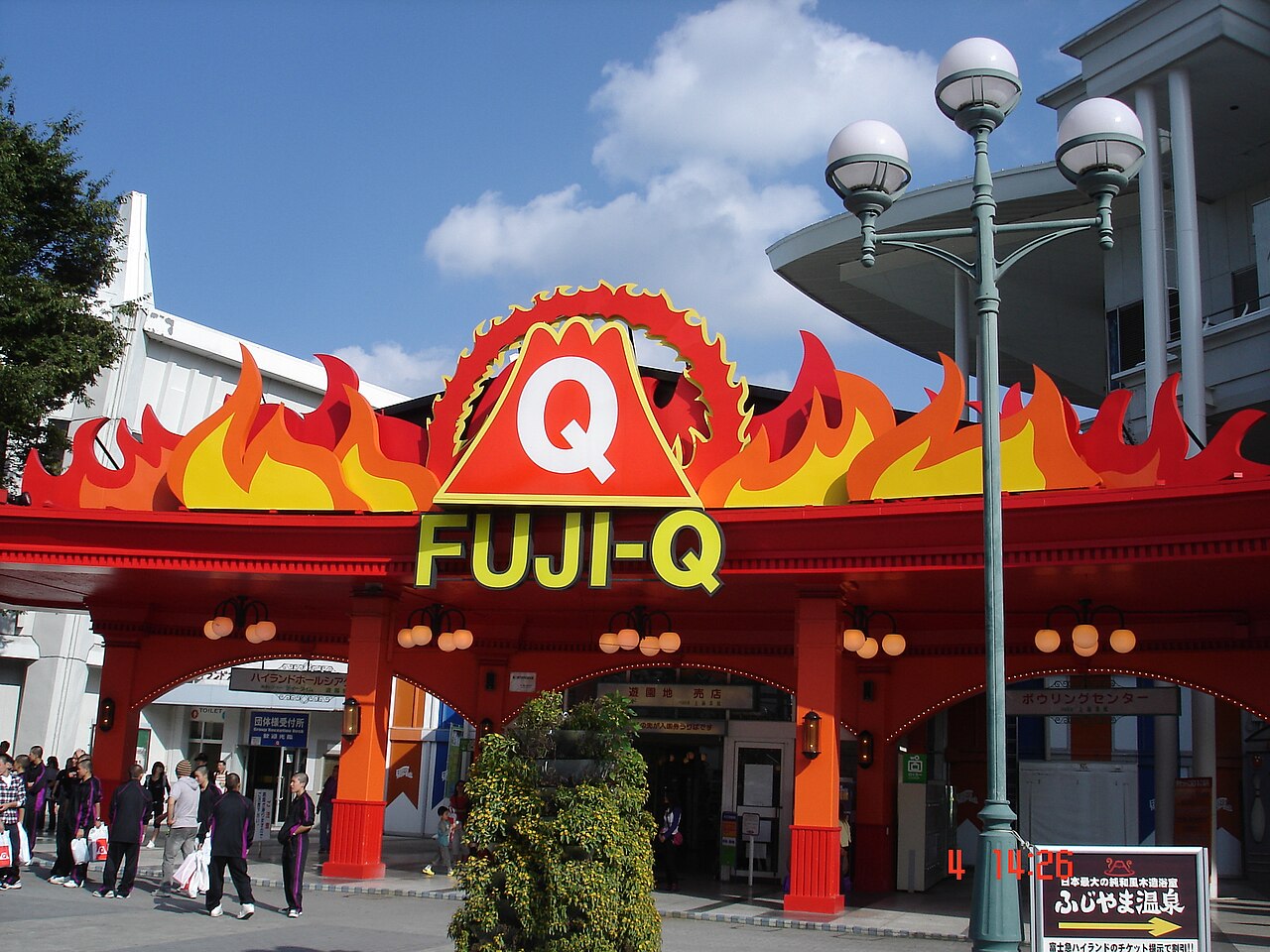
A record-breaking amusement park at the foot of Mount Fuji, famous for extreme roller coasters and horror attractions.
Fuji-Q Highland is one of Japan's most famous amusement parks, sprawled at the foot of Mount Fuji near Fujiyoshida and renowned worldwide for a collection of record-breaking roller coasters. Thrill-seekers come for rides that have repeatedly held Guinness World Records, all set against the surreal backdrop of the snow-capped mountain rising directly beyond the tracks, a juxtaposition of adrenaline and serene natural grandeur found nowhere else.
The park opened in 1968 and built its reputation on engineering superlatives. Fujiyama, launched in 1996, was once the world's tallest and fastest coaster and remains a beloved 'King of Coasters'. Dodonpa, later rebuilt as Do-Dodonpa, stunned riders with brutal acceleration from a standstill to well over 170 kilometres per hour in a handful of seconds. Eejanaika is a fourth-dimension coaster that spins riders' seats independently, and Takabisha holds a record for one of the steepest drops in the world at 121 degrees, beyond vertical. A notable fact: this dense cluster of record holders in a single park is unmatched, drawing coaster enthusiasts from around the globe.
Beyond the headline coasters, Fuji-Q offers a full day of variety. The Super Scary Labyrinth of Fear is a walk-through haunted hospital attraction that ranks among the longest and most intense in the world, while gentler zones cater to families, including areas themed around popular characters and a Thomas Land for young children. Restaurants, game arcades and seasonal events round out the experience, and the park's setting means many rides deliver head-on views of Mount Fuji at their peaks.
Visiting takes planning to do well. Entry to the park grounds is free, with charges applied either per ride or, more commonly, through a one-day pass costing roughly 6,000 to 6,300 yen that covers unlimited rides. The flagship coasters draw very long queues, so using the official app to reserve free timed-entry slots is essential to ride the best attractions in a single day. The park is broadly accessible with paved paths and facilities, though the thrill rides themselves carry height, health and mobility restrictions that are strictly enforced.
The park operates year-round, and each season has its appeal, though the coasters run largely regardless of weather. Spring and autumn offer mild temperatures and the clearest Fuji backdrops for photos from ride summits; summer brings water attractions and long opening hours; and winter, while cold, often delivers the crispest mountain views and a seasonal illumination event after dark. Weekdays outside Japanese school holidays see the shortest lines by a wide margin.
Getting there could hardly be easier for a major attraction. The Fujikyuko Line stops at its own dedicated Fujikyu-Highland Station, which sits right at the main gate, one stop before Kawaguchiko. Note the Fujikyuko Line is a private railway not covered by the Japan Rail Pass, though IC cards are accepted, and direct highway buses from Shinjuku Expressway Bus Terminal also stop at the park entrance, making a day trip from Tokyo straightforward.
A local's tip
Reserve free timed-entry tickets for the most popular coasters through the official app the moment they open; without one, waits for the record-breaking rides can exceed two hours.
Best time to visit
Weekdays outside Japanese holidays to minimise queues
Getting there
Ride the Fujikyuko Line to Fujikyu-Highland Station, which sits directly at the park entrance; direct highway buses from Shinjuku also stop at the park.
Good to know
- Lockers
- Parking
- Restrooms
- Restaurants
Plan the whole trip offline
Fuji-Q Highland is one of many places in the Real Japan app — with turn-by-turn directions, nearby spots and full offline maps you can use with no signal.