One of Japan's largest keyhole burial mounds, a monument to the ancient Kibi kingdom you can climb.
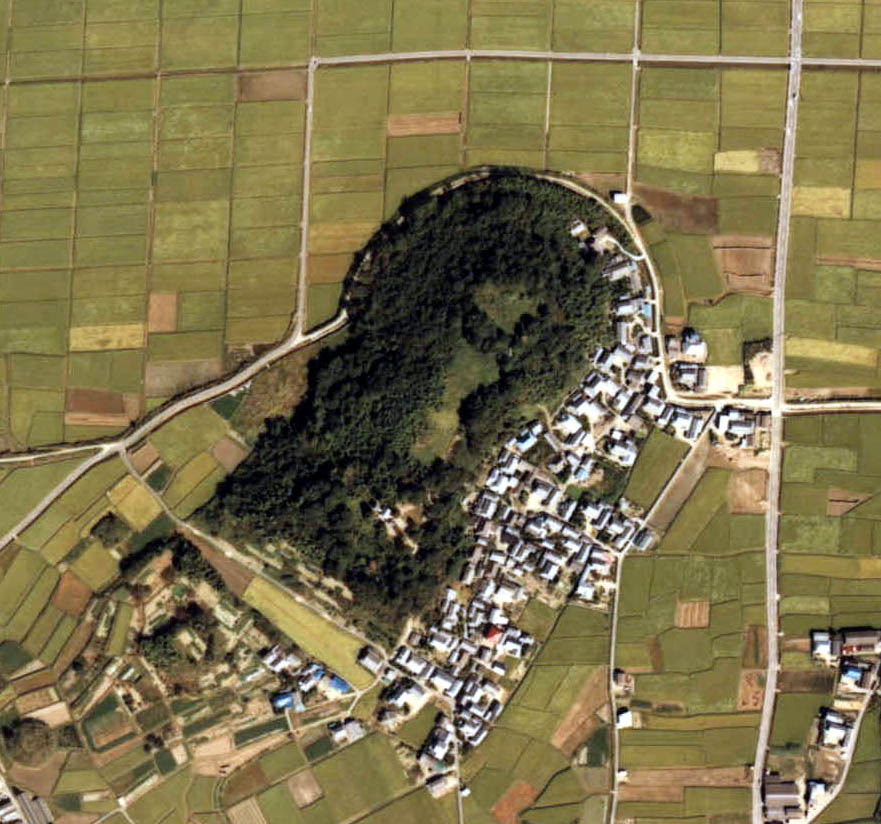
Tsukuriyama Kofun is one of the largest ancient burial mounds in all of Japan and a powerful reminder that the Kibi plain west of Okayama was once home to a kingdom rivalling the early Yamato court. This colossal keyhole-shaped tomb, stretching around 350 metres in length, dates to the 5th century Kofun period, when Japan's emerging elite raised enormous earthworks to entomb their rulers. Its sheer scale places it among the top handful of kofun in the country, and it stands as the grandest surviving monument to the power of ancient Kibi.
The kofun (literally 'old mound') were built in the distinctive zenpo-koen-fun shape - a round rear joined to a trapezoidal front, resembling an old-fashioned keyhole from above - and were once surrounded by moats and studded with rows of haniwa clay figures. Tsukuriyama's size implies that the ruler buried here commanded immense resources and a large population, evidence that the Kibi region was, for a time, one of the most formidable powers in the Japanese archipelago before it was absorbed and divided by the centralising Yamato state. That history echoes in the local Momotaro and demon legends still told at the nearby shrines.
What makes Tsukuriyama especially rewarding to visit is that, unlike the imperial tombs of the Kansai region which are sealed and off-limits, this mound is open and you can actually climb it. A path leads up onto the forested earthwork, allowing visitors to walk along the back of a 1,500-year-old royal tomb and appreciate its vast dimensions from above - a rare and slightly surreal experience that connects you directly to Japan's protohistoric past. From the top, views open over the surrounding rice fields and the wider Kibi plain.
The site is understated - there is no grand building, just the great green mound rising among farmland - so a little imagination and context greatly enrich the visit. Understanding that this is a tomb on the scale of an emperor's, raised by a lost regional kingdom, turns a quiet hill into something genuinely awe-inspiring. Interpretive signs and the nearby archaeological heritage help tell the story.
Tsukuriyama sits along the flat Kibi Plain cycling route between the Kibitsu shrines and Soja, and reaching it by rented bicycle is by far the best approach, letting you combine it with Kibitsu Shrine, Bitchu Kokubunji's pagoda and the countryside in a single relaxed day. The mound involves an uphill climb on uneven, sometimes muddy paths, so sturdy shoes are advisable and it is less suitable for those with mobility difficulties. Entry is free and a visit takes around 45 minutes.
Spring and autumn offer the most pleasant conditions for the ride and climb. For anyone fascinated by Japan's ancient origins, Tsukuriyama Kofun is a remarkable and tangible link to the powerful, half-legendary kingdom that once ruled the Kibi lands.
A local's tip
Unusually, you can actually climb this ancient keyhole tomb - a rare chance to walk up one of Japan's largest burial mounds.
Best time to visit
Daytime; combine with the Kibi Plain cycle route
Getting there
On the Kibi Plain cycling route between the Kibitsu shrines and Soja; by bike from Bizen-Ichinomiya Station, or a longer walk across the fields.
Good to know
- Restrooms
Plan the whole trip offline
Tsukuriyama Kofun is one of many places in the Real Japan app — with turn-by-turn directions, nearby spots and full offline maps you can use with no signal.