A National Treasure shrine with a unique double-gabled roof and a 360-metre wooden corridor.
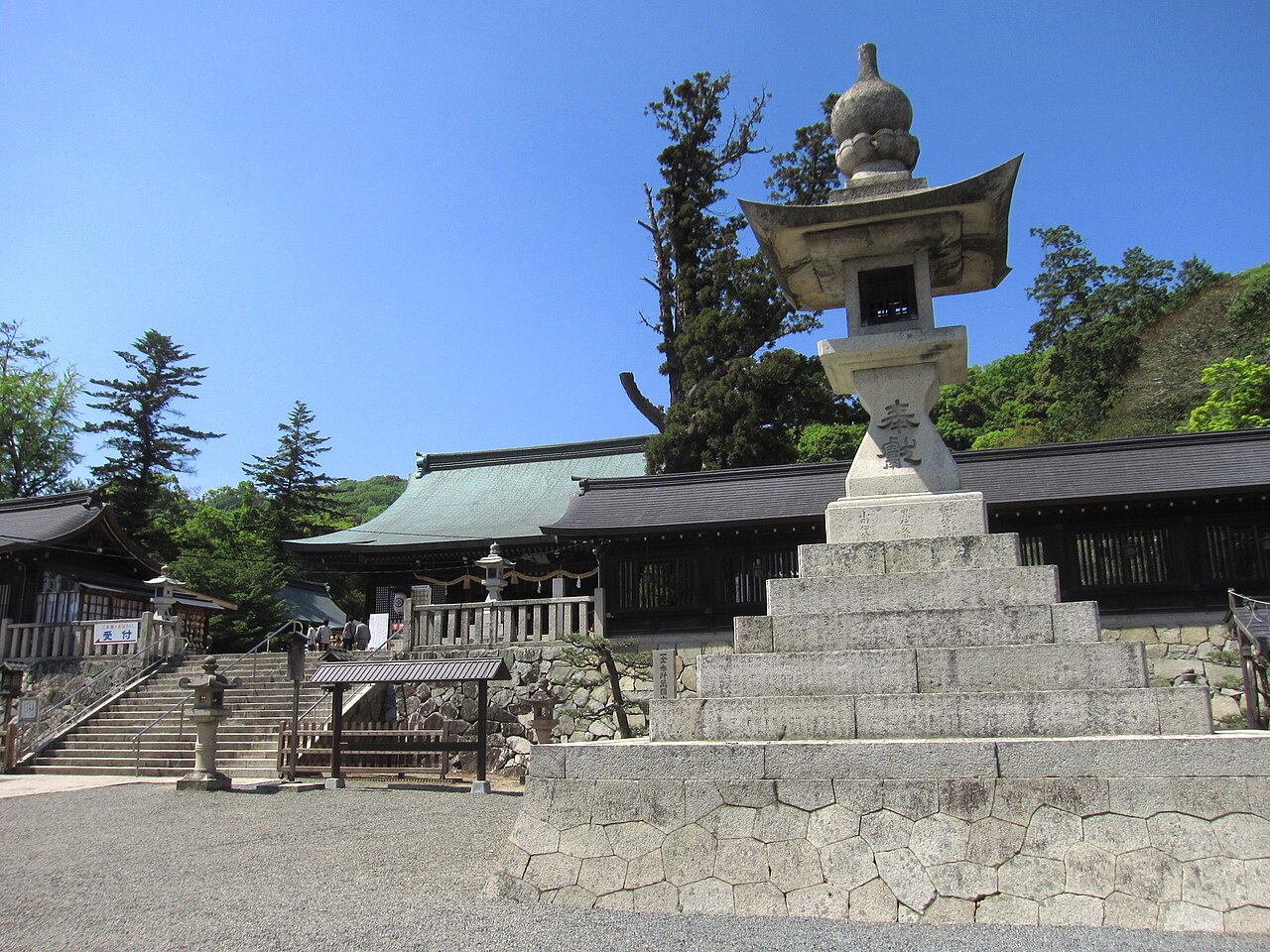
Kibitsu Shrine is one of the most architecturally remarkable and atmospheric Shinto shrines in western Japan, standing at the foot of Mt. Nakayama on the ancient Kibi plain west of Okayama city. It is the chief shrine of the old Kibi province and enshrines Kibitsuhiko-no-mikoto, a legendary imperial prince who, according to tradition, subdued a fearsome demon called Ura - a tale widely believed to be the origin of Japan's beloved Momotaro 'Peach Boy' folk story.
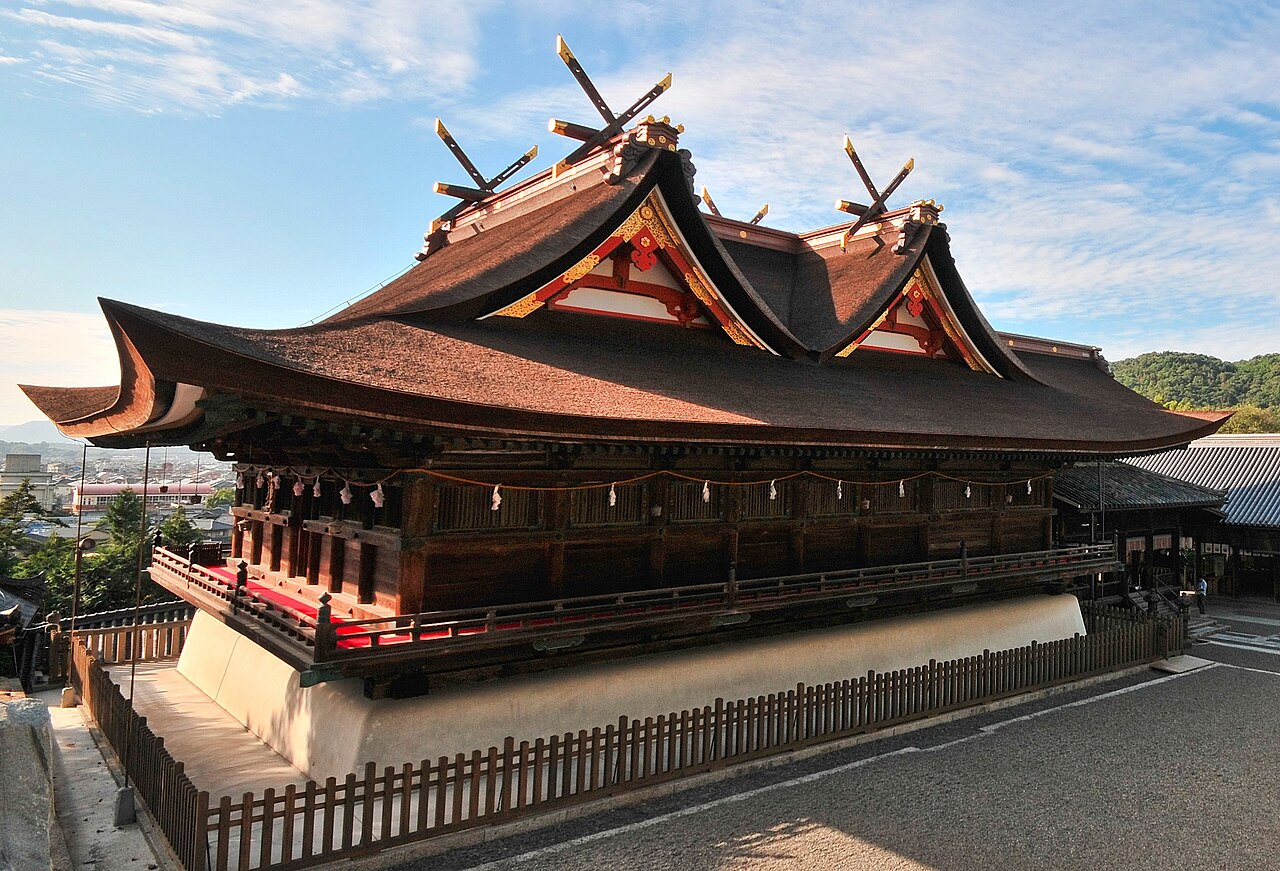
The shrine's main hall is a designated National Treasure and its glory. Rebuilt in 1425, the honden and haiden display the unique kibitsu-zukuri architectural style found nowhere else: a vast roof formed by two joined irimoya gables that rise in dramatic double-dormer peaks, covered in layered hinoki cypress bark. The scale and originality of the structure make it one of the most distinctive shrine buildings in the country, and its influence from Buddhist temple architecture is visible in the details.
Kibitsu's other signature feature is its extraordinary covered corridor. A roofed wooden passageway some 360 metres long runs from the main precinct down and along the contours of the hillside in a single graceful sweep, connecting the shrine to outlying halls. Walking its length, with the gentle curve of the hill on one side and the shrine forest on the other, is a serene and memorable experience, especially beautiful when framed by autumn colour or the shrine's celebrated peony and hydrangea gardens in their seasons.
At the end of the corridor stands the Okamaden, where one of Japan's most unusual rituals takes place: the Narukama shinji, a form of divination in which the sound made by a cauldron of cooking rice is interpreted to foretell fortune. The ritual, tied directly to the demon legend - the defeated ogre's spirit is said to reside beneath the cauldron - lends the shrine a genuinely mysterious air and connects the visitor to centuries of living folklore.
A visit rewards unhurried exploration. Beyond the National Treasure hall and the corridor, the wooded grounds hold subsidiary shrines, seasonal flower gardens and quiet spots that feel far removed from the modern world. The shrine's deep association with the Momotaro legend and the ancient Kibi culture makes it a highlight for anyone interested in Japanese mythology and history, and it pairs naturally with the nearby Kibitsuhiko Shrine and the ancient tombs of the Kibi plain, all linked by a popular cycling route.
The grounds are free to enter, though the corridor and hillside involve steps and slopes that limit accessibility. Allow around an hour, more in flower season. To reach the shrine, take the JR Kibi Line from Okayama to Kibitsu Station and walk about ten to fifteen minutes. Serene, ancient and architecturally singular, Kibitsu Shrine is one of the true treasures of the Okayama region.
A local's tip
Walk the full 360-metre wooden corridor to the Okamaden hall, home to the eerie Narukama shinji rice-cooking divination ritual tied to the local demon legend.
Best time to visit
Morning; spring for peonies, autumn for the corridor
Getting there
Take the JR Kibi Line from Okayama Station to Kibitsu Station (about 15 minutes), then walk roughly 10-15 minutes to the shrine at the foot of Mt. Nakayama.
Good to know
- Restrooms
Plan the whole trip offline
Kibitsu Shrine is one of many places in the Real Japan app — with turn-by-turn directions, nearby spots and full offline maps you can use with no signal.