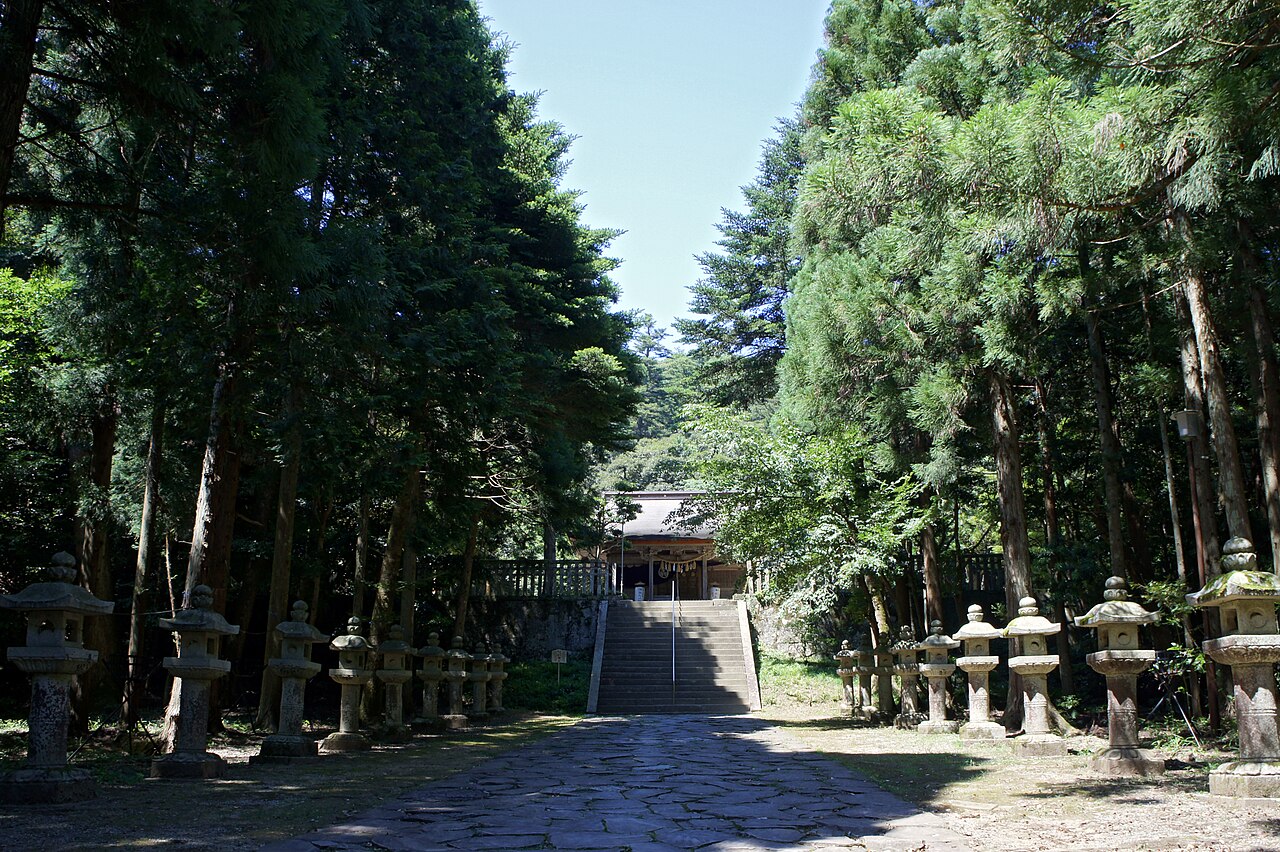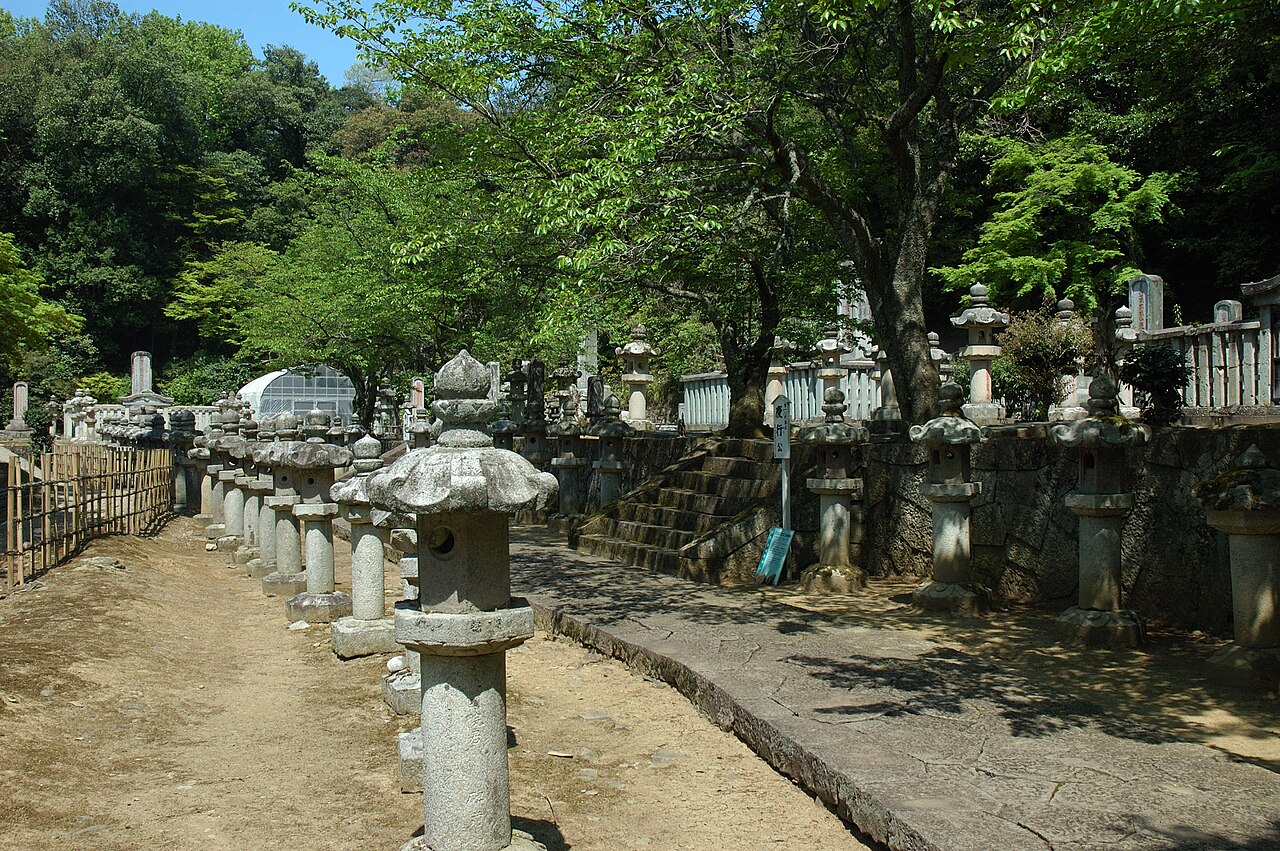
The atmospheric hillside graves of the Ikeda lords of Tottori, lined by hundreds of stone lanterns and designated a National Historic Site.
The Tottori Domain Ikeda Clan Cemetery is one of the most quietly powerful historical sites in the region, the ancestral burial ground of the daimyo who ruled Tottori for more than two centuries. Designated a National Historic Site, it spreads across a wooded slope on the eastern edge of the city and offers something you rarely encounter so completely preserved: an entire feudal dynasty laid to rest with all the ceremony and hierarchy of the Edo period intact.
The Ikeda were a major clan, governing the wealthy 325,000-koku Tottori Domain from their castle in the city, and their tombs reflect that status. Successive lords are buried here beneath large, dignified stone monuments, each grave approached through avenues lined with rank upon rank of stone lanterns donated by retainers to honour their departed masters. The sheer number of lanterns, hundreds of them arranged in solemn rows and now softened by moss and age, is the site's unforgettable signature. Walking between them, especially on a misty or overcast day, feels like stepping into a deliberately staged landscape of memory and loyalty.
The cemetery is more than a picturesque graveyard; it is a physical record of how a domain organised its reverence for authority. The scale of a lord's monument, the placement of graves, and the tributes of lanterns all encode the relationships between ruler and retainer that structured samurai society. For anyone interested in the Edo period, it is a rare chance to read those social bonds directly in stone rather than through a museum panel. Historians value the site precisely because it survives so intact, allowing study of daimyo funerary practice across many generations in a single place.
Set against the forested hillside, the atmosphere is serene and contemplative. Tall trees filter the light over the grey stone, the city noise fades, and the avenues of lanterns lead the eye upward toward the principal tombs. In autumn the surrounding foliage adds colour to the greys and greens, and photographers are drawn to the receding perspectives of the lantern rows, which have a haunting, almost cinematic quality. It is a place to walk slowly and quietly, mindful that it remains a sacred resting place.
Because it lies a little out of the centre and is not a mass-market attraction, the cemetery is usually peaceful and free of crowds, which only deepens its effect. There is no admission fee and the grounds are always open, though the setting and lack of public transport mean a taxi or car is the practical way to reach it. Allow around 40 minutes to wander the avenues and take in the principal graves.
Combined with Tottori Castle's ruins, the city historical museum and the Ikeda-founded Tosho-gu shrine, the cemetery completes a portrait of the clan that shaped the city: you can see where they ruled, how they worshipped, and finally where they lie. For travellers who appreciate atmospheric, off-the-beaten-path history, it is one of Tottori's most memorable and moving corners.
A local's tip
Photographers love the endless rows of moss-covered stone lanterns; visit on a still, overcast day when the light is soft and the avenues feel timeless.
Best time to visit
Autumn for foliage; clear mornings for atmosphere
Getting there
About 15 minutes by taxi east of Tottori Station toward the Kunitomi area; the cemetery lies on a quiet wooded slope and is best reached by car.
Good to know
- Parking
- Restrooms
Plan the whole trip offline
Tottori Domain Ikeda Clan Cemetery is one of many places in the Real Japan app — with turn-by-turn directions, nearby spots and full offline maps you can use with no signal.