The luminous Hall of Lamps before Kukai's mausoleum, where thousands of lanterns burn without pause, two said to have stayed lit for nearly a thousand years.
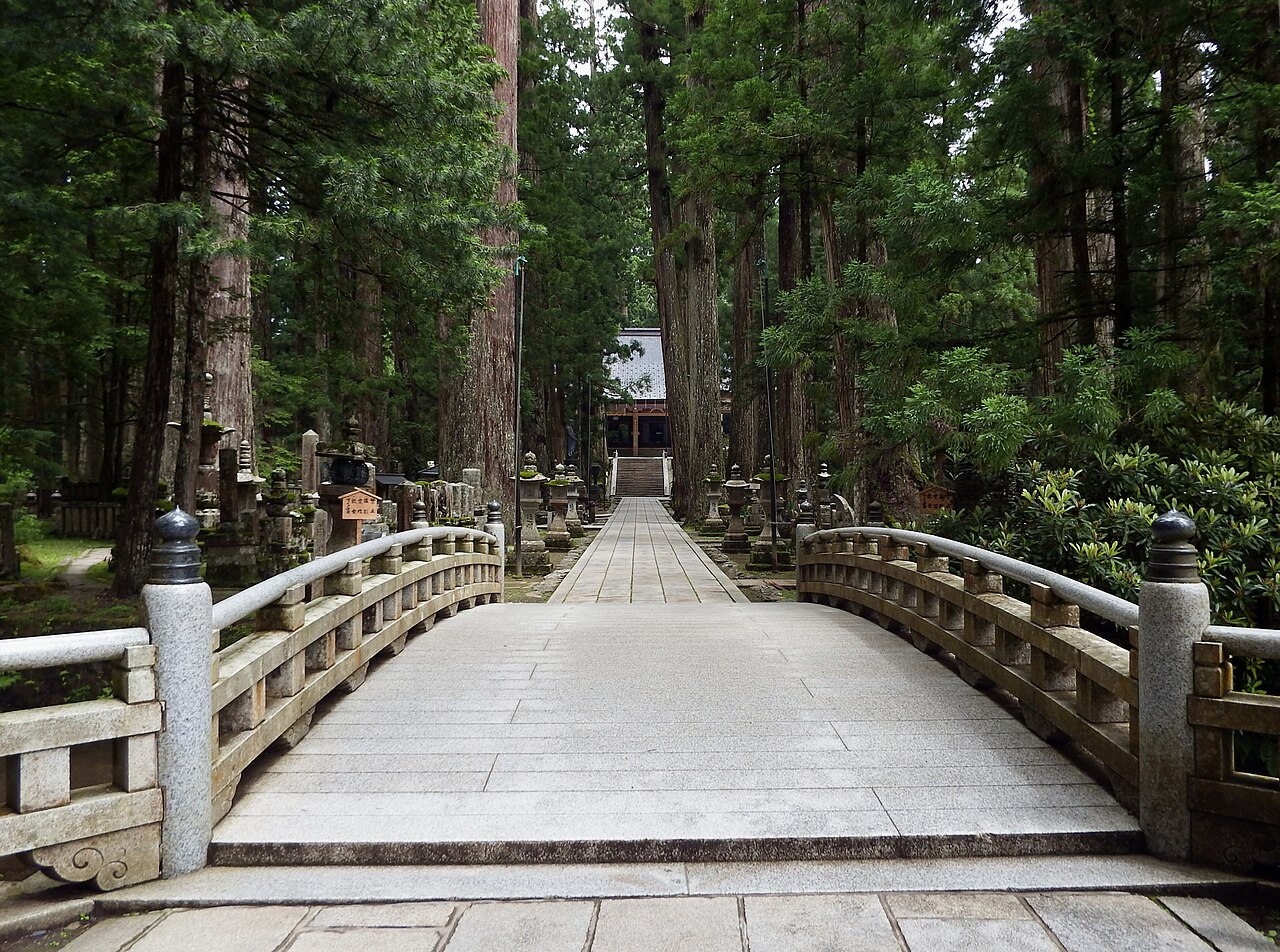
At the far end of the cedar-shrouded approach through Okunoin, past 200,000 tombstones and the last of the towering trees, stands Torodo, the Hall of Lanterns. It is the main hall of worship at Okunoin and the closest point most visitors may reach to the Gobyo, the mausoleum where Kukai (Kobo Daishi) is believed to remain in eternal meditation, just across the sacred Gobyobashi bridge behind it.
The hall takes its name from the more than 10,000 lanterns that fill it, donated by worshippers over the centuries and kept perpetually alight. Their combined glow, gold and warm against the dark timber interior, is one of the most quietly overwhelming sights on Mount Koya. Among them, two lamps are especially venerated: one, the "Poor Woman's Lamp," is said to have been offered by a destitute woman named Oteru who sold her hair to donate it; the other, the "White River Lamp," was given by Emperor Shirakawa. Both are believed to have burned continuously for close to a thousand years.
Downstairs, a basement chamber holds tens of thousands more small statues and personal lanterns, rows upon rows of them receding into soft light. Upstairs and outside, the hall serves as the stage for Okunoin's daily devotions. The most moving of these is the Shojin-gu, held every morning at around 6:00 and again at 10:30, in which robed monks carry a specially prepared meal along the path and offer it to Kobo Daishi, whom they treat not as a historical figure but as a living presence. This ritual has, by tradition, been performed twice daily without interruption since Kukai entered meditation in the year 835, an unbroken devotion spanning more than 1,100 years.
Directly behind Torodo lies Gobyobashi, the final bridge. Beyond it, in the most sacred precinct of the mountain, no photography is permitted and visitors are asked to remove hats and lower their voices. Many pause at the bridge to bow, ladle water over the Mizumuke Jizo statues that line the stream, and offer a quiet prayer before approaching.
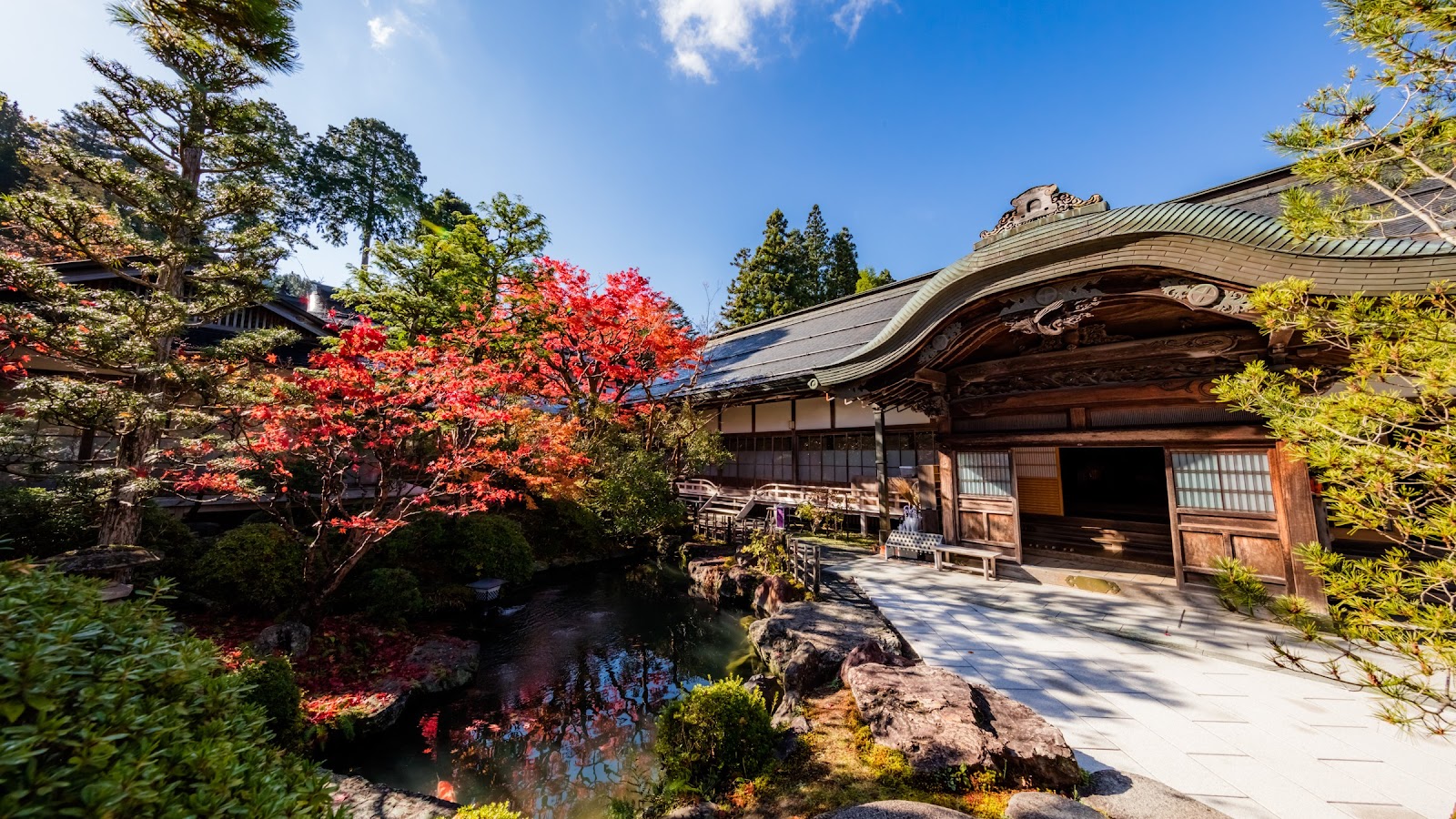
Torodo is at its most atmospheric in the early morning, when you can attend the meal-offering ceremony in near solitude, and in the evening, when Ekoin temple leads a guided lantern-lit walk explaining the history and legends of the cemetery. In every season the setting transforms: cherry and fresh green in spring, fiery maples in autumn, and a profound hush under snow in winter.
To reach it, take a Rinkan bus from Koyasan Station to the Okunoin-mae stop and walk the atmospheric graveyard path, or start further back at Ichinohashi for the full pilgrimage approach. Entry to the hall and its glowing basement is free, though donations are welcomed. Allow at least half an hour here, and more if you plan to sit with the lamps and let the extraordinary stillness of the place settle over you.
A local's tip
Arrive before 6:00 to witness the Shojin-gu ritual, when monks carry a meal to Kobo Daishi, a ceremony performed daily without a single day's break for over 1,100 years.
Best time to visit
Early morning for the 6:00 breakfast offering ceremony to Kukai
Getting there
Take a Rinkan bus from Koyasan Station to the Okunoin-mae stop, then walk the tree-lined approach past the graves to the far end of the cemetery. Torodo stands just before Gobyobashi bridge.
Good to know
- Restrooms
- Guided tours
Plan the whole trip offline
Torodo Hall (Okunoin Lantern Hall) is one of many places in the Real Japan app — with turn-by-turn directions, nearby spots and full offline maps you can use with no signal.