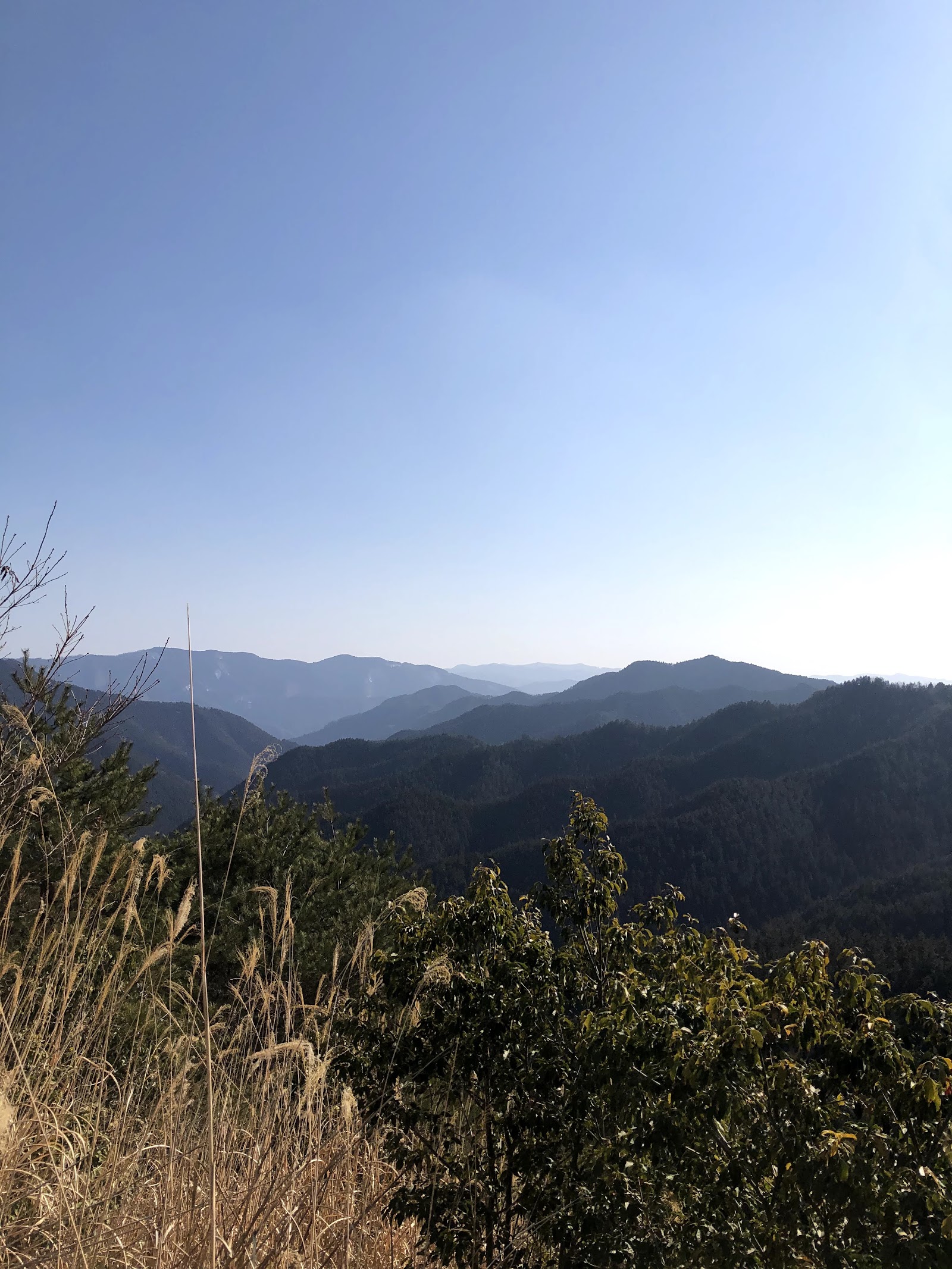
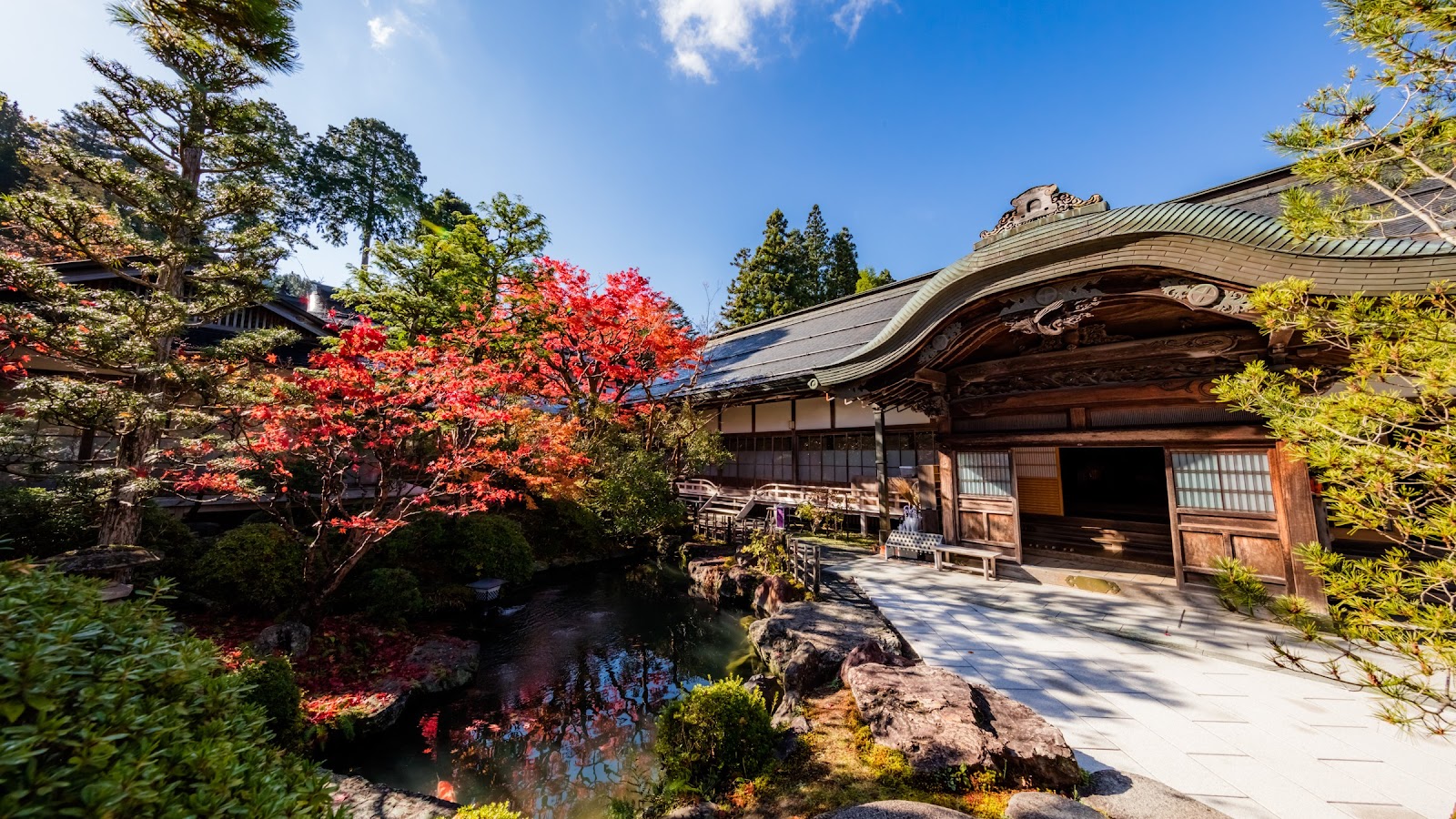
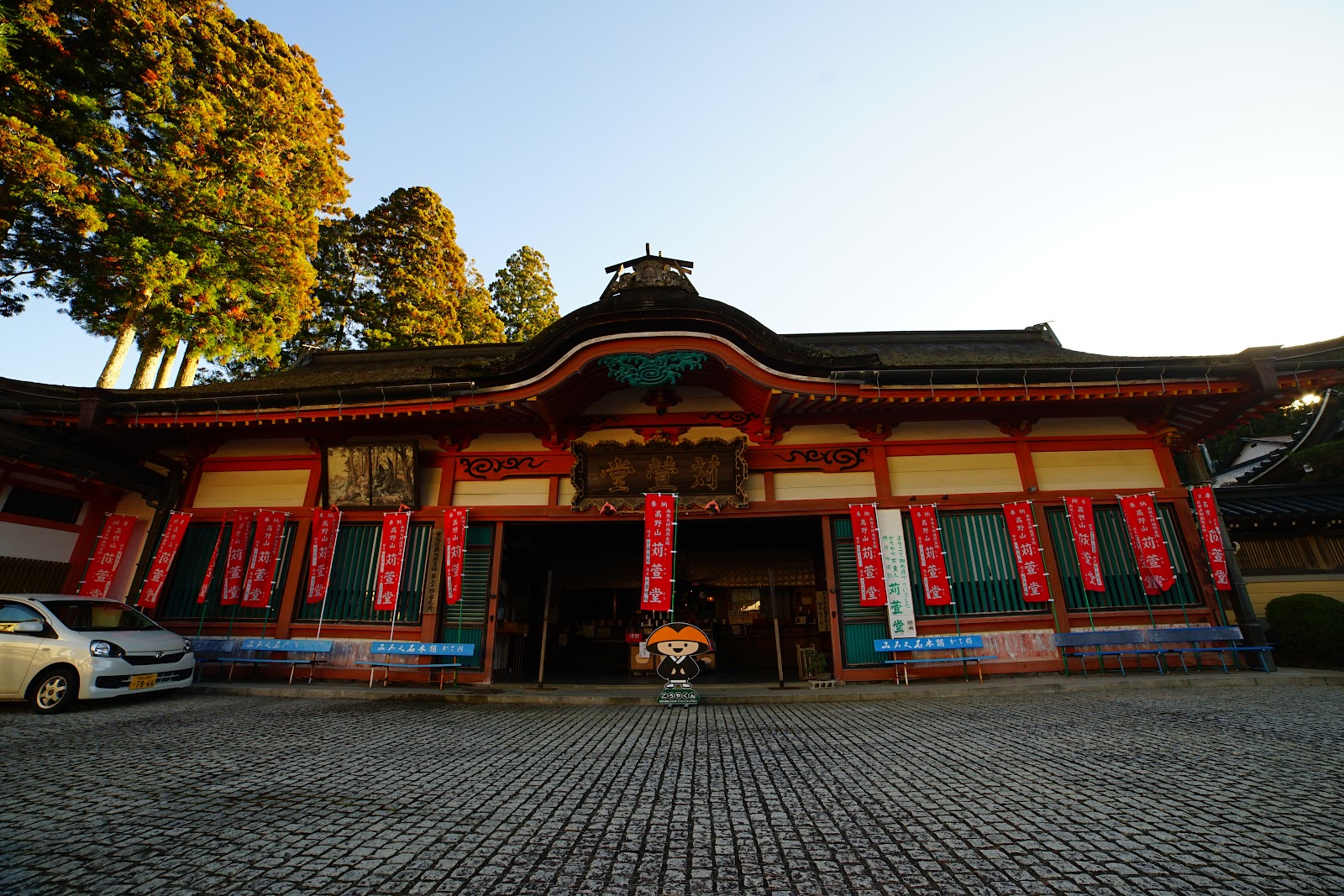
A historic temple lodging beside the Ichinohashi entrance to Okunoin, prized for its location, gardens and morning fire ritual.
Shojoshin-in is a venerable shukubo standing at the eastern edge of Mount Koya's temple town, just steps from Ichinohashi, the traditional stone gateway to Okunoin. That location is its defining advantage: guests can rise for the morning service and then walk, in a matter of minutes, into the great cedar-and-lantern cemetery before the day's visitors arrive, when mist still hangs among the 200,000 graves and the only sound is birdsong.
The temple has a long history within the Koyasan Shingon community and, like its neighbours, balances two lives. By day it is a place of prayer; by night it becomes a lodging where travellers are given tatami rooms, some overlooking mossy gardens, and served shojin ryori, the refined vegetarian cuisine that has sustained the mountain's monks for centuries. Dishes lean on seasonal vegetables, delicate tofu preparations and the famous local goma-dofu, sesame tofu with a silken, nutty richness, all arranged with quiet care on lacquered trays.
Shojoshin-in's grounds include tranquil gardens designed for contemplation from the wooden verandas, and the temple is known for the atmosphere of its main hall during devotions. The daily highlight is the early morning service, held around 6:00, followed at many temples by the goma fire ceremony, in which the resident priest kindles a ritual fire and feeds it wooden tablets inscribed with prayers, the flames symbolising the burning away of worldly attachments. Kneeling close to that fire in the incense-thick hall, listening to the layered chanting of the sutras, is the kind of experience that stays with travellers long after they leave the mountain.
Staying here follows Koya's gentle template. Check-in is mid-afternoon, dinner is early, and the evenings are made for rest and reflection rather than activity, though the temple's proximity to Okunoin means an after-dark stroll along the lantern-lit approach, or a place on Ekoin's guided night cemetery tour nearby, is easy to arrange. Then comes the reward of the dawn walk into a hushed, empty Okunoin, arguably the single finest way to experience the holiest site on Mount Koya.
The temple's eastern position also makes it convenient for reaching the rest of the mountain. Buses run from just outside toward Senjuinbashi, the central crossroads near Kongobuji and Danjo Garan, and on to the Daimon gate, so the whole World Heritage landscape is within a short ride or a pleasant walk. The Reihokan museum, which safeguards many of Koya's national-treasure statues and paintings, is also easily reached.
To get here, take the Nankai cable car to Koyasan Station and a Rinkan bus toward Okunoin, alighting near the Ichinohashi entrance; the temple is a brief walk away. A night's stay with two vegetarian meals generally starts around 13,000 yen per person. As with every lodging on the mountain, booking ahead is wise, particularly during the spring cherry blossoms and the vivid autumn foliage, when rooms fill quickly. For travellers whose priority is an unforgettable early morning in Okunoin, Shojoshin-in's setting is hard to beat.
A local's tip
Its position right by Ichinohashi means you can walk into a near-empty Okunoin at first light, minutes after the morning service ends.
Best time to visit
Overnight, for easy dawn access to Okunoin
Getting there
From Koyasan Station take a Rinkan bus toward Okunoin and alight near the Ichinohashi entrance; Shojoshin-in stands close to the start of the Okunoin approach.
Good to know
- Wi-Fi
- Garden
- Vegetarian meals
Plan the whole trip offline
Shojoshin-in Temple is one of many places in the Real Japan app — with turn-by-turn directions, nearby spots and full offline maps you can use with no signal.