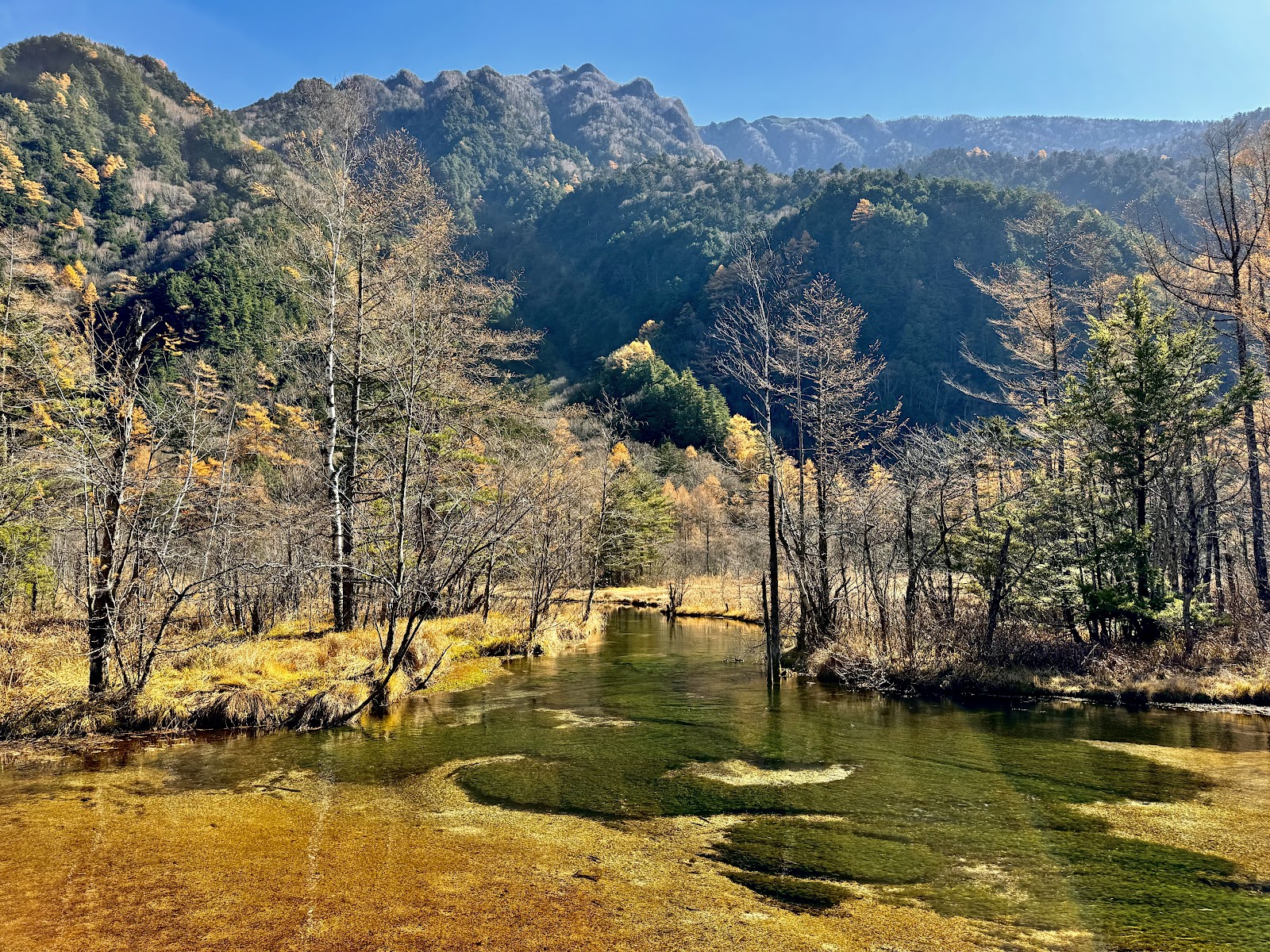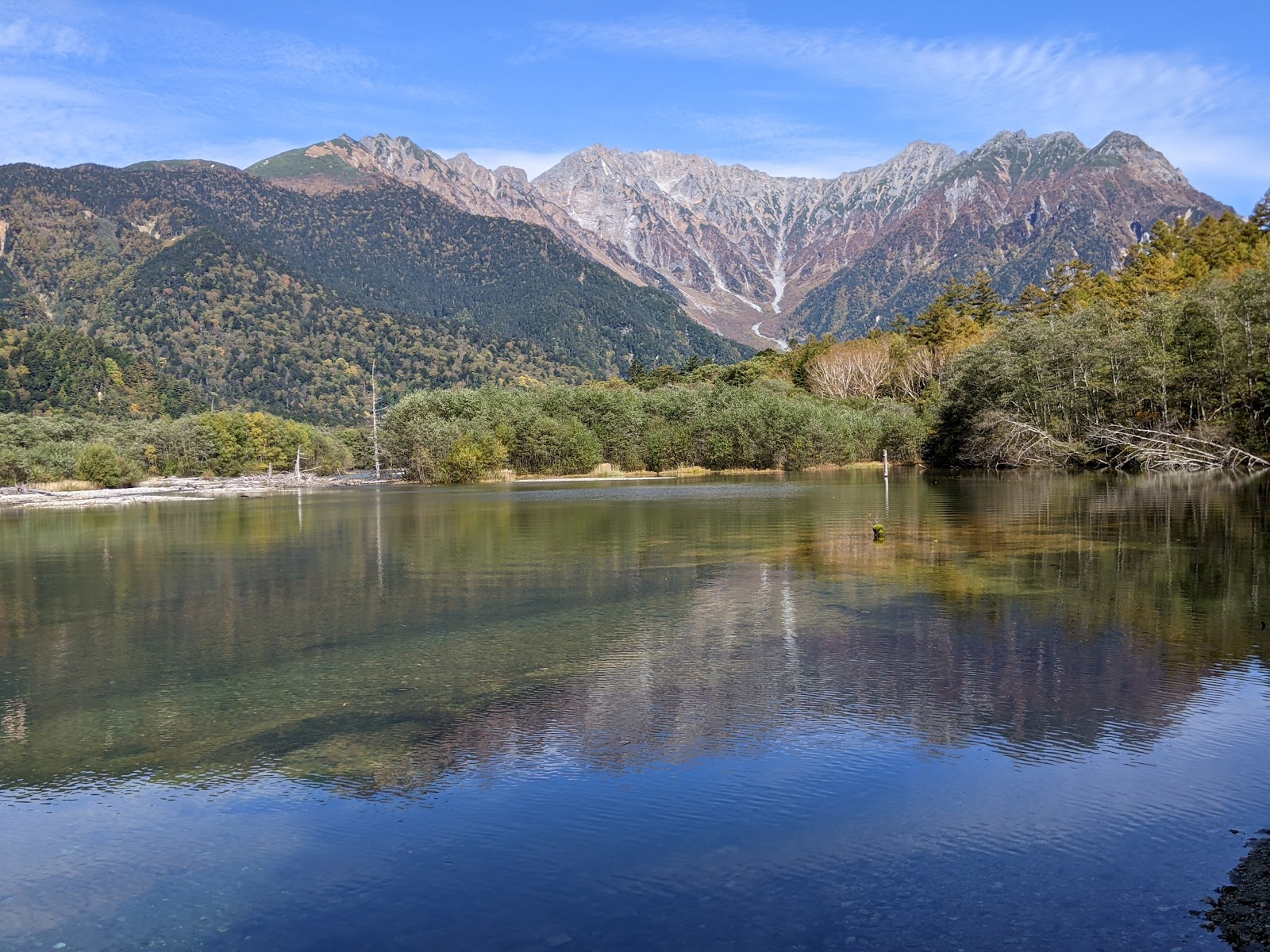
A hauntingly still mountain pond where dead tree trunks rise from mirror water beneath the Hotaka peaks and Mount Yakedake.
Taisho Pond (Taisho-ike) is Kamikochi's most atmospheric body of water, a shallow, glassy lake at the downstream end of the valley where bleached tree trunks stand marooned in the mirror-still surface. It is a place of quiet drama, and on a windless dawn — when mist curls off the water and the Hotaka range and the volcanic cone of Yakedake float perfectly reflected below — it produces some of the most ethereal photographs in the Japanese Alps.
The pond is young, geologically speaking, and its story is written into its name. On the morning of 6 June 1915, Mount Yakedake erupted, and a torrent of mud and debris dammed the Azusa River, flooding the forest and drowning the trees whose skeletal remains still break the surface today. Because the eruption fell in the Taisho era, the new lake was christened Taisho Pond. Over the decades sediment has slowly filled it, so it is far smaller than it once was, which lends the scene its melancholy, ephemeral quality — you are looking at a landscape still quietly changing.
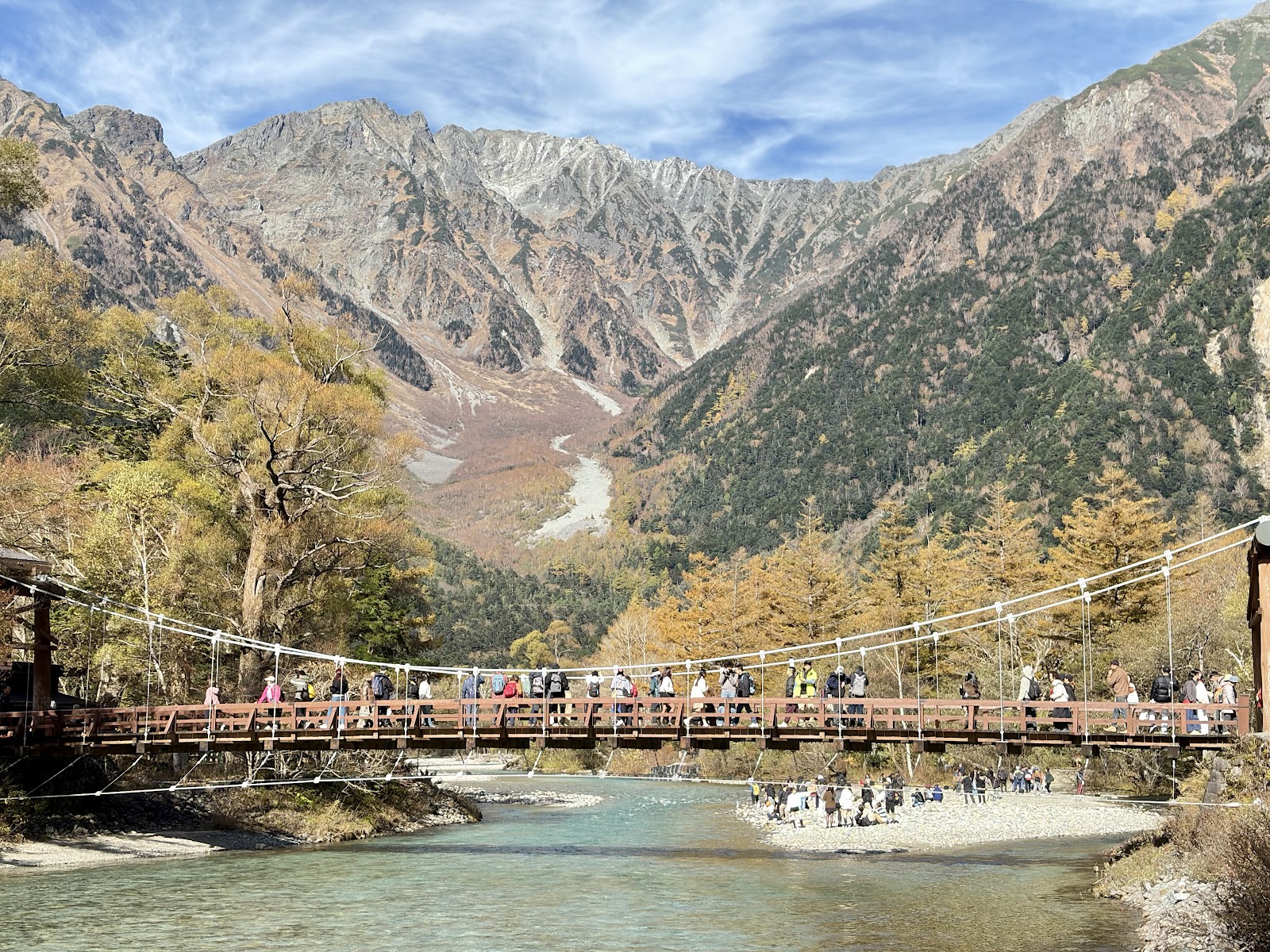
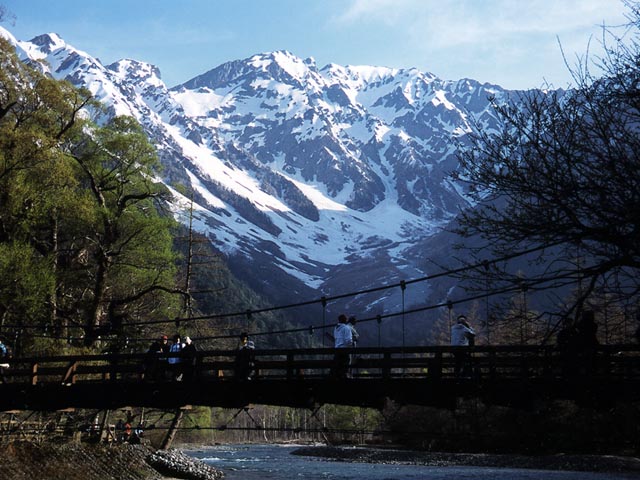
Most travellers experience Taisho Pond as the first or last stop on a Kamikochi walk. It sits about 40 minutes downstream from Kappa Bridge along a flat, well-marked riverside trail, and the Kamikochi shuttle bus stops right beside it, making it one of the easiest scenic spots in the valley to reach. Many photographers deliberately alight here on the way in, catch the early reflections, then walk the gentle path upstream to Kappa Bridge as the day warms.
The experience is contemplative rather than energetic. There is a small viewing area and boardwalk at the water's edge, and the surrounding larch and birch woodland fills with birdsong. Because Kamikochi bans private cars, the stillness is almost total, and the water can be so calm that the boundary between mountain and reflection disappears. It is a favourite of landscape painters as well as photographers.
Season and time of day transform the pond completely. In early summer the surrounding greenery is luminous; in October the larches blaze gold and the first snow dusts the peaks, doubling the drama in the reflection. Fog is common at dawn and, rather than a nuisance, it is the very thing many visitors come for — the trees emerging from the mist like something from a scroll painting. By midday the wind usually stirs the surface and the magic softens, so early is best.
Accessibility is good: the bus stop, restrooms and viewing platform are close together and largely level, making Taisho Pond suitable for visitors who cannot manage Kamikochi's longer trails. Remember that the whole valley closes from mid-November to mid-April, and that reaching it means taking the shuttle bus from Sawando or the train-and-bus route from Matsumoto, as no private vehicles are permitted. Come at dawn, stand quietly at the rail, and Taisho Pond delivers one of Japan's most poetic mountain scenes.
A local's tip
Get off at the Taisho-ike stop on the way in rather than out — the morning light and mirror reflections are best before 8am.
Best time to visit
Dawn, when mist rises off the water
Getting there
The Kamikochi shuttle bus stops at Taisho-ike, one stop before the main terminal; the pond is a 3-minute walk. You can also walk 40 minutes downstream from Kappa Bridge.
Good to know
- Parking
- Restrooms
Plan the whole trip offline
Taisho Pond is one of many places in the Real Japan app — with turn-by-turn directions, nearby spots and full offline maps you can use with no signal.