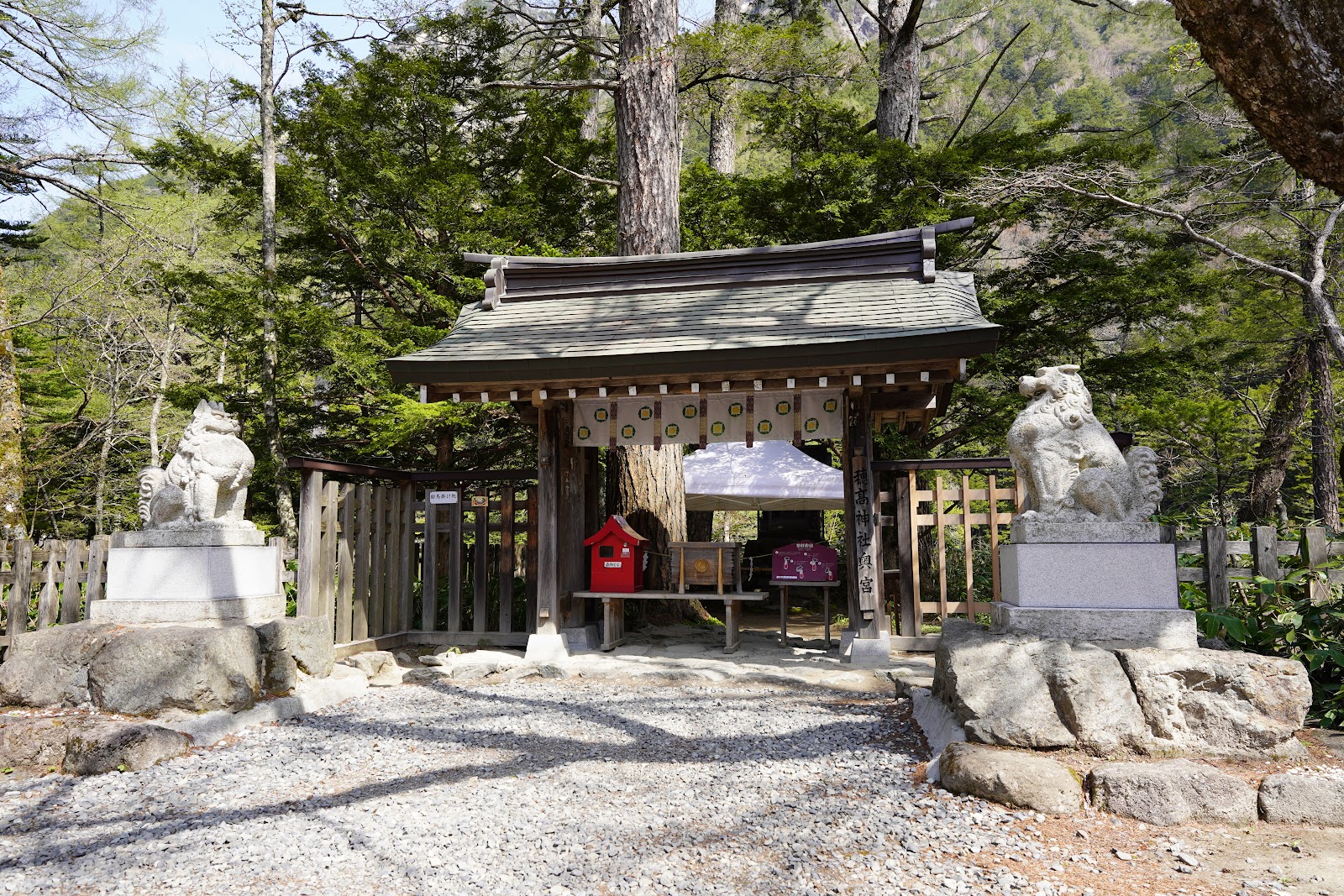
A mystical inner shrine beside the mirror-clear Myojin Pond deep in the Kamikochi highlands.
Hotaka Shrine Okumiya is the inner mountain shrine of Hotaka Jinja, set in one of the most breathtaking natural settings in Japan on the shore of Myojin Pond, deep within the Kamikochi highland valley of the Northern Japan Alps. While the main Hotaka Shrine stands down in the Azumino plain, its Okumiya, or inner shrine, lies high in the mountains at the foot of sacred Mount Myojin, reachable only on foot along the pristine valley of the Azusa River.
The shrine venerates Hotakami-no-mikoto, a mountain deity revered as the guardian of the Hotaka peaks and as an ancestral god of the seafaring Azumi clan, whose name lives on in the nearby Azumino district. This unusual pairing of a sea people with the highest mountains of central Japan gives the shrine a distinctive mythology, and it is honored as a protector of mountaineers and travelers who venture into the surrounding alpine wilderness.
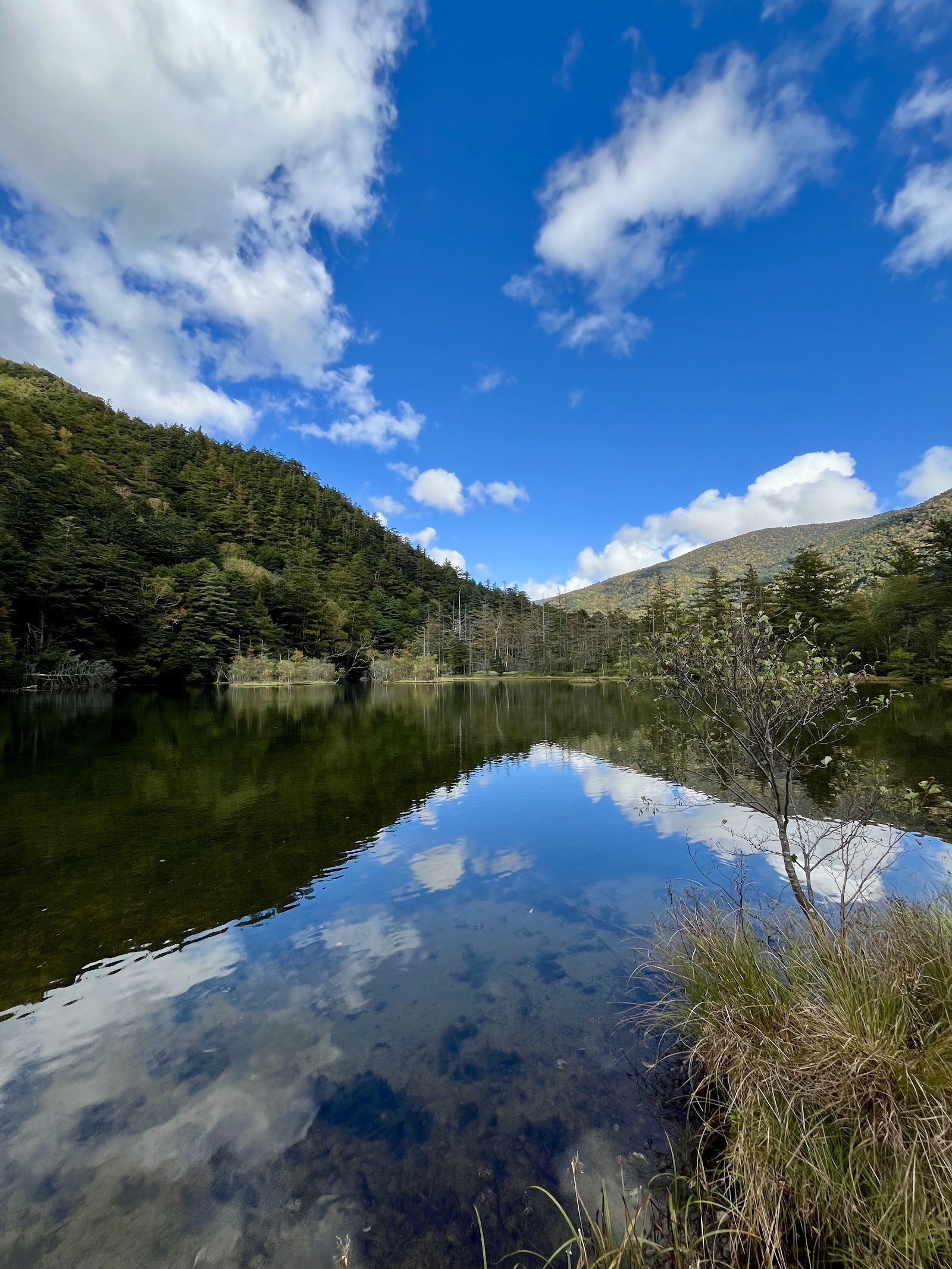
The true magic of the Okumiya lies in Myojin Pond, a sacred body of water fed by underground springs at the base of the sheer rock face of Mount Myojin. The pond is astonishingly clear and still, its surface mirroring the jagged peak and the surrounding forest in near-perfect reflection on calm mornings. Ancient trees, mossy stones and drifting mist give the spot an otherworldly, almost primeval atmosphere, and it has long been regarded as a place where the divine and the natural world meet. A small admission grants access to the pondside precinct, where visitors can walk to the water's edge and take in the reflected mountains.
Each autumn the shrine hosts the Ofune Matsuri, its boat festival, on the eighth of October. Two elegant ceremonial boats, one bearing a carved dragon prow and the other a phoenix, are rowed slowly across Myojin Pond by priests in ancient court dress, offering prayers of gratitude to the mountain god as maple leaves begin to turn. It is one of the most beautiful and atmospheric festivals in the Alps, and photographers travel far to witness the boats gliding over the mirrored water.
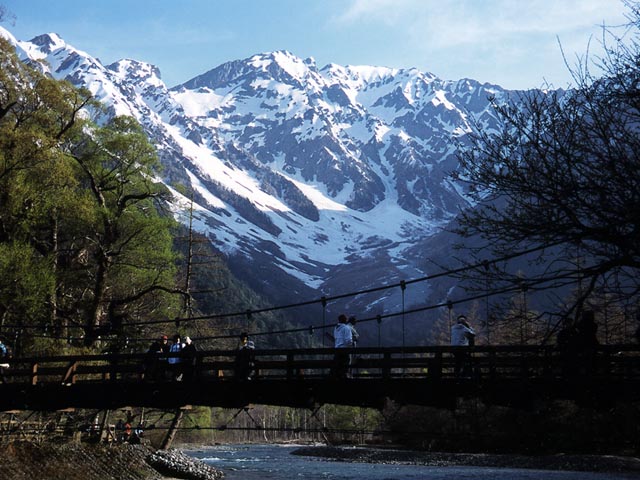
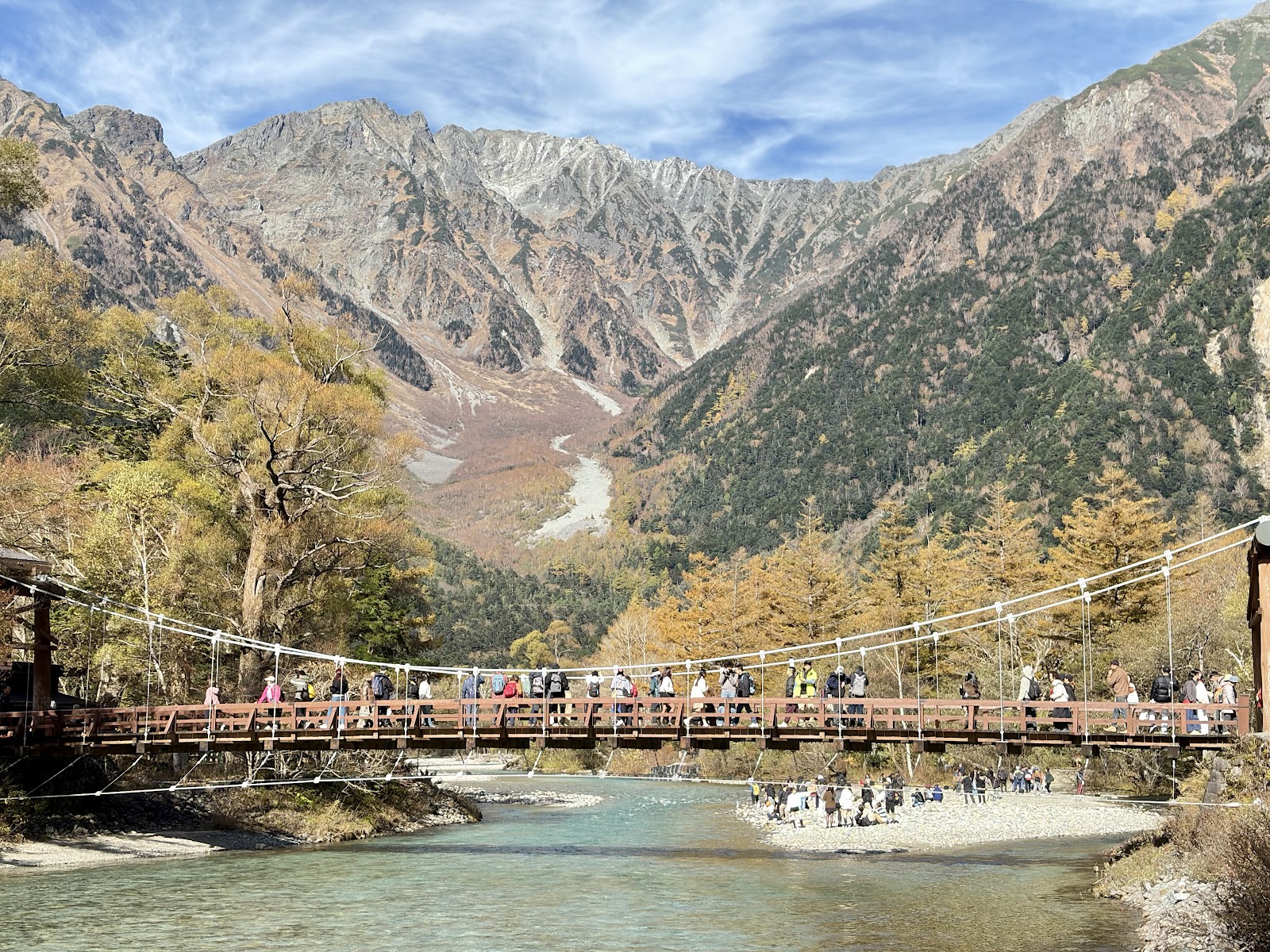
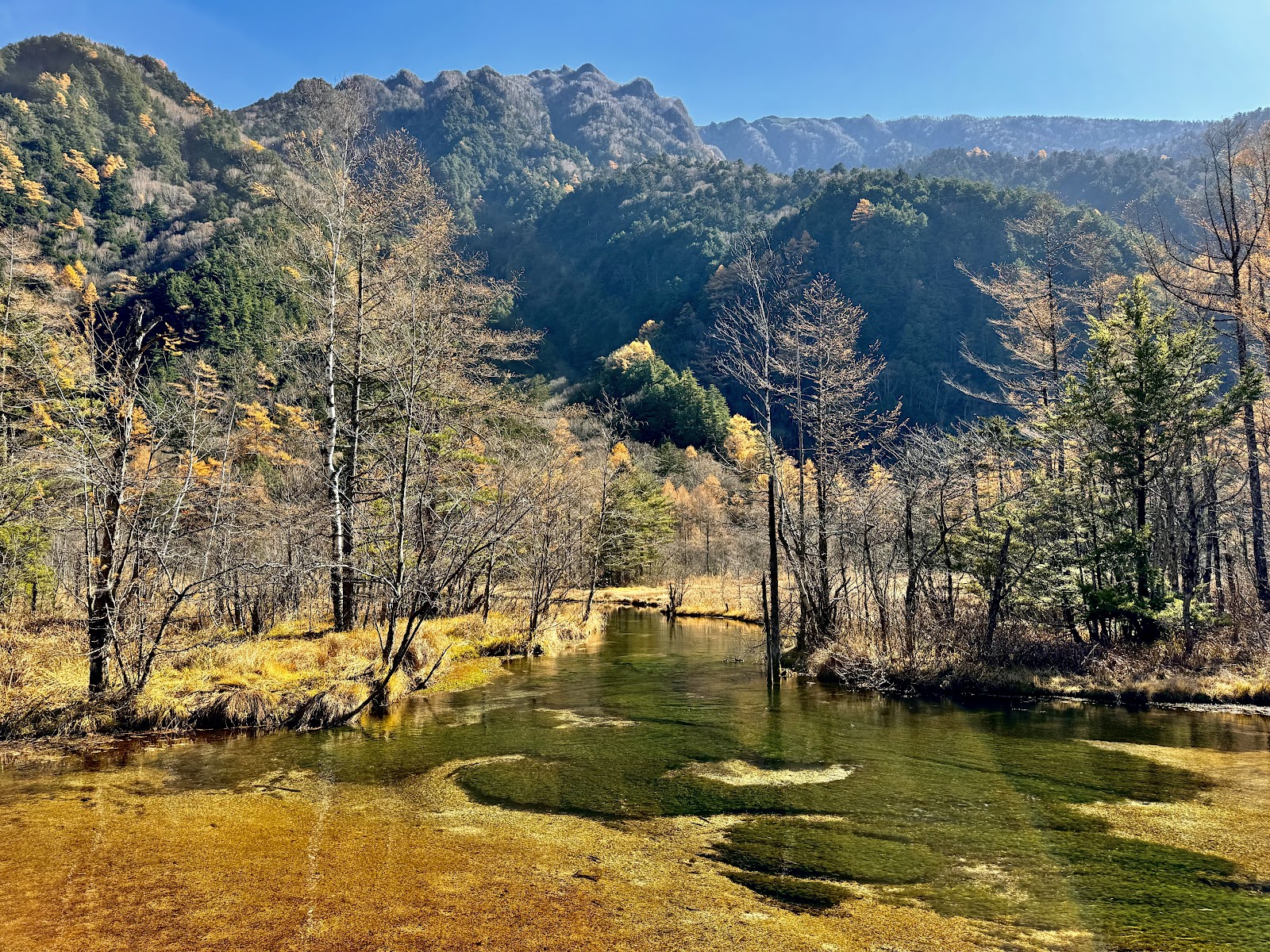
Reaching the Okumiya is part of its appeal. Kamikochi itself is a protected car-free highland accessible only by bus or taxi, generally from mid-April to mid-November, as the valley is closed by snow in winter. From the famous Kappa Bridge, a flat and scenic walking trail follows the crystalline Azusa River upstream for about an hour to Myojin, passing through beech and larch forest with constant views of the surrounding peaks. The walk is easy and suitable for most visitors, though good shoes and awareness of the mountain weather are wise.
A visit to Hotaka Shrine Okumiya combines spiritual atmosphere with some of the finest alpine scenery in Japan, and it pairs naturally with a longer day of walking in Kamikochi. Allow around an hour at the pond and shrine, and a half to full day for the round-trip hike from the bus terminal. Come in fresh early summer green, or in the golden larch and crimson maple of October, when the valley and its sacred pond are at their most sublime.
A local's tip
Every October 8th the shrine holds the Ofune Matsuri, floating two dragon-and-phoenix-prowed boats across Myojin Pond in one of the Alps' most beautiful autumn festivals.
Best time to visit
Late spring to autumn (Kamikochi is closed in winter)
Getting there
From Matsumoto take a train and bus (or direct bus) to Kamikochi, then walk about one hour upstream along the flat Azusa River trail from Kappa Bridge to Myojin. Kamikochi is car-free; access is by bus or taxi only, roughly mid-April to mid-November.
Good to know
- Parking
- Restrooms
Plan the whole trip offline
Hotaka Shrine Okumiya (Myojin) is one of many places in the Real Japan app — with turn-by-turn directions, nearby spots and full offline maps you can use with no signal.