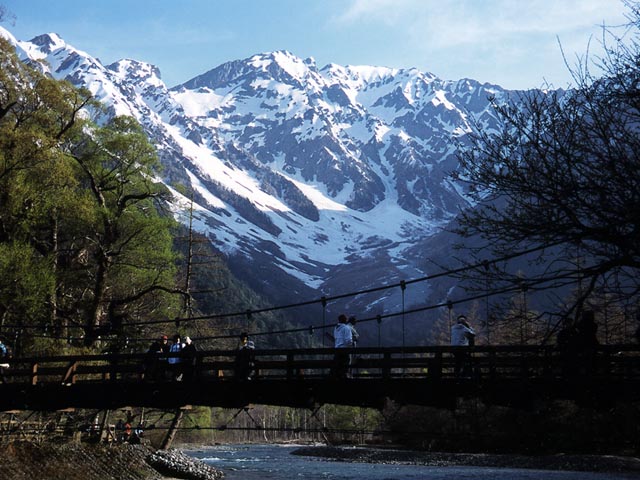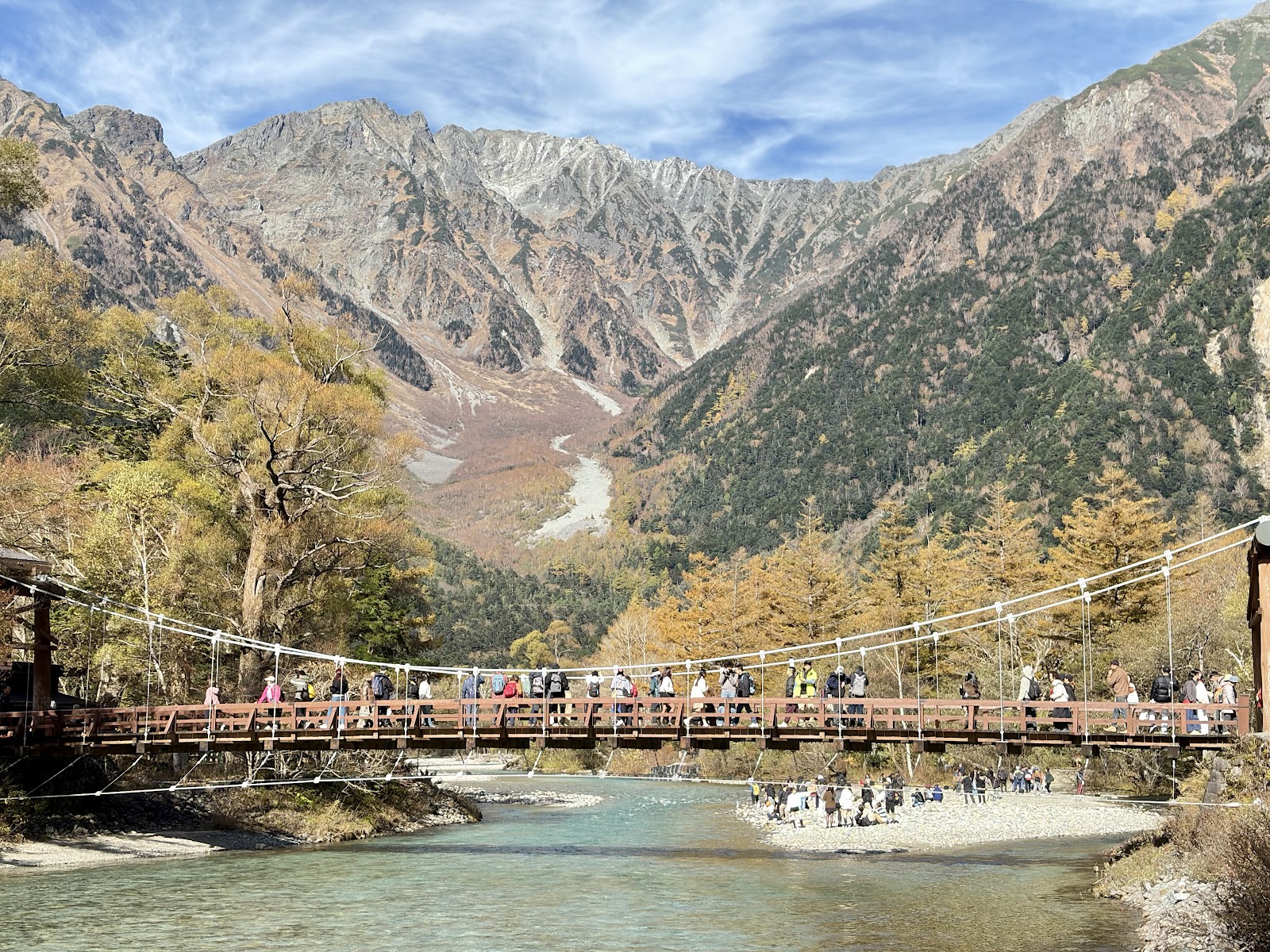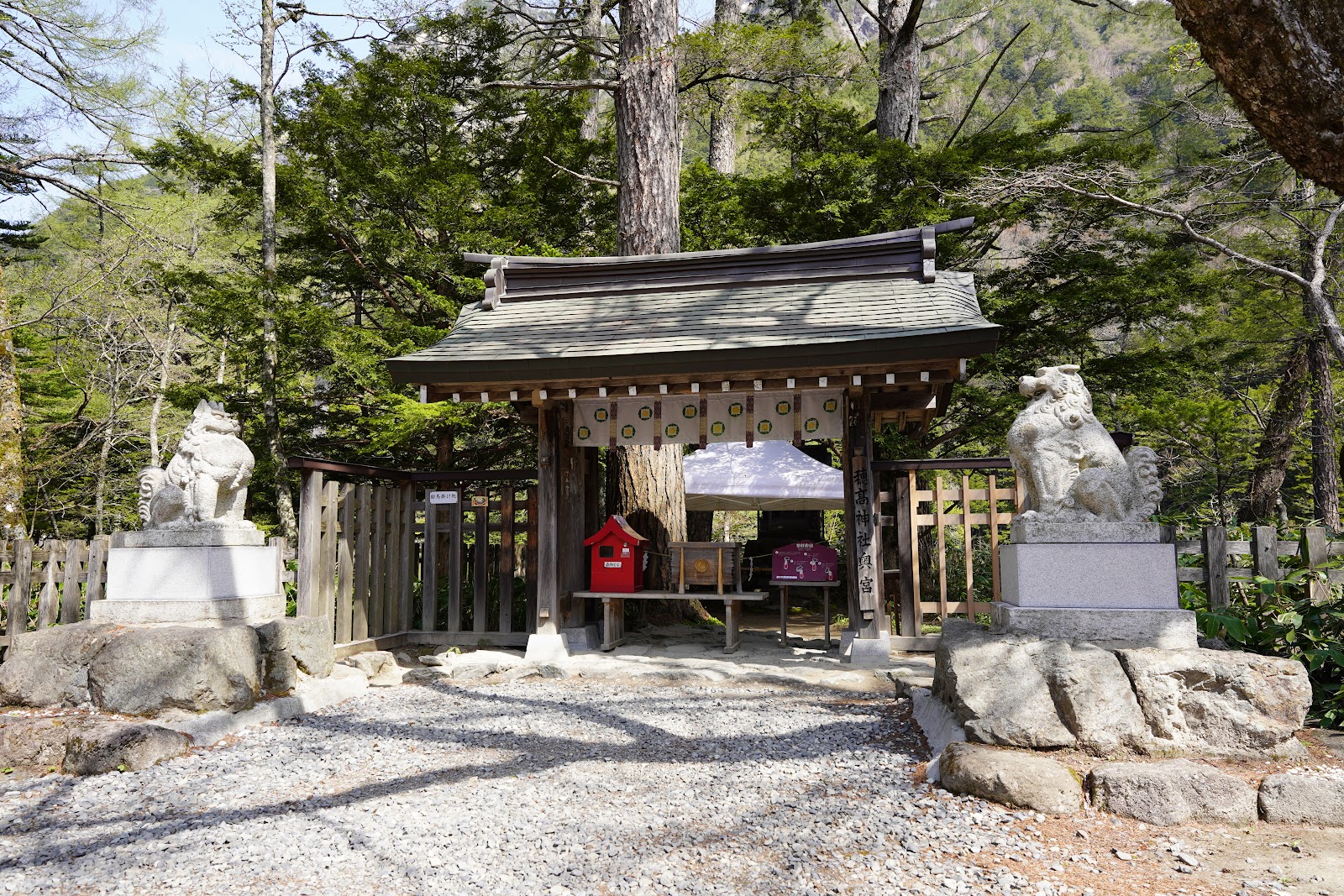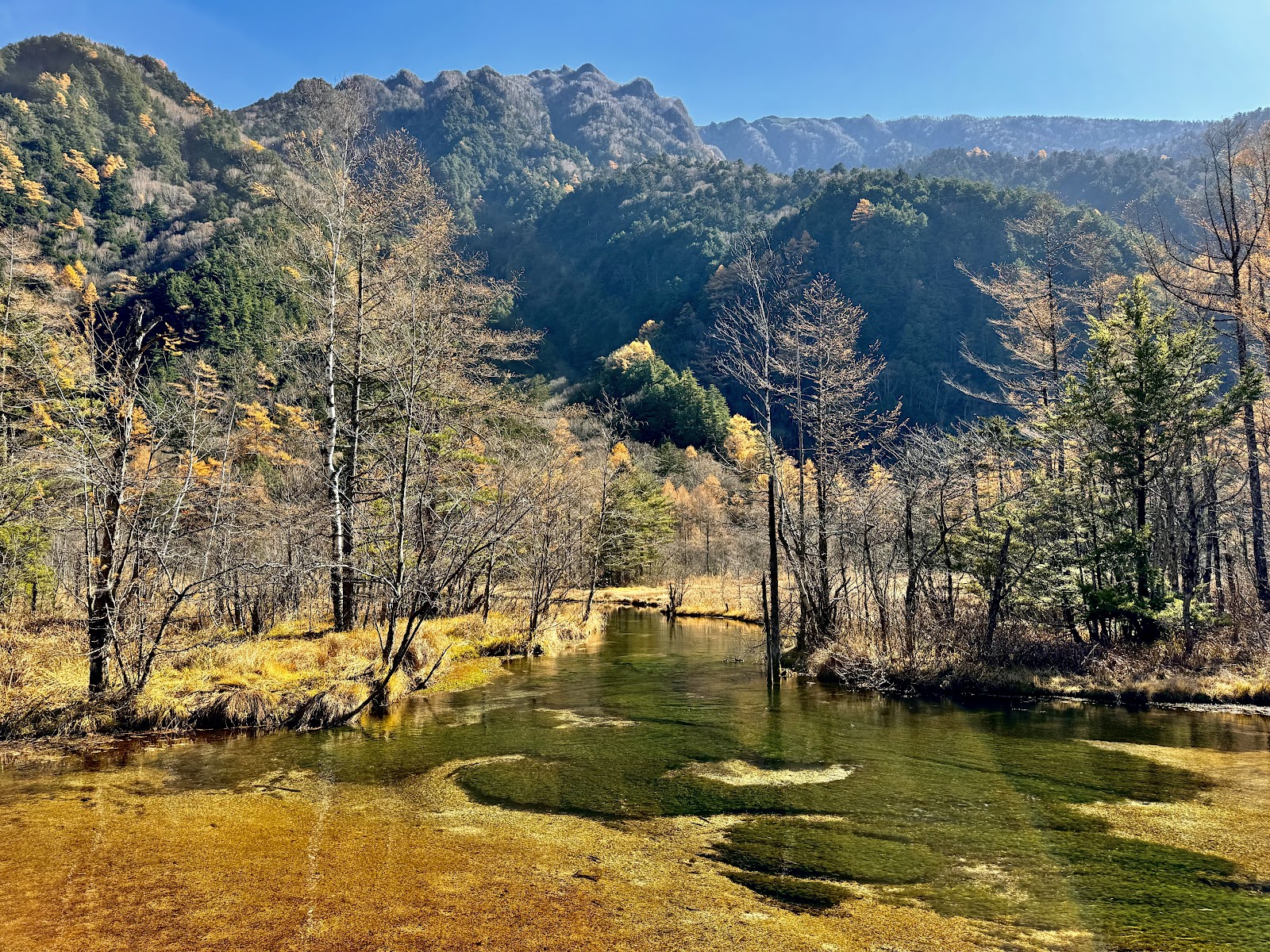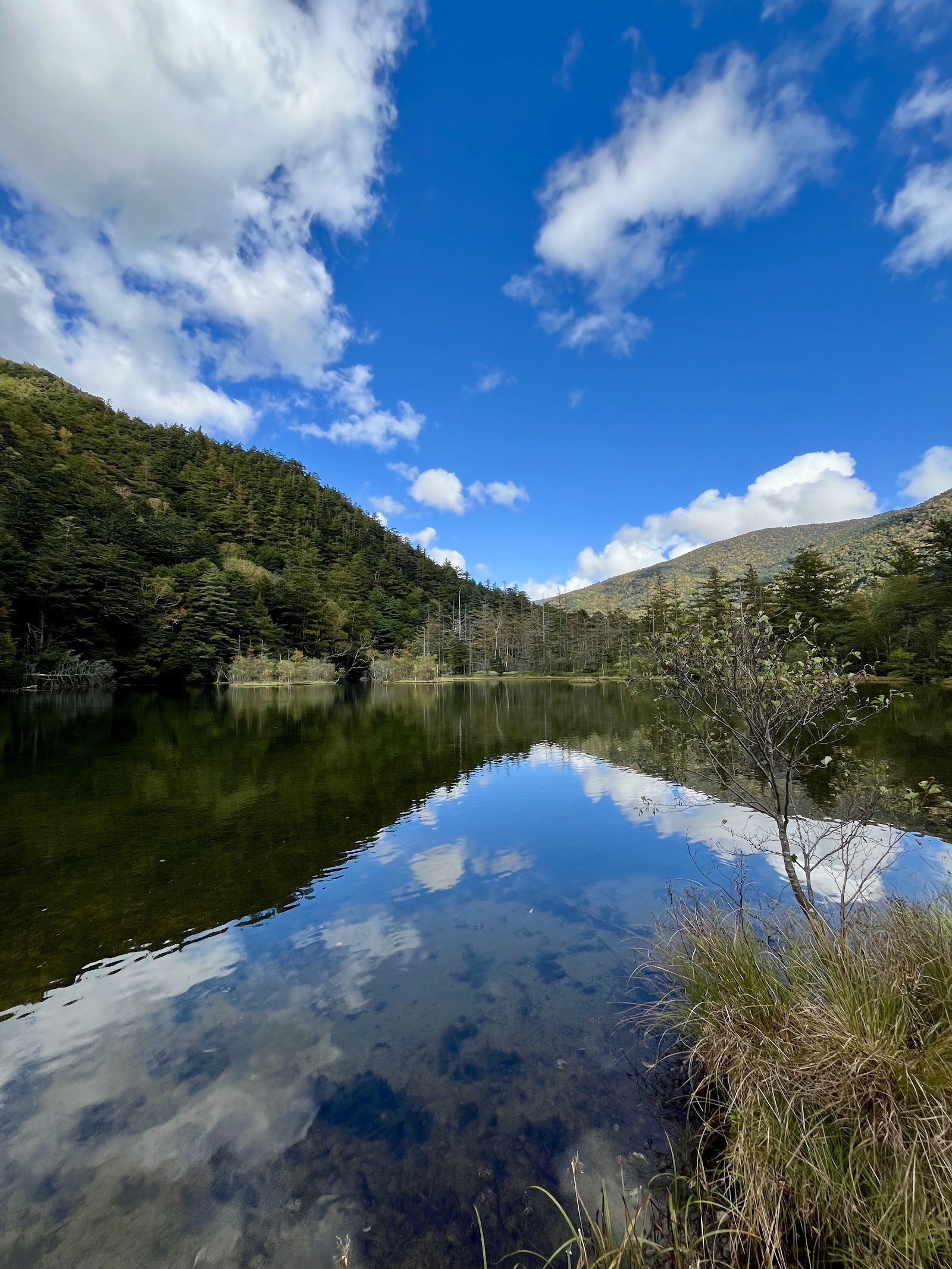
A sacred spring-fed pond beneath the sheer wall of Mount Myojin, enshrined within the inner sanctuary of Hotaka Shrine.
Myojin Pond (Myojin-ike) lies an hour's gentle walk upstream from Kappa Bridge, hidden in the grounds of the Okumiya, the inner sanctuary of Hotaka Shrine. Fed by underground springs, its water is astonishingly clear and stays a constant cold temperature year-round, giving the pond an almost sacred stillness beneath the towering 2,931-metre rock wall of Mount Myojin. Split into two linked basins, ringed by primeval forest and moss-covered rock, it feels a world away from the busier riverside promenade.
The pond has been revered for centuries as the dwelling of the deity of Hotaka, the guardian of these mountains, and it remains a working place of worship. Because it sits within the shrine's precincts, a small admission fee applies, which helps preserve its untouched character. The clarity of the water is remarkable: fallen leaves and submerged logs are visible metres down, and in autumn golden larch needles drift across a surface that mirrors the grey cliffs and blue sky above.
The walk to Myojin is one of Kamikochi's finest easy hikes. From Kappa Bridge a flat, well-maintained trail follows the Azusa River upstream for about 3.5 kilometres, passing through larch woodland and marshy clearings where Japanese macaques and, occasionally, deer appear. Many walkers make a loop, following the left bank up and returning along the right bank through the Dakesawa wetland boardwalks, a quieter and more forested route. The round trip from Kappa Bridge takes roughly two and a half hours at a relaxed pace.
The most magical time to visit is the Myojin-ike boat festival (Ofune Matsuri) held every year on 8 October, when Shinto priests row two ornate dragon- and phoenix-headed boats across the pond to give thanks to the mountain deity and pray for the safety of climbers. Held against a backdrop of early autumn colour, it is one of the most photogenic mountain rituals in Japan.
The visiting experience is meditative. A small teahouse (Myojinkan) near the pond serves noodles, sweets and coffee, and there are restrooms and benches, so it makes a natural turnaround point or lunch stop on a Kamikochi day walk. The atmosphere is hushed and reverent; many visitors linger simply to watch light shift across the water.
Autumn, from early to mid-October, is the peak season, when the larches turn gold and the reflection deepens, but early summer greenery and the fresh clarity of the springs make any snow-free month rewarding. The trail is flat and suitable for anyone in reasonable walking condition, though it is a genuine one-hour hike each way, so proper shoes and water are sensible. As with all of Kamikochi, the valley closes from mid-November to mid-April, and access is by shuttle bus only. Reach the terminal, follow the river upstream, and Myojin Pond rewards the effort with one of the Alps' most serene and spiritual corners.
A local's tip
Loop back on the opposite (right) bank via the Dakesawa wetlands for a completely different, quieter forest walk.
Best time to visit
Morning; the Myojin autumn boat festival on 8 October
Getting there
Walk about one hour upstream from Kappa Bridge along the flat Azusa River trail to Myojin; the pond lies within the grounds of Hotaka Shrine's inner sanctuary.
Good to know
- Teahouse
- Restrooms
Plan the whole trip offline
Myojin Pond is one of many places in the Real Japan app — with turn-by-turn directions, nearby spots and full offline maps you can use with no signal.