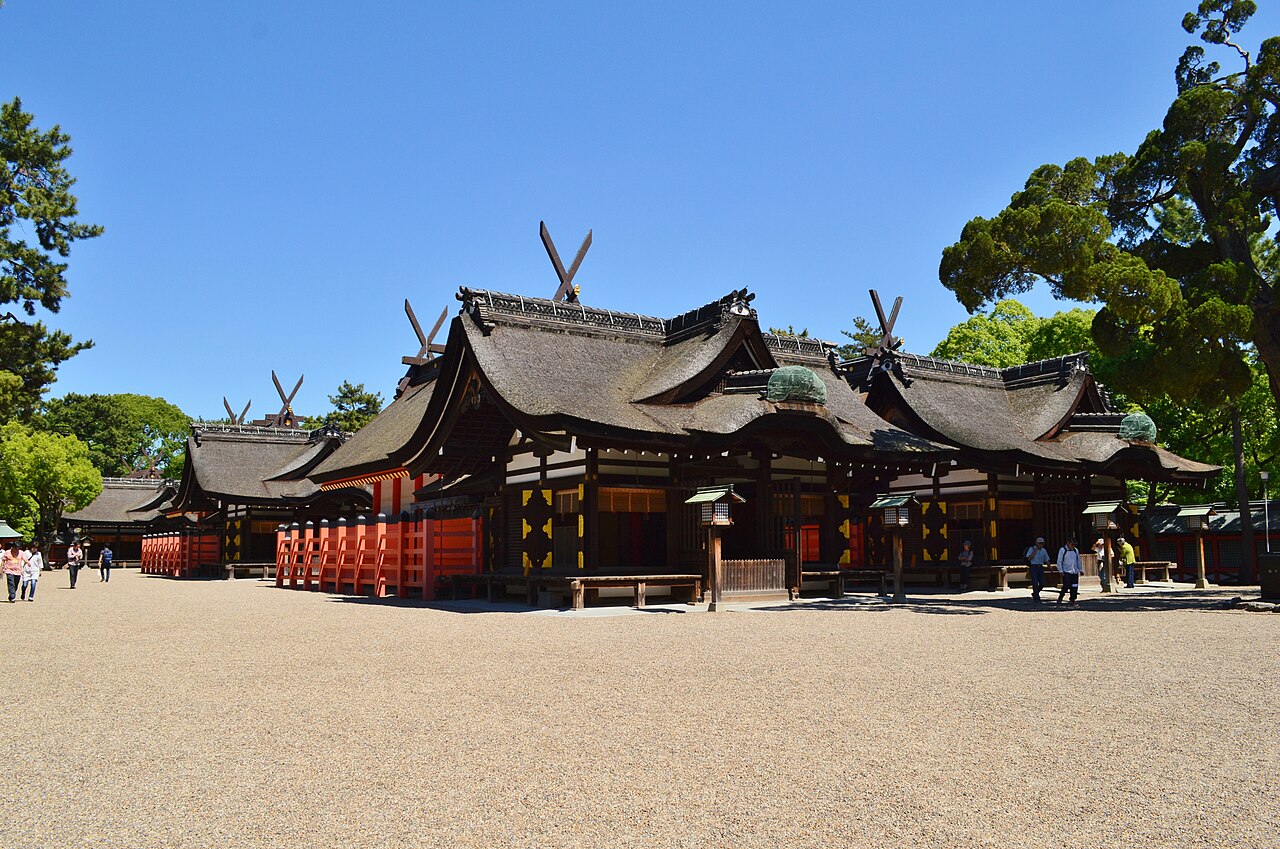
Said to be the origin of all Japan's 2,000-plus Sumiyoshi shrines, with a main hall in the rare ancient Sumiyoshi-zukuri style.
Sumiyoshi Shrine is one of the oldest and most important shrines in Fukuoka, and by local tradition it is the birthplace of the entire Sumiyoshi cult, making it the fountainhead of the more than two thousand Sumiyoshi shrines scattered across Japan. It enshrines the three Sumiyoshi deities, guardians of sailors and sea travel, together with the sun goddess Amaterasu and the legendary Empress Jingu. Its earliest documented mention dates to 737, and it served as the ichinomiya, the highest-ranked shrine, of the old Chikuzen Province. Along with the great Sumiyoshi shrines of Osaka and Shimonoseki it is counted among the Three Great Sumiyoshi Shrines of Japan.
The shrine's quiet dignity comes as a surprise given its setting, tucked into a wooded green enclave barely ten minutes on foot from the bustle of Hakata Station and the neon of Nakasu. Its main hall, rebuilt in 1623 under the patronage of the Kuroda lords of Fukuoka, is a designated Important Cultural Property and a fine example of the Sumiyoshi-zukuri architectural style, one of the oldest forms of shrine building in the country. The style is austere and archaic: a straight-gabled roof of cypress bark, unpainted or vermilion pillars, and a rectangular plan derived from ancient palace architecture rather than the more elaborate later shrine forms. Standing before it gives a genuine sense of how shrines looked more than a millennium ago.
The grounds hold several curiosities that reward a slow wander. Near the entrance stands a striking bronze statue of a robust male figure with one hand extended, and visitors press their own palm against his to draw in strength, energy and good fortune. There are ancient trees, a Noh stage used for seasonal performances, and numerous small auxiliary shrines dedicated to various kami. The shrine comes fully alive during its grand annual festival in mid-October, when portable shrines, sumo, and Noh and dance performances fill the precinct with music and crowds; ceremonies here have historically included rituals for the safety of seafarers, fitting for deities of the sea.
Because of its central location, Sumiyoshi Shrine is one of the easiest historic sights to fold into a busy Fukuoka itinerary, an ideal first or last stop close to the station. A visit needs only twenty to thirty minutes, but it offers a real change of pace from the shopping and dining nearby: mossy stone, tall trees, the smell of incense and the deep continuity of a place that has been sacred for well over a thousand years. Arrive early in the morning, before the city fully wakes, and you may have this ancient origin point of an entire nationwide tradition almost to yourself.
A local's tip
Look for the bronze statue of a powerful figure near the entrance with an outstretched hand; visitors clasp its palm to receive strength and good fortune.
Best time to visit
Early morning; mid-October for the annual festival
Getting there
An easy ten-minute walk from the west side of Hakata Station, or a short taxi ride; the shrine sits in a green pocket between Hakata and the Nakasu entertainment district.
Good to know
- Restrooms
Plan the whole trip offline
Sumiyoshi Shrine is one of many places in the Real Japan app — with turn-by-turn directions, nearby spots and full offline maps you can use with no signal.