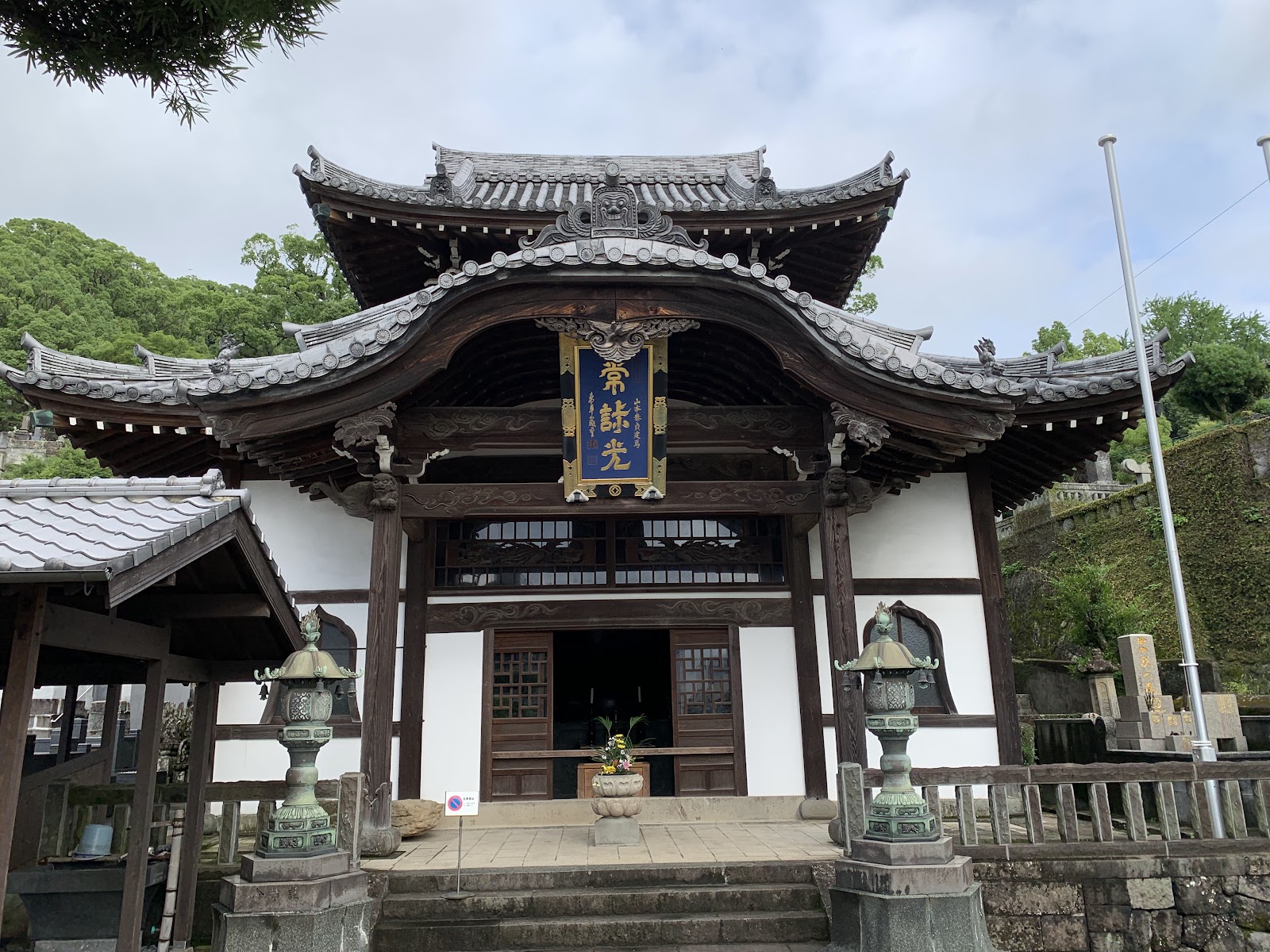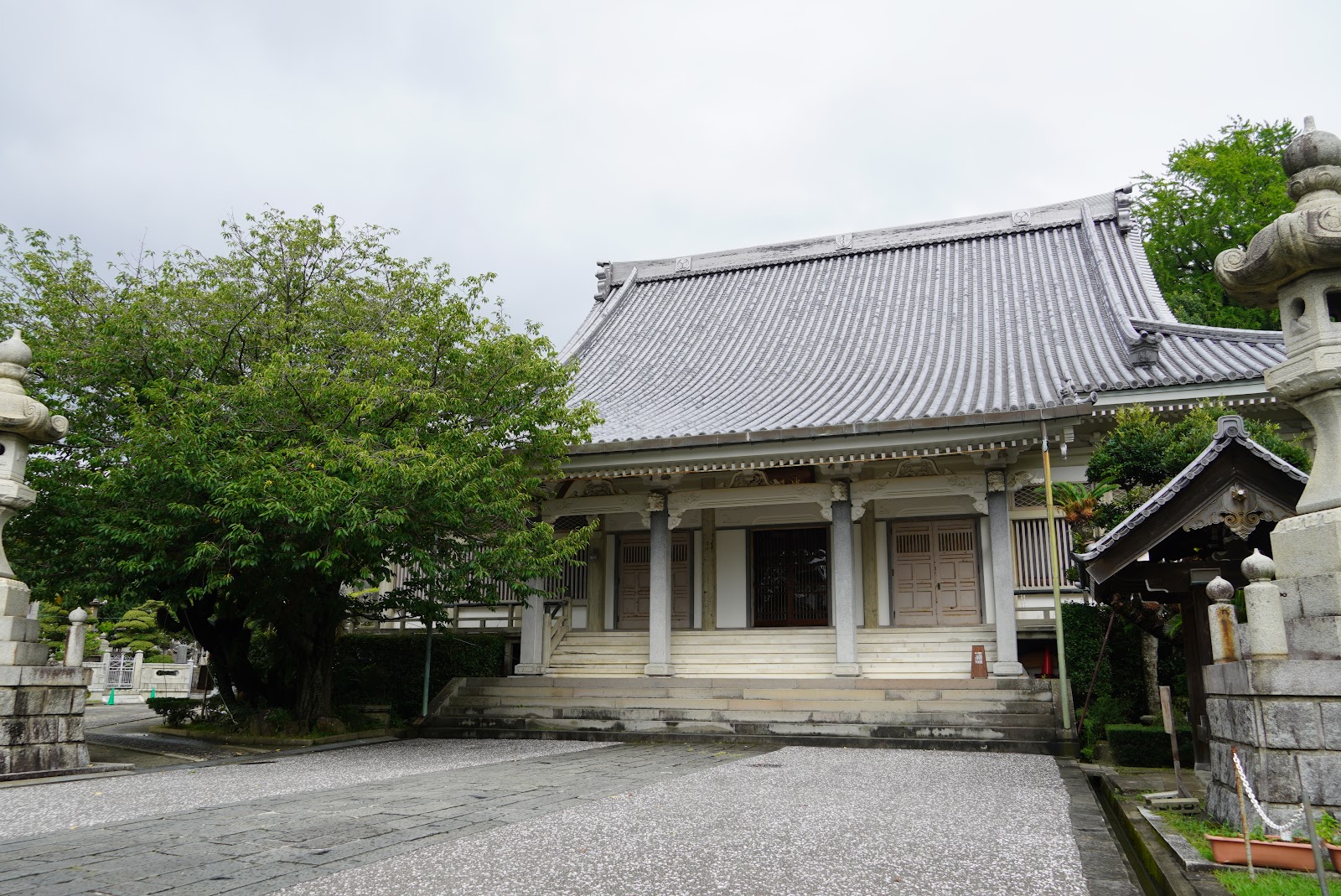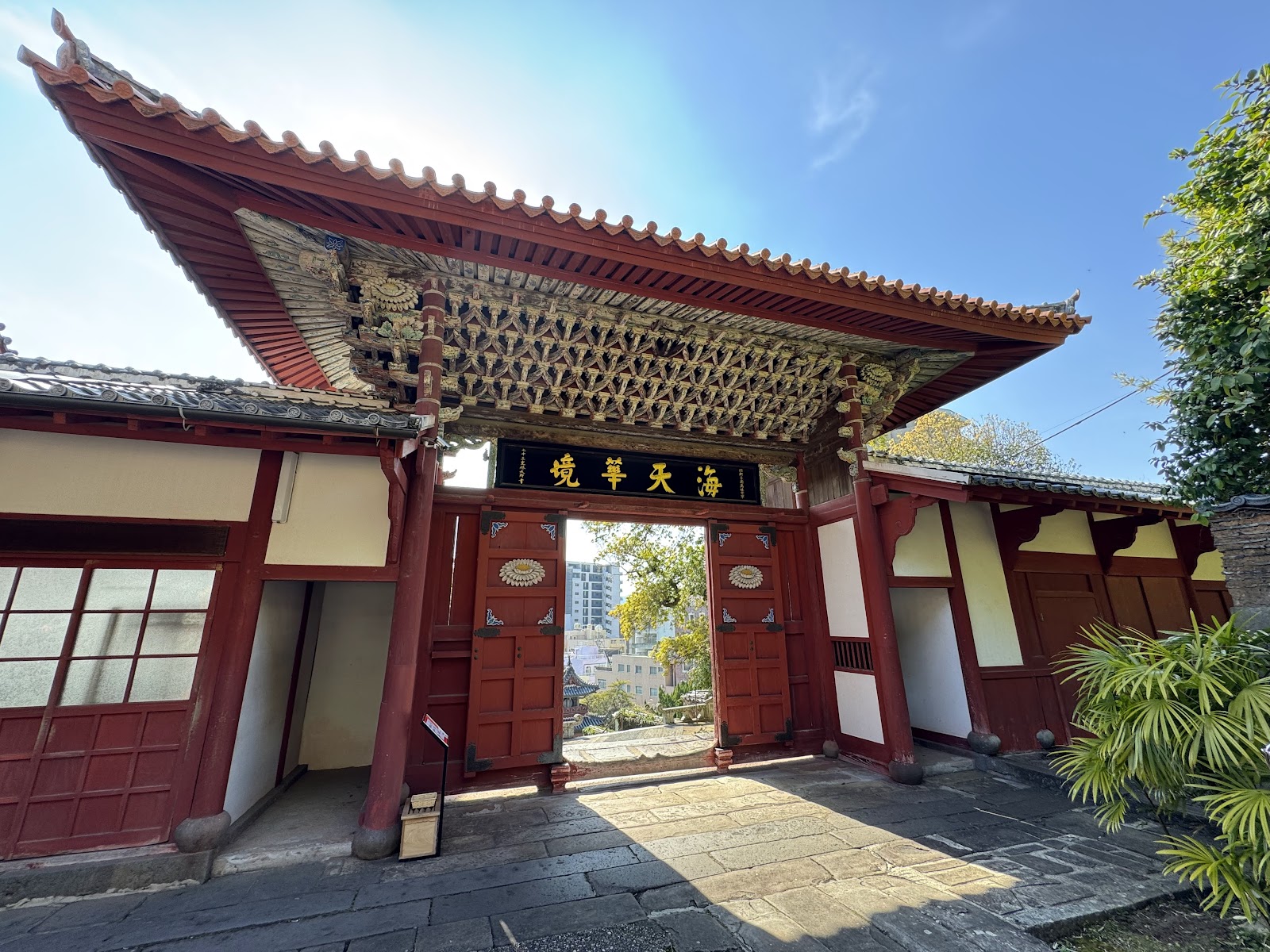
A striking Chinese Zen temple with vermilion gates and two National Treasures, founded by Nagasaki's Chinese community.
Sofukuji is one of Nagasaki's most distinctive temples, a vivid expression of the city's deep and long-standing ties to China. Founded in 1629 by the Chinese community of Nagasaki, and specifically by Fujian immigrants who wished for a temple in their own tradition, it belongs to the Obaku school of Zen Buddhism, which was brought to Japan from China in the seventeenth century. Everything about Sofukuji, from its architecture to its rituals, reflects a southern Chinese aesthetic rarely seen elsewhere in Japan, making it an exotic and colourful contrast to the more familiar Japanese temple styles.
The temple is entered through a series of ornate gates painted a brilliant vermilion red, quite unlike the subdued wood and grey of most Japanese temples. The most famous is the Daiippomon, the second gate, and the Sanmon gate, both richly decorated in Ming-dynasty Chinese style. Beyond them stands the temple's crowning glory, the Daiyuhoden, the main hall, which is designated a National Treasure of Japan. It was built by Chinese craftsmen using materials and techniques imported from China, and its sweeping roofs, intricate brackets and rich colour make it a masterpiece of continental architecture on Japanese soil. A second structure, the first gate, is also a National Treasure, giving this relatively small temple a remarkable concentration of the country's highest heritage designations.
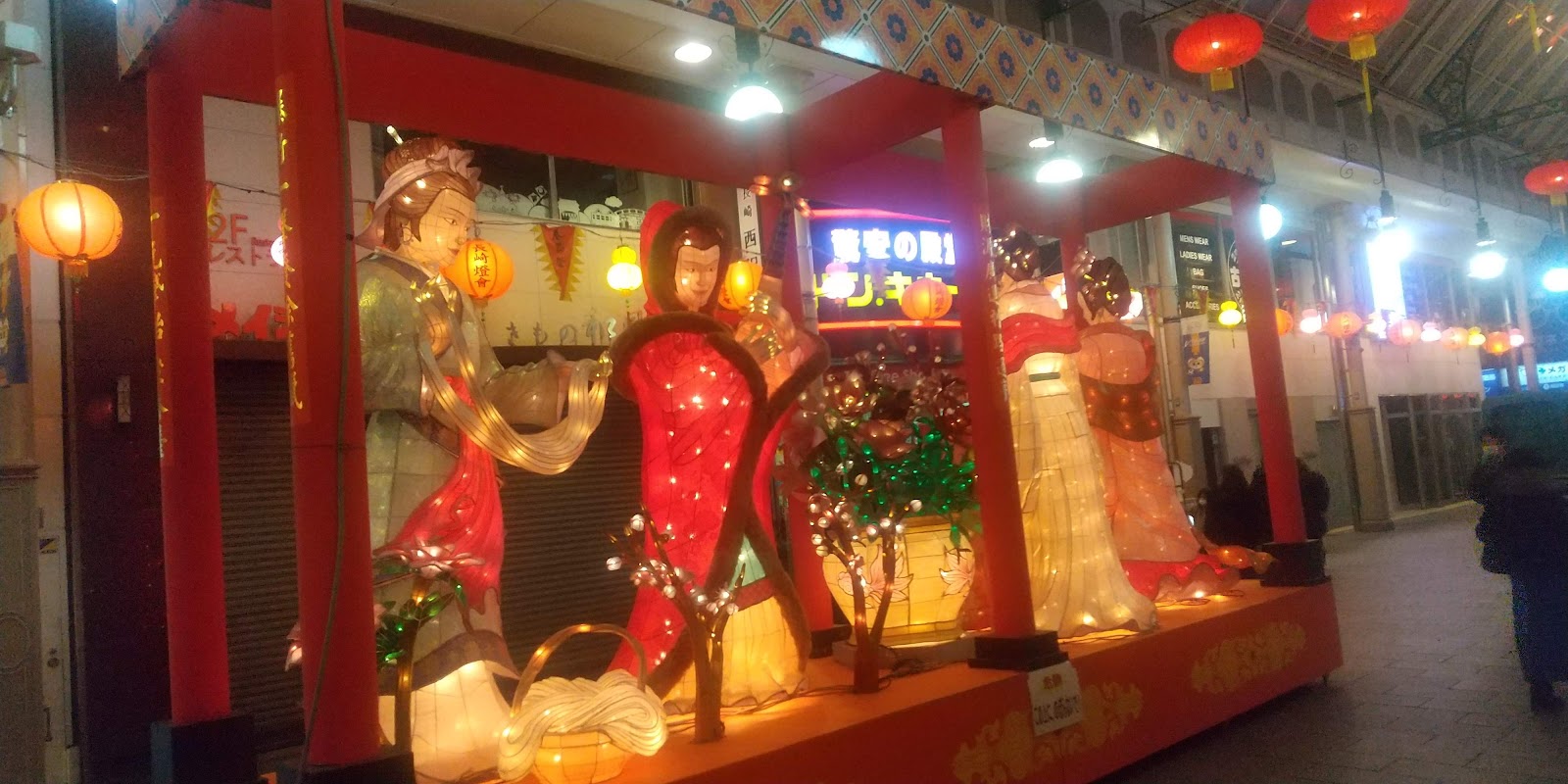
Sofukuji served as a spiritual home and community anchor for Nagasaki's Chinese residents, who were a vital part of the port's international character during the centuries when the city was Japan's chief gateway for foreign trade. The temple hosts distinctive Chinese-influenced observances, most notably during the summer Bon season, when it becomes a centre for rituals honouring the dead, including the lighting and floating of lanterns and ceremonies rooted in Chinese custom. These events draw crowds and fill the vivid grounds with colour and devotion.
The experience is compact and atmospheric, and most visitors spend around forty-five minutes exploring the gates, the main hall and the quieter corners of the grounds. While there are steps up to and within the temple, the core areas are manageable for most, and a small admission fee supports the temple's upkeep. The bright colours and unusual forms make it especially rewarding for photographers and for anyone interested in the cross-cultural threads of Nagasaki's past.
Among the grounds' curiosities is an enormous iron cauldron, cast in the seventeenth century to cook porridge for distribution to the starving during a severe famine, a striking reminder of the temple's role in relief and charity during hard times. Details like this give Sofukuji a human dimension beyond its architectural splendour.
A notable point is how Sofukuji, together with Nagasaki's other Chinese-founded temples, testifies to the city's uniquely international makeup. Where Dejima channelled Dutch trade and Oura Church its Christian heritage, Sofukuji embodies the deep Chinese presence that shaped Nagasaki's cuisine, festivals and culture, influences still visible in the city today, from its Chinatown to its distinctive dishes.
The best time to visit is a quiet morning, or the late-summer Bon season for its lantern rituals. Take tram line 1 to the Shokakuji-shita stop and walk a few minutes to the red gate. For its National Treasures, its brilliant colour and its window onto Nagasaki's Chinese heritage, Sofukuji is a rewarding and unusual temple well worth seeking out.
A local's tip
Look for the enormous iron cauldron in the grounds, cast to cook relief porridge for the poor during a seventeenth-century famine, a rare survivor of the temple's charitable history.
Best time to visit
Morning for calm; late summer for the Bon Festival lantern rituals
Getting there
Take Nagasaki tram line 1 to the Shokakuji-shita stop, then walk about three minutes to the temple's vivid red gate.
Good to know
- Restrooms
- Temple hall
Plan the whole trip offline
Sofukuji Temple is one of many places in the Real Japan app — with turn-by-turn directions, nearby spots and full offline maps you can use with no signal.