Nagasaki's historic entertainment quarter—a warren of lanes packed with izakaya, bars and champon counters that come alive after dark.
Shianbashi is Nagasaki's traditional entertainment district, a dense warren of narrow lanes immediately south of the Hamanomachi arcade where the city has come to eat, drink and be entertained for well over a century. The name means roughly "the bridge of hesitation" or "contemplation bridge," a reference to a small bridge that once stood here over a now-covered canal; the story goes that patrons crossing it would pause to reconsider whether to venture into the pleasure quarter beyond—giving the spot, and the district, its evocative name.
Historically Shianbashi sat on the approach to Maruyama, Nagasaki's licensed pleasure quarter, which in the Edo period rivalled the great entertainment districts of Kyoto and Edo (Tokyo) and was famous throughout Japan. Because Nagasaki was the country's sole window on foreign trade, its pleasure quarter drew an unusually international clientele—Dutch and Chinese merchants among them—and the culture that grew up here absorbed foreign influences alongside classic Japanese entertainment. Something of that layered, worldly history still colours the area's atmosphere.
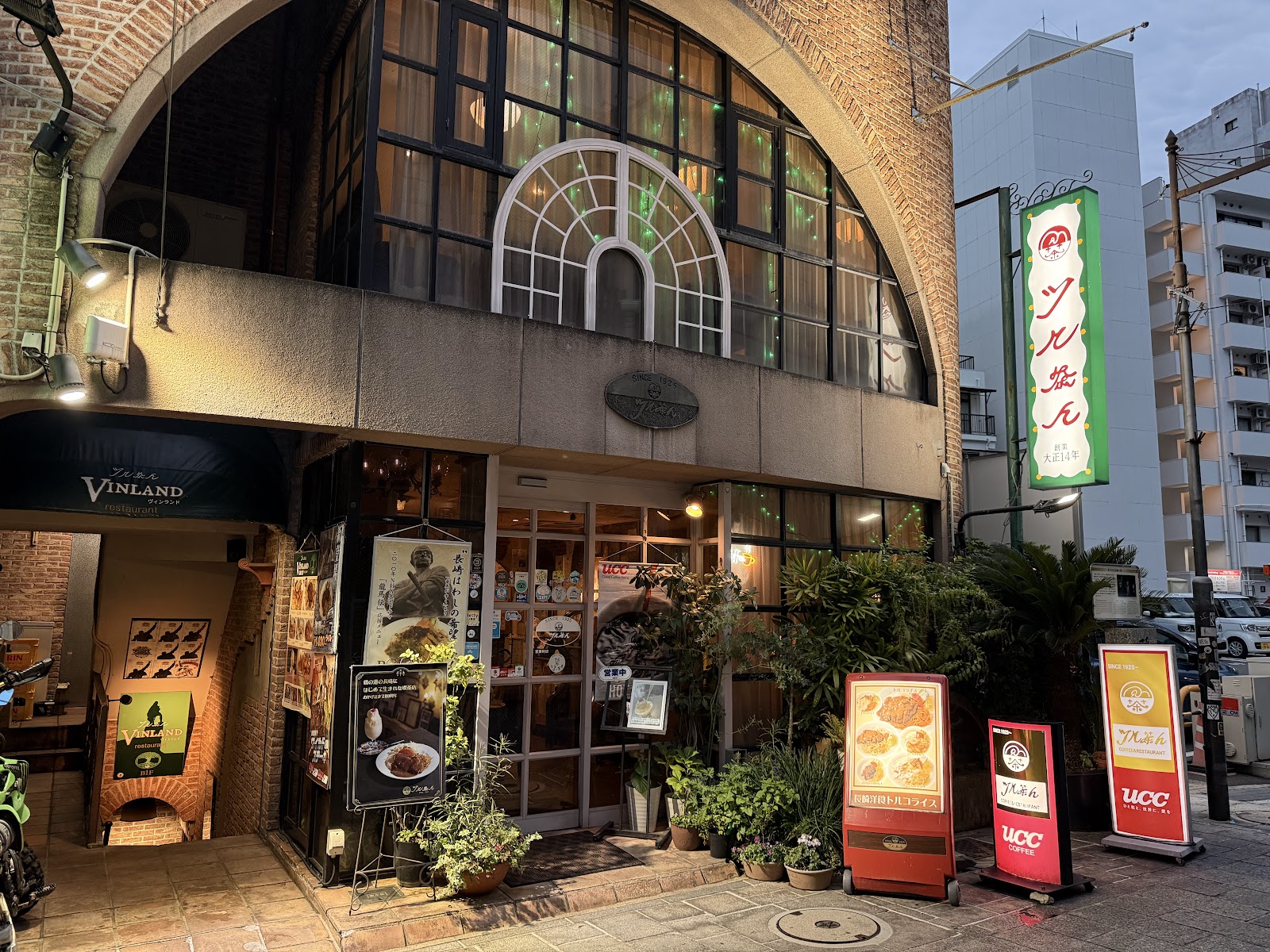
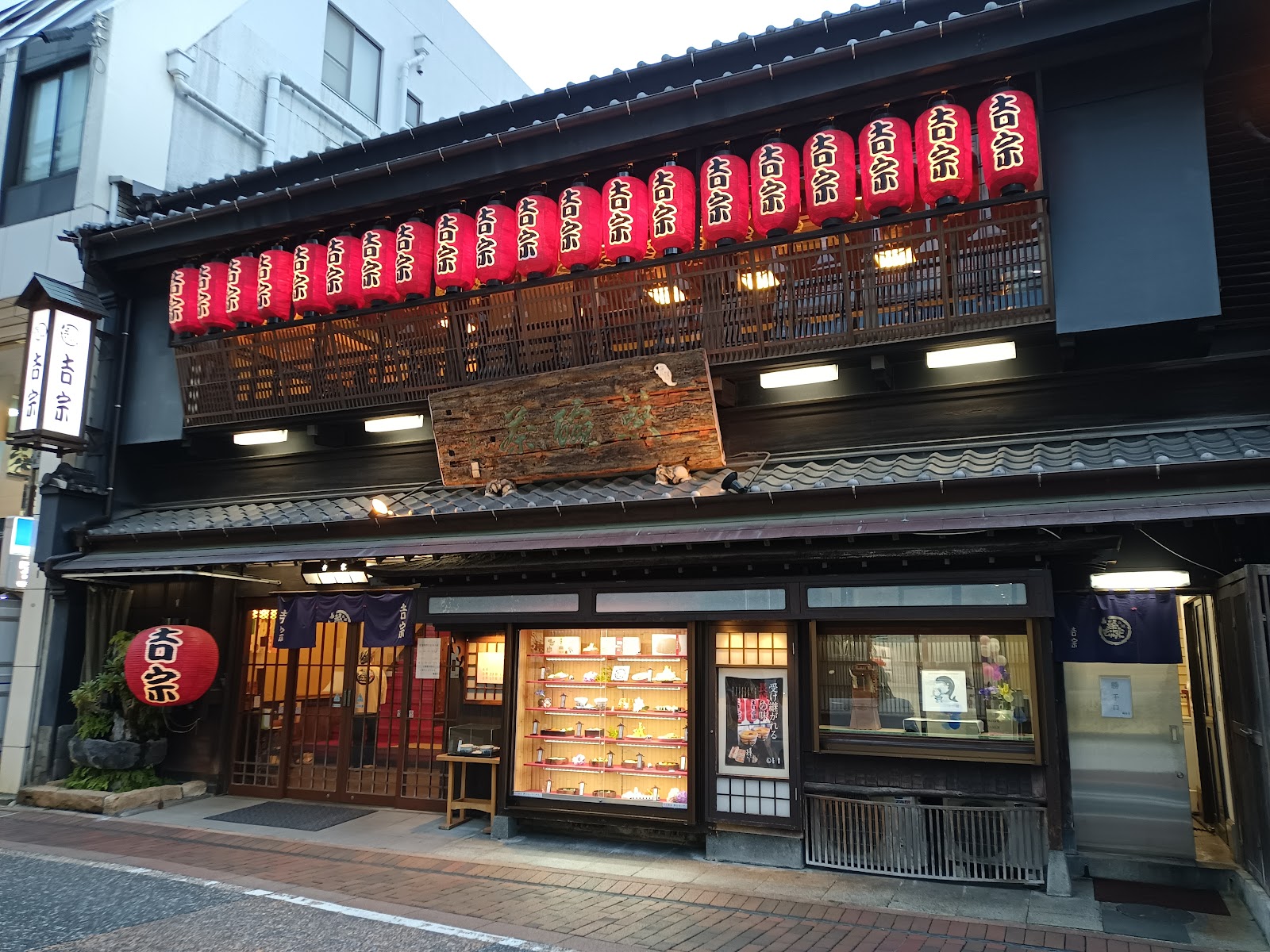
Today Shianbashi is Nagasaki's after-dark heart. By day the lanes are quiet and a little worn, but as evening falls they fill with the glow of lanterns and signboards and the district transforms into a maze of izakaya, small bars, snack counters, karaoke boxes, clubs and restaurants. It is the natural place to sample Nagasaki's distinctive food culture, shaped by centuries of Chinese, Portuguese and Dutch contact: champon, the hearty noodle dish of pork, seafood and vegetables in a milky broth; sara-udon, its crisp-noodle cousin; Chinese-influenced buta-no-kakuni braised pork; and, for dessert, the Portuguese-descended castella sponge cake. Many of the city's most characterful small eateries are hidden in these lanes.
Exploring Shianbashi is best done slowly and on foot, ducking down side alleys and reading the hand-painted signs. Because it adjoins both the covered Hamanomachi arcade and Shinchi Chinatown, it is easy to fold into a downtown evening: browse the arcade before the shops close, wander through Chinatown for its gates and lanterns, then settle into a Shianbashi izakaya as the district lights up. The quarter is compact and walkable, and although it is a genuine nightlife area, it retains an old-town intimacy rather than the brash scale of a big-city entertainment district.
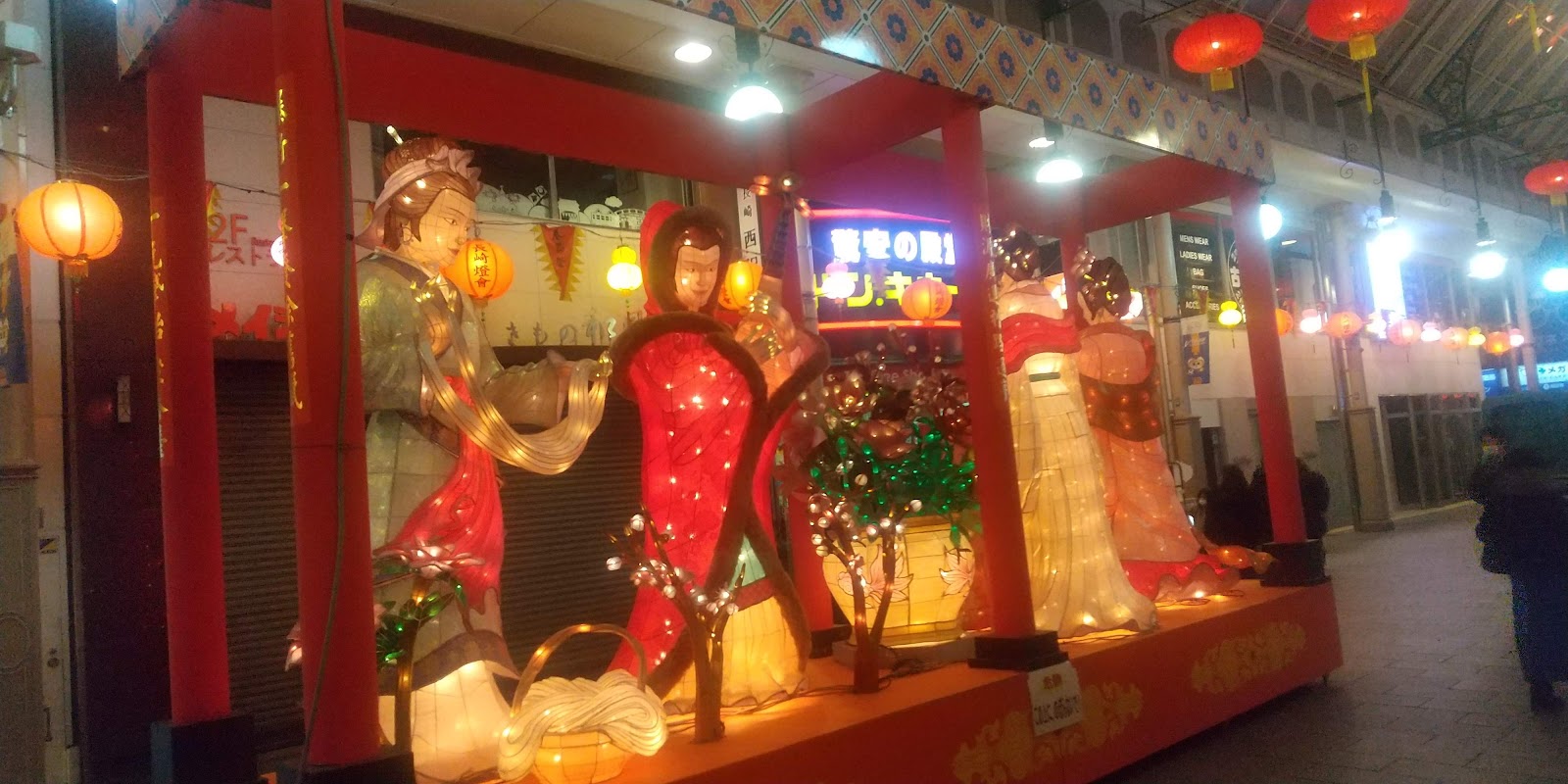
Seasonal festivals bring extra life. During the Nagasaki Lantern Festival in late winter—an event rooted in the city's Chinese community and its lunar-new-year celebrations—the surrounding downtown, including the lanes near Shianbashi, is draped with thousands of red lanterns and thronged with visitors, and the district's restaurants do a roaring trade.
Getting there is simple: the Shianbashi tram stop, on the main tram line through downtown, sits right at the edge of the quarter, and a flat, cheap streetcar fare brings you from the station or the waterfront in minutes. Come in the evening, arrive hungry, and let yourself get a little lost among the lanes—Shianbashi is where you taste the everyday, convivial side of a city more usually visited for its solemn history.
A local's tip
This is the place for local specialities after dark—seek out a champon or sara-udon counter, or a small izakaya serving Nagasaki-style dishes, rather than the obvious chains near the tram stop.
Best time to visit
Evening, when the lanes come alive
Getting there
Take the tram to Shianbashi stop; the district's lanes begin right at the crossing, immediately south of the Hamanomachi arcade and a short walk from Chinatown.
Good to know
- Wi-Fi
- Restrooms
Plan the whole trip offline
Shianbashi is one of many places in the Real Japan app — with turn-by-turn directions, nearby spots and full offline maps you can use with no signal.