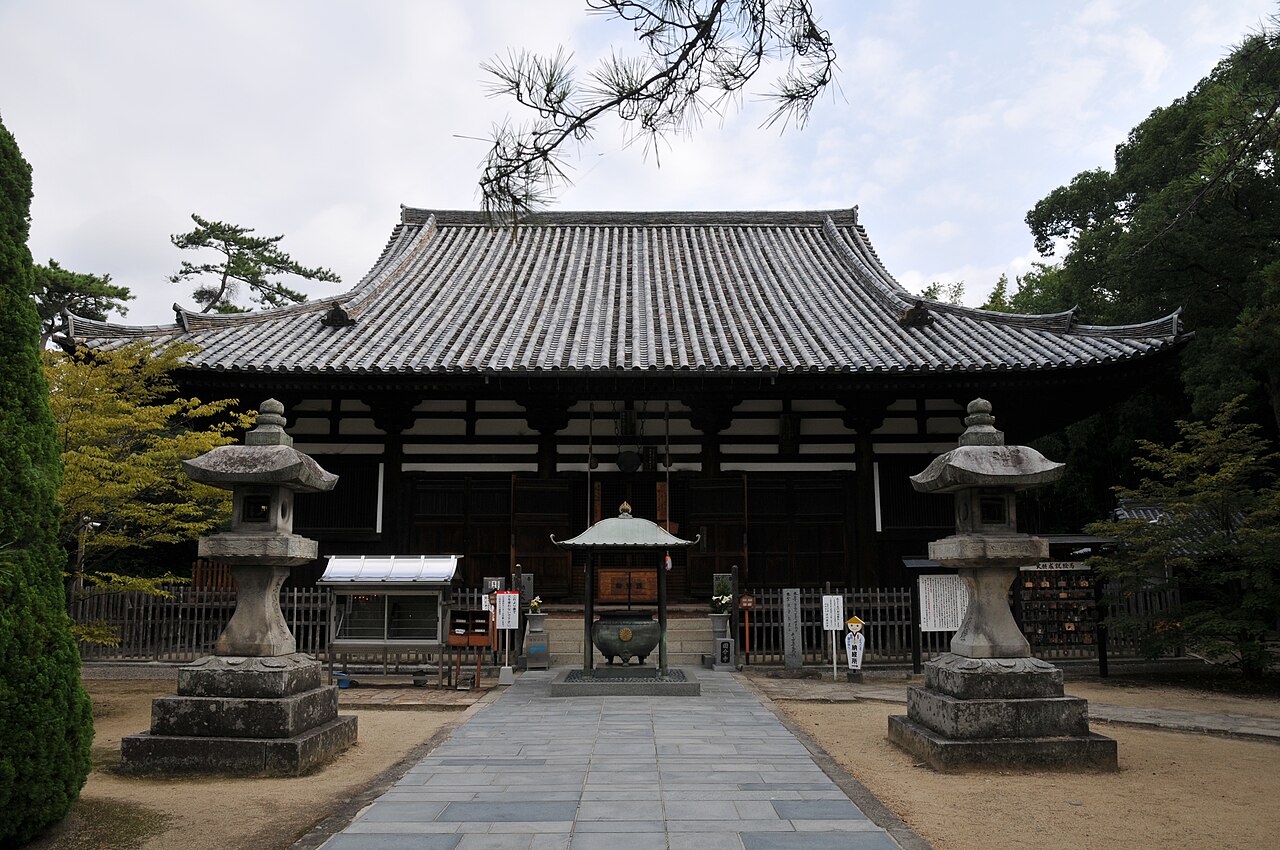
The 80th pilgrimage temple and an 8th-century imperial provincial temple with ancient ruins in its grounds.
Sanuki Kokubun-ji is the 80th temple of the Shikoku pilgrimage and one of the most historically important stops on the route. It stands in the Kokubunji district of western Takamatsu, on ground that has been sacred and official for well over 1,200 years, and it is one of the rare pilgrimage temples easily reached by JR train — a boon for visitors travelling on a Japan Rail Pass.
The temple's origins lie in an imperial decree. In 741 the Emperor Shomu ordered a network of state-sponsored provincial temples, one kokubunji in each province, to protect the nation through Buddhist practice. This was the official temple of Sanuki Province, today's Kagawa Prefecture, and its scale and status once matched that role. Wander the grounds and you can still see the great carved foundation stones that supported the original pagoda and halls, laid out across the site like a map of the vanished 8th-century monastery — a tangible link to the dawn of organised Buddhism in Japan. For this reason the whole precinct is designated a National Historic Site.
The principal image is a Senju (thousand-armed) eleven-headed Kannon, and the temple belongs to the Omuro branch of the Shingon sect. The present main hall, a graceful tiled-roof structure, is itself an Important Cultural Property, and the temple treasures include a bronze bell counted among the oldest in the region. Towering pines and a bronze statue of Kobo Daishi preside over the courtyard, and the sense of continuity — ancient ruins beneath a still-active temple — gives Sanuki Kokubun-ji a gravity that many of the smaller pilgrimage stops lack.
Pilgrims follow the usual devotions here: purifying at the water basin, offering incense and candles, chanting sutras at the main hall and the Daishi hall, and collecting the temple stamp. Because the grounds are broad and level, with good parking and restrooms, the temple is comfortable for older visitors and families, and it rarely feels rushed even when tour buses arrive.
Seasonally, spring cherry blossom and autumn maples frame the old stones beautifully, and the low light of early morning or late afternoon is ideal for photography of the main hall and pagoda base. Allow around 45 minutes to walk the full precinct, read the historical markers explaining the ancient temple layout, and take in the sense of standing on one of Shikoku's oldest continuously sacred sites.
Sanuki Kokubun-ji makes a natural pairing with other western Takamatsu pilgrimage temples such as Shiromine-ji and Negoro-ji on the Goshikidai plateau above, letting you combine an accessible lowland temple with more dramatic mountain ones in a single day. As always, treat the site as the living, working temple it is: keep noise down near the halls, ask before photographing pilgrims, and give way to the white-clad ohenro completing their long circuit of the island.
A local's tip
Look for the original 8th-century foundation stones of the ancient provincial temple laid out in the grounds — you are standing on one of Sanuki Province's oldest state monuments.
Best time to visit
Spring and autumn
Getting there
Ride the JR Yosan Line to Kokubu Station and walk about 10 minutes; the temple is one of the few pilgrimage sites conveniently reached on a Japan Rail Pass.
Good to know
- Parking
- Restrooms
Plan the whole trip offline
Sanuki Kokubun-ji (Temple 80) is one of many places in the Real Japan app — with turn-by-turn directions, nearby spots and full offline maps you can use with no signal.