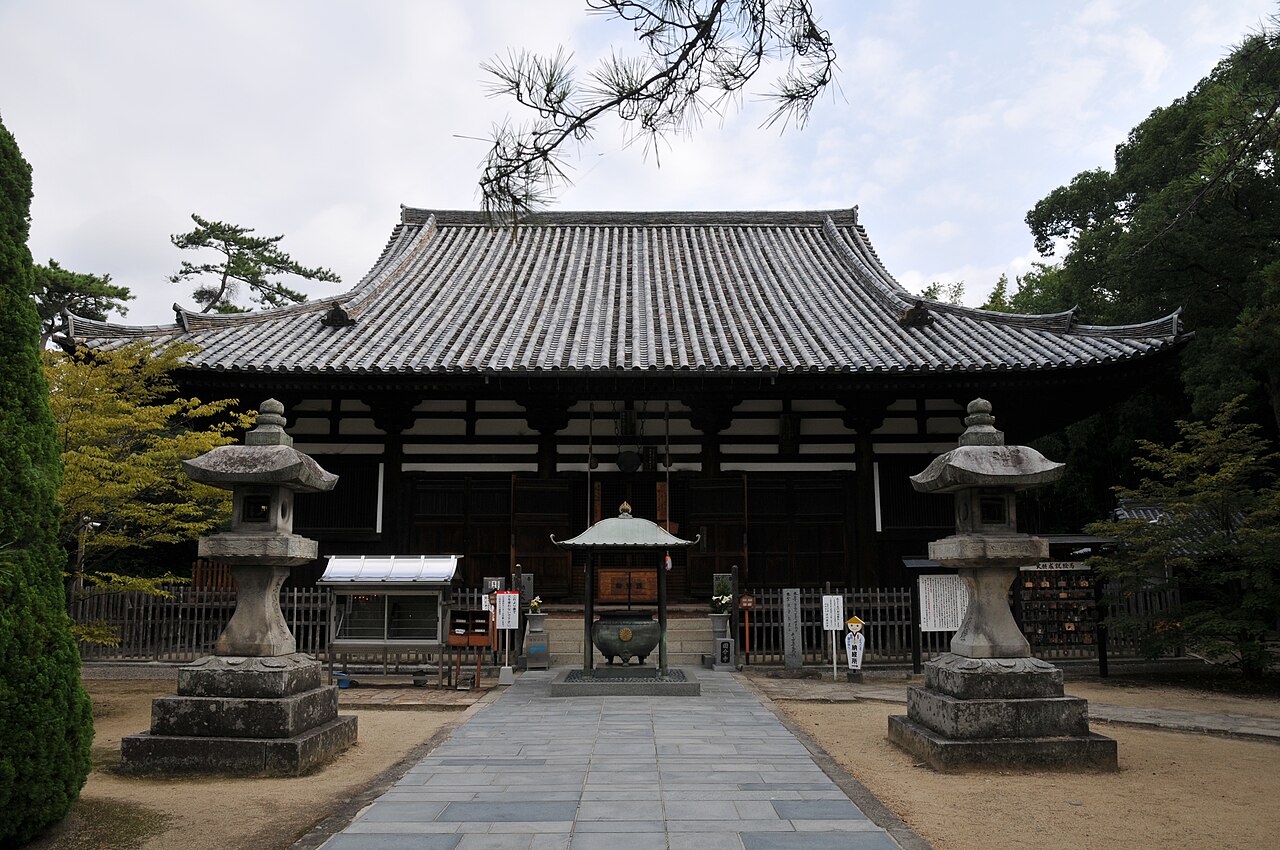
The 81st pilgrimage temple on the Goshikidai plateau, beside the tomb of the exiled Emperor Sutoku.
Shiromine-ji is the 81st temple of the Shikoku pilgrimage, perched on the forested Goshikidai plateau west of Takamatsu, near the city of Sakaide. Wrapped in tall cedars and often touched by mountain mist, it is a temple heavy with history and haunted, quite literally in legend, by one of the most dramatic stories in Japan's imperial past.
The temple is traditionally attributed to Kobo Daishi (Kukai) and the monk Chishо in the 9th century, and its principal image is a Senju (thousand-armed) Kannon of the Shingon tradition. Its grounds climb the hillside in a series of mossy terraces, connecting a main hall, a Daishi hall, pagodas and small sub-shrines by stone stairways worn smooth by centuries of pilgrims. Ancient trees and the cool plateau air lend it a serene, secluded atmosphere quite different from the lowland city temples.
What sets Shiromine-ji apart is its connection to the Emperor Sutoku. Sutoku reigned in the 12th century but was forced to abdicate and, after the failed Hogen Rebellion of 1156, was exiled to Sanuki Province, where he died in bitter isolation in 1164. His tomb lies on the plateau close to the temple, and legend holds that his resentment was so profound that he became a vengeful spirit, an onryo blamed for calamities that befell the capital. Over the centuries he was enshrined and placated as one of Japan's most feared and revered ghosts, and the quiet mausoleum near Shiromine-ji is a place many visitors find genuinely moving. The pairing of a serene pilgrimage temple with the resting place of a tragic, wrathful emperor gives the site an unusual emotional depth.
The temple is also simply beautiful. The Goshikidai plateau, whose name means 'five-coloured heights', is known for its scenery, and Shiromine-ji's forested setting is at its finest in autumn, when maples flare against the evergreens, and lovely again in spring with cherry blossom and the tender greens of early summer. Birdsong, the rush of a mountain stream and the tap of pilgrims' staffs are often the only sounds.
Practically, Shiromine-ji is a mountain temple with no direct rail access; most visitors come by car or taxi up the plateau road, while walking pilgrims reach it on the forest trail linking temples 80 and 82. Parking and restrooms are provided at the top. Devotions follow the pilgrimage pattern: purification at the basin, incense and candles, sutra chanting at the main and Daishi halls, and the collection of the temple's calligraphic stamp.
Allow around 50 minutes to explore the terraced grounds and walk the short path to Emperor Sutoku's tomb. Shiromine-ji pairs naturally with nearby Negoro-ji, its neighbour on the plateau and home of the Ushioni legend, making an atmospheric two-temple mountain loop. Treat the temple and the imperial mausoleum with due respect — keep quiet near the halls and the tomb, ask before photographing pilgrims, and take a moment to reflect on the layered history held in this misty high place.
A local's tip
Pay respects at the nearby mausoleum of Emperor Sutoku, the exiled 12th-century emperor whose vengeful ghost became one of Japan's most feared spirits.
Best time to visit
Autumn foliage season
Getting there
Reached by car or taxi up the Goshikidai plateau from Sakaide or Takamatsu; walking pilgrims climb the forest path between temples 80 and 82.
Good to know
- Parking
- Restrooms
Plan the whole trip offline
Shiromine-ji (Temple 81) is one of many places in the Real Japan app — with turn-by-turn directions, nearby spots and full offline maps you can use with no signal.