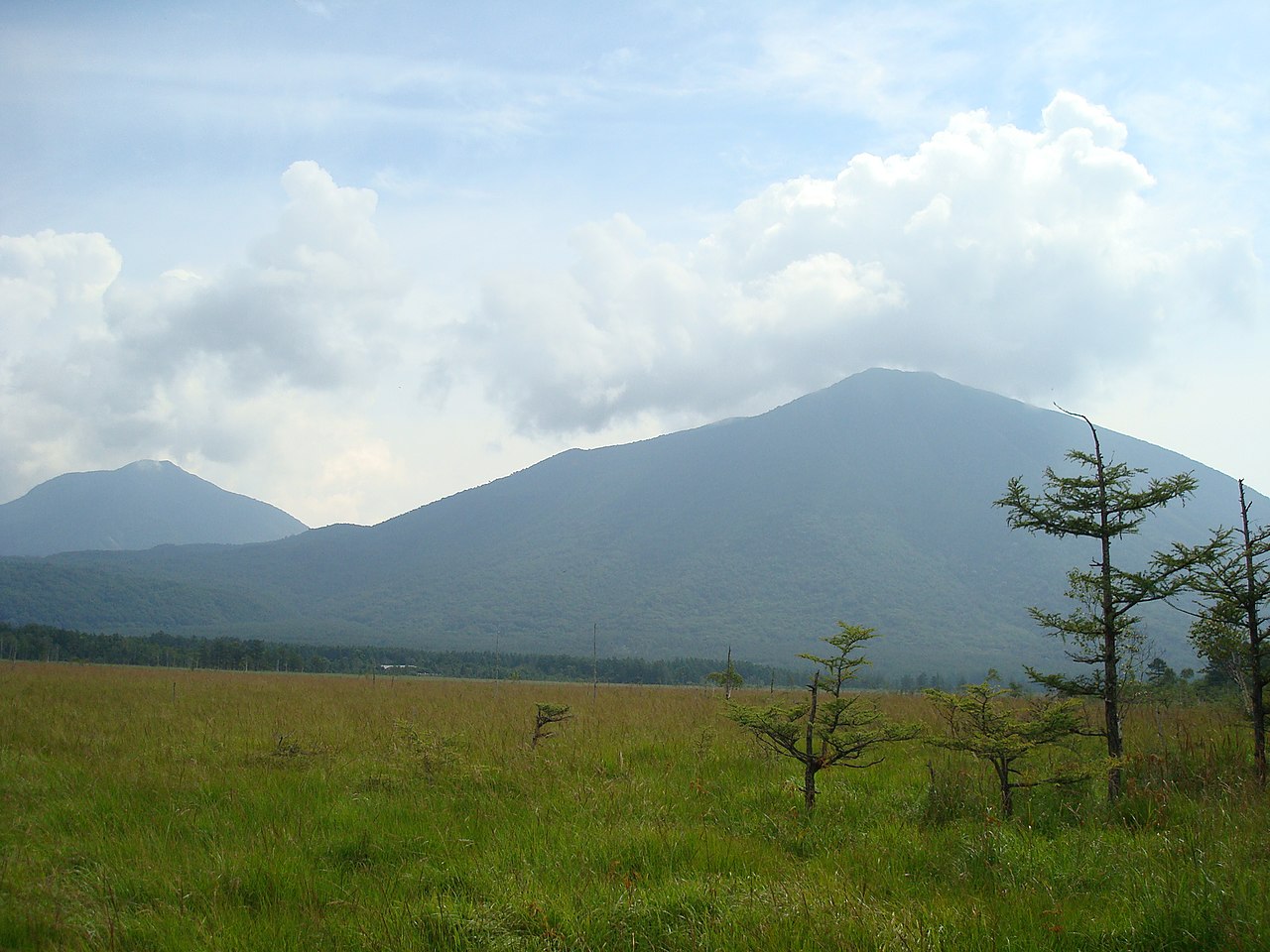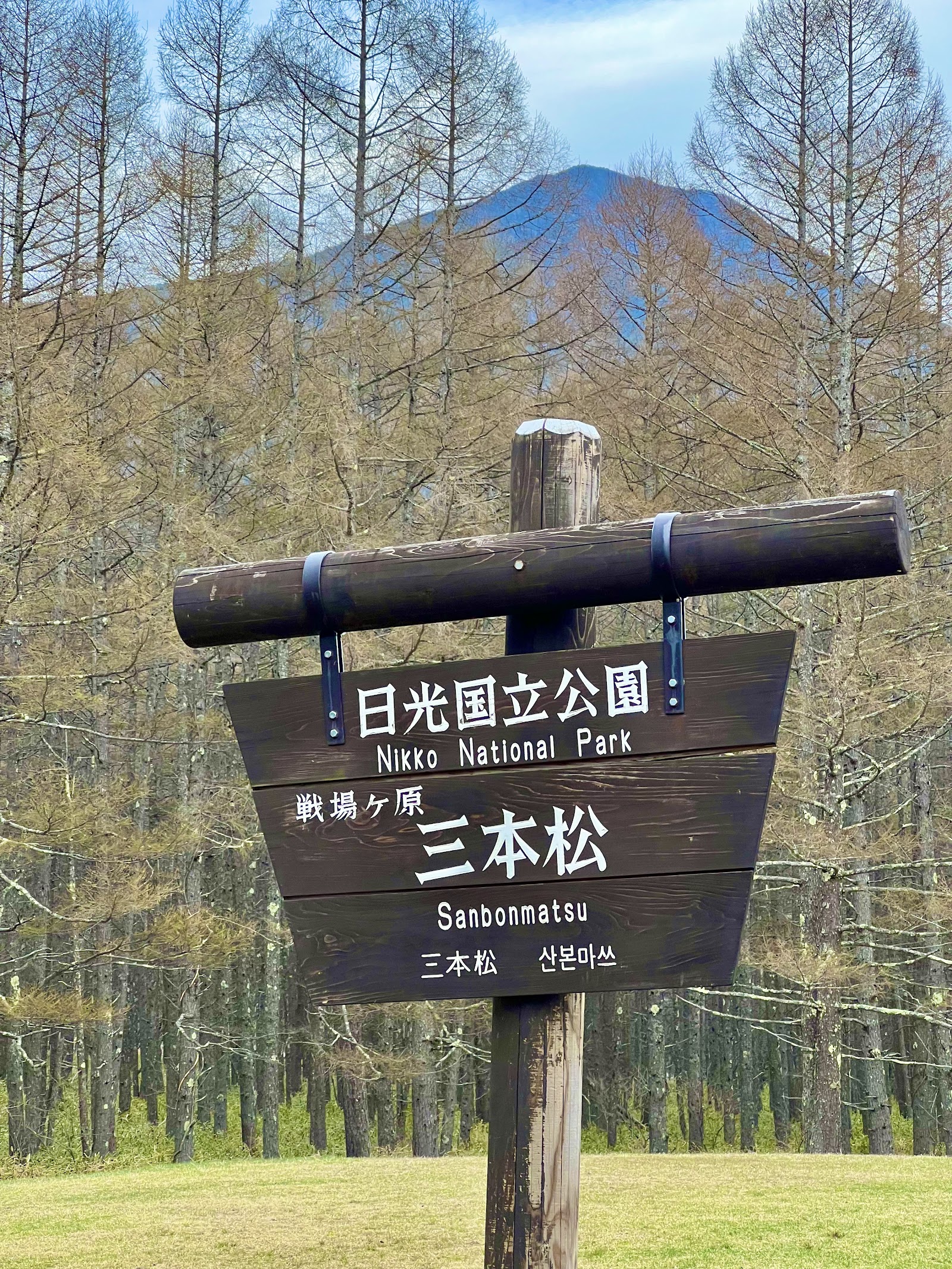
A roadside rest area with a sweeping open view of Mount Nantai across the Senjogahara marsh.
Sanbonmatsu, whose name means "three pines," is the main gateway and viewpoint for the great Senjogahara marshland of Oku-Nikko. Set beside National Route 120 at the eastern edge of the wetland, it combines a convenient roadside rest area with one of the most effortless panoramas in the region: a wide, unobstructed sweep across the flat expanse of the marsh to the volcanic peaks of Mount Nantai and Mount Taro rising beyond.
The appeal of Sanbonmatsu is its openness. Where much of Nikko's scenery is framed by dense forest, here the land flattens into the largest highland marsh in the area, and the sky suddenly widens. From the viewpoint and the adjoining garden area the eye travels uninterrupted over the golden reed beds of Senjogahara to the mountain wall behind, a composition that changes character with the light and the seasons but is always expansive and calming. It is the classic postcard angle on Nantai from the north-west, and requires no climbing at all.
Senjogahara itself is a former lake bed, slowly filled over millennia to become a plateau marsh at around 1,400 metres. Designated for its ecological value, it is laced with well-maintained wooden boardwalk trails, and Sanbonmatsu is the most popular trailhead for exploring them. From the rest house you can set off on a flat, family-friendly walk into the heart of the wetland, passing seasonal wildflowers, grazing meadows and quiet stands of birch, with Ryuzu Falls and Shobugahama reachable on longer routes.
The seasons transform the outlook. Late spring and early summer bring vivid green to the marsh and clear, snow-dusted views of Nantai; summer sees cotton grass and alpine flowers dot the reeds. Autumn is arguably the finest, when the entire marshland turns a burnished russet and gold, typically in the second half of October, framing the darker mountains and drawing crowds of photographers. Even winter has a stark appeal, though the highland cold is serious and facilities scale back.
As a rest area, Sanbonmatsu is generously equipped by mountain standards. There is a large car park that makes it a natural stop for drivers touring the Oku-Nikko loop, along with restrooms, a rest house and shops selling local snacks and souvenirs, a welcome pause on the long route up to Yumoto Onsen. The Tobu buses running between Nikko Station and Yumoto stop here, so it is easy to reach without a car, about an hour and ten minutes from town.
For visitors who want the grandeur of Oku-Nikko's landscape without a demanding hike, Sanbonmatsu is ideal. Step off the bus, walk a few paces to the railing, and the whole shining breadth of Senjogahara opens before you beneath the sacred mountains, an easy, generous view that also serves as the doorway to one of the finest marshland walks in Japan.
A local's tip
This is the least strenuous way to photograph Mount Nantai across Senjogahara; the boardwalk nature trail into the marsh starts right beside the rest house.
Best time to visit
Autumn for grassland colour; late spring for fresh green and clear views of Nantai
Getting there
Take a Tobu bus from Nikko Station toward Yumoto Onsen and get off at the Sanbonmatsu stop, roughly an hour and ten minutes, at the eastern edge of the Senjogahara marshland on National Route 120.
Good to know
- Shops
- Parking
- Restrooms
- Rest house
Plan the whole trip offline
Sanbonmatsu Observation Point is one of many places in the Real Japan app — with turn-by-turn directions, nearby spots and full offline maps you can use with no signal.