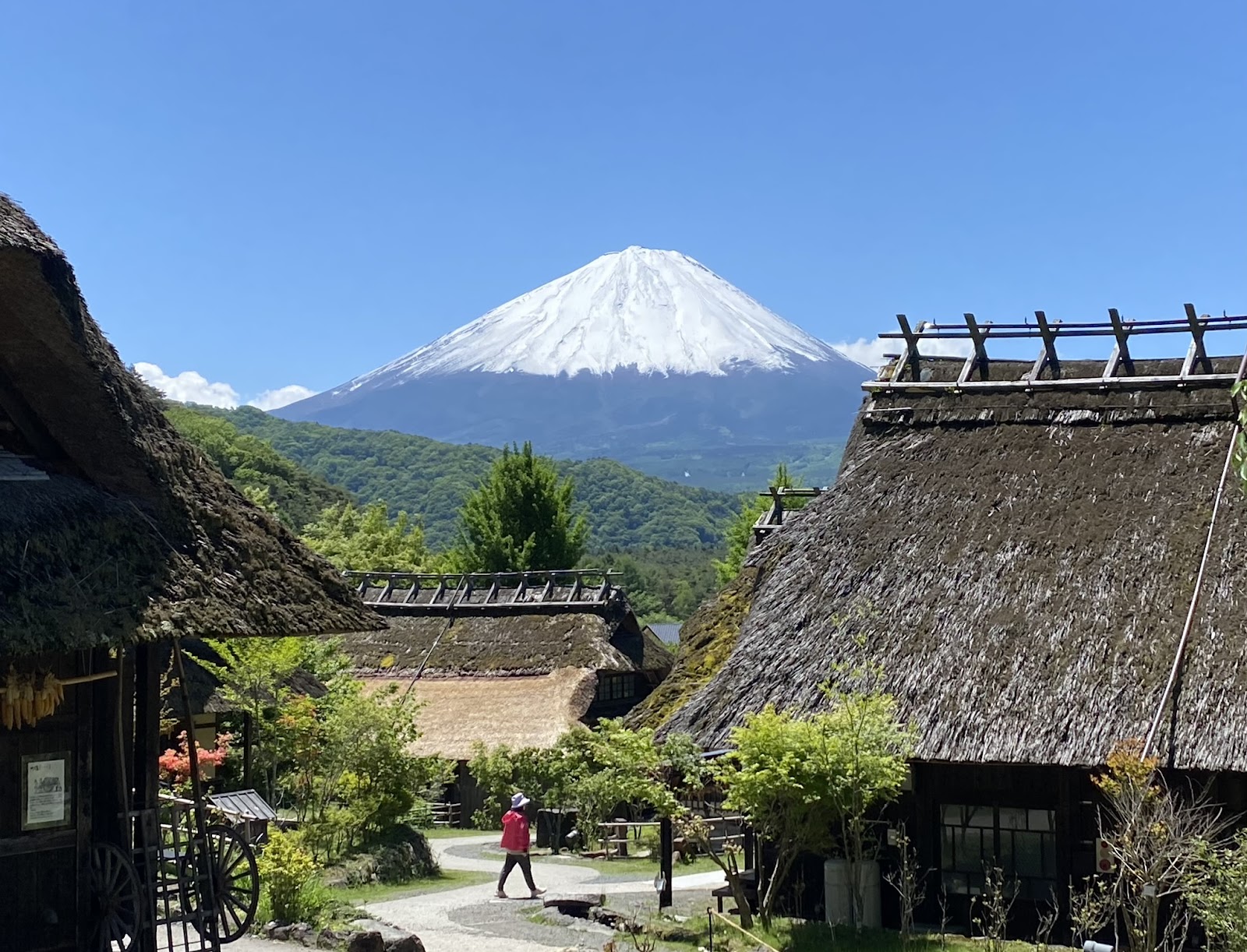
A reconstructed thatched-roof village on Lake Saiko's shore, blending folk crafts, local food and framed Fuji views.
Saiko Iyashi-no-Sato Nenba is a reconstructed traditional village on the western shore of Lake Saiko, a living open-air museum of the thatched-roof farmhouses that once filled this valley. Its full name translates roughly as 'the healing village of Nenba', and it aims to preserve and revive the rural culture, crafts and scenery of pre-modern Japan against the backdrop of Mount Fuji, whose cone rises directly behind the rows of steep straw roofs.
The village has a poignant origin. The original hamlet of Nenba stood on this spot until a catastrophic typhoon in 1966 triggered a landslide that destroyed it, taking many lives. Decades later the site was rebuilt, its distinctive kabuto-zukuri thatched farmhouses faithfully reconstructed and reopened in 2006 as a cultural park. Rather than a preserved original settlement, it is a careful recreation, but one that captures the form and spirit of the lost village and gives visitors a tangible sense of how mountain communities around Fuji once lived.
Today around twenty thatched houses line the slope, each given a purpose. Some are craft workshops where visitors can try pottery, washi papermaking, incense-making or weaving; others are small museums of local history, tools and archaeology; and several are shops and eateries serving regional specialties such as houtou noodle stew and grilled fish. Costume houses let visitors dress in kimono or samurai armour for photographs. A notable fact: on clear days Mount Fuji appears perfectly framed above the thatched ridgelines, a composition that draws photographers and evokes the woodblock landscapes of old Japan.
Visiting is relaxed and hands-on. A modest admission of around 500 yen grants access to the grounds, with individual workshops and experiences charging small additional fees. The village occupies a gentle hillside with paved main paths that are mostly manageable, though some houses have traditional raised floors and steps that limit full accessibility. Two hours is comfortable for wandering the lanes, trying a craft, sampling local food and taking in the views; craft enthusiasts can easily linger longer.
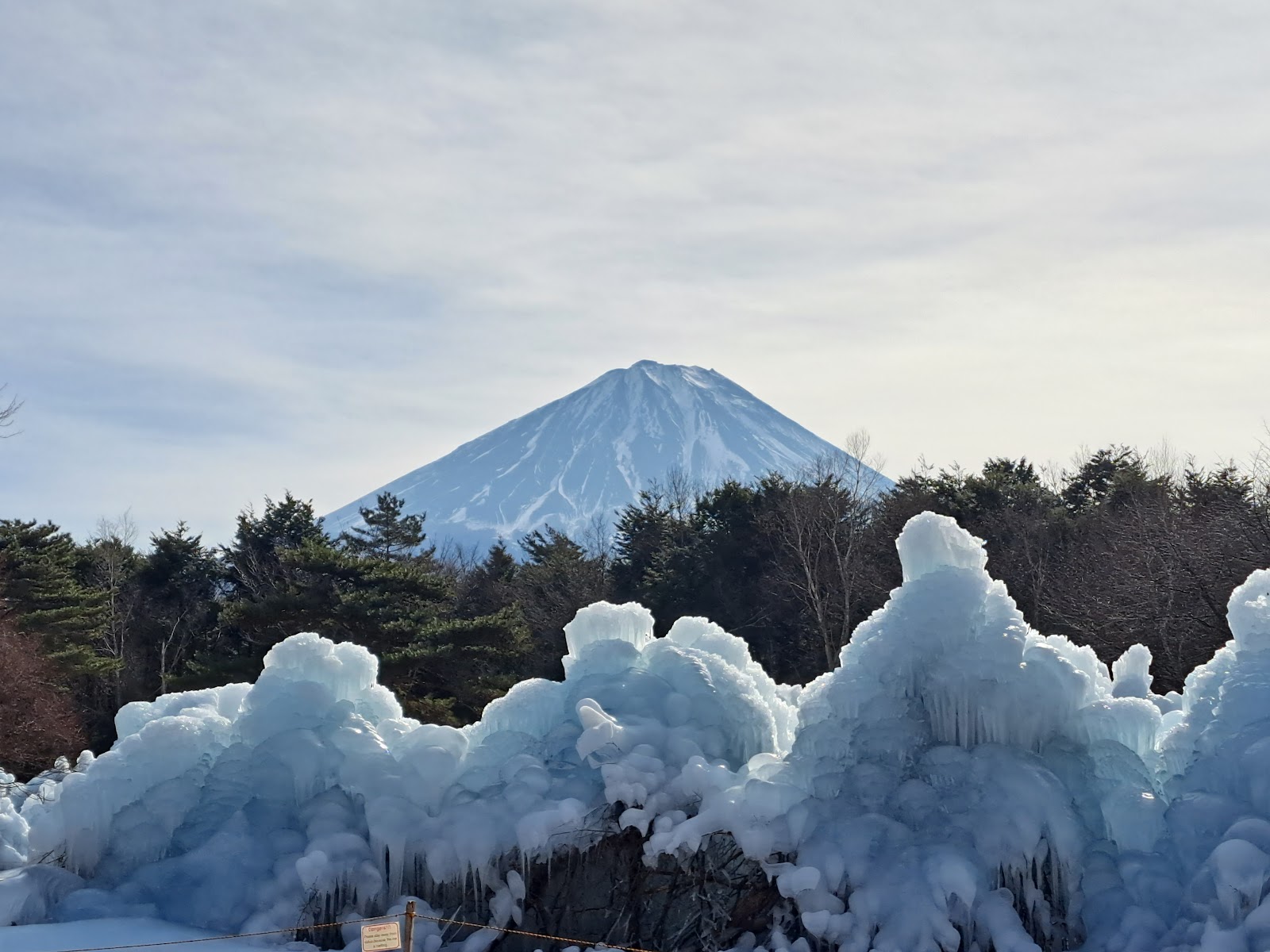
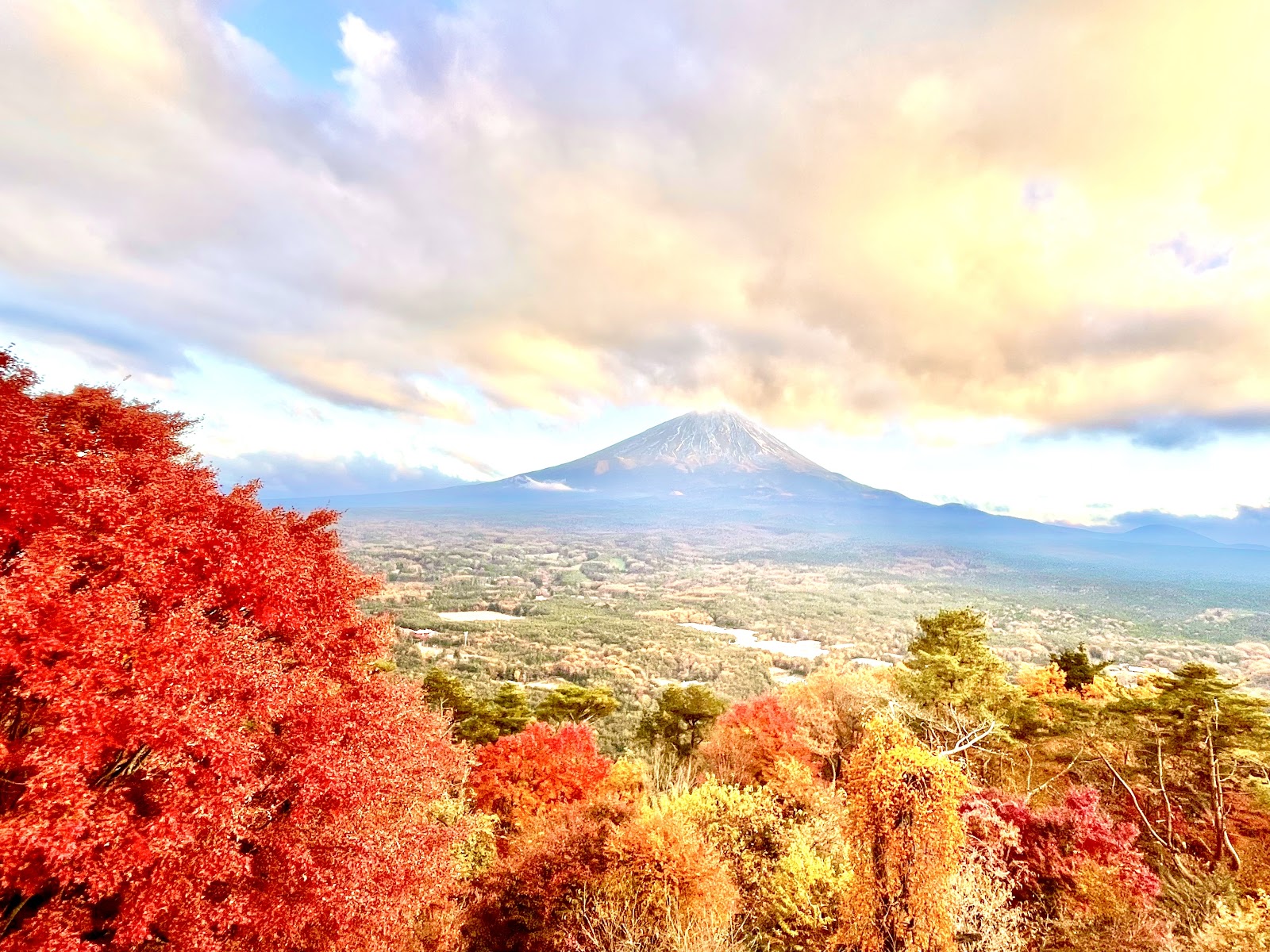
Each season reshapes the scene. Spring brings cherry and plum blossom among the roofs, summer surrounds the village in green with the occasional festival, autumn sets the surrounding hills ablaze in red and gold, and winter caps the thatch with snow for the most storybook views of all, when Fuji stands clearest against cold blue skies. Because the village faces the mountain, a clear morning is ideal, giving the sharpest Fuji backdrop before afternoon cloud tends to gather around the peak.
Getting there involves a scenic bus ride, as the village lies well beyond the rail network. From Kawaguchiko Station, take the green-line Saiko sightseeing bus bound for Nenba, which loops west past Lake Saiko and reaches the Iyashi-no-Sato stop in roughly 40 to 50 minutes. The Fujikyuko Line trains that serve Kawaguchiko are a private railway not covered by the Japan Rail Pass, but IC cards are accepted on the trains and buses, and drivers will find parking at the village entrance.
A local's tip
Try on a samurai or kimono costume at one of the workshop houses and pose with a thatched roof and Mount Fuji together, a combination unique to this reconstructed village.
Best time to visit
Clear mornings for Fuji behind the thatched roofs
Getting there
From Kawaguchiko Station take the green-line Saiko sightseeing bus toward Nenba; the village stop is roughly a 40-50 minute ride around the western side of Lake Saiko.
Good to know
- Parking
- Restrooms
- Restaurant
- Craft workshops
Plan the whole trip offline
Saiko Iyashi-no-Sato Nenba is one of many places in the Real Japan app — with turn-by-turn directions, nearby spots and full offline maps you can use with no signal.