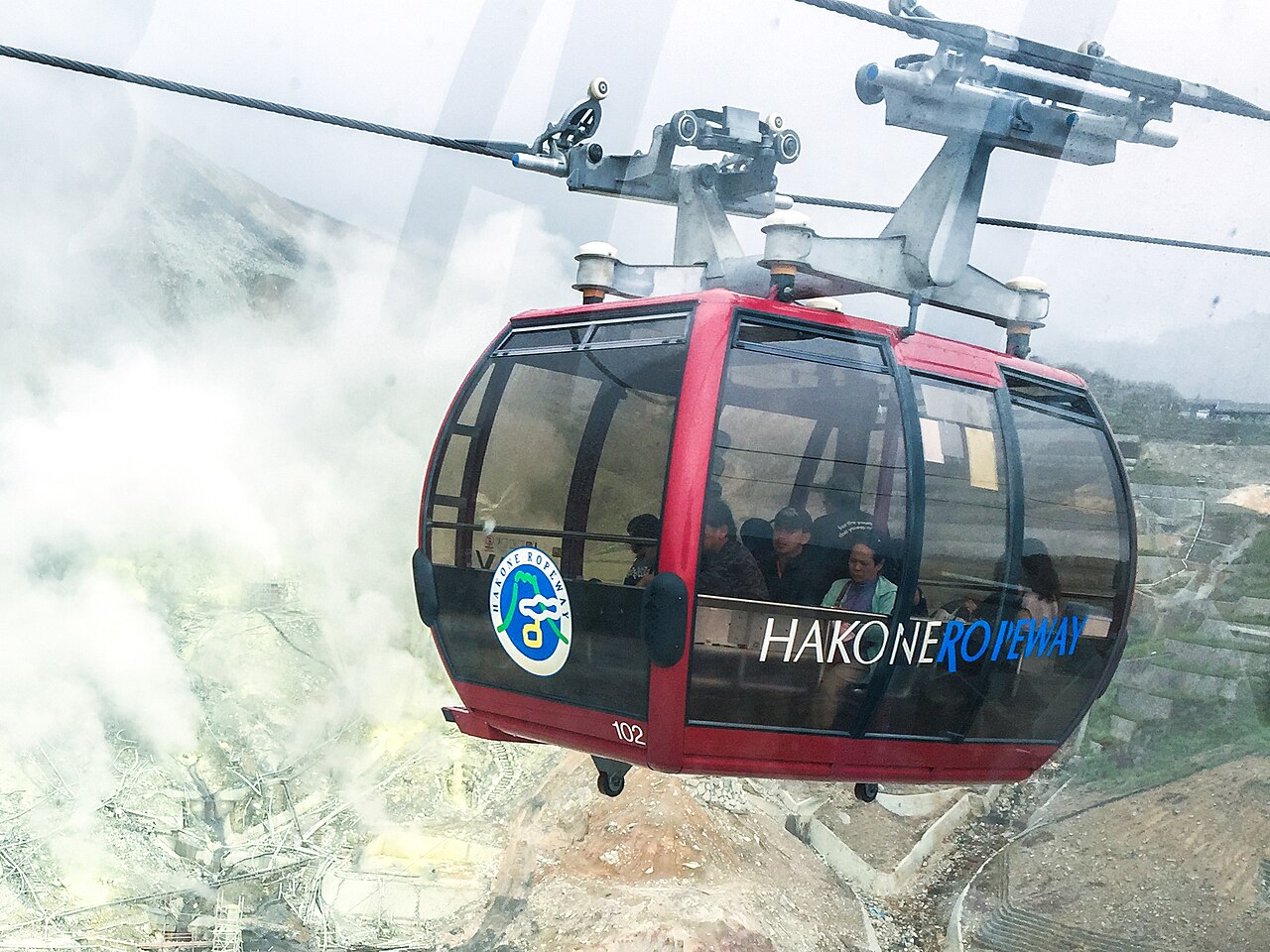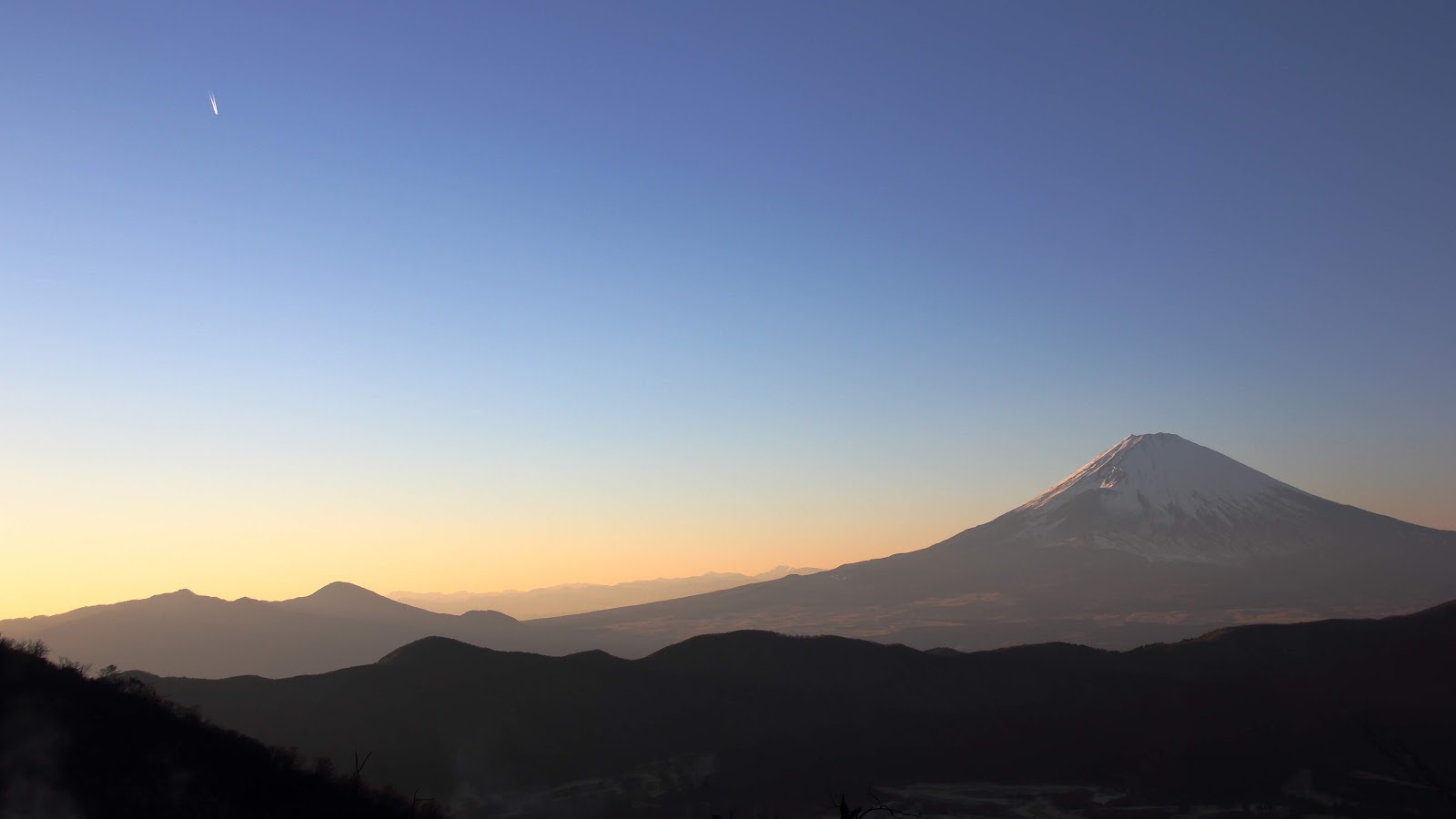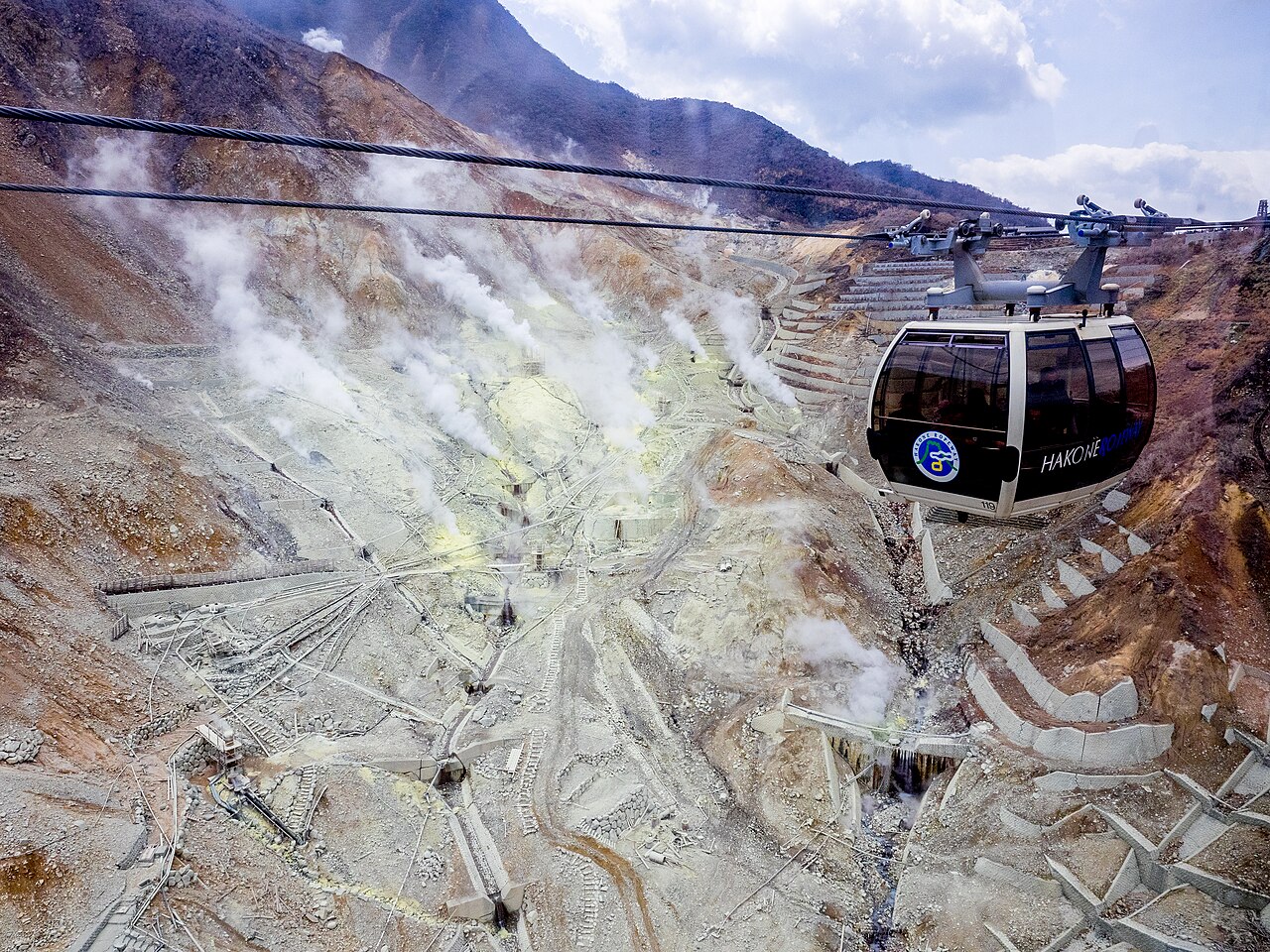
A steaming volcanic valley with sulphur vents, black eggs, and sweeping views of Mount Fuji across the caldera.
Owakudani, whose name means "Great Boiling Valley," is the raw volcanic heart of Hakone and one of the most dramatic viewpoints in the entire Fuji-Hakone-Izu National Park. The valley was created roughly 3,000 years ago by the last major eruption of Mount Hakone, which collapsed part of the ancient volcano and left behind a scarred, steaming amphitheatre of grey rock, hissing fumaroles, and pools of bubbling sulphurous water. Standing on the observation area beside Owakudani Station, visitors are surrounded by plumes of white volcanic steam rising from the hillsides, the sharp smell of sulphur in the air, and — on a clear day — the unmistakable cone of Mount Fuji framed perfectly to the west.
The valley sits at around 1,050 metres above sea level and is reached most easily by the Hakone Ropeway, whose gondolas glide silently over the fuming vents before depositing passengers at the summit station. From here a network of short walking paths leads to the boiling ponds where the area's famous kuro-tamago, or black eggs, are cooked. The eggs turn coal-black because the iron in the spring water reacts with sulphur to coat the shells; the yolk inside remains an ordinary yellow. Local tradition holds that eating one adds seven years to your life, and the small shops sell them in bags of five.
Beyond the novelty, Owakudani is a place to appreciate the living geology of Japan. The ground is genuinely active, and access is occasionally restricted when volcanic gas levels rise, as happened during the 2015 unrest that closed the valley for months. When open, it is entirely safe on the marked paths, though visitors with respiratory conditions should take note of the sulphur dioxide in the air. The stark, almost lunar landscape contrasts beautifully with the forested slopes and the deep blue of Lake Ashi far below.
The experience is best on a crisp, cloudless morning, ideally in autumn when the surrounding hillsides blaze with red and gold koyo foliage, or in winter when a dusting of snow sharpens the view of Fuji. Photographers prize the alignment of the steaming vents in the foreground with the sacred mountain behind — a composition that captures both the danger and the serenity of the region in a single frame. The light is clearest in the early hours before haze builds over the valley.
Getting there is part of the adventure. From Hakone-Yumoto, take the Hakone Tozan Railway and its switchback cable car up to Sounzan, then transfer to the ropeway; the entire journey is covered by the Hakone Freepass. Allow at least an hour at the top to walk the paths, eat an egg, browse the shops, and simply watch the earth breathe. Combined with the ropeway ride and a cruise on Lake Ashi, Owakudani forms the centrepiece of Hakone's classic sightseeing loop.
A local's tip
Buy a kuro-tamago (black egg) boiled in the sulphur springs; local legend says each one adds seven years to your life.
Best time to visit
Clear mornings, autumn
Getting there
Take the Hakone Ropeway from Sounzan or Togendai and alight at Owakudani Station; the observation area is a short walk from the exit.
Good to know
- Shops
- Restrooms
- Restaurant
Plan the whole trip offline
Owakudani Valley is one of many places in the Real Japan app — with turn-by-turn directions, nearby spots and full offline maps you can use with no signal.