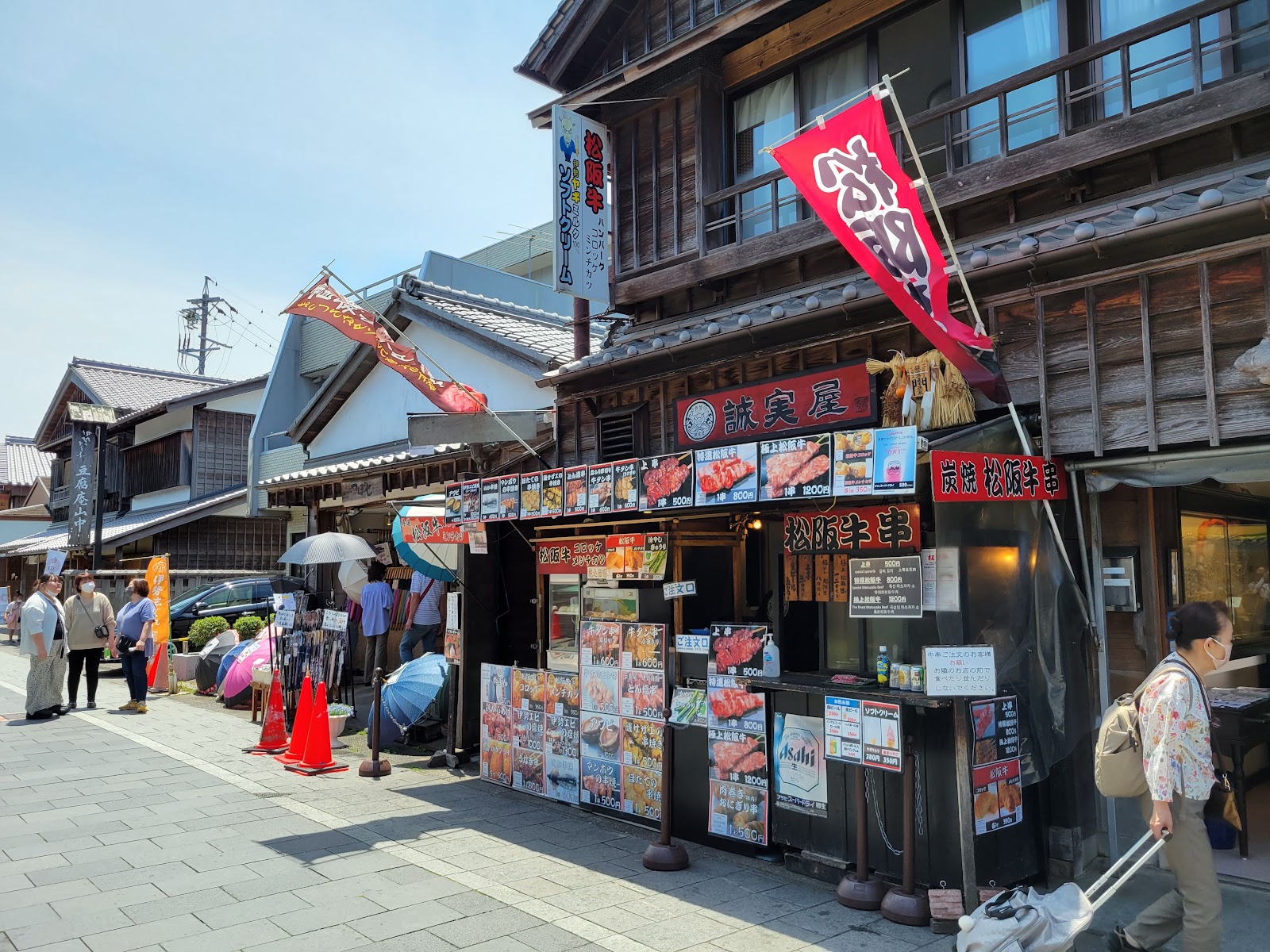
The historic approach to the Inner Shrine, an 800-metre street of traditional wooden shops, eateries and sake merchants.
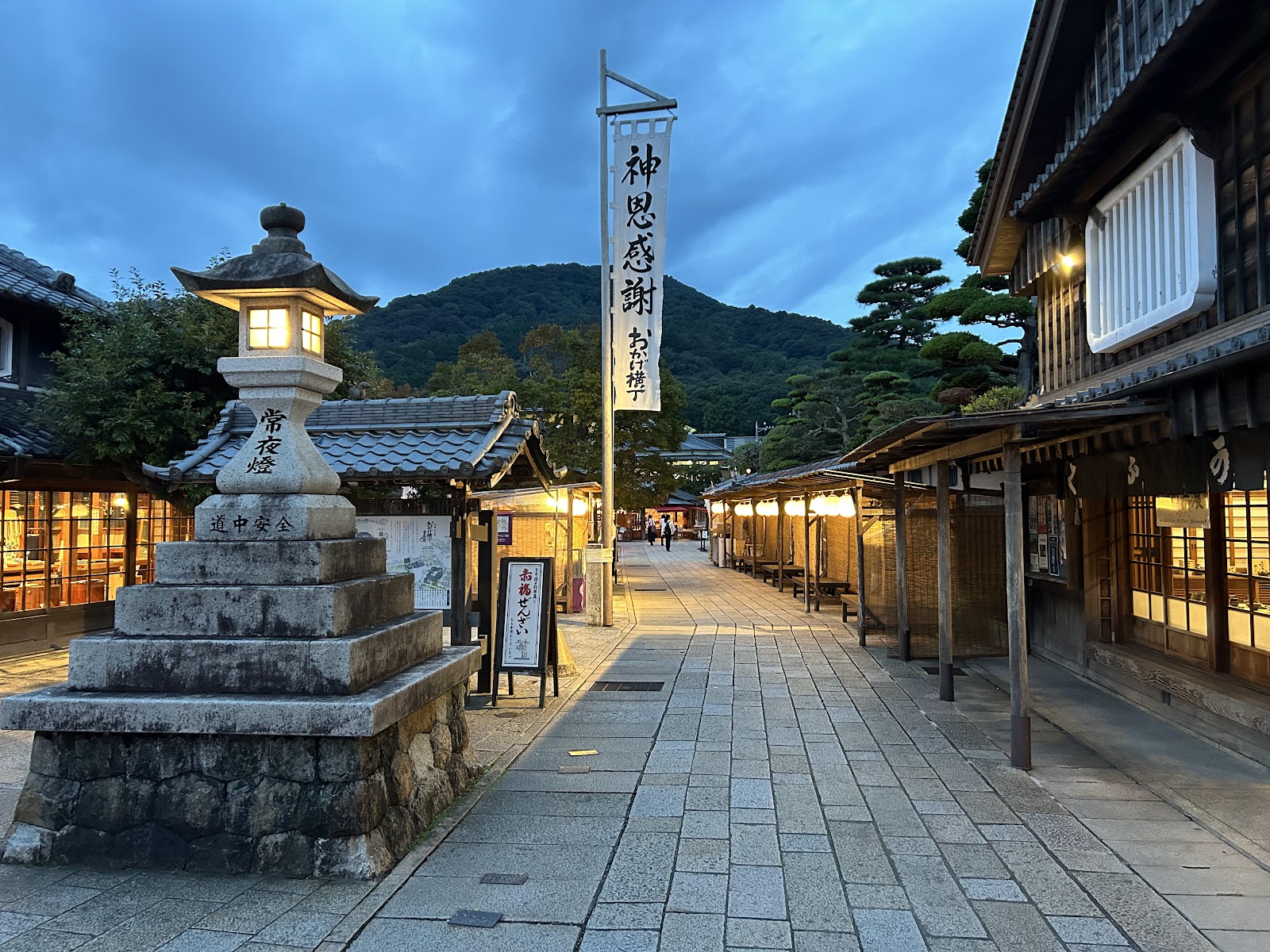
Oharaimachi is the atmospheric approach road to the Naiku, the Inner Shrine of Ise Jingu, and one of the most charming historic shopping streets in Japan. Running for roughly 800 metres along the Isuzu River up to the sacred Uji Bridge, it is lined with beautifully preserved and reconstructed wooden buildings in the traditional Ise style, their steep tiled roofs and slatted facades creating a townscape that feels centuries old. For most visitors, walking Oharaimachi is an inseparable part of the pilgrimage to the shrine.
The street's history is bound up with the great age of Ise pilgrimage. During the Edo period, journeying to Ise Jingu became a national phenomenon, and at times millions of pilgrims made the trip in mass movements known as okage-mairi. Oharaimachi grew to serve this flood of travellers, offering lodging, food, souvenirs and services along the final stretch to the shrine. The name itself refers to the oshi, the shrine agents who once guided and hosted pilgrims here. Though the street declined in the modern era, a careful restoration from the 1980s onward revived its historic character, and today it is thriving once more.
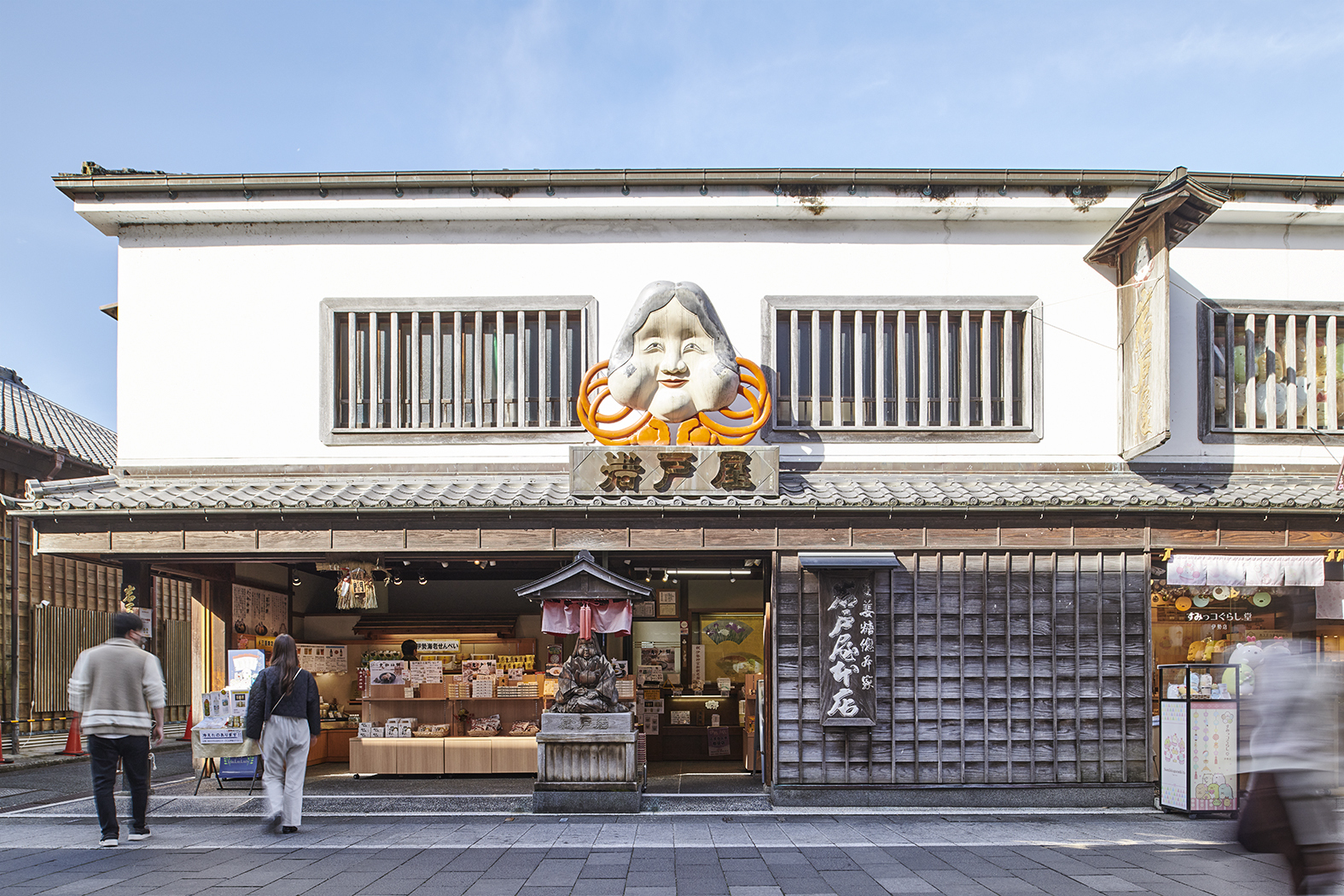
The architecture is a highlight in itself. The buildings follow the local convention of presenting their gabled ends to the street, and many are genuine old structures or faithful reconstructions using traditional techniques, giving the whole thoroughfare a harmonious, timeless appearance rarely achieved in modern Japanese towns. Interpretive touches and the absence of intrusive modern signage help preserve the mood.
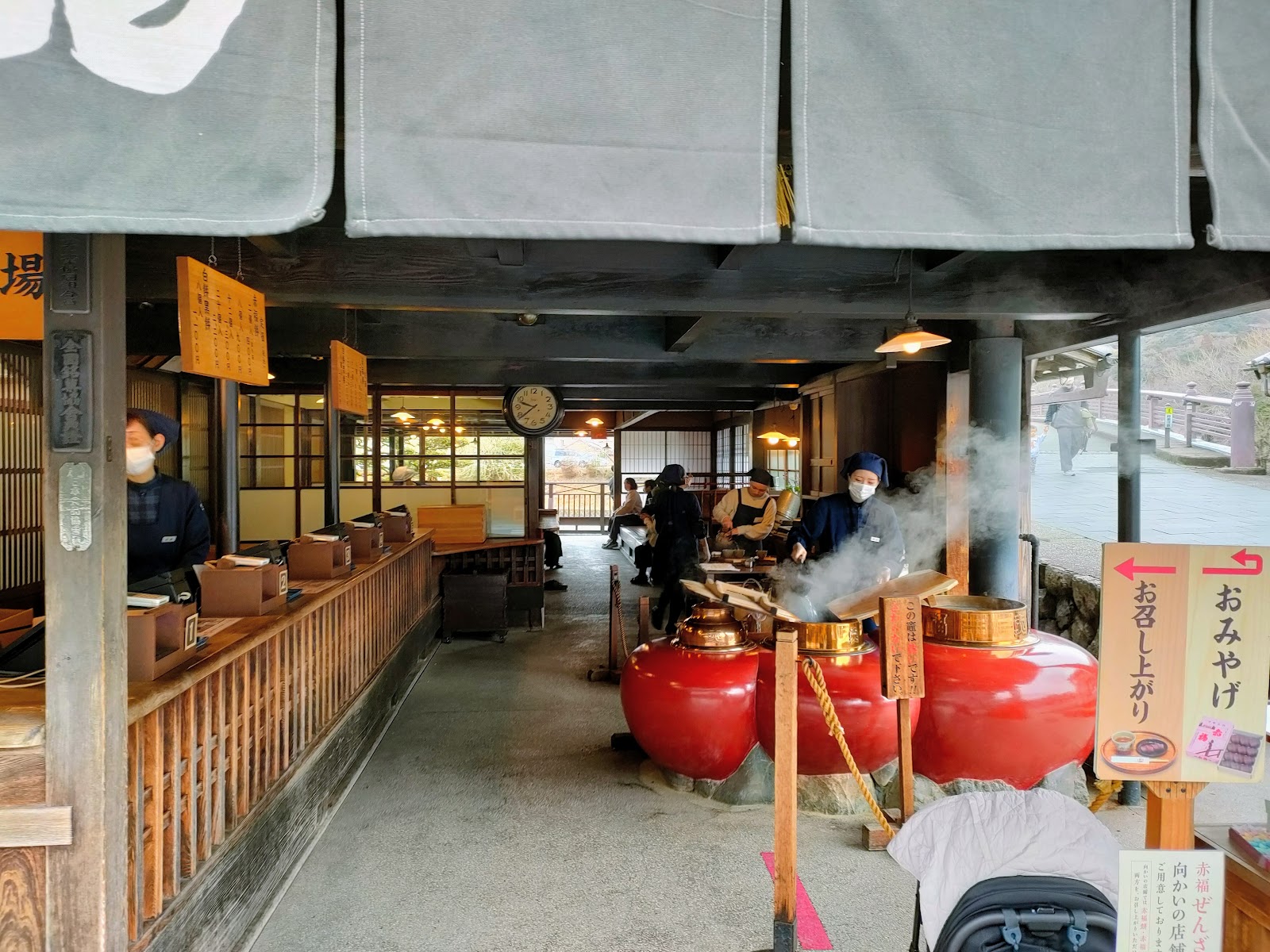
Of course, Oharaimachi is above all a place to eat and browse. Its shops and stalls sell an abundance of local specialities: Ise udon, thick soft noodles in a dark, sweet-savoury sauce; tekone-zushi, marinated fish over vinegared rice; grilled oysters and other seafood from nearby Ise Bay; freshly steamed buns; and the famous Akafuku mochi, soft rice cakes topped with sweet red bean paste that pilgrims have eaten here for three centuries. Sake breweries, tea shops, craft stores and confectioners fill the remaining frontages, making the street a feast for all the senses.
At the heart of Oharaimachi lies its liveliest section, Okage Yokocho, a recreated Edo-period townscape packed with additional food and craft stalls. Together they draw large crowds, especially on weekends and around the New Year, when the approach to the shrine becomes a river of visitors.
Oharaimachi begins at the Naiku-mae bus stop and runs to the entrance of the Inner Shrine, so it is naturally combined with a visit to the shrine itself, whether as an appetite-whetting stroll beforehand or a well-earned reward afterward. It costs nothing to wander, and shops generally open through the daytime hours. Strolling this graceful old street, snacking as you go and soaking in the pilgrim atmosphere, is one of the simple, enduring pleasures of a trip to Ise.
A local's tip
Try the freshly grilled seafood and Ise specialities from stalls along the way, and duck into a sake shop for a tasting of local Mie brews.
Best time to visit
Late morning to early afternoon, then the shrine
Getting there
From Iseshi or Ujiyamada Station take a Mie Kotsu bus to Naiku-mae; the street leads directly from the bus stop to the Uji Bridge entrance of the Naiku.
Good to know
- Restrooms
- Restaurants
- Souvenir shops
Plan the whole trip offline
Oharaimachi is one of many places in the Real Japan app — with turn-by-turn directions, nearby spots and full offline maps you can use with no signal.