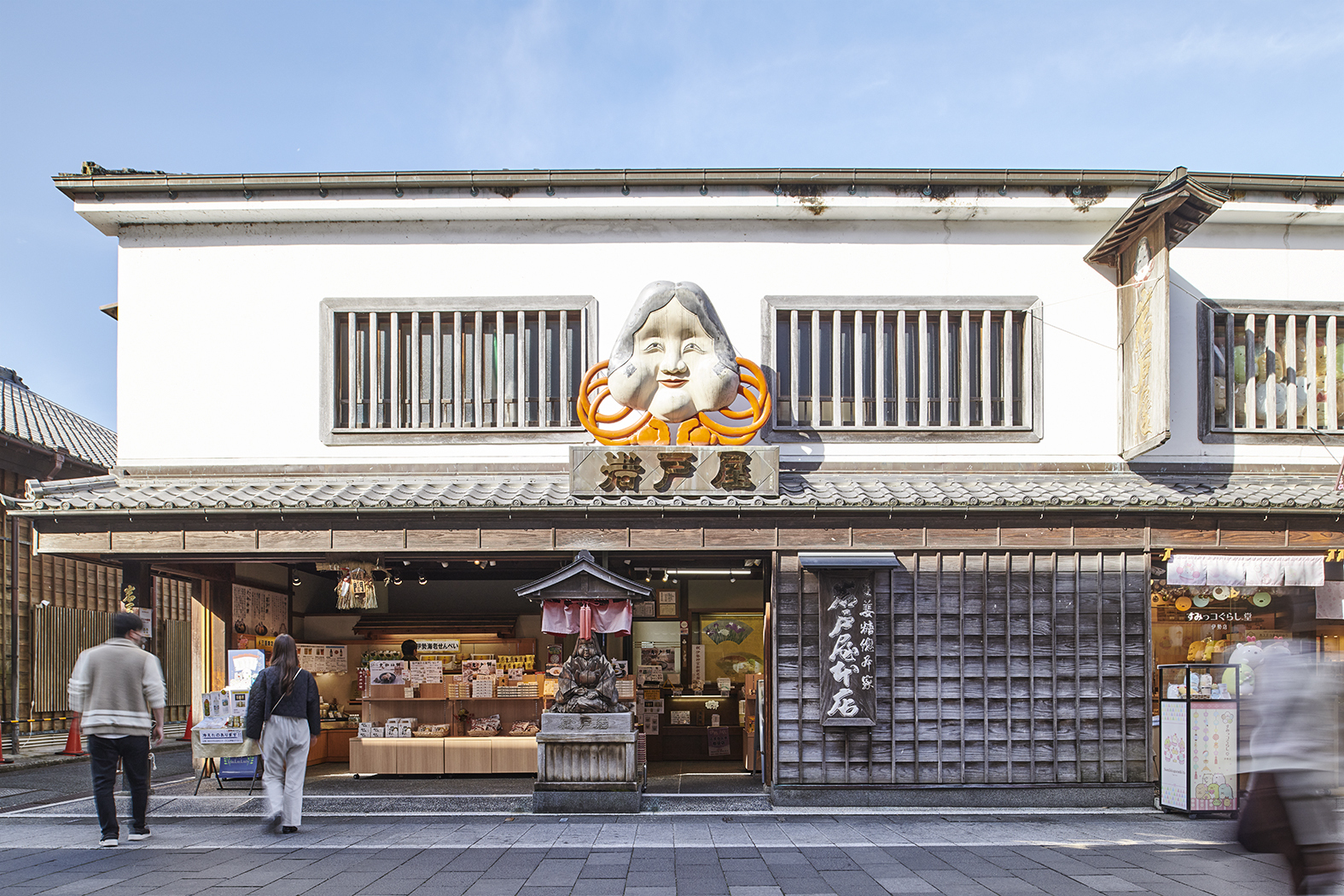
A traditional Oharaimachi sweet shop selling iwato-mochi, soft rice cakes filled with sweet bean paste, a classic Ise pilgrim treat.
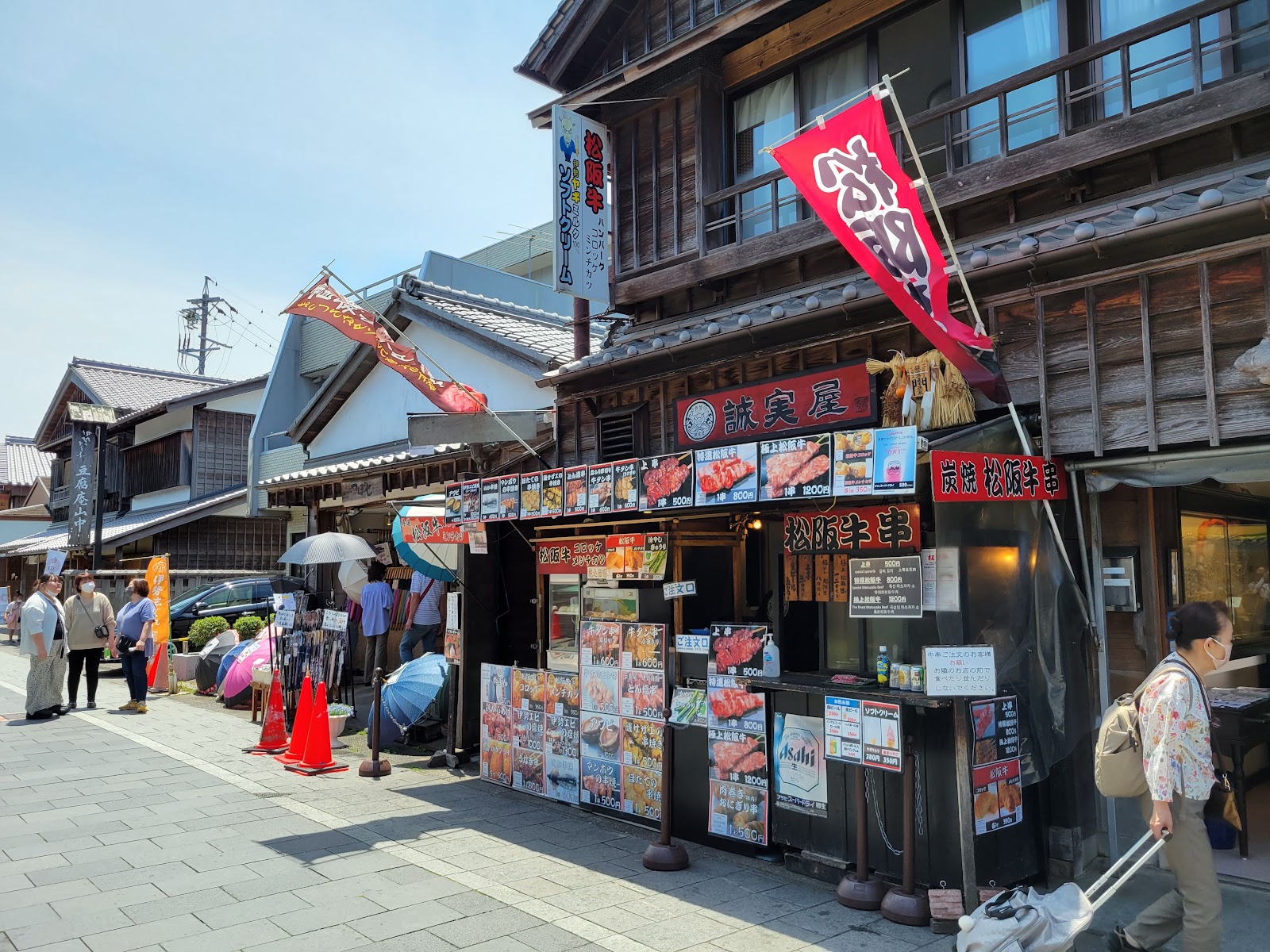
Iwatoya is a beloved traditional confectioner on Oharaimachi, the old pilgrim street leading to Ise Jingu's Inner Shrine, and its name is synonymous with iwato-mochi, one of the region's classic sweets. Housed in a handsome wooden building on the stone-paved lane, the shop carries on the long Ise tradition of offering pilgrims a small, sweet reward for their journey — a custom that turned the approaches to the shrine into a paradise of mochi, sweets and tea houses.
The specialty, iwato-mochi, is disarmingly simple and utterly satisfying: soft, freshly pounded rice cake wrapped around a smooth, gently sweet red bean paste, dusted or glazed so that each piece is tender and just sticky enough. Made in small batches through the day, it is best eaten fresh, still soft from the kitchen, and the shop sells it both singly for eating on the spot and in boxed sets as a souvenir. The gentle sweetness and pillowy texture make it a natural pause between the savoury bowls of Ise udon and tekone-zushi found elsewhere on the street.
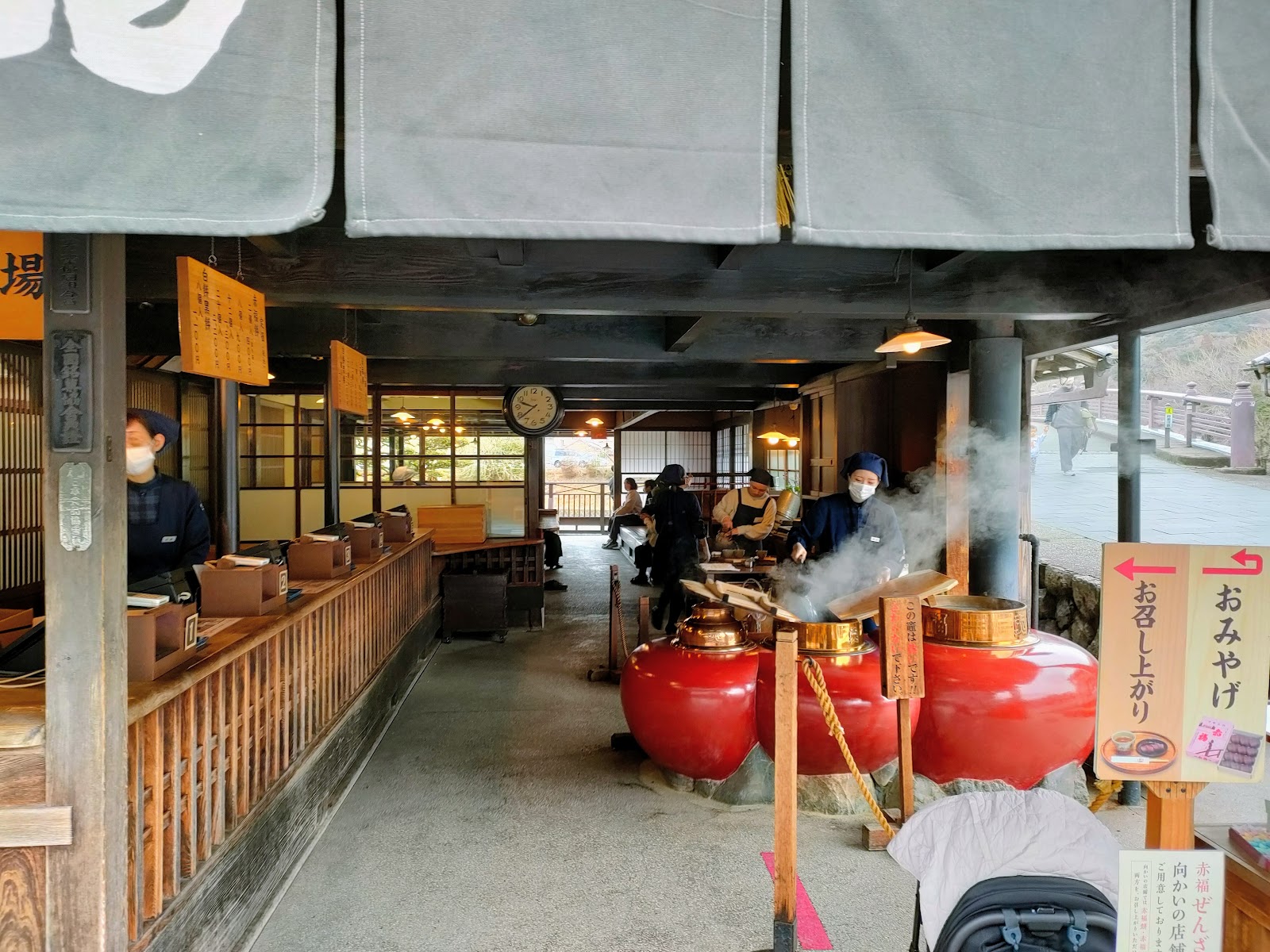
Sweets like these are woven into the history of Ise pilgrimage. During the Edo period, huge numbers of ordinary people travelled to Ise Jingu, and the towns along the approach flourished by feeding, lodging and entertaining them. Mochi shops multiplied because rice cakes were portable, filling and auspicious, and several of Oharaimachi's most famous names — Akafuku chief among them — built their reputations on a single sweet. Iwatoya sits firmly in this lineage, offering a quieter, less crowded alternative to the biggest houses while keeping the same handmade quality.
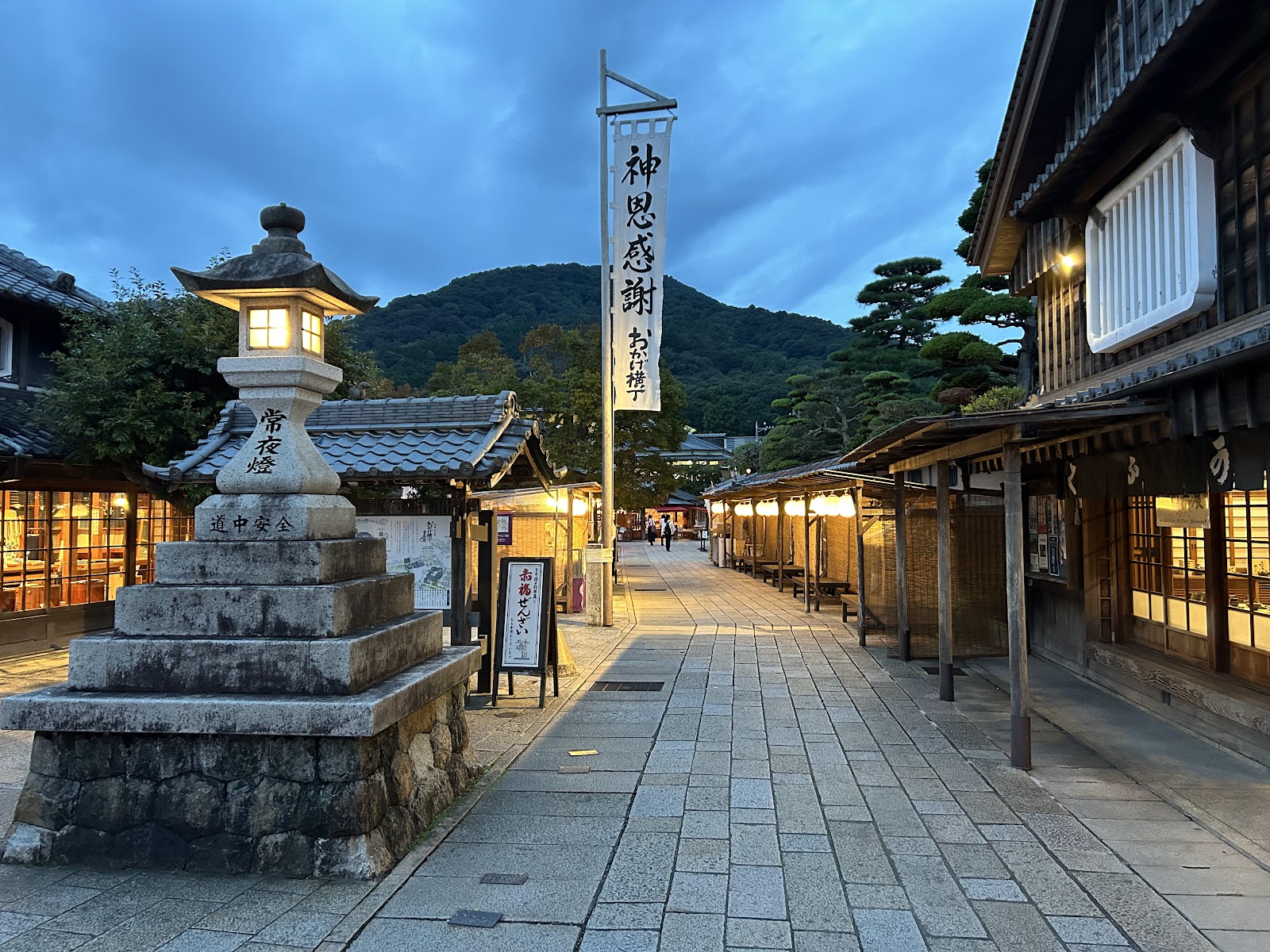
The pleasure of a visit is as much about place as taste. Oharaimachi stretches for roughly 800 metres of preserved and restored machiya townhouses, their lattice fronts and tiled roofs recreating the atmosphere of an Edo-era pilgrim road. Partway along, the lane opens into the lively stalls of Okage Yokocho. Standing outside Iwatoya with a warm piece of mochi in hand, the sacred forest of Naiku just minutes away, is a small but genuine taste of the ritual that has drawn travellers to Ise for centuries.
For visitors, mornings are ideal, both because the mochi is freshest and because the street is calmer before the midday crowds arrive. Weekends, holidays and especially the New Year period are extremely busy. Cash is handy for quick purchases. Iwato-mochi does not keep long, so buy only as much as you will eat within a day or two. To reach the shop, take a bus to the Naiku (Inner Shrine) stop from Ise-shi or Uji-Yamada Station and walk up Oharaimachi, or approach on foot from Isuzugawa Station. Sweet, traditional and modestly priced, a stop at Iwatoya is a gentle, delicious way to honour the old pilgrim custom of treating yourself on the road to Ise.
A local's tip
Buy a couple of pieces of freshly made iwato-mochi to eat warm on the street, and a boxed set to take home — the soft rice cakes are best the same day.
Best time to visit
Morning, when the mochi is freshest
Getting there
On Oharaimachi street on the way to Ise Jingu's Inner Shrine (Naiku). Take a bus to Naiku from Ise-shi or Uji-Yamada Station and walk along the old lane.
Good to know
- Takeaway
- Restrooms
- Tea service
Plan the whole trip offline
Iwatoya (Oharaimachi) is one of many places in the Real Japan app — with turn-by-turn directions, nearby spots and full offline maps you can use with no signal.