Japan's oldest surviving shinmei-zukuri shrine, a serene National Treasure in the forests above Omachi.
Nishina Shinmei Shrine, tucked into a cedar forest at the foot of the North Alps near Omachi, is a quietly extraordinary place: the oldest extant example of shinmei-zukuri, one of the three purest and most ancient styles of Japanese shrine architecture, conceived before Buddhism reached the islands. For anyone interested in how the Japanese built for their gods before continental influences arrived, it is a National Treasure of the first importance.
The shinmei style is best known today from the Ise Grand Shrine, which is ritually rebuilt every twenty years and so is never actually old. Nishina Shinmei, by contrast, preserves genuine antiquity. The area was the domain of the Nishina clan, who administered lands belonging to Ise, and they built and maintained a shrine in the sacred style over many centuries. Its main hall, or honden, and the flanking treasury and worship hall are the oldest standing structures anywhere in the classic shinmei form, and they were designated National Treasures for exactly that reason.
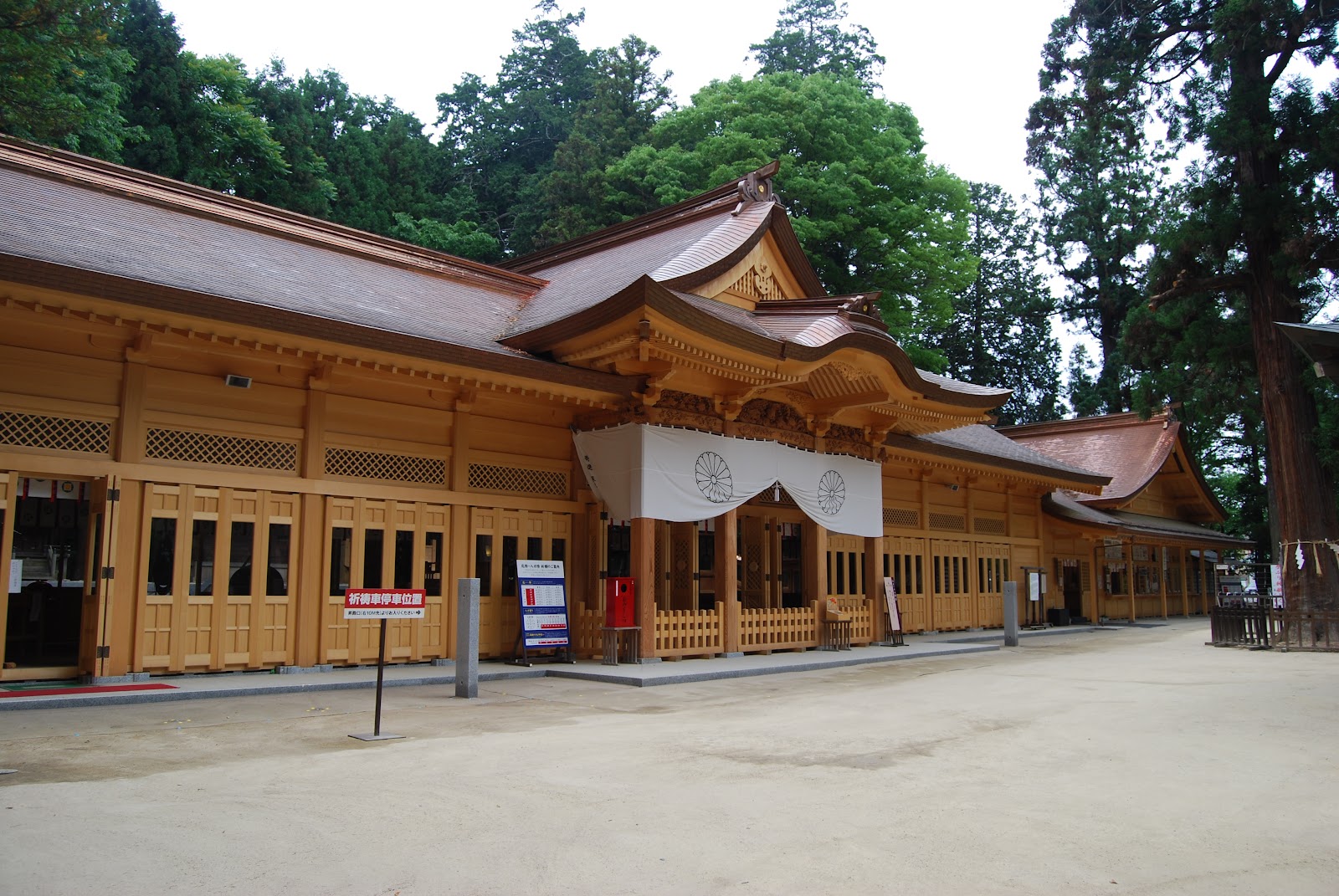
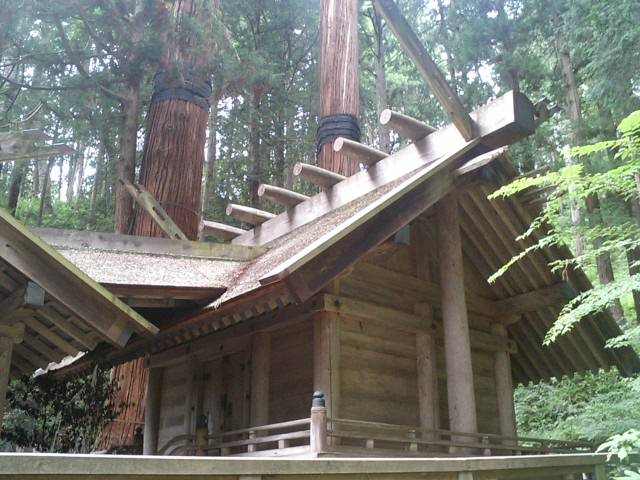
The architecture rewards close attention. The buildings stand raised on posts driven directly into the ground, with straight cypress-bark roofs, forked finials called chigi projecting from the gables, and short horizontal billets known as katsuogi lying across the ridge. There are no curved roofs, no bright paint and no ornamental brackets, only clean, honest lines and natural timber. The design descends from the raised granaries of ancient Japan, and standing before it you can sense a continuity reaching back to the earliest agricultural society. Like Ise, the shrine was traditionally renewed through a shikinen sengu ceremony, but here enough of the historic fabric survives to convey real age.
The setting amplifies the effect. The shrine is approached through an avenue of towering old cypress and cedar trees, some centuries old, that filter the light into cool green shafts and hush the sound of the outside world. In winter, when fresh snow settles on the thatch and the dark trunks of the conifers, the scene is almost unbearably serene; in autumn the surrounding hardwoods add warm colour. It remains an active place of local worship rather than a tourist attraction, so visitors are few and the atmosphere is reverent.
Omachi itself is the gateway to the Tateyama Kurobe Alpine Route and sits amid some of the finest mountain scenery in central Japan, so Nishina Shinmei fits naturally into a wider itinerary of alpine sightseeing. The shrine is a little out of the way, in the hills southeast of the town, and is most easily reached by car or taxi, about 15 minutes from central Omachi. Those relying on trains can take the scenic JR Oito Line and continue by taxi. However you arrive, allow time simply to stand in the forest and take in a shrine that has kept its ancient form longer than almost any other in Japan.
A local's tip
This is the oldest surviving example of the pure shinmei-zukuri style that inspired Ise Grand Shrine; note there are no nails in the classic sections.
Best time to visit
Any season; especially serene in fresh snow
Getting there
From Omachi, drive or taxi about 15 minutes; the shrine sits in the hills southeast of the town centre near Yasaka.
Good to know
- Parking
- Restrooms
Plan the whole trip offline
Nishina Shinmei Shrine is one of many places in the Real Japan app — with turn-by-turn directions, nearby spots and full offline maps you can use with no signal.