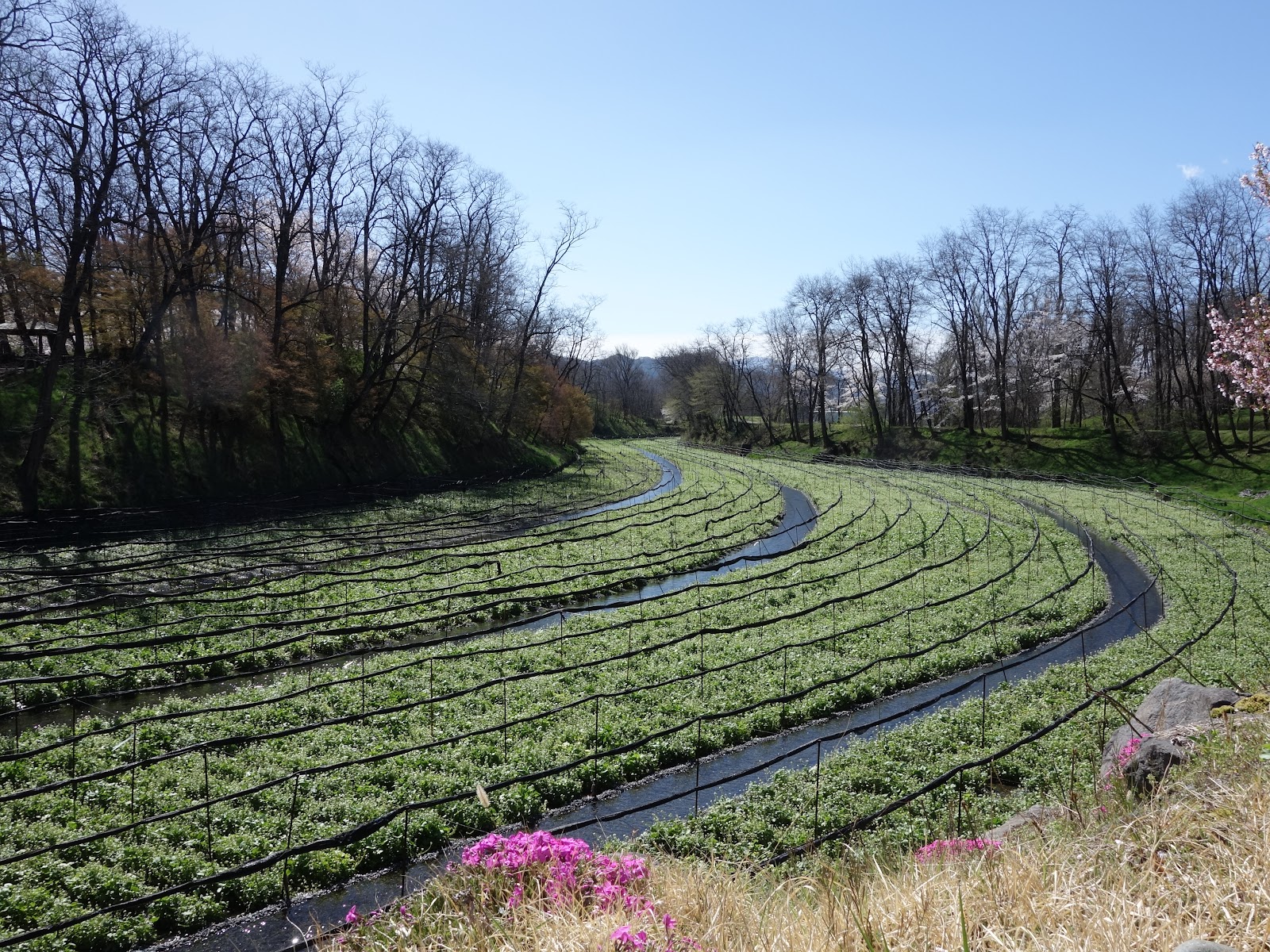
Japan's largest wasabi farm, a scenic Azumino landscape of spring-fed water channels, watermills and wasabi ice cream.
The Daio Wasabi Farm, in the Azumino countryside northwest of Matsumoto, is the largest wasabi farm in Japan and one of the most photogenic rural attractions in Nagano Prefecture. Established in 1915, the 15-hectare farm sits on an alluvial fan where cold, mineral-rich snowmelt from the Northern Japan Alps rises to the surface as spring water, the exact clear, cool, constantly flowing conditions that true wasabi needs to grow.
The result is a striking landscape of long, gravel-bedded water channels striped with rows of green wasabi plants, shaded in summer by black netting that protects the delicate crop from direct sun. Fed by tens of thousands of tonnes of pristine spring water each day, the farm produces genuine fresh wasabi, a world away from the horseradish-based paste most travellers know. Paths wind between the beds, over little bridges and past viewing points where, on clear days, the Alps form a backdrop.
A famous highlight is the trio of wooden waterwheels standing in a gentle side-stream, instantly recognisable because film director Akira Kurosawa featured them in his 1990 anthology film Dreams. They are the farm's signature photo spot and lend the whole scene a timeless, storybook quality. Visitors can also take a short clear-boat river tour on the Azusa River's crystalline waters nearby for an extra fee in warmer months.
The real draw for many, though, is the food. The farm turns its harvest into an inventive menu: fresh wasabi soft-serve ice cream, wasabi-topped soba noodles, wasabi croquettes, wasabi beer and even wasabi-flavoured snacks and sweets in the large gift shop. Sampling freshly grated wasabi reveals a mild, almost sweet aroma quite unlike the sharp tube version, and it makes an excellent, only-here culinary memory.
A notable fact is that entry to the farm is completely free; you pay only for food, boat rides and souvenirs, which makes it superb value for a half-day excursion. It is also largely flat and stroller- and wheelchair-friendly along the main paths, though some viewpoints involve gentle slopes and gravel.
The experience is relaxed and scenic, best enjoyed on a clear morning from spring through autumn when the channels are lush and the light is good. Summer offers the greenest vistas and the boat tours, while winter still opens but the beds are covered and the atmosphere is quieter and starker. Allow around 60 to 90 minutes to stroll, eat and photograph.
Getting there takes a little planning, as the farm is in rural Azumino rather than central Matsumoto. From Matsumoto Station, take the JR Oito Line north to Hotaka Station, a ride of roughly 30 minutes, which is covered by the Japan Rail Pass. From Hotaka it is about a 15-minute rental cycle or a short taxi ride to the farm; renting a bicycle at the station is a popular and pleasant way to explore the flat Azumino countryside. Some seasonal shuttle buses also operate. Note IC cards may not be usable on this rural rail stretch, so carry cash or a paper ticket.
A local's tip
Try the fresh wasabi soft-serve ice cream and a real wasabi-topped soba; the mild sweetness of freshly grated Azumino wasabi is nothing like the tube paste back home.
Best time to visit
Morning on a clear day; spring to autumn when the water channels are lushest
Getting there
Take the JR Oito Line from Matsumoto to Hotaka Station (about 30 minutes), then a rental bicycle (about 15 minutes) or taxi to the farm; some seasonal shuttle buses also run.
Good to know
- Parking
- Gift shop
- Restrooms
- Restaurants
Plan the whole trip offline
Daio Wasabi Farm is one of many places in the Real Japan app — with turn-by-turn directions, nearby spots and full offline maps you can use with no signal.