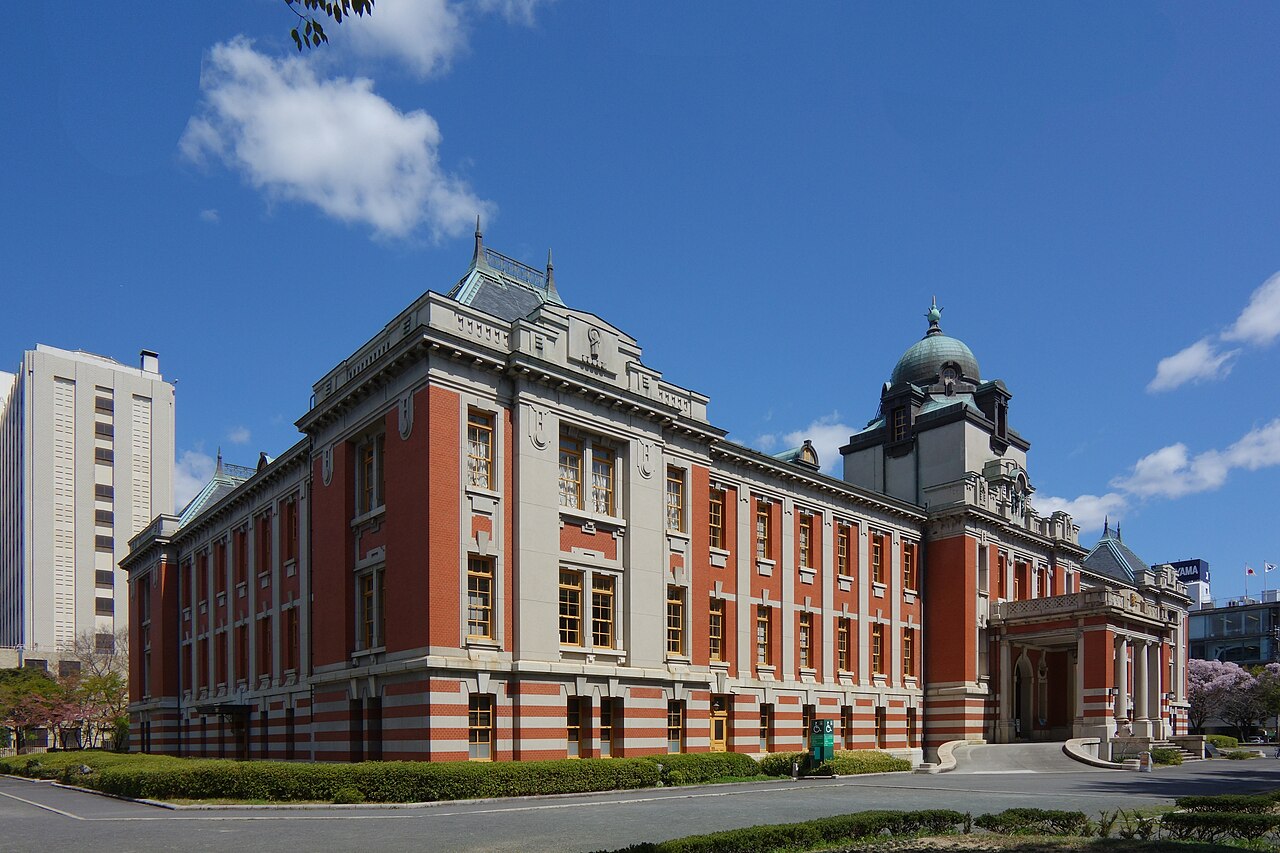
A grand 1922 former courthouse of red brick and white stone, now a free museum of Nagoya's history and architecture.
The Nagoya City Archives occupy one of the finest surviving public buildings of early-twentieth-century Nagoya: a stately former courthouse completed in 1922, during the Taisho era, in a dignified neo-Baroque style. Built of red brick trimmed with white stone and crowned by a central dome-topped tower, it served for decades as the Nagoya Court of Appeals and District Court before being repurposed. Today it is preserved as an Important Cultural Property and functions both as the city's historical archive and as a free museum, letting visitors admire the architecture and learn about Nagoya's past at no cost.
The building is a rare intact example of the Western-influenced official architecture that Japan embraced as it modernised. Its symmetrical facade, arched entrance, and rows of tall windows project the authority and optimism of the age, and the interior lives up to the exterior. A grand central staircase rises beneath an ornamented ceiling, corridors run in polished formality, and the star attraction is the preserved former courtroom on the upper floor. There the high, richly moulded plaster ceiling, the judges' bench and the solemn wood panelling remain as they were, offering a vivid picture of how justice was staged in prewar Japan. Panels explain the workings of the old court system and the significance of the room.
Beyond the architecture, the archives hold and display materials documenting the history of Nagoya — maps, photographs, official records and exhibits tracing the city's growth from castle town to modern metropolis, including its wartime destruction and postwar reconstruction. For history-minded visitors these displays add valuable context to sites seen elsewhere in the city, from Nagoya Castle to the industrial museums, though signage is primarily in Japanese with only partial English support.
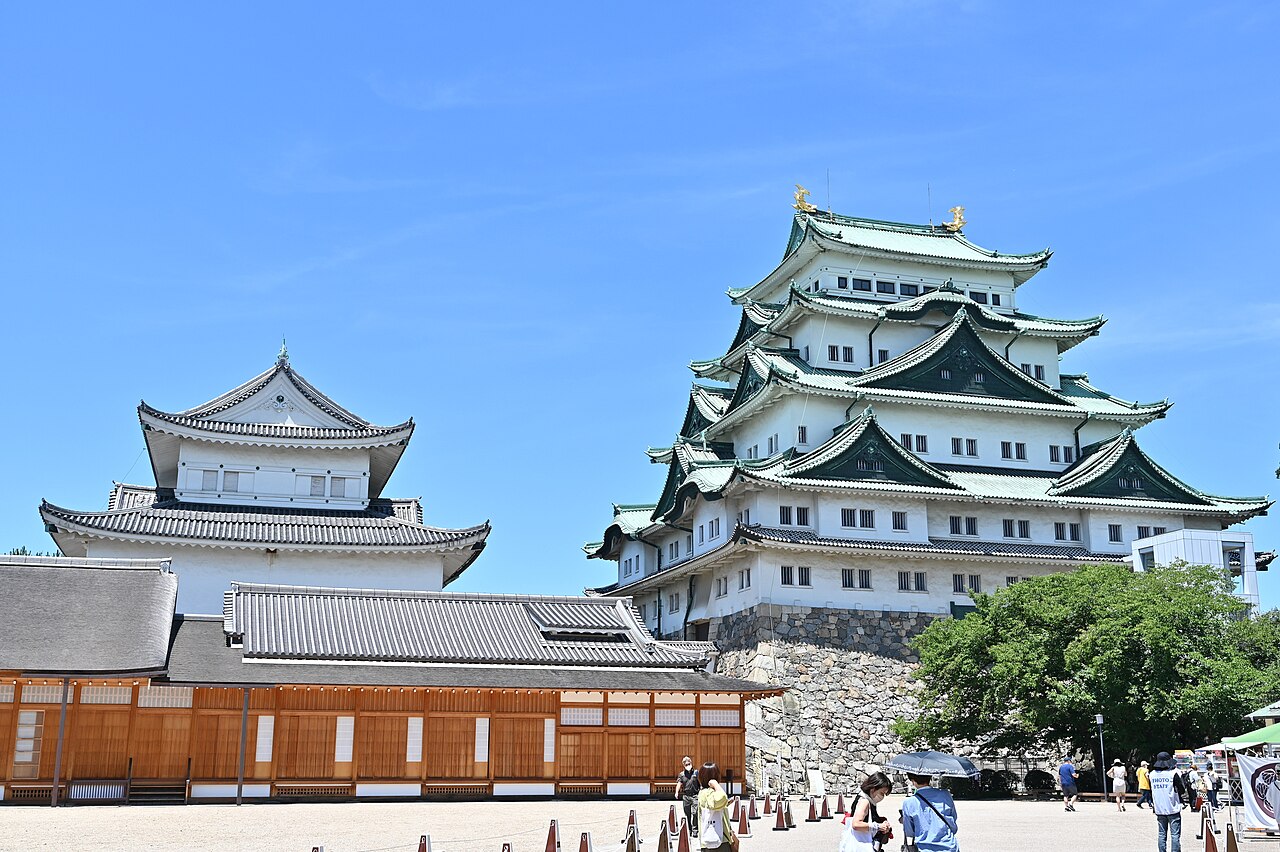
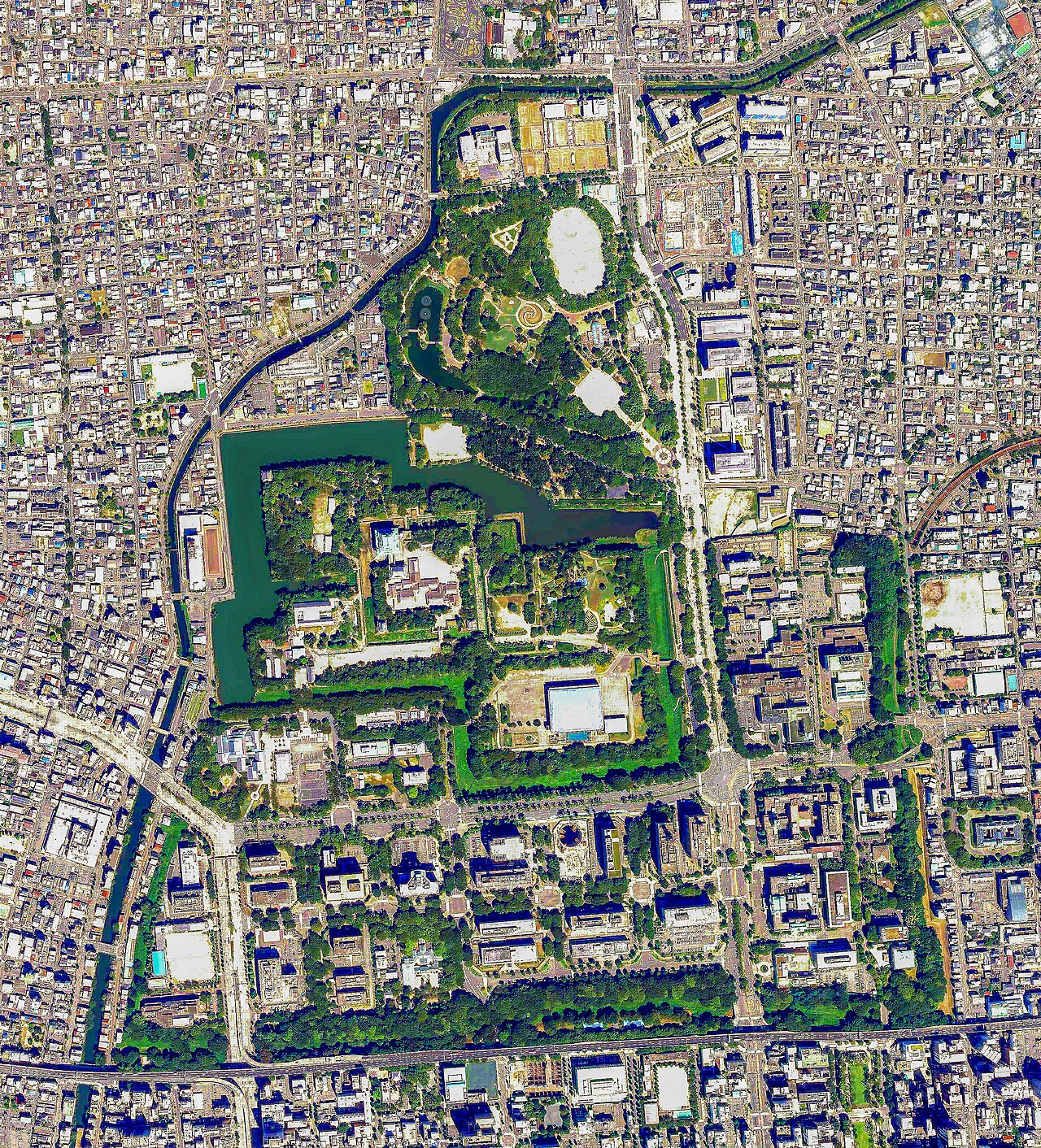
The archives sit in an ideal location for combining with other sights. They lie just south of Nagoya Castle and at the western end of the Bunka no Michi heritage district, so a visit slots naturally into a walking route that takes in the castle, this building, the Bunka no Michi Futaba Museum and the other preserved mansions of the Cultural Path. The handsome exterior alone makes it a rewarding stop and a favourite of architecture photographers.
Practical details are simple: admission is free, the building is open daily except Mondays during standard daytime hours, and a visit takes about forty minutes. Restrooms are available, and the quiet, uncrowded interior is a pleasant refuge on a hot or rainy day.
For travellers who want to understand Nagoya beyond its samurai castle and its modern skyline, the City Archives capture the confident, rapidly Westernising Japan of the early twentieth century in a single beautiful structure. As a free, architecturally significant stop within easy reach of the castle and the Cultural Path, it is an easy and rewarding addition to any history-focused day in the city.
A local's tip
Head upstairs to the preserved former courtroom — its ornate plasterwork ceiling and central-hall staircase are the architectural highlight and free to photograph.
Best time to visit
Weekdays; the reading rooms and court chamber are quietest
Getting there
About 8 minutes on foot from Shiyakusho Station, between Nagoya Castle and the Bunka no Michi heritage district.
Good to know
- Restrooms
- Free admission
- English signage
Plan the whole trip offline
Nagoya City Archives is one of many places in the Real Japan app — with turn-by-turn directions, nearby spots and full offline maps you can use with no signal.