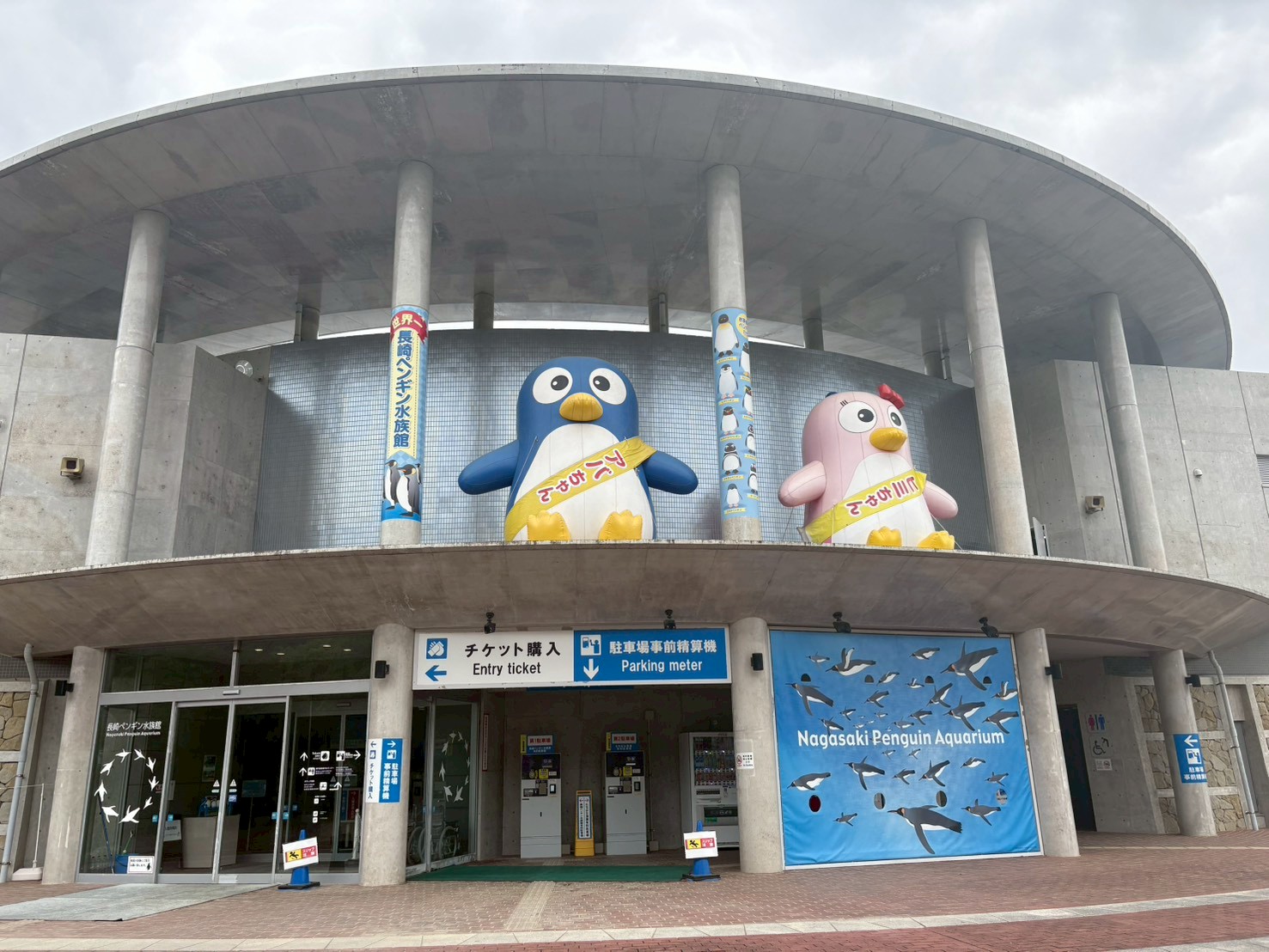
The aquarium with the most penguin species in the world—nine kinds of penguin, plus a natural sea bay where they swim and stroll a beach.
The Nagasaki Penguin Aquarium is a delightful, family-friendly attraction on the eastern coast of the city, and it holds a genuine world record: it keeps more species of penguin than any other aquarium on earth—nine of the world's eighteen species, from the tiny little penguin to the stately king penguin. For anyone travelling with children, or simply in need of a lighter counterpoint to Nagasaki's often solemn historical sites, it makes a charming half-day out.
The aquarium has deep roots. It grew out of an earlier marine park that opened in the late 1950s, making it one of Japan's pioneering penguin-keeping institutions, and it reopened in its present form in 2001 with a redesigned focus on these captivating birds. Over the decades its staff have accumulated a formidable expertise in penguin breeding and care, and the collection has become both a popular attraction and a serious centre for research and conservation.
The headline experience is the great tank in the main hall, a deep pool several metres tall in which king, gentoo and other cold-water penguins porpoise and dart underwater, watched through large viewing windows. But what sets Nagasaki apart from an ordinary aquarium is that it makes use of its natural setting on a quiet sea bay. In good weather the staff lead penguins out to an outdoor "penguin beach," where the birds waddle across the sand and swim freely in the netted-off natural seawater of the bay itself—a rare chance to see penguins moving in something close to a wild environment rather than a concrete tank. Scheduled feeding sessions, where keepers hand-feed the birds and explain their behaviour, and occasional close-encounter events where visitors can touch or walk beside a penguin, are the highlights of a visit, so it is worth checking the day's timetable on arrival and planning around it.
Beyond the penguins, the aquarium presents the marine life of the local waters. Tanks display fish and creatures of the Sea of Ariake and the waters off Nagasaki, and there are hands-on touch pools where children can meet starfish and other shoreline animals. The grounds include a small nature trail and a bamboo forest, a beach where kayaking and other activities are sometimes offered, and a café, making the site a relaxed place to spend a couple of hours. Because so much of the appeal is indoors, it is also a reliable rainy-day option in a city famous for its wet weather.
The aquarium's conservation work adds substance to the fun: it has had notable success breeding several penguin species in captivity, contributing to international efforts to sustain populations, and its displays explain the threats these birds face in the wild. It is the kind of attraction that entertains children while quietly educating them.
Getting there requires a short journey out of the centre—frequent buses run from Nagasaki Station along the coast to the aquarium at Hotarujaya in about 30 to 40 minutes. It is a little removed from the main cluster of downtown sights, so it works best as a dedicated outing, ideally timed around the penguin beach and feeding sessions that make a visit here genuinely special.
A local's tip
Check the daily schedule for the outdoor 'penguin beach' walk and feeding sessions, when penguins swim in the open sea bay—far more memorable than the indoor tanks alone.
Best time to visit
Feeding times; good for families in any weather
Getting there
Take a bus bound for the Penguin Aquarium (Pengin Suizokukan) from Nagasaki Station, about 30-40 minutes along the eastern coast at Hotarujaya. Buses are frequent.
Good to know
- Cafe
- Wi-Fi
- Restrooms
- Family-friendly
Plan the whole trip offline
Nagasaki Penguin Aquarium is one of many places in the Real Japan app — with turn-by-turn directions, nearby spots and full offline maps you can use with no signal.