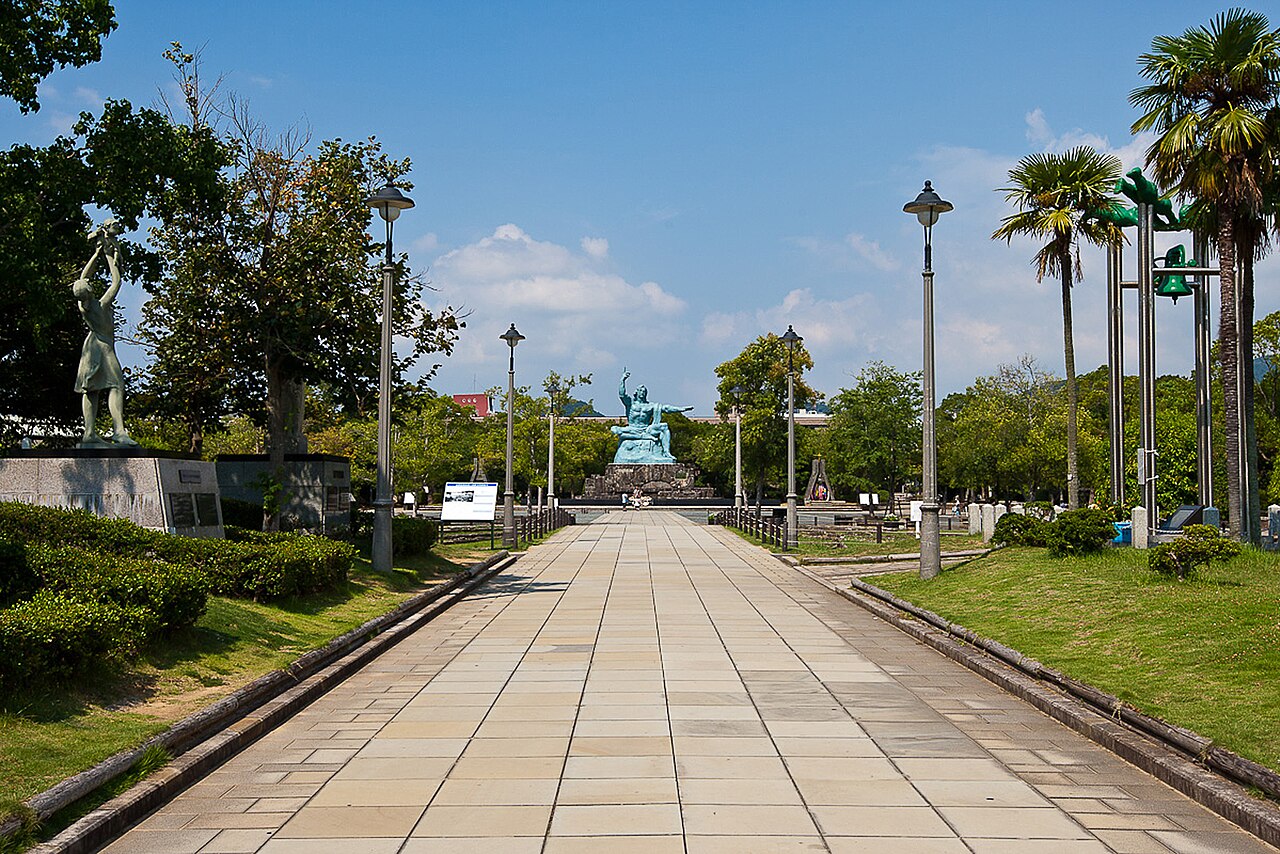
A solemn memorial park dedicated to the victims of the 1945 atomic bombing and to a future without nuclear weapons.
Nagasaki Peace Park is a place of remembrance and quiet resolve, created on the hillside above the district devastated when an atomic bomb was dropped on the city on 9 August 1945. Laid out to honour the tens of thousands who died and to express Nagasaki's enduring call for the abolition of nuclear weapons, the park is one of the most moving sites in Japan, drawing visitors from around the world who come to reflect on the human cost of war and to stand for peace.
The park's most recognisable feature is the Peace Statue, a monumental bronze figure some ten metres tall by the sculptor Seibo Kitamura. The seated figure raises one hand toward the sky, pointing to the threat of nuclear weapons that still hangs over humanity, while extending the other horizontally in a gesture of tranquillity and peace. The eyes are gently closed in prayer for the victims. Every year on the anniversary of the bombing, a solemn memorial ceremony is held before the statue, attended by survivors, dignitaries and citizens, with a moment of silence at the exact time of the blast.
Stretching before the statue is the Fountain of Peace, built in memory of victims who died desperate for water in the aftermath of the explosion, when the firestorm and radiation left the wounded crying out for something to drink. Its inscription carries the words of a young girl who survived the bombing, recalling her thirst. Along the park's central axis stand peace monuments donated by cities and nations from across the globe, each an artistic plea for a world free of such weapons, turning the park into an international gallery of hope.
The experience is contemplative and freely open at all hours. The grounds are landscaped with lawns, trees and flowers, and in spring cherry blossom softens the solemn setting. Paths are broad and largely flat once you reach the upper terrace, which is served by escalators and a lift, making the park accessible to most visitors. Many people spend around an hour walking the length of the park, pausing at the statue, the fountain and the international monuments, often in reflective silence.
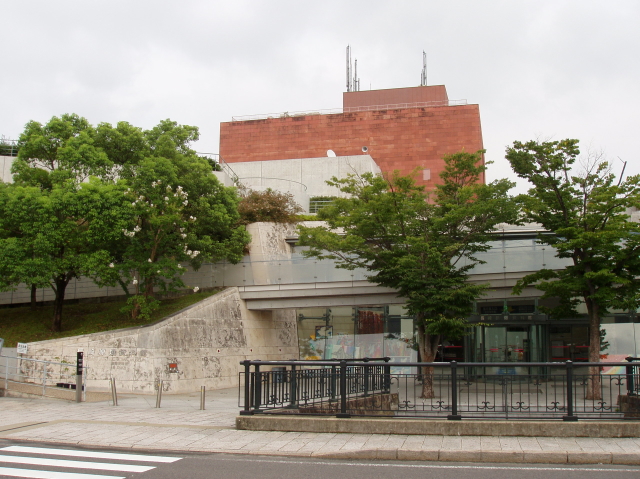
Close by lie two further essential sites: the Hypocenter Park, marked by a simple black stone column standing directly beneath the point where the bomb exploded in the air above the city, and the Nagasaki Atomic Bomb Museum, which documents the event and its aftermath in unflinching detail. Together with the Peace Park they form a circuit of remembrance that most visitors experience as a single, deeply affecting whole.
A notable point is the message that distinguishes Nagasaki. As the second and, to date, last city to suffer an atomic attack, Nagasaki has adopted a global mission: that it should remain the last, and that no other city should ever share its fate. This forward-looking plea for a nuclear-free future, rather than only mourning the past, gives the park its particular character and quiet power.
The best time to visit is a calm morning for reflection, or the ninth of August for the annual ceremony. Take tram line 1 or 3 to the Heiwa-koen stop and walk a few minutes. A visit to Nagasaki Peace Park is a sobering, essential and ultimately hopeful experience that stays with travellers long after they leave.
A local's tip
Walk the short distance to the separate Hypocenter Park nearby to see the black stone column marking the exact point above which the bomb detonated, quieter and more affecting than the main statue.
Best time to visit
Morning for quiet reflection; August 9th for the memorial ceremony
Getting there
Take Nagasaki tram line 1 or 3 to the Heiwa-koen stop, then walk about four minutes; escalators and a lift access the upper terrace.
Good to know
- Lift
- Benches
- Restrooms
Plan the whole trip offline
Nagasaki Peace Park is one of many places in the Real Japan app — with turn-by-turn directions, nearby spots and full offline maps you can use with no signal.