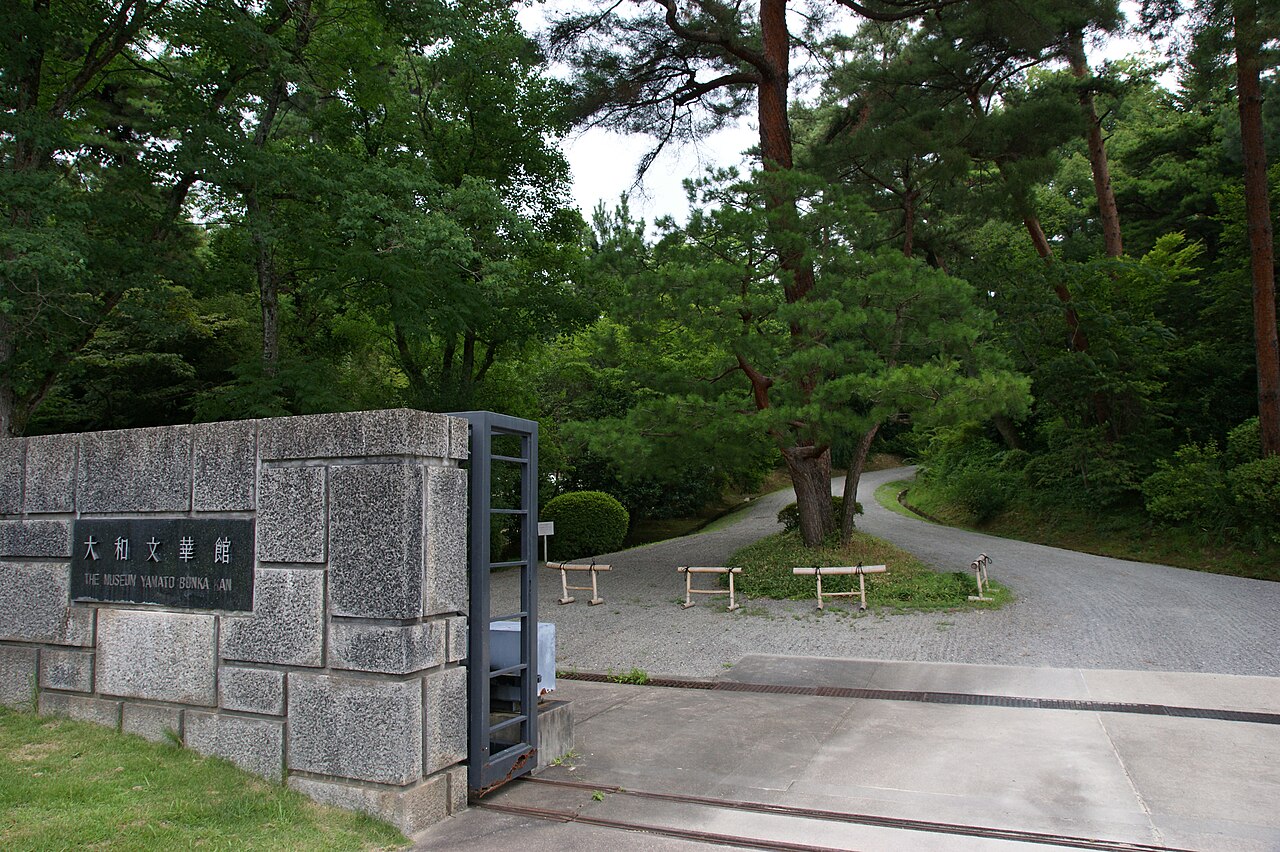
An elegant private museum of Japanese and East Asian art set in a garden in leafy Gakuenmae.
Museum Yamato Bunkakan is one of Nara's hidden cultural gems, a refined private art museum tucked into the quiet garden suburb of Gakuenmae, well away from the deer parks and temple crowds. Founded by the Kintetsu Railway and opened in 1960, it houses a distinguished collection of Japanese, Chinese and Korean art assembled with the discernment of a private connoisseur rather than the breadth of a state institution.
The collection numbers around two thousand works and includes National Treasures and Important Cultural Properties. Its strengths lie in classical East Asian painting, Buddhist art, calligraphy, ceramics, lacquer and textiles, with celebrated Japanese narrative handscrolls and ink paintings among the finest pieces. Because so much of the collection is fragile and light-sensitive, the museum works on a rotating exhibition model, mounting a series of carefully themed shows through the year that each bring out a different facet of its holdings. This means the museum rewards repeat visits and that catching a particular masterpiece is a matter of consulting the exhibition schedule.
The building itself is a serene, low-slung modernist pavilion designed to let the art breathe, with a central courtyard and galleries that open onto views of the surrounding greenery. Around it lies Bunka-en, a landscaped garden planted for the seasons with plum, cherry, iris and autumn maples, so that the approach to the museum is itself part of the experience. Visitors often comment that the combination of exquisite objects and quiet garden makes for one of the most peaceful cultural outings in the Nara area.
Inside, the atmosphere is calm and unhurried; the galleries are rarely crowded, and the lighting and presentation are of a high standard. English labelling covers the principal works, though the interpretive depth is greatest in Japanese. The museum is accessible, with level routes and lifts, and a small shop offers scholarly catalogues that are prized by collectors. A visit typically takes a little over an hour, longer if a major exhibition is showing or the garden is in bloom.
Spring is the loveliest time to come, when the garden's plum and cherry blossoms frame the walk to the entrance, though autumn's maples are equally rewarding. To reach the museum, take the Kintetsu Nara Line to Gakuenmae Station — about ten minutes from Kintetsu Nara Station — then walk south for roughly seven minutes through the residential streets. As the connection is Kintetsu-only, a Japan Rail Pass will not cover this stretch, but an IC card works smoothly. For travellers willing to step off the standard temple circuit, Yamato Bunkakan offers a rare and rewarding encounter with East Asian art at its most refined.
A local's tip
Arrive before a special exhibition's final week and wander the surrounding garden, Bunka-en, first — its seasonal plum, cherry and iris plantings are a highlight in their own right and free to enjoy on the approach.
Best time to visit
Spring for the garden's plum and cherry blossoms
Getting there
Take the Kintetsu Nara Line to Gakuenmae Station, about ten minutes from Kintetsu Nara; the museum is a quiet seven-minute walk south through a leafy residential neighbourhood. It is Kintetsu-only, so a Japan Rail Pass does not cover the final leg.
Good to know
- Shop
- Wi-Fi
- Garden
- Restrooms
Plan the whole trip offline
Museum Yamato Bunkakan is one of many places in the Real Japan app — with turn-by-turn directions, nearby spots and full offline maps you can use with no signal.