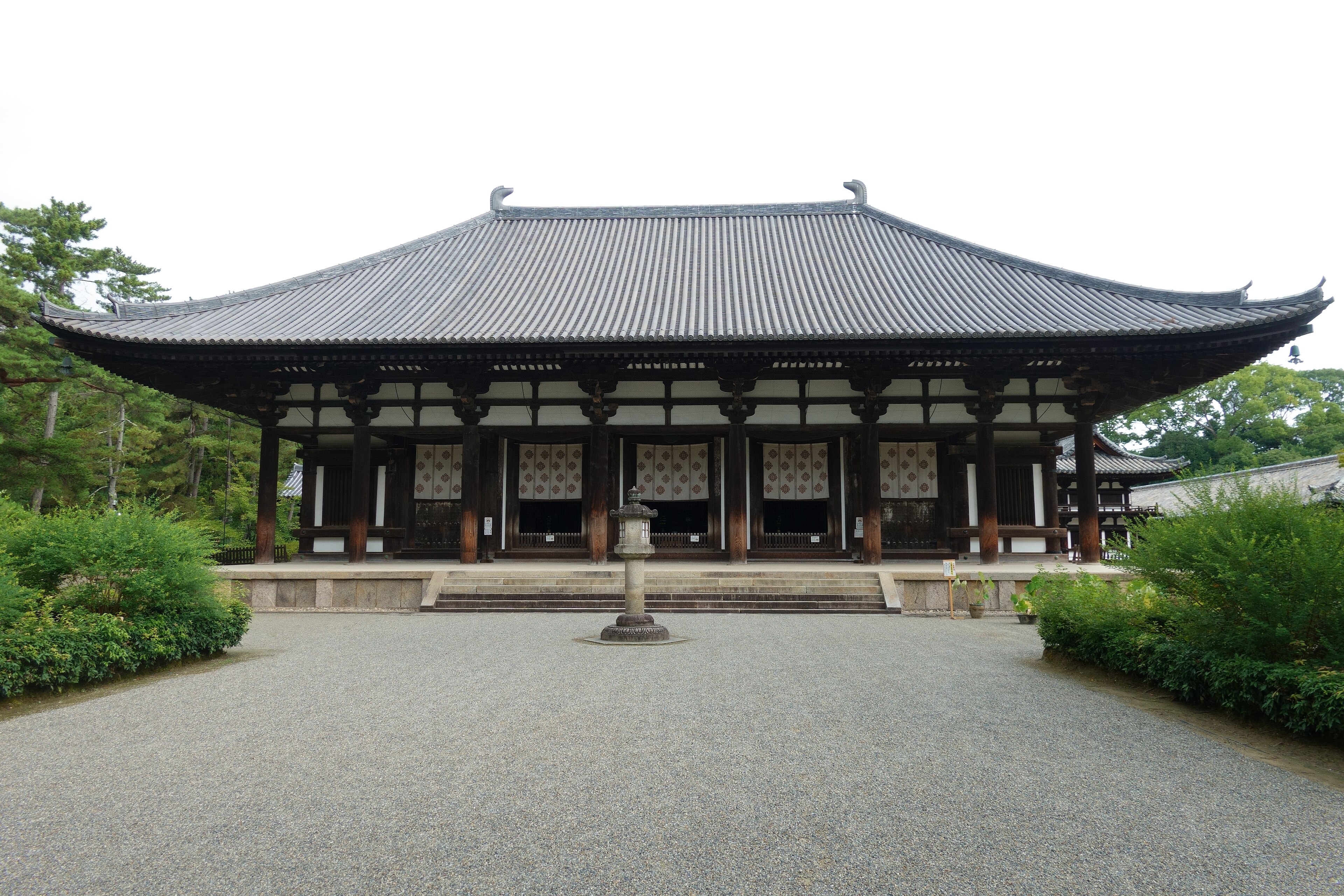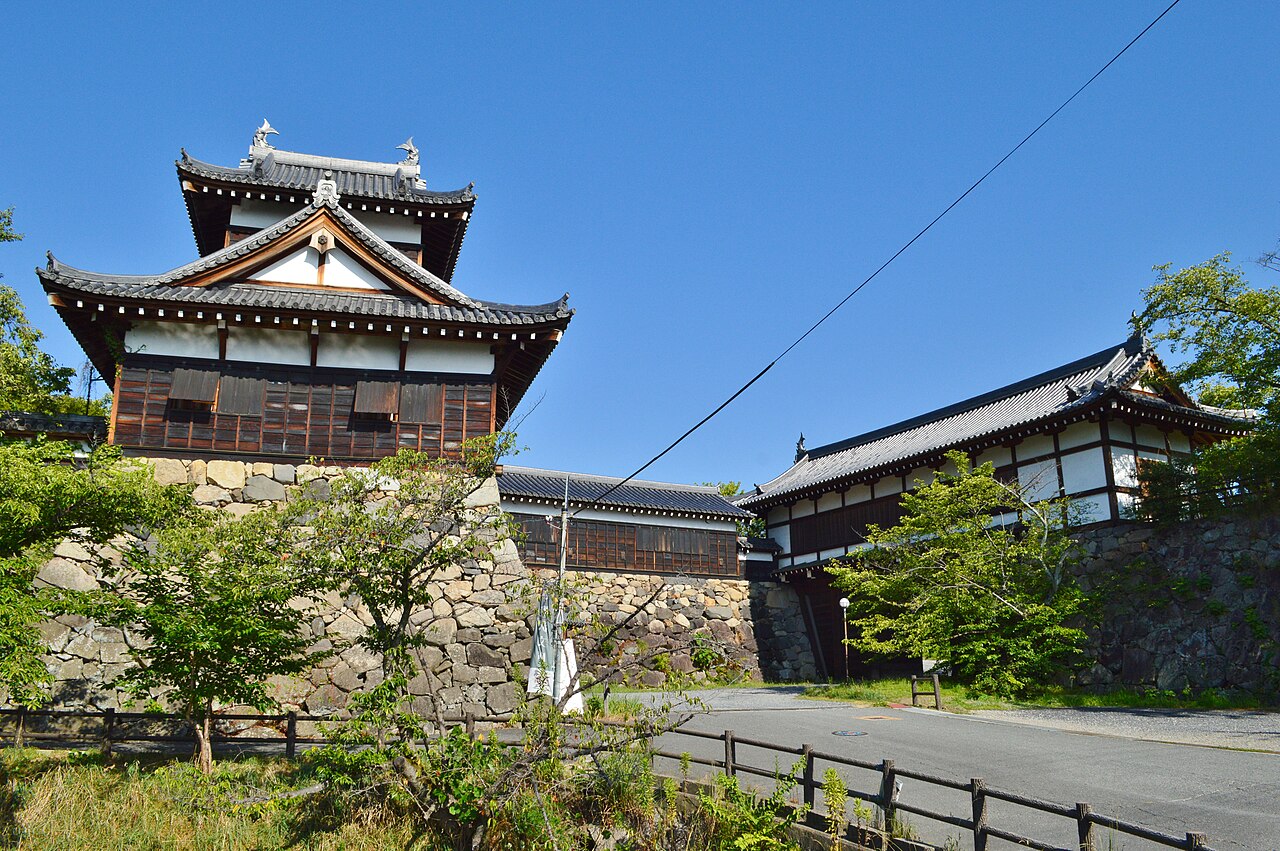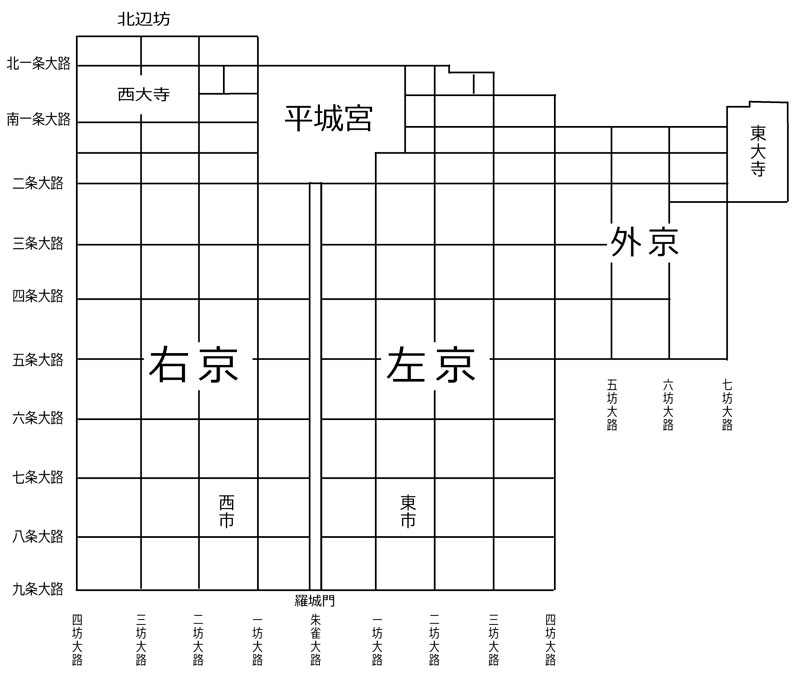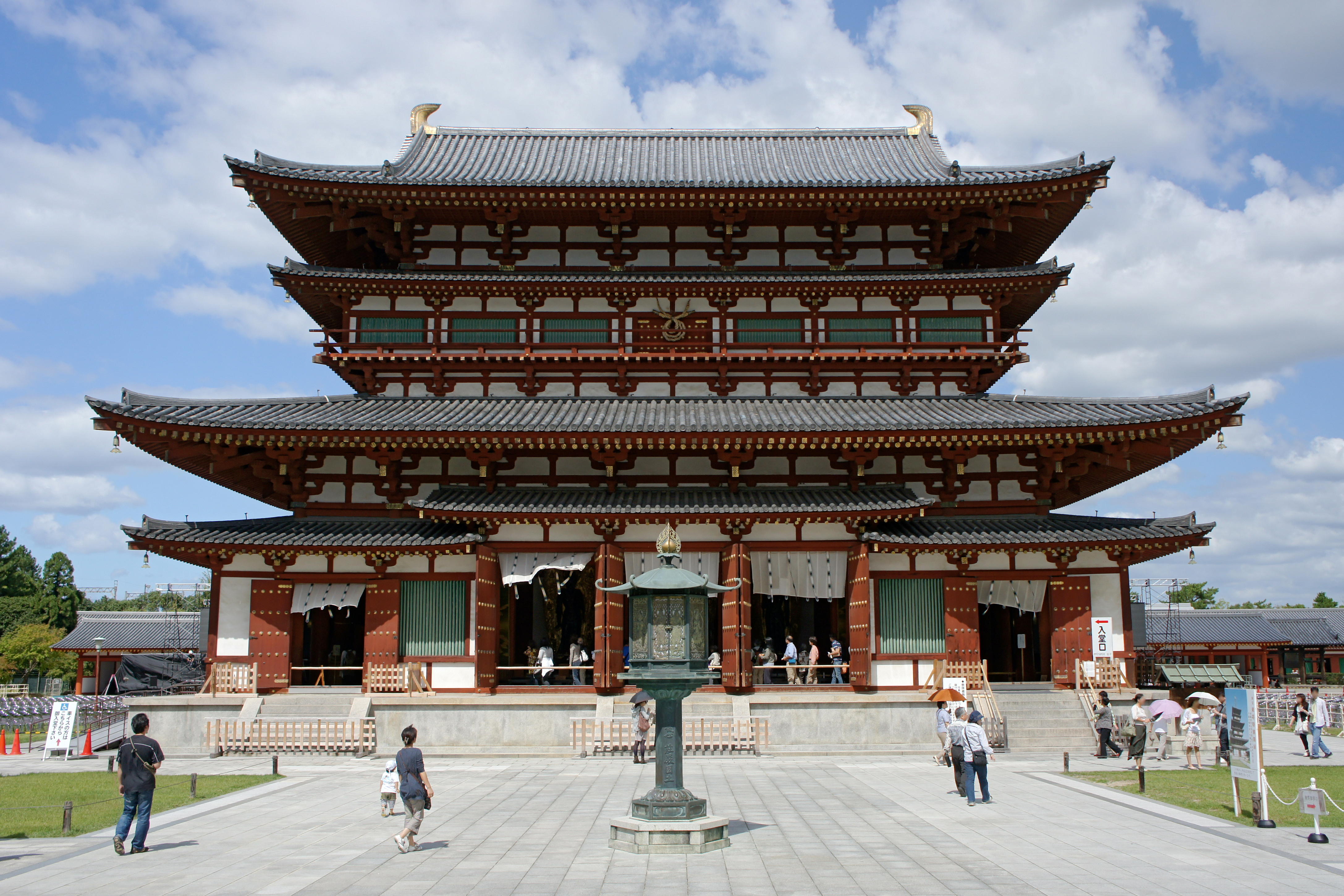
An imperial temple in Nishinokyo whose original 8th-century East Pagoda is nicknamed 'frozen music' for its rhythm.
Yakushi-ji, set among the rice fields and residential lanes of the Nishinokyo district southwest of central Nara, is one of the oldest and most prestigious imperial temples in Japan. Emperor Temmu ordered its construction in 680 to pray for the recovery of his ailing empress, and though it was first built in the earlier capital of Fujiwara-kyo, it was rebuilt at its present site around 730 as a faithful copy of the original. It serves as the head temple of the Hosso school of Japanese Buddhism, and its principal image, the Yakushi Nyorai or Medicine Buddha, gives the temple both its name and its enduring purpose as a place of prayer for healing.
The temple's masterpiece is the East Pagoda (To-to), the single structure to survive intact from the eighth century. At first glance it appears to have six roofs, but it is actually a three-story pagoda whose tiers are punctuated by smaller decorative pent-roofs known as mokoshi. This rhythmic alternation of large and small eaves gives the tower a syncopated grace that the American scholar Ernest Fenollosa is said to have likened to frozen music, a phrase that has clung to it ever since. After years hidden under scaffolding for a full dismantling and restoration, the East Pagoda has been returned to public view in all its ancient dignity.
Standing opposite it, the vermilion West Pagoda is a vivid 1981 reconstruction, and the contrast between the two, one silvered with age, the other freshly painted in the bright colours the whole temple once wore, is quietly instructive about how these monuments looked when new. Between them rises the reconstructed Kondo, or Golden Hall, which houses the celebrated Yakushi Triad, a trio of bronze statues from around the year 700 that rank among the supreme achievements of early Japanese sculpture, their bodies modelled with a soft, lifelike fullness. Behind lies the Great Lecture Hall, and to the north the Toindo holds a graceful Sho-Kannon statue.
Yakushi-ji is inscribed as part of the Historic Monuments of Ancient Nara UNESCO World Heritage Site. The grounds are broad, paved and largely flat, making the temple one of the more accessible in the Nara area, and the open plan means the great halls and twin pagodas can all be taken in without much walking. It sees fewer visitors than the temples of Nara Park, so even in peak season you can usually contemplate the East Pagoda in relative peace.
The ideal way to visit is to pair Yakushi-ji with Toshodai-ji, its equally venerable neighbour just ten minutes' walk to the north, and to come in the morning light. Getting here is easiest on the Kintetsu Kashihara Line: Nishinokyo Station sits only three minutes' walk from the gate. Because it is a Kintetsu line rather than JR, the trip is not covered by the Japan Rail Pass, but fares are modest and IC cards work throughout.
A local's tip
The East Pagoda is the only structure to survive from 730 - look closely and you will see it appears to have six roofs but is really a three-story tower with decorative lean-to skirts (mokoshi), the detail that earned it the nickname 'frozen music'.
Best time to visit
Morning, and combine with Toshodai-ji next door
Getting there
Take the Kintetsu Kashihara Line to Nishinokyo Station, which is a 3-minute walk from the temple. From Kintetsu Nara Station transfer at Yamato-Saidaiji. Toshodai-ji is a 10-minute walk north, so the two pair naturally.
Good to know
- Wi-Fi
- Restrooms
- Wheelchair access
Plan the whole trip offline
Yakushi-ji is one of many places in the Real Japan app — with turn-by-turn directions, nearby spots and full offline maps you can use with no signal.